Rushing Through Traditions

There’s a strong tendency in society, fuelled especially by advertising, to rush headlong towards whatever comes next. Novelty is prized, anticipation is monetised, and lingering is quietly discouraged. We’re nudged to believe that satisfaction lies just beyond the next purchase, the next upgrade, the next season. Christmas makes this habit particularly visible. Before the last crumbs of mince pie have been brushed away, the message has already shifted, sales banners change colour, playlists move on, and the glow of the season is treated as something faintly embarrassing to hold on to.

You see it most clearly when decorations come down well before Twelfth Night. What was meant to be a period of celebration and reflection is truncated, tidied away, and replaced with a brisk return to normality. In the hurry to move on, something gentle is lost. The slower rhythms of tradition invite us to dwell, to savour, and to let meaning settle. Resisting the rush, even briefly, becomes a quiet act of attentiveness, a reminder that not everything of value needs to be cleared away at speed.

But there’s also another way of seeing this, and it’s worth holding it alongside the longing to linger. Traditions can ground us, but they can also harden into habits that resist necessary change or growth. For some, moving quickly beyond Christmas isn’t a loss of meaning but an expression of renewal, a clearing of space for fresh starts and forward momentum that can be genuinely life-giving. Rather than framing this as a choice between tradition and progress, it may be wiser to hold a both-and approach, preserving what nourishes the soul while remaining open to change, even when that balance feels untidy and unresolved.
On Christmas Eve

Christmas Eve arrives quietly, like breath on cold glass. The world slows, even if only for a moment, and listens. Streetlights glow a little softer, kitchens carry the memory of cinnamon and warmth, and the dark feels less like an ending and more like a cradle.

This is the night between, between longing and fulfilment, between promise and presence. We stand with tired hearts and hopeful hands, carrying the year we’ve lived, its griefs and its small, bright joys. Nothing needs to be fixed tonight. Nothing needs to be proven. Love doesn’t hurry.

Somewhere beneath the noise, a deeper truth hums. God doesn’t arrive with spectacle or certainty, but with vulnerability. Not above the mess, but within it. A child’s cry breaks the silence, and the universe leans in. Power chooses tenderness. Eternity borrows time.

Christmas Eve invites us to rest in that holy nearness. To believe that light can be born in the darkest places, including our own. To trust that gentleness is never wasted, and that hope, however fragile, is enough to carry us through the night.

So we wait. Candles ready. Hearts open. Tomorrow will come. For now, this is enough.

Reducing Stress at Christmas

Christmas carries a strange mix of light and weight. The lights sparkle, the music drifts through shops, and yet the pressure quietly builds. Expectations pile up, family dynamics resurface, money feels tighter, and the calendar fills faster than it ever should. Reducing stress at Christmas begins by noticing that much of it comes not from the season itself, but from what we think it ought to be.

One gentle step is permission, permission to simplify. Not every tradition needs to be honoured every year, not every invitation needs a yes, and not every table needs to look like a magazine spread. Choosing fewer things and doing them with care can be deeply freeing. Rest is not laziness at Christmas, it’s wisdom.

It also helps to ground yourself in small, ordinary moments. A quiet walk in cold air, a mug warming your hands, a familiar song played just for you. These pauses remind the nervous system that it’s safe to slow down. Breathing more deeply, even for a minute, can interrupt the rush and bring you back into your body.

Connection matters too, but it doesn’t have to be perfect. Honest conversations, lowered expectations, and a bit of humour can soften tense edges. If grief or loneliness surfaces, let it be acknowledged rather than pushed away. Christmas doesn’t erase hard feelings, it sits alongside them.

Finally, remember that the season passes. The world doesn’t hinge on one meal, one gift, or one day. Kindness to yourself, as much as to others, is perhaps the most meaningful Christmas practice of all.

Chill About “Happy Holidays”

People don’t say “Happy Holidays” because they’re ashamed of Christmas. They say it because several holidays occur around the same time – Christmas, Hanukkah, Kwanzaa, New Year, and others. Using an inclusive greeting simply recognises the reality of multiple celebrations happening at once. Yet somehow, this has been framed as a cultural threat.

In truth, the areas often criticised for saying “Happy Holidays” tend to be more economically productive, globally connected, and culturally diverse. People there interact daily with neighbours, colleagues, and strangers who don’t look, worship, or live exactly as they do. Exposure to different traditions isn’t threatening, it’s normal. Acknowledging others’ celebrations doesn’t diminish your own.

Graphics or narratives that suggest otherwise aren’t educational. They are carefully packaged branding, a form of grievance marketing designed to create division rather than understanding. When such messaging forms the bulk of someone’s information diet, it shapes their perception of the world in a narrow and fearful way.

Loving Christmas and recognising why “Happy Holidays” exists aren’t contradictory. They can coexist comfortably, reflecting both personal tradition and social awareness. Inclusivity doesn’t erase identity; it affirms that in a shared world, multiple stories and celebrations can exist side by side.

So this season, there’s no need to choose between joy and acknowledgment. You can celebrate what you love while respecting others’ traditions. In doing so, the message is clear: kindness, curiosity, and understanding matter more than cultural grievance. Merry Christmas and Happy Holidays!

The Jewish Festival of Hanukkah

Today, 15 December in 2025, Jews around the world gather to celebrate the first day of Hanukkah, a festival rich in memory, meaning, and light. As winter deepens and days feel short and fragile, Hanukkah arrives as a quiet but resilient act of hope. It recalls a moment when faith was threatened by oppression and conformity, and when a small community chose courage, identity, and trust over fear.

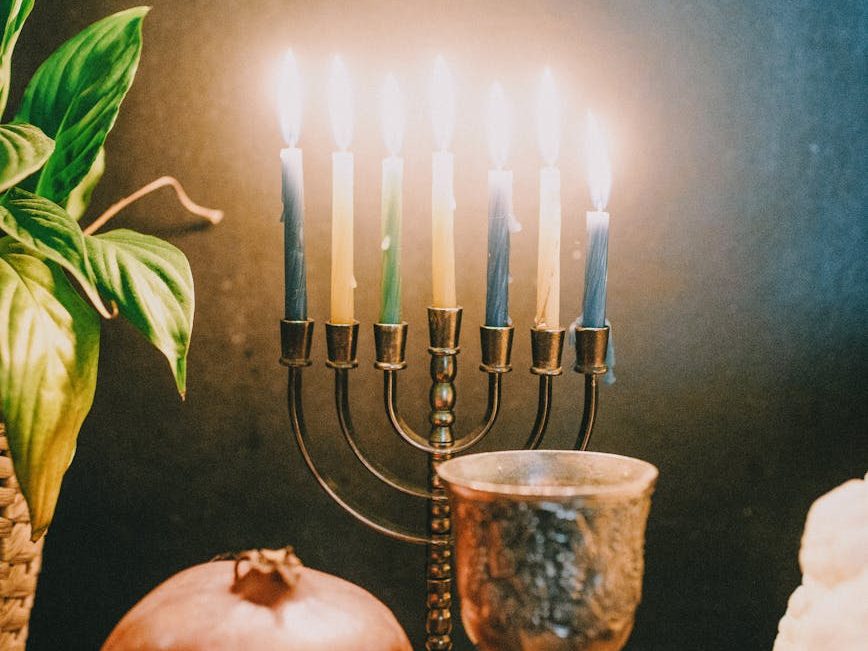
At the heart of Hanukkah is the lighting of the menorah, one candle on the first night, growing steadily brighter as each evening passes. It’s a gentle ritual, yet deeply powerful, reminding those who take part that light doesn’t need to be overwhelming to be transformative. Even a single flame can push back darkness, can offer warmth, can be seen from a window and shared with the world outside.

The festival remembers the rededication of the Temple in Jerusalem and the story of the oil that should have lasted one day but burned for eight. Whether heard as history, tradition, or sacred story, it speaks of endurance beyond expectation, of provision where none seemed possible. It invites reflection on what it means to stay faithful when resources are thin and the odds feel stacked against you.

Hanukkah is also a time of joy, family, food, song, and storytelling. Children play games, gifts are exchanged, and tables are filled with foods fried in oil, celebrating abundance in the midst of scarcity. In a fractured world, Hanukkah offers a steady, luminous reminder that identity matters, hope endures, and light, patiently tended, can still change everything.

Note: The date of Hanukkah changes each year because it follows the Jewish calendar rather than the Gregorian calendar used by most of the world. The Jewish calendar is lunisolar, shaped by both the moon and the sun. Months begin with the new moon and last 29 or 30 days. Hanukkah always starts on the 25th day of the Hebrew month of Kislev, but because the Jewish year doesn’t match the length of the solar year, the festival shifts when mapped onto the Gregorian calendar. To keep festivals in their proper seasons, the Jewish calendar occasionally adds an extra month. This prevents celebrations from drifting through the year, but the exact Gregorian date still varies, usually falling in late November or December. So while Hanukkah’s timing is fixed within Jewish tradition, it appears to move each year on modern calendars, reflecting an ancient, carefully balanced way of marking time.