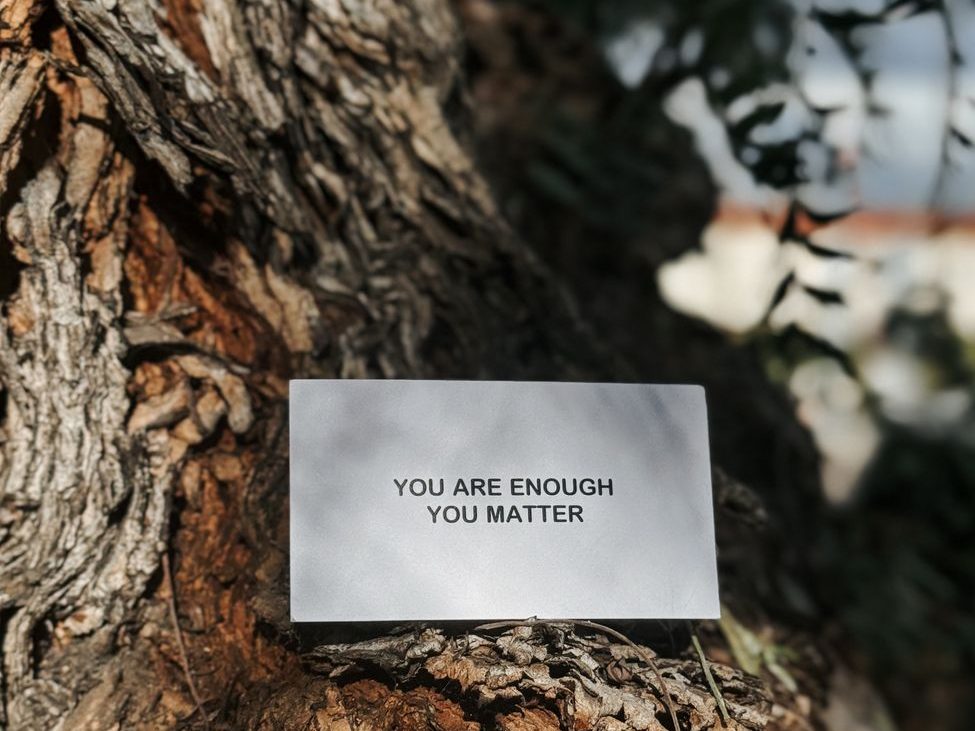
We live in a society where the algorithms know us better than we know ourselves. They watch what we click, how long we linger, which words make us pause, and what patterns emerge from our choices. In doing so, they build a portrait of us so detailed that it sometimes feels unnervingly intimate, predicting desires we haven’t yet named, and serving them back before we’ve had a chance to notice them rising within us.
There’s a kind of seduction in this. We find comfort in scrolling, receiving what feels like a personalised gift each time a recommendation hits the mark. Music that echoes our moods, films that speak to our tastes, even news curated to confirm our worldviews. All these create a cocoon where life feels smoother, tailored, frictionless. Yet this ease comes at a cost.
The omniscient algorithms aren’t neutral companions but carefully designed systems whose primary aim is to hold our attention, often shaping our wants rather than simply responding to them. They thrive on narrowing our horizons, because the more predictable we are, the easier we are to keep engaged. Over time, we risk mistaking this curated reflection for genuine choice, forgetting that our deepest longings are not meant to be managed by code.
Perhaps the challenge is to remain awake: to enjoy the convenience without surrendering our agency, to let algorithms assist us without allowing them to define us. For in the end, knowing ourselves must always run deeper than what any machine can calculate.
When the winter season rolls in with its chilly winds and shorter days, it often brings along an unwelcome companion: the common cold. Though it’s typically not dangerous for most people, a cold can be disruptive, unpleasant, and tiring. Fortunately, there are several ways to bolster your defences and minimize the chances of catching one. Avoiding colds in winter isn’t just about avoiding people who are sick, it’s about taking care of your entire body, mind, and environment.
The common cold is caused by a variety of viruses, with the rhinovirus being the most common culprit. These viruses thrive in colder, drier air, which is why they tend to circulate more during the winter months. When people spend more time indoors in close proximity to each other, viruses can spread more easily through respiratory droplets or contaminated surfaces. The cold air can also dry out the nasal passages, making it easier for viruses to penetrate and take hold. With that in mind, avoiding colds starts with some practical habits and a healthy lifestyle.
One of the most effective ways to prevent colds is by maintaining strong hand hygiene. Washing your hands thoroughly with soap and warm water for at least 20 seconds can significantly reduce the spread of viruses. It’s especially important to wash hands after being in public spaces, touching shared surfaces, or before eating. Alcohol-based hand sanitizers are a helpful alternative when soap and water aren’t available, but they’re not a substitute for a good wash.
Keeping your hands away from your face is another crucial practice. Viruses often enter the body through the nose, mouth, or eyes. By reducing how often you touch your face, particularly with unwashed hands, you can lower your chances of infection. It takes mindfulness, especially if you have the habit of rubbing your eyes or resting your chin on your hands, but it’s worth being aware of.
Supporting your immune system is also central to cold prevention. This begins with good nutrition. A diet rich in fruits, vegetables, whole grains, lean proteins, and healthy fats provides the body with the essential nutrients it needs to fight off infections. Vitamin C, zinc, and vitamin D are particularly helpful in supporting immune function. Citrus fruits, leafy greens, nuts, seeds, and fatty fish like salmon can help keep your defenses strong. In winter, when sun exposure is low, many people find it helpful to take a vitamin D supplement, but it’s always a good idea to check with a healthcare provider first.
Regular exercise is another powerful immune booster. It improves circulation, reduces stress, and helps regulate body systems. While it can be tempting to become more sedentary during cold weather, staying active (whether through walking, yoga, or indoor workouts) can make a meaningful difference in your resilience to illness.
Sleep, too, is a non-negotiable. When you’re well-rested, your immune system is better equipped to fight off viruses. Most adults need between seven and nine hours of sleep per night. In the winter, when the body’s natural rhythms may be thrown off by the lack of daylight, it’s helpful to maintain consistent sleep and wake times and create a restful nighttime environment.
Hydration plays a less obvious but important role in cold prevention. Dry indoor air can sap moisture from your body, including your nasal passages, which are your first line of defense against airborne viruses. Drinking enough water throughout the day keeps mucous membranes moist and functioning. Using a humidifier in your home can also help maintain a healthy level of moisture in the air, especially while you sleep.
Speaking of indoor air, winter often means closed windows and recycled air. This can increase the concentration of airborne viruses in the home or office. To counter this, try to ventilate your space when possible, open a window for a few minutes when the weather allows, or consider using an air purifier with a HEPA filter. Keeping your environment clean, particularly high-touch surfaces like doorknobs, keyboards, and smartphones, also reduces the spread of germs.
While physical health is often the focus of cold prevention, mental and emotional well-being are just as important. Chronic stress can suppress the immune system and make you more vulnerable to illness. Incorporating stress-reducing practices into your daily routine (whether it’s through prayer, meditation, reading, journaling, or simply spending time with loved ones) can create a sense of peace that benefits your body as well as your mind.
Another layer of defense comes from being mindful of your social environment. Avoiding people who are clearly ill, especially in close quarters, is common sense. But it’s also courteous to stay home when you’re sick to prevent spreading the virus to others. If you live or work with others, encourage a culture of openness about health: normalize staying home when unwell, provide easy access to tissues and hand sanitizer, and keep shared spaces tidy.
If you have children, teaching them the basics of hygiene and helping them practice it can go a long way. Kids are particularly susceptible to colds and tend to be less diligent about handwashing and covering their mouths when they cough or sneeze. Making hygiene fun and consistent can help instill lifelong habits.
In some cases, using natural remedies or preventative treatments can add another layer of protection. Some people swear by elderberry syrup, echinacea, or garlic for their immune-supporting properties. While scientific evidence is mixed on many of these, if used responsibly and without replacing medical advice, they can be part of a well-rounded prevention strategy.
Ultimately, avoiding colds in winter isn’t about doing one big thing, it’s about doing many small things consistently. It’s a mix of taking care of your body, your environment, and your daily habits. A strong immune system, a clean space, good hygiene, and rest all work together to make you a less appealing target for viruses. And if you do happen to catch a cold despite your best efforts, treating yourself with patience and care helps speed recovery and minimizes the risk of spreading it to others.
Staying healthy in the winter is about more than just avoiding illness; it’s about feeling well, staying active, and enjoying the season with as much energy and comfort as possible. And while no one can completely eliminate the risk of catching a cold, these practical steps can keep you resilient and ready to face winter’s challenges head-on.
Forgiveness is one of the most beautiful ideas in the Christian faith, and one of the most difficult to put into practice.
Most of us know what it’s like to be hurt, disappointed, or let down by others. Sometimes the wounds are small and quickly forgotten. Sometimes they run much deeper. In those moments, forgiveness can feel less like a gift and more like a challenge.
Yet the Bible repeatedly points us towards a God whose response to human failure is mercy. Again and again, God rescues, restores, and makes a way forward where none seems possible. The story of the Exodus reminds us that God led his people from fear and captivity into freedom.
The New Testament takes this theme a step further. Paul encourages Christians to treat one another with grace rather than judgement, recognising that each person belongs to the Lord. Jesus then speaks directly about forgiveness, telling the parable of a servant who receives extraordinary mercy, but struggles to extend that same mercy to someone else.
Perhaps the challenge of forgiveness is that it asks us to release something we’ve been carrying. Resentment, anger, and old hurts can become like a heavy backpack that we drag through life. We may grow so accustomed to the weight that we forget it’s there. Forgiveness doesn’t mean pretending that wrongs don’t matter, nor does it mean excusing harmful behaviour. Rather, it means refusing to allow bitterness to have the final word.
When we remember the grace we’ve received from God, we discover a different way of living. Forgiveness becomes less about keeping score and more about making room for healing, reconciliation, and freedom.
We’ve been forgiven. We’re being transformed by grace. We’re called to forgive.
Note: This devotional is based on worship I led at Stockton Salvation Army on Sunday 13 September 2026, you can see my full notes by clicking here.
One of the most revealing questions we can ask ourselves isn’t, “What do I own?” but, “What do I treasure?” Jesus knew that what captures our hearts will eventually shape our lives. That’s why, when he told the story of the rich farmer, he wasn’t condemning success or hard work. He was exposing the danger of building a life where everything revolves around “I”, “me” and “mine”.
It’s a temptation we all face. We can spend years constructing impressive towers of achievement, reputation, possessions or security, only to discover how fragile they really are. Ecclesiastes reminds us that the things we work hardest to accumulate are often the things we can’t keep. They were never meant to carry the weight of our deepest hopes.
Paul offers a better way. “Set your minds on things above.” He’s not asking us to escape the world but to live in it with different priorities. Compassion, kindness, humility, patience, forgiveness, and love may not attract much attention, but they’re the building blocks of a life that lasts because they’re rooted in Christ.
Perhaps today is an opportunity to look honestly at the foundations beneath your own life. If circumstances changed tomorrow, what would remain? The good news is that Jesus offers us a foundation that can’t be shaken. When Christ becomes our greatest treasure, everything else finds its proper place. We learn to hold possessions lightly, love people deeply, and live generously, knowing that our true riches are found in him.
So today, ask yourself those same two questions: What is your greatest treasure? And what are you building your life on? May your answer lead you ever closer to the one foundation that never fails.
Note: This devotional is based on worship I led at Middlesbrough Salvation Army on Sunday 2 August 2026, you can see my full notes by clicking here.
The World Cup has a way of capturing our imagination. For a few weeks, people from every continent are united by the same excitement, the same hopes, and the same dreams. Every match reminds us that talent matters, but so do teamwork, discipline, perseverance, and courage. The greatest players don’t succeed on their own. Behind every moment of brilliance are years of unseen practice, faithful coaches, and teammates who make sacrifices for one another.
The Christian life isn’t so different. Paul often used sporting images to describe faith, reminding believers to “run in such a way as to get the prize” (1 Corinthians 9:24). He wasn’t encouraging competition against one another, but wholehearted commitment to Christ. Faith isn’t something we dip into occasionally. It’s a daily journey of learning, growing, and trusting God, especially when life feels difficult.
Football also teaches us that there’ll be setbacks. Even the finest teams concede goals, suffer defeats, and experience disappointment. Yet the champions are often those who refuse to give up. They learn, recover, and keep going. God’s grace works like that in our lives. We all make mistakes, fall short and sometimes wonder whether we’ve failed beyond repair. But our heavenly Coach doesn’t discard us. He forgives, restores, and invites us back onto the field with renewed hope.
As the final whistle blows on another World Cup, the celebrations will eventually fade and new champions will one day emerge. But the victory Christ offers is eternal. He calls each of us to follow him with faith, humility, and love, knowing that the greatest prize isn’t a trophy that gathers dust, but the promise of life with him forever.
Our Gospel reading in Matthew 13:1–9 & 18–23 is one of Jesus’ best-known parables, yet it’s one that never stops asking searching questions. We often hear it as a story about four different kinds of people. But perhaps Jesus is inviting us to ask something much more personal: What kind of soil is my heart today?
The wonderful thing is that our hearts aren’t fixed. Over a lifetime we’ve probably known every kind of soil. There have been times when disappointment, grief or hurt have hardened us. At other times we’ve welcomed God’s Word with enthusiasm, only to find our faith tested when life became difficult. There are also seasons when worries, responsibilities and endless distractions have crowded out the space where God wants to work. Yet, by God’s grace, there have been times when we’ve been open, receptive and fruitful, often without even realising it.
The focus of Jesus’ parable isn’t really the soil. It’s the generosity of the Sower. He scatters the seed freely and abundantly because he knows that hardened hearts can be softened, shallow faith can grow deeper, and lives tangled with thorns can be renewed.
That promise is echoed in Isaiah 55:10–13, where God’s Word is compared to the rain and snow that water the earth. They don’t return empty but bring life, growth and fruitfulness. In the same way, God’s Word quietly accomplishes his purpose, often long before we see the results.
And we aren’t left to grow by our own efforts. In Romans 8:1–11, Paul reminds us that the Holy Spirit lives within us, giving us new life and enabling us to become the people God calls us to be.
So today, let’s simply ask God to make us good soil. If our hearts have become hard, may he soften them. If our roots are shallow, may he deepen them. If our lives are crowded, may he help us make room for him. Then, as his Word takes root, may our lives bear fruit that blesses our families, our community and everyone we meet, bringing glory to Christ.
Note: This devotional is based on worship I led at Horden Salvation Army on Sunday 12 July 2026, you can see my full notes by clicking here.
Whoever welcomes you welcomes me, and whoever welcomes me welcomes the one who sent me. Matthew 10:40
Jesus has a remarkable way of elevating the ordinary. In these closing verses of Matthew 10, he isn’t speaking about grand achievements, spectacular miracles or impressive acts of faith. Instead, he speaks about welcome. A door opened. A meal shared. A cup of cold water offered to someone in need.
It’s easy to think that only extraordinary Christians make a difference, yet Jesus turns that assumption upside down. He tells his disciples that welcoming those who serve him is, in fact, welcoming Christ himself. Every act of kindness offered in his name becomes an act of worship. Even something as simple as giving a thirsty traveller a drink carries eternal significance.
That’s both encouraging and challenging. Most of us won’t stand before crowds or change the course of history. But all of us have opportunities every day to reflect Christ through simple generosity, thoughtful hospitality and quiet compassion. A listening ear, an encouraging word, an invitation to share a meal or a practical helping hand can reveal God’s love just as powerfully as a sermon.
As Pride Month draws to a close, these words invite us to reflect on the kind of welcome we offer. Jesus doesn’t call us to build higher walls or tighter circles; he calls us to recognise his presence in those we receive with grace. Every person bears God’s image and longs to know they’re seen, valued and loved. Whatever our differences, Christ’s followers are called to be known for generous hospitality, genuine respect and a willingness to make room at the table. Our welcome should reflect the wideness of God’s love and the compassion of Christ.
Father’s Day can stir gratitude, but also memory, absence, and complexity. The Bible doesn’t smooth that out, it places human fatherhood alongside the reality of a Father who’s always faithful. Here’s three Bible readings from the Lectionary that reflect this.
In Genesis 21:8–21, Abraham’s fatherhood is painfully imperfect. He provides for Ishmael, yet sends him away into the wilderness with Hagar. It’s a moment of rejection and fear, a child in danger and a mother pushed to despair. And yet, in that place where human care runs thin, God hears the boy’s cry. The wilderness isn’t outside God’s attention; it becomes the very place where God’s provision is revealed. Human fatherhood falters, but God’s compassion reaches further.
Psalm 86:1–10, 16–17 answers that same tension in prayer. “Hear me, Lord, and answer me, for I am poor and needy.” It’s the voice of someone who knows dependence, who cannot rely on self-sufficiency or human strength alone. And yet the psalm turns quickly to trust: “You, Lord, are forgiving and good, abounding in love to all who call to you.” This is fatherhood reframed, not as distance or control, but as attentive mercy, patient love, and readiness to hear.
Jesus deepens this in Matthew 10:24–39. He speaks honestly about division, misunderstanding, and the cost of following him, even when it cuts across the closest human bonds. Yet he anchors everything in the Father’s care: not even a sparrow is forgotten, and those who acknowledge the Son are held within the life of God. The Father Jesus reveals isn’t distant from suffering, but present in it, aware of it, and faithful through it.
Read together, these passages draw a single line. Human fatherhood is real but limited, sometimes marked by failure and separation. God’s fatherhood meets us in those very places, hearing the cry in the wilderness, answering the prayer of the needy, and holding fast those who feel the cost of discipleship. On Father’s Day, that’s both comfort and challenge: that we’re ultimately known, heard, and kept by a Father whose love doesn’t fail, even when everything else feels uncertain.
It’s easy to look at the world around us, or even at our own lives, and focus on what’s difficult, uncertain, or disappointing. Sarah certainly had her reasons for doing that. When she overheard God’s promise that she’d have a son in her old age, she laughed. It seemed absurd. Humanly speaking, it was impossible. Yet God’s response is one of the most memorable questions in Scripture: “Is anything too hard for the Lord?” (Genesis 18:14).
That question sits alongside the wonderful assurance of Romans 5. Paul reminds us that God’s love doesn’t depend on our goodness, success, or faithfulness. Christ died for us while we were still sinners. Before we’d done anything to deserve it, God had already reached out in love. That’s the foundation of our hope. We trust God not because life is always easy, but because God has shown us his heart in Jesus.
In Matthew’s Gospel, Jesus looks at the crowds and is moved with compassion. He sees people who are weary, confused, and struggling. Then he does something surprising: he sends ordinary disciples to share his work of healing, serving, and proclaiming good news.
Perhaps that’s the challenge for us this week. Where are we laughing at God’s possibilities because we’ve decided something can’t change? Where are we doubting that God can work through us? The same God who kept his promise to Sarah, and who demonstrated his love through Christ, still calls ordinary people to join in his work today.
Maybe this week we can take one small step of faith: trusting God’s promise a little more, receiving God’s love a little more deeply, and sharing God’s compassion a little more generously.
Assertiveness is often misunderstood. Many people assume it means being forceful, outspoken, or even aggressive, as long as those actions are wrapped in good intentions. Yet Christian assertiveness looks very different. It’s better understood as servant assertiveness, a way of relating to others that’s shaped by humility, compassion, and respect. Rather than demanding to be heard, it seeks first to listen. Rather than overpowering others, it honours their dignity while also recognising the value God has placed within us.
Aggressive behaviour often grows from a failure to recognise the worth of others. It pushes forward without listening, treating people as obstacles rather than fellow travellers made in the image of God. Passive behaviour, on the other hand, can stem from a failure to recognise our own worth. It stays silent when wisdom should speak, withdraws when love should engage, and forgets that we, too, are beloved children of God. Though they appear very different, both aggression and passivity become centred on self. One demands its own way; the other hides from responsibility.
Assertiveness offers a better path. It’s the practice of being open, honest, and respectful towards both ourselves and others. It enables us to speak truthfully without hostility and to listen carefully without surrendering our convictions. In this, we see the example of Jesus. He was neither aggressive nor passive. He listened deeply, spoke courageously, challenged injustice, welcomed the outsider, and remained secure in his identity as the Father’s beloved Son.
A healthy sense of purpose also matters. Aggressiveness often arises when people lack a clear understanding of their true goals and values. When we know who we are in God and what he’s calling us to do, we no longer need to force our way forward. Instead, we can walk with quiet confidence, treating others with grace while faithfully following the path God has set before us.
I recognise the month of June as Pride Month and stand proudly alongside my brothers and sisters in the LGBTQ+ community. For me, Pride is more than a celebration; it’s an opportunity to affirm the dignity, worth, and humanity of people who have too often faced prejudice, exclusion, or misunderstanding. It’s a reminder that every person deserves to be treated with kindness, respect, and compassion, regardless of their sexual orientation, gender identity, background, faith, ethnicity, or life experience.
Throughout my life, I’ve come to believe that our shared humanity is far more important than the labels that can sometimes divide us. We may not all see every issue in exactly the same way, but we can choose to listen, to learn, and to treat one another with grace. A healthy and caring community is built not on uniformity, but on mutual respect and a commitment to ensuring that everyone feels valued and welcomed.
This website and my social media accounts are safe and inclusive spaces where people from all walks of life can engage in conversation, share experiences, and explore ideas without fear of hostility or discrimination. I want them to be places where marginalised voices are heard, where differences are respected, and where empathy is encouraged. This commitment extends not only to the LGBTQ+ community, but also to all those who have experienced exclusion or disadvantage in any form.
At the heart of this statement is a simple conviction: we’re all human, and every human being deserves respect, dignity, and the opportunity to flourish. During Pride Month, and throughout the year, I remain committed to that principle.