International Migrants Day

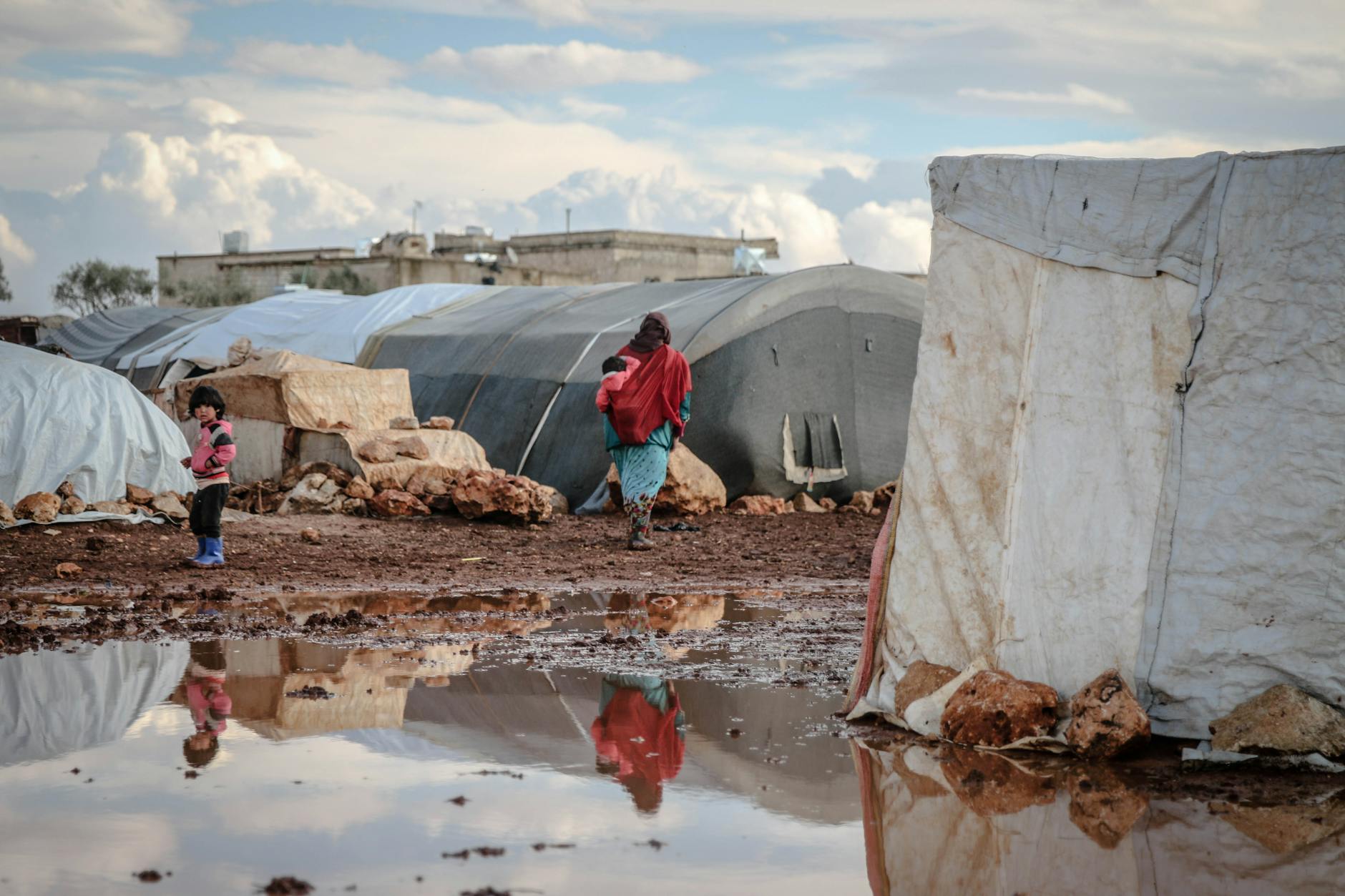
International Migrants Day is marked each year on 18 December, inviting us to pause and really see the people behind the word “migrant”. It was established by the United Nations to recognise the millions who live, work, study, and raise families away from the place they first called home, often carrying both hope and grief in the same suitcase. Some move by choice, others by necessity, many by a mixture of both, yet all share the experience of crossing boundaries, visible and invisible.

The day shines a light on the contributions migrants make to societies, economies, cultures, and communities, contributions that are too easily overlooked or reduced to statistics. It also draws attention to the realities many face, exploitation, dangerous journeys, separation from loved ones, and the quiet strain of never fully belonging. At its heart is a call to dignity, fairness, and compassion, reminding us that human rights don’t stop at borders.

International Migrants Day asks more than polite sympathy. It challenges us to listen carefully, to resist fear-driven narratives, and to remember that migration is as old as humanity itself. It’s a moment to recognise shared vulnerability and shared strength, and to choose hospitality over suspicion, solidarity over indifference.

Bible 40 Themes 02 Covenant

Covenant is one of those biblical words that can sound distant, even legalistic, yet at its heart it speaks of relationship, commitment, and promise held steady across time. In Genesis 17, God says to Abram, later named Abraham, I will establish my covenant between me and you and your descendants after you throughout their generations as an everlasting covenant, to be your God and the God of your descendants after you. These words are spoken not into certainty, but into vulnerability. Abram is old, childless by human reckoning, living between promise and fulfilment. Covenant begins there, not with achievement, but with trust.

What’s striking is that the covenant isn’t presented as a contract between equals. Abram doesn’t negotiate terms or offer guarantees. The promise flows one way, grounded in God’s faithfulness rather than human reliability. This is an everlasting covenant, stretching beyond one lifetime, beyond one moment of obedience or failure, binding generations yet unborn into a story of belonging. It reminds us that faith has a long memory and a wide horizon. We inherit promises we didn’t earn, and we live in ways that will shape people we’ll never meet.

Covenant also names identity. To be your God is relational language, intimate and personal, not abstract theology. It speaks of presence, guidance, and care. In a world shaped by transactions, productivity, and conditional acceptance, covenant insists that relationship comes first. We aren’t held by God because we perform well, but because we’re known and named. Abraham’s new name marks that shift, from who he was to who he’s becoming, shaped by promise rather than past limitation.

Yet covenant isn’t passive. Abraham is invited to walk before God faithfully, to live as someone whose future is already spoken for. Covenant creates a way of life rooted in trust, generosity, and hope. It asks us to live now as if the promise is true, even when the evidence feels thin.

In our own lives, covenant can feel fragile. We’re aware of broken promises, fractured relationships, and our own inconsistency. Genesis 17 gently reminds us that the deepest promise does not rest on our steadiness, but on God’s. The covenant holds when we waver, stretches across time, and quietly insists that grace will have the final word.

Bible Reference: Genesis 17

Critique Power, Not People

Jews around the world are not responsible for the actions of the Israeli Government, just as people of any faith or ethnicity aren’t accountable for the decisions of a state that claims to act in their name. Judaism is a diverse global religion and culture, not a single political position, and Jewish communities hold a wide range of views about Israel, its leadership, and its policies.

To conflate Jewish identity with the actions of one government is both inaccurate and unjust, and it risks fuelling antisemitism by treating a whole people as a monolith. Political criticism, however strong or necessary, should be directed at those in power and at specific policies, not at ordinary people who share neither responsibility nor control. Upholding this distinction matters, because justice depends on fairness, clarity, and the refusal to blame the many for the choices of the few.

It isn’t antisemitic to criticise the Israeli government or its policies, just as it isn’t prejudiced to challenge any other state’s actions, provided the focus remains on decisions, laws, and leaders rather than on a people or a faith. Antisemitism targets Jews because they are Jews, while legitimate political criticism questions power and policy, and confusing the two silences necessary debate while doing nothing to protect Jewish communities from real hatred.

Holding this line clearly and carefully allows moral scrutiny without collective blame, solidarity without erasure, and disagreement without dehumanisation, so that our arguments aim towards dignity, safety, and peace for all. May that be our hope and our practice. Shalom.

Not Evil, Just Honest

Many consider the lyrics of Black Sabbath to be dark and sinister. In fact, nothing could be further from the truth. Beneath the heavy riffs and haunting vocals lies a band deeply concerned with the world’s injustices, the fragility of the human soul, and the dangers of unchecked power. Rather than glorifying evil, Black Sabbath often turned a critical eye on it: warning, questioning, and mourning rather than celebrating destruction.

Take War Pigs for example, often mistaken for a violent anthem, when in reality it’s a scathing critique of warmongers who send others to die in their place. The band pulls no punches in exposing the hypocrisy and cruelty of those in charge. Similarly, Children of the Grave isn’t a doom-laden chant, it’s a passionate plea for peace, calling on the younger generation to stand against hatred and build a better future. That doesn’t sound like a celebration of darkness; it sounds like a cry for light.

Even songs that touch on the supernatural or the occult often do so to explore fear, manipulation, and the unseen battles of the mind. Black Sabbath, the self-titled track, plays like a horror story, but it’s rooted in bassist Geezer Butler’s real experience of spiritual terror and questioning. These weren’t just theatrics; they were ways of giving shape to the anxieties and moral questions that many people wrestle with in a turbulent world.

Ozzy Osbourne’s delivery, haunting, plaintive, and raw, did more to convey human vulnerability than menace. His voice wasn’t that of a villain, but of someone looking around at a broken world and asking why it had to be that way.

Of course, the band’s image and sound were deliberately provocative. They wanted to grab attention, to jolt people out of complacency. But the heart of Black Sabbath wasn’t found in evil, it was in the warning, the lament, and the hope that maybe things didn’t have to stay this way. For all the thunder and gloom, their message was surprisingly human. And deeply compassionate.