An Era Defining Speech

Click on image for photo credit.

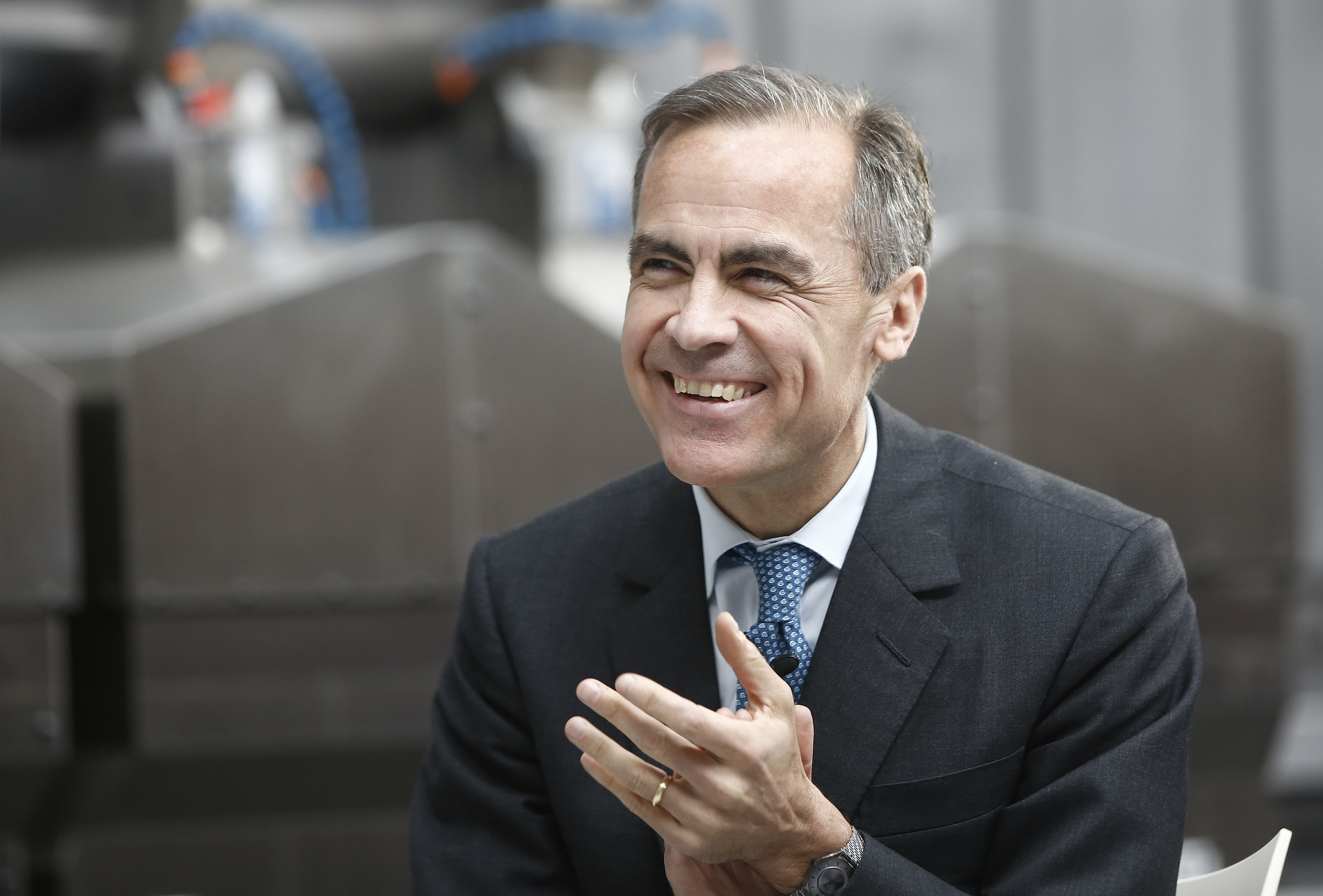
Mark Carney’s Davos speech argues that the familiar story of a stable, rules-based international order has broken down, replaced by an era of intensified great power rivalry where economic interdependence is increasingly used as a tool of coercion. He warns that middle powers can no longer rely on comforting fictions, symbolic commitments, or inherited institutions for protection, and instead must adopt honesty about the world as it is. Drawing on Václav Havel’s idea of “living in truth”, he challenges countries and companies to stop performing compliance with systems they know are failing, and to act consistently with their stated values.

Carney proposes a path he calls values-based realism, combining principled commitment to sovereignty, human rights, and the rule of law with pragmatic engagement across a fragmented world. He argues that strategic autonomy is necessary, but that isolated national fortresses would leave everyone poorer and less secure. Instead, middle powers should cooperate through flexible coalitions, shared standards, and collective investment in resilience, creating practical alternatives to weakened global institutions.

He presents Canada as an example of this approach, outlining domestic reforms to strengthen economic capacity, major investments in defence, infrastructure, energy, AI, and critical minerals, and a deliberate strategy of diversifying international partnerships across regions and issues. Through variable coalitions on security, trade, technology, and climate, Canada seeks to increase its influence without subordination to any hegemon.

Carney’s core message is that middle powers still have agency. By naming reality, strengthening themselves at home, and acting together with integrity, they can help build a more honest, cooperative, and just international order rather than retreating into fear or nostalgia.

When Faith Loses Integrity

The Book of Hosea offers one of scripture’s most searching critiques of what happens when faith becomes entangled with power, identity, and national pride. It speaks into any age where devotion to God is claimed loudly, yet trust quietly shifts towards political strength, cultural dominance, and the comfort of belonging to the “right” side of history. Hosea’s burden is not that the people of Israel stopped being religious, but that their religion had become distorted, busy with ritual yet hollowed out by misplaced loyalties.

Again and again, the prophet exposes the danger of claiming God’s authority for structures God has not ordained. They set up kings without my consent; they choose princes without my approval (Hosea 8:4) is a devastating spiritual diagnosis, not simply a political observation. It confronts the instinct to baptise human systems with divine approval, to assume that national success, military strength, or political dominance must surely reflect God’s favour. Hosea insists that such confidence is a form of unfaithfulness, even when it wears religious clothing.

What makes this prophecy so piercing is its emotional honesty. The critique is not cold or detached. God’s voice through Hosea is full of anguish and longing, not triumphalism. How can I give you up, Ephraim? How can I hand you over, Israel? (Hosea 11:8) reveals a heart broken by the distance between what faith is meant to be and what it has become. This is not the language of contempt, but of wounded love.

Hosea calls the people back to a faith rooted in trust, justice, mercy, and humility rather than in power or identity. That call remains timeless. Whenever Christianity is used to defend control rather than compassion, to protect privilege rather than pursue righteousness, Hosea’s voice still speaks. It invites honest self-examination, gentle repentance, and a return to the God who desires steadfast love more than sacrifice, and faithfulness more than any display of religious certainty.

What to leave behind?

New Year’s Eve has a particular stillness to it, a threshold moment where we pause with one foot in the familiar and the other hovering over what’s yet to come. It’s tempting to treat this night as a hard reset, as if everything behind us must be swept away to make room for something new. But wisdom rarely lives in extremes. It invites us to look back with honesty and tenderness, to notice what has shaped us, and to choose carefully what we carry forward.

Some things deserve to be packed gently for the journey ahead. Habits that have rooted us, relationships that have deepened us, moments of courage we didn’t know we had until they were asked of us. These are not accidental successes, they’re signs of growth, grace, and quiet perseverance. Carrying them forward isn’t clinging to the past, it’s honouring what has helped us become more fully ourselves.

And then there are the things it’s time to release. Old grudges that have grown heavy, patterns of thinking that shrink our hope, voices, including our own, that tell us we’re not enough. Letting go isn’t failure. It’s an act of trust, a decision to stop giving our energy to what no longer brings life.

As the year turns, we’re not asked to reinvent ourselves overnight. We’re invited to travel lighter, wiser, and more attentive. To keep what serves love, justice, and kindness, and to lay down what doesn’t. In that gentle discernment, we make space for God to meet us again, not as strangers to the future, but as people ready to step into it with intention and hope.

Reducing Stress at Christmas

Christmas carries a strange mix of light and weight. The lights sparkle, the music drifts through shops, and yet the pressure quietly builds. Expectations pile up, family dynamics resurface, money feels tighter, and the calendar fills faster than it ever should. Reducing stress at Christmas begins by noticing that much of it comes not from the season itself, but from what we think it ought to be.

One gentle step is permission, permission to simplify. Not every tradition needs to be honoured every year, not every invitation needs a yes, and not every table needs to look like a magazine spread. Choosing fewer things and doing them with care can be deeply freeing. Rest is not laziness at Christmas, it’s wisdom.

It also helps to ground yourself in small, ordinary moments. A quiet walk in cold air, a mug warming your hands, a familiar song played just for you. These pauses remind the nervous system that it’s safe to slow down. Breathing more deeply, even for a minute, can interrupt the rush and bring you back into your body.

Connection matters too, but it doesn’t have to be perfect. Honest conversations, lowered expectations, and a bit of humour can soften tense edges. If grief or loneliness surfaces, let it be acknowledged rather than pushed away. Christmas doesn’t erase hard feelings, it sits alongside them.

Finally, remember that the season passes. The world doesn’t hinge on one meal, one gift, or one day. Kindness to yourself, as much as to others, is perhaps the most meaningful Christmas practice of all.

Ad-Free Site

adfreebanner

There’s so much advertising on the Internet that, at times, it can become very distracting and intrusive. To reduce the amount that can overwhelm, I personally use an ad-blocker in my browser, which gives me a generally ad-free experience – but that’s a whole new discussion for another post.

You may have seen the above logo (or similar) on my blog, it appears in the left-hand column a little way down. By using this icon on my website I’m stating that I’m opposed to the use of corporate advertising on blogs and that I feel the use of corporate advertising on blogs devalues the medium; Similarly, I don’t accept money (or goods in kind) in return for anything I publish.

You will never see advertising on this site because I’m opposed to widespread advertising impacting every aspect of our existence; therefore, I’m drawing a line around this ‘personal’ space (deeming it inappropriate for advertising).

What I write is 100% my choice, and I will always seek to be as open and honest as I can. Be assured that my endorsement of anything (whether it’s a product, a book, a piece of art, an idea) comes directly from me and is not influenced by any outside person or organisation.

This is a helpful quote with which to conclude: If we, as a society, lose our voice completely, and corporations start doing all the talking, then we’ll be utterly lost. To some degree, this has already happened. Our ability to envision a future collectively has already been severely compromised. Kalle Lasn

Note: If you appreciate my varied posts, you might like to donate (click on link) towards my running costs. You can choose a one-off payment or a monthly/yearly subscription. Thanks, John.