Covenant is one of those biblical words that can sound distant, even legalistic, yet at its heart it speaks of relationship, commitment, and promise held steady across time. In Genesis 17, God says to Abram, later named Abraham, I will establish my covenant between me and you and your descendants after you throughout their generations as an everlasting covenant, to be your God and the God of your descendants after you. These words are spoken not into certainty, but into vulnerability. Abram is old, childless by human reckoning, living between promise and fulfilment. Covenant begins there, not with achievement, but with trust.
What’s striking is that the covenant isn’t presented as a contract between equals. Abram doesn’t negotiate terms or offer guarantees. The promise flows one way, grounded in God’s faithfulness rather than human reliability. This is an everlasting covenant, stretching beyond one lifetime, beyond one moment of obedience or failure, binding generations yet unborn into a story of belonging. It reminds us that faith has a long memory and a wide horizon. We inherit promises we didn’t earn, and we live in ways that will shape people we’ll never meet.
Covenant also names identity. To be your God is relational language, intimate and personal, not abstract theology. It speaks of presence, guidance, and care. In a world shaped by transactions, productivity, and conditional acceptance, covenant insists that relationship comes first. We aren’t held by God because we perform well, but because we’re known and named. Abraham’s new name marks that shift, from who he was to who he’s becoming, shaped by promise rather than past limitation.
Yet covenant isn’t passive. Abraham is invited to walk before God faithfully, to live as someone whose future is already spoken for. Covenant creates a way of life rooted in trust, generosity, and hope. It asks us to live now as if the promise is true, even when the evidence feels thin.
In our own lives, covenant can feel fragile. We’re aware of broken promises, fractured relationships, and our own inconsistency. Genesis 17 gently reminds us that the deepest promise does not rest on our steadiness, but on God’s. The covenant holds when we waver, stretches across time, and quietly insists that grace will have the final word.
Jews around the world are not responsible for the actions of the Israeli Government, just as people of any faith or ethnicity aren’t accountable for the decisions of a state that claims to act in their name. Judaism is a diverse global religion and culture, not a single political position, and Jewish communities hold a wide range of views about Israel, its leadership, and its policies.
To conflate Jewish identity with the actions of one government is both inaccurate and unjust, and it risks fuelling antisemitism by treating a whole people as a monolith. Political criticism, however strong or necessary, should be directed at those in power and at specific policies, not at ordinary people who share neither responsibility nor control. Upholding this distinction matters, because justice depends on fairness, clarity, and the refusal to blame the many for the choices of the few.
It isn’t antisemitic to criticise the Israeli government or its policies, just as it isn’t prejudiced to challenge any other state’s actions, provided the focus remains on decisions, laws, and leaders rather than on a people or a faith. Antisemitism targets Jews because they are Jews, while legitimate political criticism questions power and policy, and confusing the two silences necessary debate while doing nothing to protect Jewish communities from real hatred.
Holding this line clearly and carefully allows moral scrutiny without collective blame, solidarity without erasure, and disagreement without dehumanisation, so that our arguments aim towards dignity, safety, and peace for all. May that be our hope and our practice. Shalom.
Today, 15 December in 2025, Jews around the world gather to celebrate the first day of Hanukkah, a festival rich in memory, meaning, and light. As winter deepens and days feel short and fragile, Hanukkah arrives as a quiet but resilient act of hope. It recalls a moment when faith was threatened by oppression and conformity, and when a small community chose courage, identity, and trust over fear.
At the heart of Hanukkah is the lighting of the menorah, one candle on the first night, growing steadily brighter as each evening passes. It’s a gentle ritual, yet deeply powerful, reminding those who take part that light doesn’t need to be overwhelming to be transformative. Even a single flame can push back darkness, can offer warmth, can be seen from a window and shared with the world outside.
The festival remembers the rededication of the Temple in Jerusalem and the story of the oil that should have lasted one day but burned for eight. Whether heard as history, tradition, or sacred story, it speaks of endurance beyond expectation, of provision where none seemed possible. It invites reflection on what it means to stay faithful when resources are thin and the odds feel stacked against you.
Hanukkah is also a time of joy, family, food, song, and storytelling. Children play games, gifts are exchanged, and tables are filled with foods fried in oil, celebrating abundance in the midst of scarcity. In a fractured world, Hanukkah offers a steady, luminous reminder that identity matters, hope endures, and light, patiently tended, can still change everything.
Note: The date of Hanukkah changes each year because it follows the Jewish calendar rather than the Gregorian calendar used by most of the world. The Jewish calendar is lunisolar, shaped by both the moon and the sun. Months begin with the new moon and last 29 or 30 days. Hanukkah always starts on the 25th day of the Hebrew month of Kislev, but because the Jewish year doesn’t match the length of the solar year, the festival shifts when mapped onto the Gregorian calendar. To keep festivals in their proper seasons, the Jewish calendar occasionally adds an extra month. This prevents celebrations from drifting through the year, but the exact Gregorian date still varies, usually falling in late November or December. So while Hanukkah’s timing is fixed within Jewish tradition, it appears to move each year on modern calendars, reflecting an ancient, carefully balanced way of marking time.
At Christmas, the difference between happiness and joy comes into sharper focus. The season itself is often wrapped in happiness, familiar songs, warm lights, shared meals, laughter, and moments of comfort and nostalgia. This kind of happiness is good and gift-like, but it’s also fragile. It depends on things lining up, relationships feeling easy, finances holding steady, and the ache of loss staying quietly in the background. When those things don’t fall into place, Christmas happiness can feel thin, or even painful.
Christian joy tells a deeper story. The joy of Christmas isn’t rooted in perfect circumstances but in the astonishing claim that God chose to draw near, not in power or certainty, but in vulnerability. The birth of Jesus doesn’t arrive in a calm, well-ordered world. It comes amid fear, displacement, political oppression, and ordinary human anxiety. That matters, because it means joy isn’t the denial of darkness, it’s light entering it.
Joy, in this sense, is a steady confidence that God is with us, not just when the table is full and the house is warm, but when the heart feels heavy or the season stirs grief as much as gratitude. It allows space for sorrow without surrendering hope. It says that love has taken flesh and pitched its tent among us, and that nothing, not loss, not uncertainty, not brokenness, has the final word.
St Lucy’s Day, celebrated on 13 December, sits quietly in the heart of Advent, carrying a gentle promise of light in the year’s darkest days. Lucy’s name comes from lux, meaning “light”, and over the centuries she’s become a symbol of hope that refuses to be extinguished, even when nights feel long and heavy. She was a young Christian woman from Syracuse in the fourth century, remembered for her courage, her generosity to the poor, and her refusal to let fear define her choices. The stories about her mix history and legend, yet they all circle around this conviction that light belongs to God and can’t be taken away.
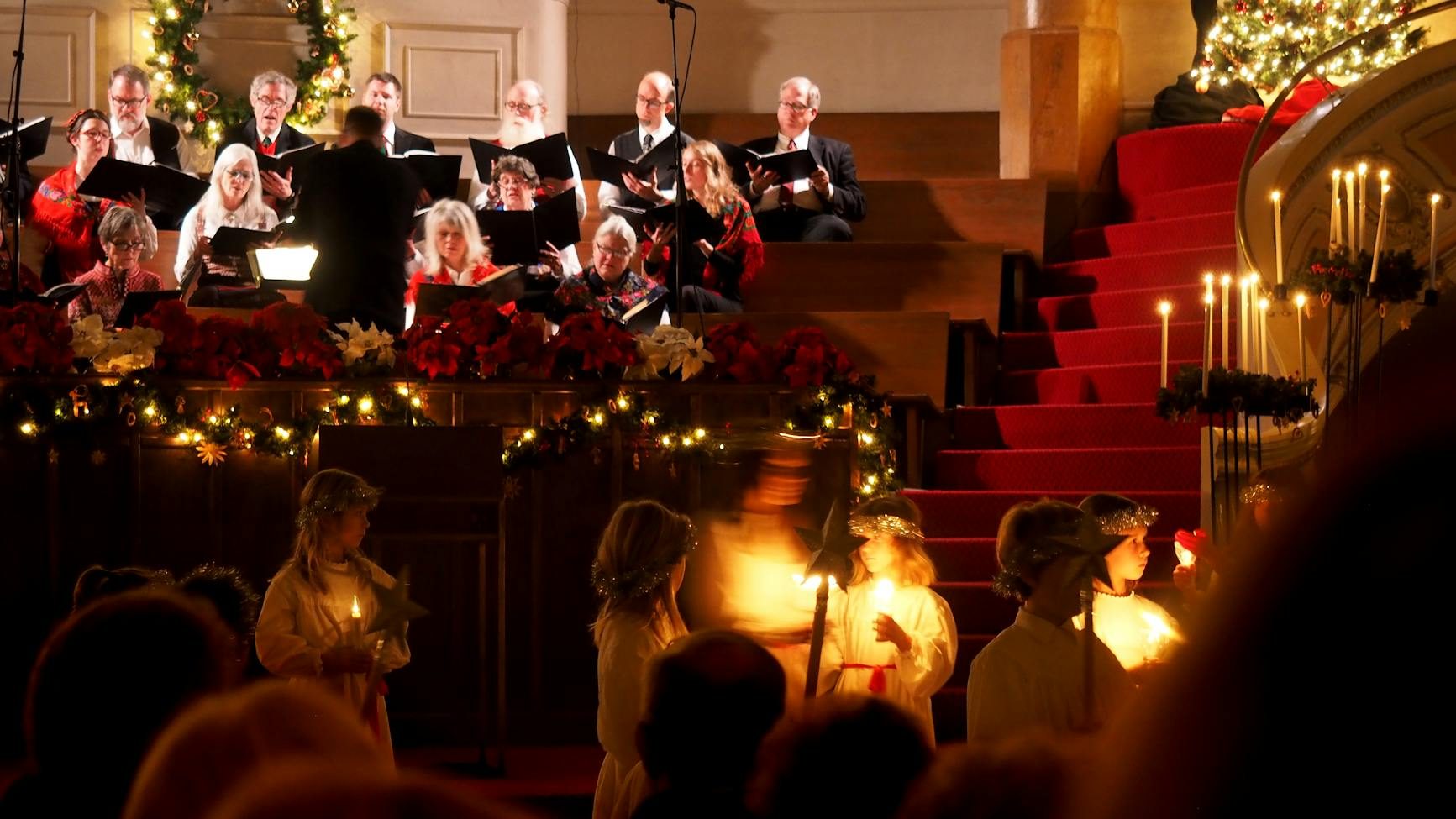
In Scandinavia the day has a luminous beauty all of its own. A girl dressed as Lucy wears a white robe and a crown of candles, moving through the early morning darkness while songs about light and peace are sung. It’s a simple ritual, yet it feels profoundly human, capturing that ache we all recognise: the longing for warmth, clarity, and kindness to break into the cold shadows of winter. Even without the candles and processions, the day invites a moment of quiet reflection, reminding us that small acts of courage and compassion shine far further than we imagine.
St Lucy’s Day whispers that light isn’t a spectacle, and it isn’t fragile. It’s something we carry, something we share, something that grows whenever we choose generosity over indifference, truth over convenience, or hope over cynicism. In the middle of December, it’s a gentle reassurance that dawn always comes.
Lewis Hamilton finished his first season with Ferrari in 2025 calling it a “nightmare” and the worst year of his Formula 1 career. For the first time in 19 seasons he failed to score a podium, and the emotional toll was clear as he spoke of anger, exhaustion, and a desire to disconnect completely over the winter. The move to Ferrari had begun with huge optimism, pairing the sport’s most successful driver with its most iconic team in pursuit of an eighth world title, but that promise quickly faded.
Ferrari’s car proved difficult and inconsistent, particularly due to skid wear problems that forced performance-limiting compromises. Although Hamilton won a sprint race in China, repeated technical issues and strategic limitations undermined race pace across the season. He struggled more than team-mate Charles Leclerc, who consistently out-qualified him and finished 86 points ahead, leading to unusually self-critical public comments from Hamilton. Team principal Frederic Vasseur downplayed these remarks as emotional reactions in an exceptionally tight field.
Ferrari’s first winless season since 2021 intensified scrutiny, and chairman John Elkann urged the drivers to focus more on driving and less on public commentary. Despite his frustrations, Hamilton insists he remains motivated, believing the sweeping rule changes coming in 2026 could reset the competitive order. Whether his struggles reflect car characteristics, team issues, or the effects of age remains uncertain, but his attempt to rebound next season is set to be one of F1’s defining stories.
The Third Sunday of Advent carries a note of joy, yet it isn’t the shallow cheer of tinsel and glitter. Advent joy is something deeper, born not of circumstance but of promise. The prophet Isaiah cries out, The desert and the parched land will be glad; the wilderness will rejoice and blossom. Joy bursts forth in unlikely places, just as it did when Mary, a young woman in Nazareth, received the angel’s word and sang of God’s faithfulness. This joy doesn’t deny sorrow or struggle; it wells up within them, a sign that God’s kingdom is near.
Paul, writing to the Philippians, urges: Rejoice in the Lord always. I will say it again: Rejoice! These words weren’t penned in ease but from prison. His joy didn’t rest on freedom or comfort but on the presence of Christ who was with him even there. Advent joy, then, isn’t about waiting for everything to be perfect before we rejoice. It’s about recognising the nearness of the Lord in the middle of imperfection, trusting that even in barrenness, God makes new life blossom.
John the Baptist, still in the wilderness, points beyond himself: Among you stands one you do not know. Even in his stark call to repentance, there is joy, because the Messiah is close at hand. Advent joy invites us to look for Christ’s presence in unexpected faces, in moments of kindness, in the whisper of the Spirit that meets us in our waiting.
This Sunday, a rose-coloured candle can be lit, softening the season’s sombreness with the warmth of joy. Its flame reminds us that joy is not naïve optimism but fierce hope – hope that God keeps his promises, hope that light breaks into darkness, hope that love will have the last word.
As we move closer to Bethlehem, may joy find us not only in carols and candles, but in the small, hidden ways Christ is at work. May it take root in us, steady and unshaken, so that even in a weary world we may rejoice, and our lives may shine with the gladness of the one who comes.
The 2025 album landscape reveals a rich tapestry of introspection, experimentation, and emotional exploration. Across genres, artists are mining vulnerability, resilience, and identity, whether through the ethereal electropop of Alison Goldfrapp’s Flux, the intimate reflections of Blood Orange’s Essex Honey, or Cat Burns’ raw personal journey in How to Be Human.
Many works engage with themes of grief, loss, and self-discovery, as seen in Dijon’s Baby, Olivia Dean’s The Art of Loving, and Skunk Anansie’s The Painful Truth, often balancing emotional depth with creative sonic approaches. Others channel rebellion, empowerment, and catharsis, such as ALT BLK ERA’s genre-bending Rave Immortal, Heartworms’ Glutton for Punishment, and Wet Leg’s playful Moisturiser.
Several albums emphasise memory, nostalgia, and the passage of time, from Ludovico Einaudi’s reflective The Summer Portraits to Ichiko Aoba’s luminous folk textures in Luminescent Creatures, while conceptual works like Steven Wilson’s The Overview and Christian Fiesel’s Dusk at Dawn explore cosmic and cinematic narratives, connecting human experience to broader existential or fantastical frameworks. Also included in my favourites of 2025 are ambient albums by Cousin Silas collaborating with Kevin Buckland and Substak.
Live albums from Nick Cave, BEAT, David Gilmour, and Pink Floyd highlight performance, reinterpretation, and the enduring power of musical dialogue. Experimental, ambient, and avant-pop approaches, exemplified by Brian Eno & Beatie Wolfe, Stereolab, and FKA Twigs, demonstrate an ongoing fascination with sound, texture, and immersive atmospheres.
Overall, these favourite albums reveal a 2025 musical zeitgeist defined by introspection, emotional honesty, and sonic adventurousness, blending personal and universal narratives, celebrating human resilience, and pushing the boundaries of genre, form, and expression. The year’s music feels simultaneously intimate and expansive, reflective and experimental, offering both solace and provocation in equal measure.
Flux (Alison Goldfrapp) blends lush, ethereal electropop with some of her most vulnerable lyrical writing yet, featuring shimmering production from collaborators like Richard X and Stefan Storm on this, her second solo album.
Rave Immortal (ALT BLK ERA) is a fierce, genre-bending record fusing punk, rave, and hip-hop energy to confront themes of identity, rage, and resilience, channelling raw emotion into anthemic, rebellious tracks that celebrate empowerment and defiance.
Live (BEAT – Adrian Belew, Tony Levin, Steve Vai & Danny Carey) is a live document of their reinterpretation of King Crimson’s 1980s-era material, conveying both devotion to the originals and the energy & spontaneity of a modern performance. It features extended versions of songs from Discipline, Beat, and Three of a Perfect Pair, weaving in improvisational moments and dynamic interplay.
Metalhorse (Billy Nomates) combines elements of synth-pop, punk, blues, folk, and electro around a concept of a crumbling funfair, exploring loss, insecurity, resilience, and life’s unpredictable ups and downs.
Essex Honey (Blood Orange) is a reflective and intimate record by Devonté Hynes exploring grief, memory, and home. It’s grounded in his Essex upbringing and stitched together with his signature genre-blur. It blends dreamy sonic textures, subtle guest appearances, and a deeply personal emotional core.
Lateral, Liminal, and Luminal (Brian Eno & Beatie Wolfe) unfold as a triptych of sound and thought, blending ambient experimentation with poetic reflection on human consciousness and the planet’s fragility, weaving a meditative dialogue between technology, ecology, and empathy.
How to Be Human (Cat Burns) finds her peeling back layers of grief, self-doubt and resilience. It’s a deeply personal journey of navigating loss and identity, yet ultimately offering comfort in our shared existence of being human.
We Are Love (The Charlatans) is a warm, reflective album that explores tenderness, resilience, and the ways love quietly holds a life together. Its songs move through nostalgia, hope, struggle, and renewal, offering a gentle affirmation that connection remains the one thing that endures.
Dusk at Dawn (Christian Fiesel) offers a musical retelling of the themes of 2001: A Space Odyssey, drawing inspiration from Kubrick’s film and Arthur C. Clarke’s screenplay. Find it on Bandcamp.
Waiting for Winter (Cousin Silas & Kevin Buckland) is a collaborative ambient album released on Bandcamp, featuring atmospheric soundscapes and minimal classical textures evocative of cinematic winter landscapes. Find it on Bandcamp.
Silent Hour (Cousin Silas & Substak) creates a spacious ambient journey where gentle drones and subtle rhythms evoke stillness and nocturnal calm, drawing the listener into a meditative, dreamlike state. Find it on Bandcamp.
The Luck and Strange Concerts (David Gilmour) is a live album capturing performances from his Luck and Strange tour, blending tracks from his recent solo work with iconic Pink Floyd songs into a sweeping live retrospective of his career. It showcases Gilmour’s emotive guitar work and vocals across 23 live tracks, drawing on concerts from 2024 and released in multiple formats with rich audio and video options.
Baby (Dijon) is a deeply personal, experimental R&B album that explores the chaos, ecstasy, and anxiety of new fatherhood and the messy emotional landscape of domestic life through fractured, genre-bending production and deeply felt vocals. It’s an often raw, sometimes unsettling journey that uses glitchy electronics, warped rhythms, and intimate songwriting to reflect on love, fear, lineage, and the overwhelming experience of becoming a parent.
Play (Ed Sheeran) captures his instinct for storytelling through melody, moving between carefree joy and quieter confession, with songs that centre on connection and everyday emotion wrapped in instantly familiar hooks.
EUSEXUA (FKA Twigs) delves into sensuality, self-discovery, and the complexities of desire, blending intimate vulnerability with empowered expression through experimental, immersive music that weaves ethereal textures with bold, confrontational moments.
Everybody Scream (Florence + the Machine) explores the fierce alchemy of physical vulnerability, emotional upheaval and spiritual reclamation, wrapped in mythic imagery and ritualistic sound. With echoes of witchcraft, survival and rebirth, it’s a bold statement of power and fragility entwined.
The Human Fear (Franz Ferdinand) wrestles with anxiety, vulnerability, and the strange beauty of collective experience, turning personal unease into something communal and cathartic, where sharp riffs and wry lyricism coalesce into a powerful whole.
Glutton for Punishment (Heartworms) is a debut studio album that delves into the psychology of self-inflicted pain and emotional resilience, blending dark, gothic energy with danceable post-punk and alternative rhythms to explore conflict, obsession, and catharsis. The record juxtaposes raw introspection and narrative storytelling across a blend of propulsive beats and atmospheric textures, presenting a bold artistic identity that balances vulnerability with fierce sonic ambition.
Luminescent Creatures (Ichiko Aoba) drifts like a half-remembered dream, bathing the listener in softly glowing folk textures that explore fragility, memory, and the quiet holiness of the natural world. Aoba moves with her usual tenderness, letting voice and guitar shimmer at the edges of silence, creating an atmosphere where vulnerability feels luminous rather than exposed.
Son of Glen (Jakko M. Jakszyk) is a deeply personal and reflective album exploring family, memory, and identity through prog-rock sophistication and lyrical intimacy, balancing intricate musicianship with emotional storytelling.
Curious Ruminant (Jethro Tull) spans nine tracks from intimate folk-rock to a 16-minute suite, showcasing Ian Anderson’s flute and leadership alongside long-time members and new guitarist Jack Clark in a mix of reflective lyricism and expansive instrumentals.
From the Pyre (The Last Dinner Party) is a character‑driven, myth‑steeped baroque pop and art‑rock album that explores mythic emotional extremes and elemental storytelling through vivid imagery and dramatic narratives. It binds a suite of personal yet allegorical tales around the symbolic concept of the pyre (a place of destruction, regeneration, passion, and fire) with a darker, earthier tone than their debut, blending theatricality with raw emotional depth.
The Summer Portraits (Ludovico Einaudi) captures fleeting warmth and gentle nostalgia through delicate piano and orchestral textures, each piece feeling like a memory preserved in sunlight, reflecting on time, transience, and quiet beauty.
Critical Thinking (Manic Street Preachers) channels the band’s trademark intensity into reflections on truth, ideology, and the noise of modern discourse, balancing intellectual bite with emotional depth while questioning conviction and compassion in a fractured world.
Tall Tales (Mark Pritchard & Thom Yorke) emerged during the COVID-19 lockdowns through remote collaboration, using vintage synths, experimental textures, and Yorke’s haunting vocals to explore dystopian themes of alienation, disconnection, and the uneasy effects of progress.
The Bad Fire (Mogwai) confronts recent personal challenges, including Barry Burns’ daughter’s illness, while delivering the band’s signature mix of brooding atmospherics, expansive crescendos, and moments of luminous melody.
Live God (Nick Cave & The Bad Seeds) is a live double‑album capturing the intense, transcendent energy of their Wild God Tour across Europe, the UK, and North America, blending powerful performances of new material with reimagined classics. The album stands as a testament to the band’s emotional and spiritual breadth onstage, showcasing both the gravity and joy of Cave’s towering catalogue in a visceral live setting.
The Art of Loving (Olivia Dean) moves through the complexities of intimacy, heartbreak, and self-discovery with warmth and clarity, balancing soulful vulnerability with confident joy in songs that feel both deeply personal and universally resonant.
Live at Pompeii MCMLXXII (Pink Floyd 2025 Mix) offers a freshly remixed and remastered take on the band’s iconic 1971 live performance in Pompeii, mixed by Steven Wilson with 11 tracks, alternate takes, and bonus material presented in spatial audio and vinyl.
Wish You Were Here 50 (Pink Floyd) revisits the band’s classic album Wish You Were Here with a deluxe 50th Anniversary box set that honours the original themes of absence, alienation and creative struggle while uncovering rare studio demos, alternate versions and live recordings. This edition re‑contextualises the 1975 music with restored audio, a new Dolby Atmos mix and previously unreleased material, offering fans both nostalgia and fresh insights into one of rock’s most beloved albums.
More (Pulp) marks the band’s first album in 24 years, bringing together core members Jarvis Cocker, Candida Doyle, Nick Banks, and Mark Webber for a lush art-pop sound rich with reflective, witty lyricism and sophisticated arrangements.
Saving Grace (Robert Plant with Suzi Dian) is steeped in quiet reflection, weaving themes of longing, resilience, and weathered spirituality into a folk-rooted sound that feels both earthy and ethereal, carrying a sense of intimacy and pilgrimage.
The Painful Truth (Skunk Anansie) is a bold, emotionally raw comeback album that confronts personal struggles, mortality, and creative identity with fearless honesty.
MAD! (Sparks) showcases the Mael brothers’ inventive blend of art rock and synth-pop, filled with sharp songwriting, energetic experimentation, and characteristic wit, accompanied by an EP aptly titled MADDER!
Instant Holograms on Metal Film (Stereolab) feels like a dreamy, retro-futuristic return. Weaving together their classic motorik grooves, warm synth textures, and political lyrical reflections, while also sounding freshly alive. It’s an album about memory, utopia, and the strange currents of the present, rendered in their timeless avant-pop style.
The Overview (Steven Wilson) is a sprawling, cosmic concept album that explores the transformative “overview effect” astronauts experience when seeing Earth from space, blending progressive, space, and psychedelic rock into two long, evolving musical suites. The record weaves existential reflection with narratives of humanity’s beauty and fragility, returning Wilson to expansive prog‑rock territory while pushing his sound forward in richly detailed compositions.
Moisturiser (Wet Leg) revels in playful irreverence, mixing cheeky humour, catchy hooks, and witty observations on modern life into a carefree, mischievous celebration of fun and youthful rebellion.
The Clearing (Wolf Alice) explores introspection, transformation, and emotional turbulence through a sound that shifts between delicate vulnerability and cathartic intensity, balancing personal reflection with broader social resonance.
So, there you are, 40 great albums. Unfortunately, I can’t bring myself to choose an overall favourite, they’re all good. Enjoy!
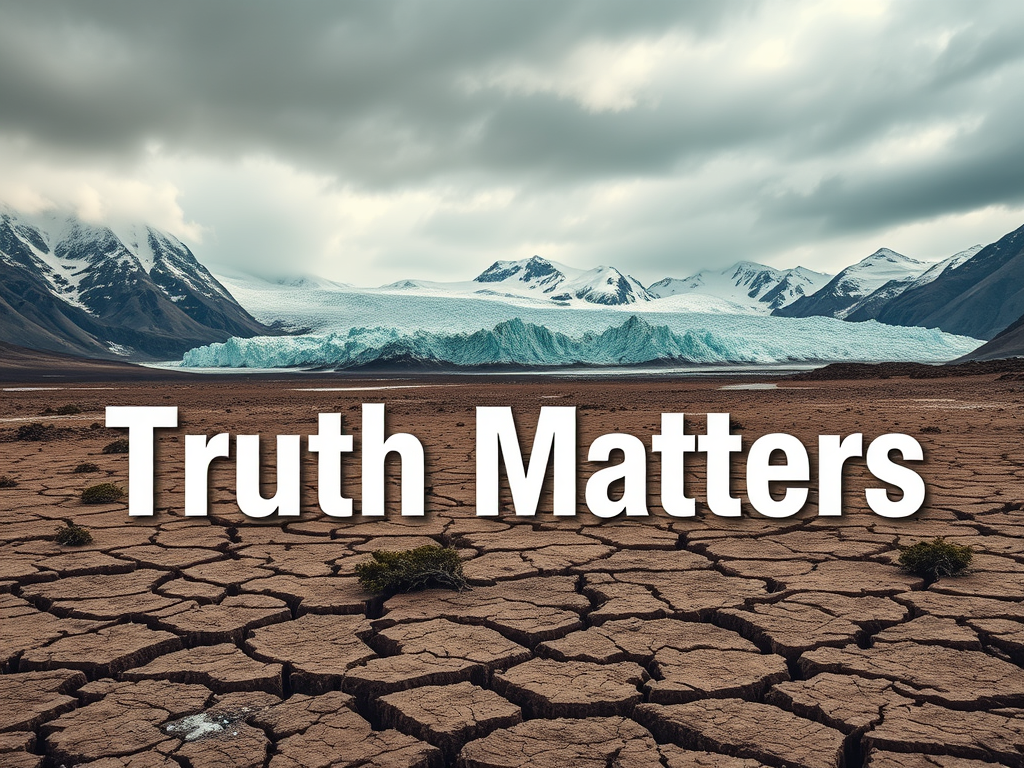
There’s a quiet but deeply troubling shift when official US government websites remove or rewrite scientific information about global warming. When the causes of climate change are presented as though they arise only from natural cycles, and when references to fossil fuels, rising emissions, or well-established impacts are deleted, something essential is lost. Science depends on clarity, transparency, and the willingness to face evidence even when it’s uncomfortable. When public institutions obscure that evidence, they weaken the trust people place in them and leave citizens less equipped to understand the world they live in.
These changes don’t alter the reality of global warming, but they make it harder for people to see the full picture. Without honest information, communities struggle to prepare for floods, heatwaves, and rising seas. Farmers, planners, schools, and local councils rely on accurate data to make decisions that shape people’s lives. Removing or downplaying that information doesn’t protect anyone; it simply masks the scale of the challenge.
There’s also a deeper danger here. When governments deny or distort science, they encourage a culture where facts become optional and evidence is treated as an inconvenience. That’s how societies drift downhill into ignorance. Once we start believing that inconvenient truths can be edited away, we create space for misinformation, mistrust, and division. Scientific understanding is one of humanity’s greatest achievements, a hard-won gift passed down through generations of curiosity and courage. To tamper with it for political comfort is to erode that gift.
We all deserve better, and the planet certainly does.
A carol service is an unconditional celebration of the love of God at Christmas; it’s a moment when music, scripture, and the soft glow of hope gather us into something far bigger than ourselves. I should know, because I’ve been organising them for years, although not in retirement. Those occasions always felt like an embrace. People arrived carrying the weight of the year, and somehow the familiar melodies, the gentle readings, and the story of a child born into vulnerability softened us all. There was no agenda except love, no priority except welcome, and no message except the astonishing truth that light still breaks into the world.
That’s why carol services must never be used for political purposes. They aren’t a platform to stir culture wars, promote nationalism, or draw battle lines between “us” and “them”. The moment you do that, the music stops being a gift and becomes a tool, and something holy is lost. Christmas speaks of peace on earth, goodwill to all, and that means everyone: neighbour, stranger, sceptic, seeker, and the person who disagrees with us completely.
A carol service is at its best when it gathers people without judgement, reminding us that divine love isn’t territorial, possessive, or partisan. It’s generous, surprising, and endlessly welcoming – and we honour it most when we let it stay that way.







 John Ager's Home on the Web!