Wynyard Woodland Country Park

Wynyard Woodland Park occupies land that was once part of the nineteenth-century Clarence Railway, a line built to transport coal from the Durham coalfields to the River Tees. The railway served the industrial development of the region for many decades, passing through what is now Thorpe Thewles. When the line closed in the twentieth century, the trackbed and surrounding land were left unused until local authorities identified the opportunity to convert the disused route into a public green space.

The redevelopment created a linear park that follows the former railway corridor. New pathways, cycle routes, and planted woodlands were introduced, allowing visitors to move through the landscape along the old line. The former station house at Thorpe Thewles was restored and adapted to include visitor facilities, a small museum covering the history of the railway, and a café. As the site matured, the woodland areas developed greater ecological value, supporting a range of wildlife and providing a mix of open and shaded spaces for recreation.

Wynyard Woodland parkrun forms part of the park’s present-day use. Held every Saturday morning, it follows sections of the former railway route and attracts local runners, walkers, and volunteers. The event highlights how the park has shifted from an industrial transport corridor to a community-focused recreational area.

Today Wynyard Woodland Park serves as a practical example of how former industrial land can be repurposed for public benefit. Its combination of historical features, accessible paths, and expanding natural habitats makes it a valued local space for exercise, education, and outdoor leisure.

St Nicholas Day

St Nicholas Day, celebrated on 6 December, carries a gentle kind of magic that flows through many European traditions. It honours St Nicholas of Myra, a fourth-century bishop remembered for kindness that wasn’t loud or self-promoting, but steady, courageous, and rooted in compassion. One of the best-known stories tells of him secretly providing dowries for three young women by slipping bags of gold through their window at night. It’s a small, vivid moment that grew into a lasting symbol of generosity given quietly, without any desire for thanks.

In many countries, children still place shoes by the door on the evening of 5 December, hoping to wake to fruit, sweets, or small gifts. The simplicity of it makes the joy feel even richer. Rather than the grand spectacle that later surrounded Santa Claus, the spirit here feels gentler, more grounded in community, more like a whisper in the winter darkness reminding us to look out for one another.

What I love about St Nicholas Day is how it nudges us toward thoughtful generosity: the kind that starts with noticing who might need a blessing, then offering it without fanfare. It reminds us that giving doesn’t have to be big to be transformative. Sometimes the smallest gesture, offered in love, becomes the spark that warms an entire season.

When Small Lives Matter

The ethics of using live animals, however small or easily overlooked, in programmes like ITV’s I’m a Celebrity is worth examining with care. The idea that living creatures can be used as props for entertainment sits uneasily once it’s named aloud, because it challenges the assumption that their lives are too insignificant to matter. When insects, worms, fish, or reptiles are tipped into tanks, poured over contestants, or handled purely for shock value, the show quietly reinforces the belief that the distress of smaller, weaker beings is inconsequential.

Contestants volunteer for these trials, but the animals don’t. They’re exposed to loud environments, constant handling, rapid movement, and extreme stress, and in some cases they’re killed outright. Even if the creatures aren’t endangered, even if the individual harm seems small, the issue isn’t simply about scale. It’s about the habits we form as a society. Normalising the idea that a life, any life, can be treated roughly for entertainment nudges us towards a thinner, less generous form of compassion.

The question becomes whether the spectacle genuinely requires the suffering of living beings, and whether the temporary thrill for viewers is a fair trade for the stress and harm inflicted. An entertainment format can be bold, messy, and playful without using animals as disposable objects. Thinking this through doesn’t diminish the fun; it simply asks the industry, and all of us, to imagine forms of entertainment that don’t rely on causing distress to creatures that can’t consent and can’t escape.

Advent Peace Breaks In

The second Sunday of Advent turns our gaze toward peace, though not a fragile or shallow peace that simply papers over conflict. Advent peace is rooted in the promises of God, a peace that holds steady even when the world shakes. Isaiah envisioned a day when swords would be beaten into ploughshares and nations would no longer train for war. This isn’t just wishful thinking; it’s the vision of God’s kingdom breaking into our fractured world. Advent dares us to believe that such peace is possible, and it begins in the heart of those who wait for Christ.

John the Baptist steps into this season with a startling voice, calling from the wilderness: “Prepare the way for the Lord, make straight paths for him.” His message isn’t comfortable, but it is necessary. The peace of Christ doesn’t come by avoiding hard truths; it comes as we open ourselves to repentance, to turning away from the habits and fears that keep us captive. The wilderness, with its stark silence and uncluttered horizon, reminds us that peace grows where we make room for God to act.

Advent peace doesn’t ignore pain or deny the violence of our age. It looks straight at them and still proclaims that Christ is coming. Jesus said to his disciples, “Peace I leave with you; my peace I give you. I do not give to you as the world gives.” His peace isn’t tied to circumstances or politics; it flows from his presence, steady and unshaken.

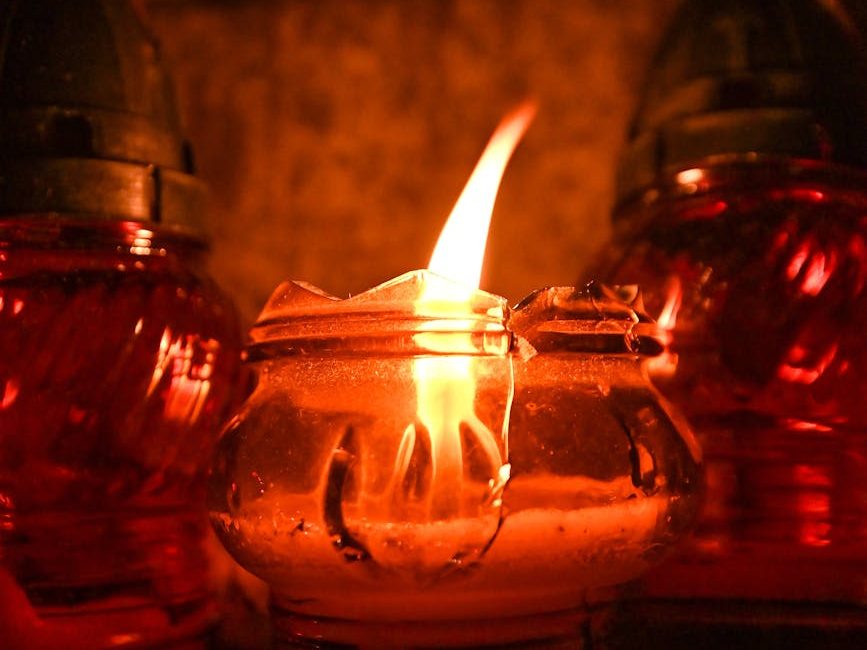
And so the candle of peace is lit this week, not as a decoration but as a declaration. It flickers against the shadows, reminding us that even the smallest light is stronger than the darkest night. Each act of reconciliation, each word of forgiveness, each quiet moment of prayer becomes part of God’s peace breaking into the world.

Advent peace doesn’t wait for everything to be settled before it arrives. It comes quietly, like a child in a manger, and yet it carries the weight of heaven’s promise. As we prepare the way, may our restless hearts be stilled, and may we live as signs of that kingdom where justice and mercy kiss, and peace holds us fast.

Breaking the Silence on Brexit

Sir Keir Starmer’s signal that the government will step up its criticism of Brexit feels like the beginning of a gentle but necessary reckoning; a moment when the country is finally invited to name the truth that’s been sitting heavily on us for years. So many promises were made in 2016, and so many of them were built on sand: claims about billions for the NHS, effortless trade deals, frictionless borders, and a world queueing up to prioritise Britain. Those lies shaped expectations, stirred emotions, and pushed people towards a path that hasn’t delivered the renewal or control they were told to expect. Now, with a quieter honesty, the government seems ready to acknowledge that Brexit hasn’t offered the stability or prosperity once promised.

By placing renewed emphasis on repairing relations with Brussels, Labour isn’t trying to reopen old divisions; it’s acting out of pragmatic realism. Closer cooperation with our nearest neighbours offers smoother trade, stronger supply chains, and a steadier economic climate. It also draws a clear contrast with Reform UK’s politics of resentment and retreat.

Hopefully, Labour can offer something steadier: the belief that partnership, shared standards, and respectful dialogue are acts of responsibility, not surrender. Many people who voted Leave weren’t gullible or unthinking; they were hopeful. They wanted a fairer deal, more security, and a sense that life might open up rather than narrow down. When those hopes haven’t been met, people are willing to listen again, as long as they’re met with honesty.

There’s something restorative in this shift, because it gently invites us to stop pretending. We can admit that we’re tired, that isolation hasn’t served us well, and that healing begins with truth. If the government speaks plainly, avoids the lure of easy slogans, and offers a hopeful, cooperative path forward, it may help the country breathe again.

International Volunteer Day

International Volunteer Day on 5 December is a wonderful chance to celebrate everyone who gives their time and energy to help others. If you already volunteer, please know this: you make an enormous difference. Whether you’re cheering at events, supporting neighbours, protecting the environment, or helping in local groups, your kindness makes communities warmer and stronger. Thank you for showing up; it matters more than you might realise.

It’s also a great moment to invite those who haven’t tried volunteering yet. You don’t need special skills or loads of free time; you just need a willingness to help. Volunteering isn’t only about giving; it’s about gaining friendships, confidence, purpose, and joy. Ask any volunteer and they’ll tell you that you might be surprised by how much it gives back.

So this International Volunteer Day, let’s celebrate the amazing people who are already making a difference, and gently encourage others to join in. Your community needs your gifts, your time, and your heart. And who knows? You might discover that volunteering is exactly what you’ve been looking for.

What is a Supermoon?

A supermoon is one of those small celestial gifts that invites you to pause, look up, and remember how closely we’re tied to the rhythms of creation. It isn’t a different kind of moon, although it certainly looks that way.

A supermoon happens when the full moon occurs at the same time the moon is at, or very near, the point in its elliptical orbit that brings it closest to Earth. This point is called perigee, and because the moon is several thousand miles nearer than usual, it appears larger to the eye and slightly brighter, with a softer, more luminous glow that seems to rest gently on the landscape.

The effect is subtle rather than dramatic. You won’t see the moon looming over rooftops like something from a film poster, yet you may notice that it feels fuller, more present, and somehow more compelling. People often describe supermoons as stirring something emotional, perhaps because light has a way of reaching more than our eyes. The moon’s pull shapes the tides, the habits of wildlife, and the way we tell stories. When it appears a little closer, those connections feel closer too.

Supermoons have become moments when communities gather. Photographers wait for that quiet instant when the rising moon sits on the horizon, and runners, night hikers, and families step outdoors simply to enjoy the sight. It’s a reminder that the heavens aren’t distant or indifferent, they’re part of the same world that holds us, and sometimes they shine a little brighter to make sure we notice.

Lifting the two-child benefit cap

Lifting the two-child benefit cap is often painted as indulgent and unfair, yet it carries clear social and economic advantages that ripple far beyond individual families. It recognises that children aren’t responsible for the circumstances they’re born into, and that society’s strength is measured by how we treat its most vulnerable.

Removing the cap helps prevent families from slipping into deep poverty; it gives parents room to breathe, make wiser choices, and build a more stable home. When families aren’t constantly fighting scarcity, children thrive: better nutrition, better school attendance, and a calmer emotional climate. Those outcomes echo into adulthood, breaking patterns of hardship rather than entrenching them.

Economically, it’s a long-term investment. Child poverty costs the UK billions every year in lost potential, higher health needs, and greater strain on public services. Supporting families early reduces those pressures. And it restores a principle that many feel had been eroded: benefits should meet actual need, not punish family size.

The Danger of Lazy Thinking

Trust in politicians may be at an all-time low; yet there’s a quieter, and in many ways deeper, threat to democracy in the way feelings and opinions are so often allowed to overshadow facts and expert insight. When that happens, public conversation becomes blurred, as if clarity itself has slipped out of reach. Confident claims start to carry the same weight as careful evidence, and the people who shout the loudest begin to drown out those who’ve spent years studying the issues that shape our common life.

It’s easy to see why this happens. Facts can feel slow, demanding, or inconvenient, while opinions offer something quicker and simpler, a shortcut that seems to spare us the effort of wrestling with complexity. Yet democracy rests on the willingness of ordinary people to stop, listen, and think with generosity and humility. Experts aren’t flawless, but their work – tested, challenged, and refined – gives us the best chance of understanding the world as it really is, rather than as we wish it to be.

If we want a healthier public square, we need to nurture a spirit of curiosity. That means reading beyond the surface, noticing where information comes from, and speaking with people who see things differently without slipping into suspicion or scorn. It asks us to value substance over spectacle, patience over instant certainty, and truth over the comfort of hearing only what we want to hear. Democracy grows stronger when we choose that slower, braver path: the one that leads us back to honesty, compassion, and shared responsibility.

Why is Socialism feared?

The negative portrayal of socialism has deep roots, and it isn’t really about the ideas themselves so much as the stories that have been told about them.

For more than a century, powerful interests have framed socialism as something to be feared, often because it challenges the concentration of wealth and asks hard questions about fairness, community, and economic justice. During the Cold War those fears hardened; western governments, media, and cultural institutions painted anything associated with collective provision as a slippery slope towards authoritarianism. That legacy still lingers, long after the geopolitical context has changed.

There’s also a tendency in public debate to flatten socialism into its worst historical examples. Instead of seeing it as a broad tradition with democratic, ethical, and community-centred strands, people often hear the word and think immediately of failed states or heavy-handed regimes. It’s easier to caricature than to explore nuance, and outrage always travels further than careful explanation.

At the same time modern politics rewards simple binaries. Calls for stronger public services, fair wages, or shared responsibility get bundled together as “socialism”, then dismissed as unrealistic or dangerous, even though many of these ideas already sit quietly at the heart of everyday life: the NHS, public libraries, state education, and the principle that no one should be left behind.

In truth socialism is portrayed pejoratively because it threatens comfortable assumptions. It asks us to look again at how we live together, who benefits, and who’s forgotten, inviting a conversation about compassion, community, and the common good.