10 Tips for Top Sleep

Firstly, let me say I’m not an expert on sleep, although I’ve read widely about it and written about The Need for Sleep on this site.

Here are tips I’ve found helpful and I try to apply them whenever possible. Although I don’t always get it right, especially with three young children.

  1. Stick to a specific sleep schedule, try to settle down and wake up at the same time each day. Remembering that a lie-in at weekends won’t make up for and lack of sleep during the working week, and might well make it harder to get up on Monday morning.
  2. Try to avoid caffeine, alcohol and nicotine too near to bedtime as these can be detrimental to good sleep. The latter two are not a problem for me as I’m teetotal and don’t smoke, but caffeine can be. I don’t usually drink coffee after 12 noon (2.00 pm at the latest) although I still drink tea, and so to reduce my caffeine intake before bed I’ll often drink decaffeinated tea. Another option is herbal tea, which I try to drink at least once a day, usually with a teaspoon of acacia honey to sweeten.
  3. It’s often tempting to eat late into the evening, but this isn’t always a good idea. I’m also at an age when my bladder can wake me up in the night, so I try to balance the need to be hydrated with my overall fluid intake.
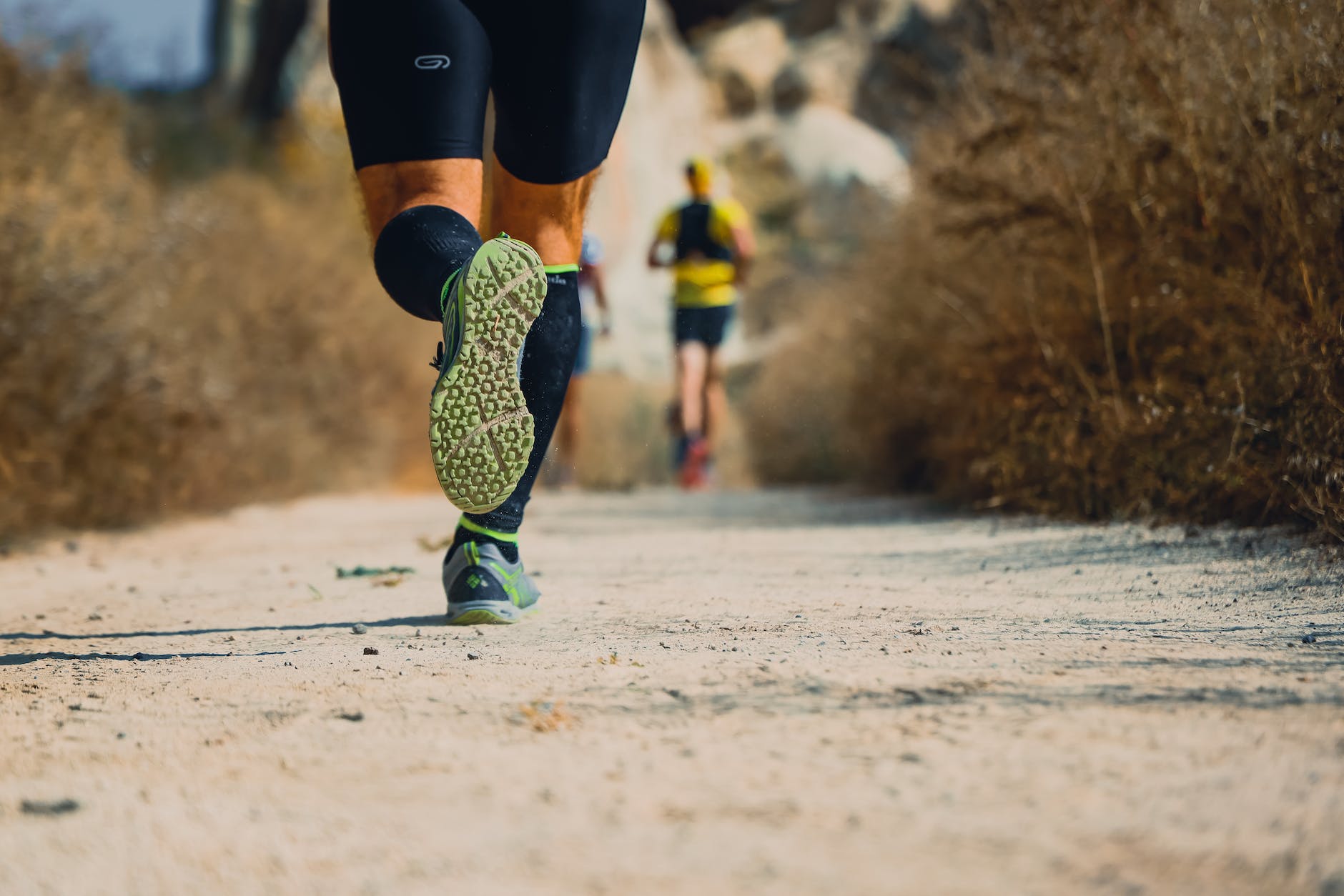
  4. Exercise is good, but not too near bedtime. We all know that exercise is beneficial for our overall health and wellbeing, but it’s better done earlier in the day.
  5. Naps are good and can help to make up for lost sleep, but it’s best not to take these after the middle of the afternoon as these can then make it harder to fall asleep at night.
  6. Make sure you unwind before bed if possible, schedule it into your daily routine. Reading or listening to music can be helpful ways to relax.
  7. Avoid screen time before bed and, if possible, keep smartphones and tablets out of the bedroom. You can also use a blue filter to reduce the detrimental effect of screen light while winding down to sleep. Many devices and operating systems now have these built-in, or there are apps you can use. You can also turn the brightness down.
  8. A hot bath is good for helping you to relax and unwind, but also the lowing of body temperature that occurs after a bath helps you to become sleepy.
  9. Make sure your bedroom is dark and cool, and get rid of anything that might distract you. If it’s not completely dark you could try an eye mask.
  10. This last tip depends on you as an individual and may vary in different circumstances. If you can’t sleep, do you get up or simply lay resting? I usually apply the rule that if not sleeping is making me anxious it’s probably better to get up for a while before returning to bed, otherwise I stay put. But always avoid the temptation to check your smartphone.

Finally, in all of this don’t forget the old adage, that an hour of sleep before midnight is worth two after midnight. Sleep well.

Remembering the Holocaust

Sadly, hatred of ‘others’ is very often in the open these days, with much more just under the thin veneer of civilized society. It’s not enough to simply ‘never forget’ the events of the Holocaust, all forms of discrimination and hatred must be actively resisted. The Holocaust happened (and can happen again) when good people turn a blind eye to everyday hatred.

First they came for the Communists,
And I did not speak out
Because I was not a Communist.
Then they came for the Socialists,
And I did not speak out
Because I was not a Socialist.
Then they came for the trade unionists,
And I did not speak out
Because I was not a trade unionist.
Then they came for the Jews,
And I did not speak out
Because I was not a Jew.
Then they came for me,
And there was no one left
To speak out for me.
Martin Niemöller

The Holocaust didn’t begin in the gas chambers, it began with words of hate, because words matter. So, as we pause and remember, we need to reflect on how easy it is to dehumanise people and exclude them because they are different from us; maybe because of their colour or culture, their faith or politics, their gender or sexual orientation etc.

As well as remembering the evils of the past, we should commit to affirming all people, valuing everyone as part of the rich tapestry of humankind, and loving them as they are and for who they are.

Slaying Imaginary Dragons

1280px-st_george_and_dragon_philly

It seems to me there’s an element in the English psyche that needs an enemy to fight, a dragon for St George (a foreigner by the way) to slay; an element that harks back to the Second World War and an imagined golden age. In the absence of a current aggressor, that role has been taken for many years by the European Union, which the United Kingdom voted to leave in 2016 by a narrow majority in a divisive referendum.

The benefits of EU membership have never really been promoted, and often lies about the EU have been perpetuated that have established themselves in our national identity. For decades politicians have also been content to blame their failures on the EU because it’s been politically expedient for them to do so.

We dubiously lift ourselves up by putting others down, insulting the Germans (for example), and hating others rather than working together for the common good, even if we hurt ourselves in the process. The latter is especially so in the possible no-deal Brexit scenario, as this would have catastrophic consequences for the UK.

For some who voted Brexit, the ‘enemy’ is now those who voted to remain in the EU, often referred to as ‘traitors’ and ‘enemies of the people’. This attitude is unhelpful and dangerous as it opens the way for far-right extremists to gain influence and power, history reminding us this never ends well.

Somehow, our nation needs to unite and find the best way forward, but I’m not sure how this can happen, and I’m concerned about the country I love.

Speaking Generally

William Booth statue

I’m grateful to my friend Stephen Poxon (author and writer) for contributing this guest post about William Booth. You can find his books here.

William Booth: Founder of The Salvation Army, Christian evangelist, reformer, friend of royalty, champion of the marginalised, wit, entrepreneur, and master of the soundbite.

So far, so good, but we must remember that Booth was preaching his message and espousing his spiritual and moral philosophy before any of the advantages of modern communications technology could be exploited. His was an era of voice projection and oratory that went largely unaided except by, maybe, primitive devices for amplification.

All the more remarkable, therefore, is the fact that so many of William Booth’s quotations have survived into the present age. Granted, many were recorded by stenographers and biographers, but General Booth’s feat is still special, especially as much of his (prophetic?) wisdom retains a fresh touch.

Such as, for example, his utterance that there might come a time when the fires of scorching faith that burned within his bones would somehow become

“Religion without the Holy Ghost, Christianity without Christ, forgiveness without repentance, salvation without regeneration, politics without God, heaven without hell”.

Forgive the pun, but this is hot stuff; not for the faint-hearted (but then, faint-heartedness was a concept Booth never understood).

Was the old man right, though?

Take a look around. See for yourself a market-place swarming with pseudo-Christian philosophies (touchy-feely-feel-good mantras of consolation paraded in the name of some churches) and you might concede, he made a reasonable point! Denominations, I mean, that sometimes appear not to know their convictions from their desperate strivings to be ultra-relevant, and which, consequently (inevitably) dilute their ancient mandate to the point of it being nothing in particular and of little use to anyone.

And as for the penultimate utterance in Booth’s list of concerns, who can forget Alastair Campbell’s famous interruption of Tony Blair, reminding the then Prime Minister that “We don’t do God”?

How about this absolute corker:

“Don’t instil, or allow anybody else to instil into the hearts of your girls the idea that marriage is the chief end of life. If you do, don’t be surprised if they get engaged to the first empty, useless fool they come across.”

He wasn’t holding back, was he! Anyone voicing such opinions nowadays would be faced with any number of charges before they could say political correctness. Yet, allowing the dust to settle, we might just find ourselves agreeing with the outspoken warrior, albeit only grudgingly, on behalf of our children and grandchildren. Is it even possible we might only, eventually, accuse him of speaking downright common sense?

Try this one: “The greatness of the man’s power is the measure of his surrender”.

Notwithstanding the gender bias of the statement, how much does a contemporary age rail against notions of surrender, obedience, deference or conformity; in civil and legal matters, relationships, education, religion, societal structures, international political diplomacy, and the workplace (and so on)? Are we, can we honestly claim, the better for such prevailing tendencies and the tacit approval of creeping anarchy in the name of entitlement?

Read. Ponder. Agree. Disagree.

Security for Facebook

My observation of comments on Facebook (and other social media sites) suggests that there is considerable confusion between cloning and hacking.

Cloning does NOT involve someone getting into your account, so your password isn’t compromised. Hacking (on the other hand) DOES mean that someone has gained unauthorised access to your account, and you will need to regain control and change your password.

So, cloning a Facebook account is NOT hacking; it’s when someone copies your personal details and tricks your friends and others into thinking it’s you. It can happen because your security settings allow the public to see your friends list. Cloning can’t be prevented, but it’s less likely if you set the visibility of your friends list to [Friends only].

You can prevent hacking (when your account IS compromised) by setting up two-step verification; this simply involves a verification code being sent to a previously nominated mobile phone when there’s a login attempt from any new browser or device. This way, you are alerted to someone attempting to hack your account before it happens and can deal with it.

Two-step verification is widely available for many apps and websites.

People often complain about Facebook (and rightly so sometimes), but the tools needed to limit cloning or prevent hacking are already available and have been for a considerable time. They take little effort to set up, but may prevent big problems later on.

Spend a few minutes every so often to review your security settings on Facebook and other websites, you know it makes sense.

See also: Spotting Hoaxes and Scams Online

Spotting Hoaxes and Scams Online

I’m sometimes amazed at the things people share on Facebook and other social media sites without first checking their veracity. NO, Facebook doesn’t have a new algorithm that limits the number of friends you see, and NO, your favourite supermarket isn’t going to give £75 to every customer – just STOP and think before sharing.

There’s a fantastic way of checking if something is a hoax or a scam, it’s called Google. If you come across something you think might be a hoax or scam on Facebook or elsewhere, simply Google it and add the word ‘hoax’ or ‘scam’ to the search terms. Always works for me. There’s also a couple of useful sites for checking; namely Snopes and Hoax Slayer, and both have a presence on Facebook.

Fake news is something else altogether, that’s sometimes more difficult to spot; but also watch out for satirical sites before reacting. Think before sharing, if it looks dodgy it probably is. Rant over!

See also: Security for Facebook

The Need for Sleep

Sleeping is the best thing we can do to improve our overall health; it’s so simple that it’s often forgotten or ignored. I’m currently reading an excellent book about why we sleep, and I’ve been surprised at the negative effects lack of sleep can have on our mental and physical health, especially if we are building up a sleep deficit over a long period of time.

We all need both quantity and quality of sleep to function normally in our everyday lives. Unfortunately, there are those who boast about how little sleep they need, and there’s also an implied societal view that sleep is somehow lazy and unproductive; these can be easily demonstrated to be false and unhelpful.

Prolonged lack of sleep weakens your immune system, doubles your risk of cancer, and increases your chances of suffering heart disease and stroke, for example. It also adversely affects your mental health, contributing to anxiety, depression, and suicide. Worryingly, many road traffic accidents are caused by lack of concentration, drowsiness and microsleeps.

Although I’ve been aware of the effects of being sleep deprived for a while, I’m now more determined to do something about it, even if having three young children doesn’t make it easy – but as an older father I owe it to them to be healthy.

See also: 10 Tips for Top Sleep

Ad-Free Site

adfreebanner

There’s so much advertising on the Internet that, at times, it can become very distracting and intrusive. To reduce the amount that can overwhelm, I personally use an ad-blocker in my browser, which gives me a generally ad-free experience – but that’s a whole new discussion for another post.

You may have seen the above logo (or similar) on my blog, it appears in the left-hand column a little way down. By using this icon on my website I’m stating that I’m opposed to the use of corporate advertising on blogs and that I feel the use of corporate advertising on blogs devalues the medium; Similarly, I don’t accept money (or goods in kind) in return for anything I publish.

You will never see advertising on this site because I’m opposed to widespread advertising impacting every aspect of our existence; therefore, I’m drawing a line around this ‘personal’ space (deeming it inappropriate for advertising).

What I write is 100% my choice, and I will always seek to be as open and honest as I can. Be assured that my endorsement of anything (whether it’s a product, a book, a piece of art, an idea) comes directly from me and is not influenced by any outside person or organisation.

This is a helpful quote with which to conclude: If we, as a society, lose our voice completely, and corporations start doing all the talking, then we’ll be utterly lost. To some degree, this has already happened. Our ability to envision a future collectively has already been severely compromised. Kalle Lasn

Note: If you appreciate my varied posts, you might like to donate (click on link) towards my running costs. You can choose a one-off payment or a monthly/yearly subscription. Thanks, John.