Books of Leviticus & Deuteronomy

So far in our journey through the books of the Bible I’ve covered Genesis and Exodus. Genesis reveals God’s purposes, human nature, failure, and hope. It introduces Abraham, through whom God establishes a covenant people. The book concludes with Joseph’s family settling in Egypt, setting the stage for Exodus, which means “departure”. Exodus recounts how God rescues his people from Egypt, leading them through the wilderness for forty years. During this time, he gives them the Ten Commandments, guiding them in their covenant relationship with him.

Following this, Leviticus and Deuteronomy serve as a “team talk” for the Israelites. These books outline how God’s people must live and behave according to their covenant. Their faith was not just about words but actions. Leviticus provides laws for daily life, focusing on right relationships with both God and one another, emphasising the importance of body, mind, and spirit.

Deuteronomy, while containing laws, also records Moses’ speeches, preparing the people for their journey into the Promised Land. The book ends with Moses’ death, just before their entry.

God never intended these laws to be a burden. Instead, they were meant to bring joy, as following his way is a delight. Some are related to a particular time and place, others are timeless. They remind us that true obedience flows from hearts filled with love for a gracious and faithful God.

This is one of a series of posts outlining all the books of the Bible. Previous Next

The Book of Exodus

The Book of Exodus, the second book of the Bible, begins after Genesis, with Joseph’s family settling in Egypt. Initially prosperous, they became a threat to Pharaoh, who enslaved them and subjected them to harsh conditions. In response, God appointed Moses to lead the Israelites out of Egypt.

Moses first attempted to persuade Pharaoh to release the Israelites, but he refused. To demonstrate his power, God sent plagues upon Egypt. After much suffering, Pharaoh relented, only to change his mind and pursue the Israelites. However, God miraculously parted the Red Sea, allowing his people to escape.

During their forty years in the wilderness, God provided for them despite their complaints. Significant events included the giving of the Ten Commandments on Mount Sinai and instructions for constructing the tabernacle, a sacred place of worship. These moments reinforced their identity as God’s covenant people and established a way of life in devotion to him.

I am the LORD your God, who brought you out of Egypt, out of the land of slavery. Exodus 20:2.

Despite witnessing God’s constant presence and provision, the people frequently turned away from him. Their disobedience grieved God, yet he remained faithful, forgiving, and full of grace. The redemption of the Israelites in Exodus serves as a foreshadowing of the ultimate redemption that would later come through Jesus Christ.

This is one of a series of posts outlining all the books of the Bible. Previous Next

The Book of Genesis

Many people set a New Year’s resolution to read the Bible in a year, but without a structured plan it can be a challenging task. Reading the Bible in chronological order can be helpful, as it presents events in sequence and avoids duplication found in traditional formats.

This post focuses on the Book of Genesis, which means “beginnings” or “origins”. It describes God’s creation of the universe and his desire for fellowship with humankind. The opening chapters are poetic rather than scientific, and are not incompatible with modern understanding. Genesis explores themes of God’s purposes, human nature, failure, and hope. It portrays how people turn away from God, yet he continually seeks to restore the relationship.

A key theme in Genesis is God’s covenant with Abraham, calling him and his descendants to be his people and fulfil his purposes. Genesis 17:7 highlights this covenant, in which God promises to be the God of Abraham and his descendants for generations to come. This covenant sets the stage for the biblical narrative, culminating in the coming of Jesus Christ.

The story of Abraham’s family unfolds with vivid imagery, covering moments of joy, sorrow, love, and conflict. Eventually, Abraham’s descendants find themselves in Egypt, with Joseph rising to a position of great authority as second-in-command to the Pharaoh.

Genesis is a book of encouragement and hope, reminding us that despite dark times, God has a plan. Regardless of how insignificant or unworthy we may feel, God’s love remains steadfast, and he has a purpose for everyone. Though sin separates us from God, Genesis foreshadows the way back.

This is the first of a series of posts outlining all the books of the Bible. Next

Why is February shorter?

Have you ever wondered why February is the shortest month? OK, maybe not, but I’m going to tell you anyway!

The problem (because that’s what it was) originates from the fact that all calendars were once lunar, and the number of lunar months does not equal the solar year. Additionally, the solar year is not exactly 365 days, and this simply compounds the problem. That’s why we add an extra day occasionally to keep the calendar in line with our annual journey around the Sun.

The problem with February goes back to the Romans, and what have they ever done for us? They used a lunar calendar, but thought it would be a good idea if winter didn’t have months. eventually (around 713 BCE) they added two months (January and February) to the end of the year, because they considered the year started with the spring equinox in March.

There was still a problem for many centuries though, because there was all sorts of tinkering for all sorts of reasons. Julius Caesar eventually initiated calendar reform creating the Julian calendar, but even then there were still problems. The months now had either thirty one or thirty days, but the year was slightly too long. They resolved this by removing one day from February and returning it once every four years.

Having more or less solved the problem, they started counting leap years every three years and messed everything up again. Emperor Augustus corrected the issue, and all was well again – until it was decided to name a month after him. Now his month (I’ll leave you to work out which one) had one less day than the one honouring Julius Caesar (you can work it out), and that was out of the question.

So, what did they do? They took another day off poor February and added it to August, obviously! Hence, February has only twenty eight days, except in a leap year. There just remained a little adjustment to the months after August, so as to avoid having three consecutive months with thirty one days.

Note: Many centuries later, most of the world moved to the Gregorian calendar, but that’s another story.

The Power of the Beatitudes

Years ago, you might have seen the Beatitudes embroidered and framed. Unfortunately, this could so easily rob them of their radical, prophetic, and subversive power, being regarded as twee and restrained rather than powerful and revolutionary.

The Beatitudes challenge conventional wisdom by reversing societal values: the weak are strong, the humble are exalted, and suffering leads to divine blessing. They encourage believers to reflect Christ’s character and embrace a countercultural way of living. These teachings provide comfort and assurance, affirming that God’s kingdom operates on different principles than worldly systems, offering hope to the marginalized.

As a blueprint for Christian ethics, the Beatitudes influence theology, spirituality, and social movements. They call believers to embody love, justice, and humility, shaping both personal conduct and community interactions. Found in Matthew 5:3–12 and partially in Luke 6:20–23, they express core Christian teachings, revealing the qualities of a life blessed by God. Each Beatitude presents a paradox, contrasting worldly values with God’s ideals. The term “beatitude” comes from the Latin beatus, meaning “blessed” or “happy.”

More than moral instructions, the Beatitudes declare divine favour on those who embody humility, mercy, and righteousness. In Jesus’ time, they challenged traditional views on power and success, urging trust in God, solidarity with the suffering, and a pursuit of justice. Christians are called to be pure of heart and endure persecution for righteousness.

The Beatitudes reveal God’s nature and kingdom, holding believers accountable, as seen in the parable of the sheep and goats in Matthew 25, where judgment depends on how we treat the poor. Jesus himself exemplified them, living in spiritual poverty and meeting people’s needs, as seen in Matthew 15. Charles Spurgeon noted that true meekness withstands persecution, just as Christ did on the cross.

One thing is framing them in homes, quite another is framing them within the home of our hearts.

Ultimately, the Beatitudes encapsulate discipleship, teaching that true fulfillment lies in humility and mercy. By embracing their paradoxes, we align with Christ’s values, living out God’s kingdom now and into the future.

The Call to Discipleship

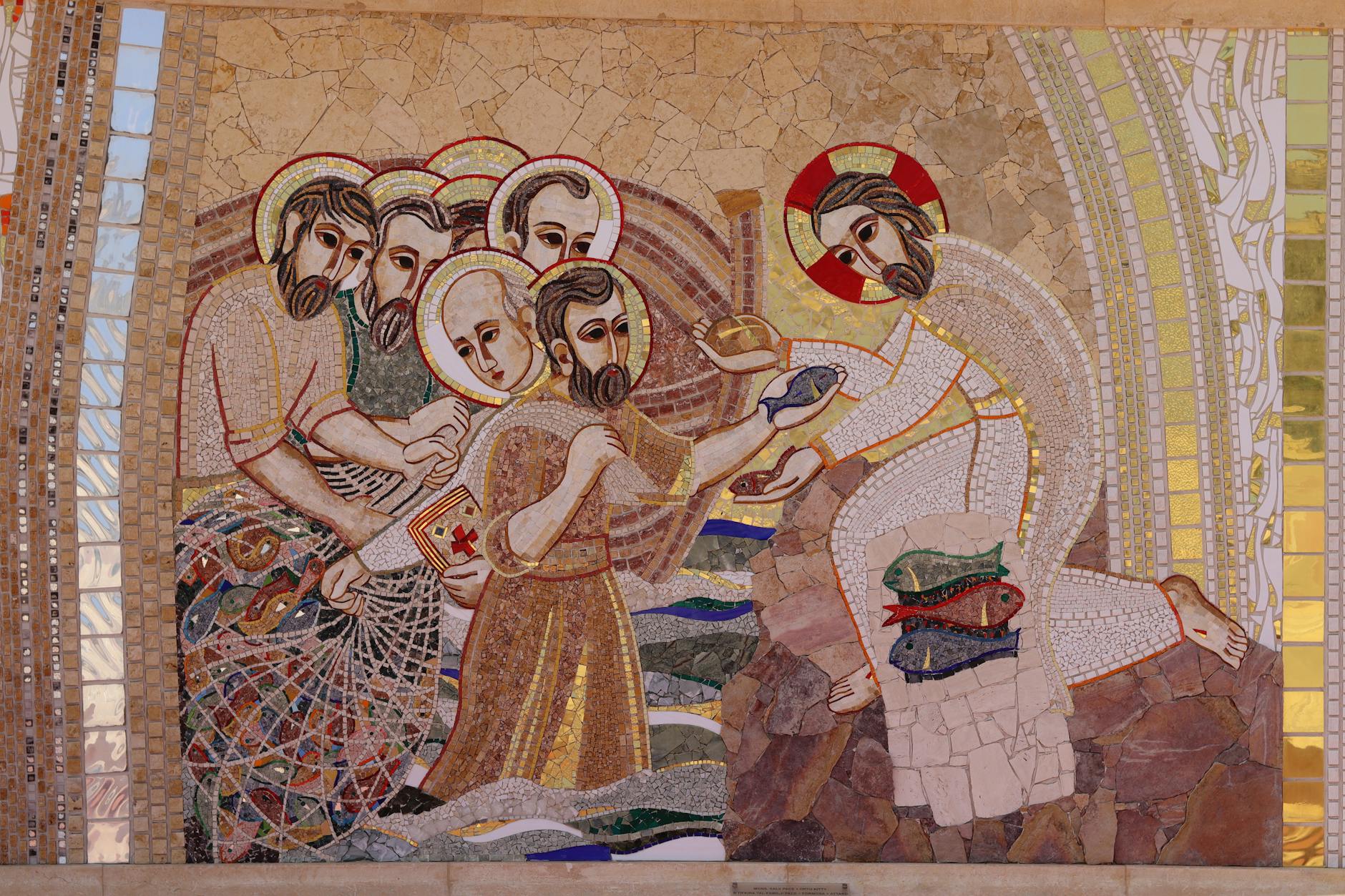
Luke 5:1-11 recounts a significant event in the ministry of Jesus, where he calls his first disciples. It’s rich in symbolism and demonstrates Jesus’ authority, the power of faith, and the transformative nature of following him.

The scene begins with Jesus standing by the Lake of Gennesaret (the Sea of Galilee), surrounded by a crowd eager to hear the word of God. To better address them, Jesus steps into a boat belonging to Simon Peter and asks him to put out a little from the shore. From there, Jesus instructs the people. After finishing his discourse, He turns to Simon and instructs him to “put out into deep water and let down the nets for a catch.” Simon, a seasoned fisherman, responds with a mixture of reluctance and respect. He explains that they’d toiled all night without catching anything, yet he agrees to Jesus’ request, saying, “But because you say so, I will let down the nets.”

This act of obedience, despite his doubts, is pivotal. When they follow Jesus’ instruction, they catch such an enormous number of fish that their nets begin to break. They signal to their partners in another boat to come and help, and both boats are so filled that they begin to sink. This miraculous catch overwhelms Simon Peter, who falls at Jesus’ knees and exclaims, “Go away from me, Lord; I am a sinful man!” His reaction reflects a profound awareness of Jesus’ divine authority and his own unworthiness. Similarly, James and John, Simon’s partners, are astonished. Jesus, however, reassures Simon, saying, “Don’t be afraid; from now on you will fish for people.” This statement marks the beginning of their new mission, to spread the Gospel and bring people into the Kingdom of God.

The passage concludes with the disciples bringing their boats to shore, leaving everything behind, and following Jesus. This act of abandonment signifies their complete trust and commitment to him. They transition from being fishermen to becoming “fishers of men,” a metaphor for their future role in gathering souls for Christ.

Our passage highlights several key themes. First, it underscores Jesus’ authority over nature, as demonstrated by the miraculous catch of fish. Second, it illustrates the importance of faith and obedience, even when circumstances seem unfavourable. Simon Peter’s willingness to trust Jesus, despite his initial scepticism, leads to an extraordinary outcome. Third, the passage reveals the transformative power of encountering Jesus. Simon Peter’s recognition of his sinfulness and Jesus’ reassurance pave the way for his new identity and purpose.

Here is a powerful account of Jesus’ call to discipleship. It challenges us to trust in his authority, step out in faith, and embrace the transformative journey of following him. We are also reminded that God often works in ways that surpass human understanding, inviting us to participate in his greater plan.

Celebrating Candlemas

The Christian festival of Candlemas (2nd February) has deep historical and cultural significance. It commemorates the Presentation of Jesus at the Temple found in Luke 2:22-40, where Mary and Joseph took the infant Jesus to the temple in Jerusalem, fulfilling Jewish law.

The name derives from the tradition of blessing and distributing candles during church services. These candles symbolise Jesus as the Light of the World as proclaimed by Simeon in the temple when he recognised Jesus as the Messiah. The practice of lighting and carrying candles in processions became a central aspect of the celebration, signifying spiritual enlightenment and protection against darkness.

Candlemas has its roots in both Christian and pre-Christian traditions. Before Christianity, the Romans celebrated Lupercalia, a festival of purification and fertility. In Celtic traditions, Imbolc, honouring the goddess Brigid, was celebrated around the same time, marking the midpoint between the winter solstice and the spring equinox. When Christianity spread, elements of these older traditions merged with the new religious observances.

In mediaeval Europe, Candlemas was an important date in the agricultural calendar. People believed that the weather on this day could predict the coming of spring. A popular English saying states:

If Candlemas Day be fair and bright,
Winter will have another flight.
If Candlemas Day be dull with rain,
Winter is gone and will not come again.

Different countries and Christian denominations observe Candlemas with unique customs. In the Roman Catholic Church, it remains a significant feast day, with candlelit processions and blessings. In Eastern Orthodox Christianity, the event is known as the Feast of the Meeting of the Lord, often including processions and special hymns.

In Mexico and parts of Latin America, Día de la Candelaria is widely celebrated. Families dress figurines of the baby Jesus in fine clothes and take them to church to be blessed. Traditional foods, such as tamales, are shared in gatherings, continuing the festive spirit from Epiphany.

In England, Candlemas was once a key date for settling debts and rents, much like Quarter Days. It also marked the end of the Christmas season in some traditions, when greenery and nativity scenes were finally taken down. Some churches still follow this practice, extending the Christmas period beyond Twelfth Night.

Though its significance has diminished in modern times, Candlemas remains an important religious and cultural festival. Its themes of light, purification, and hope continue to resonate, making it a poignant moment in the Christian calendar. Whether observed through religious services, traditional weather lore, or community gatherings, Candlemas serves as a reminder of faith, renewal, and the gradual return of longer, brighter days.

Christ’s Manifesto

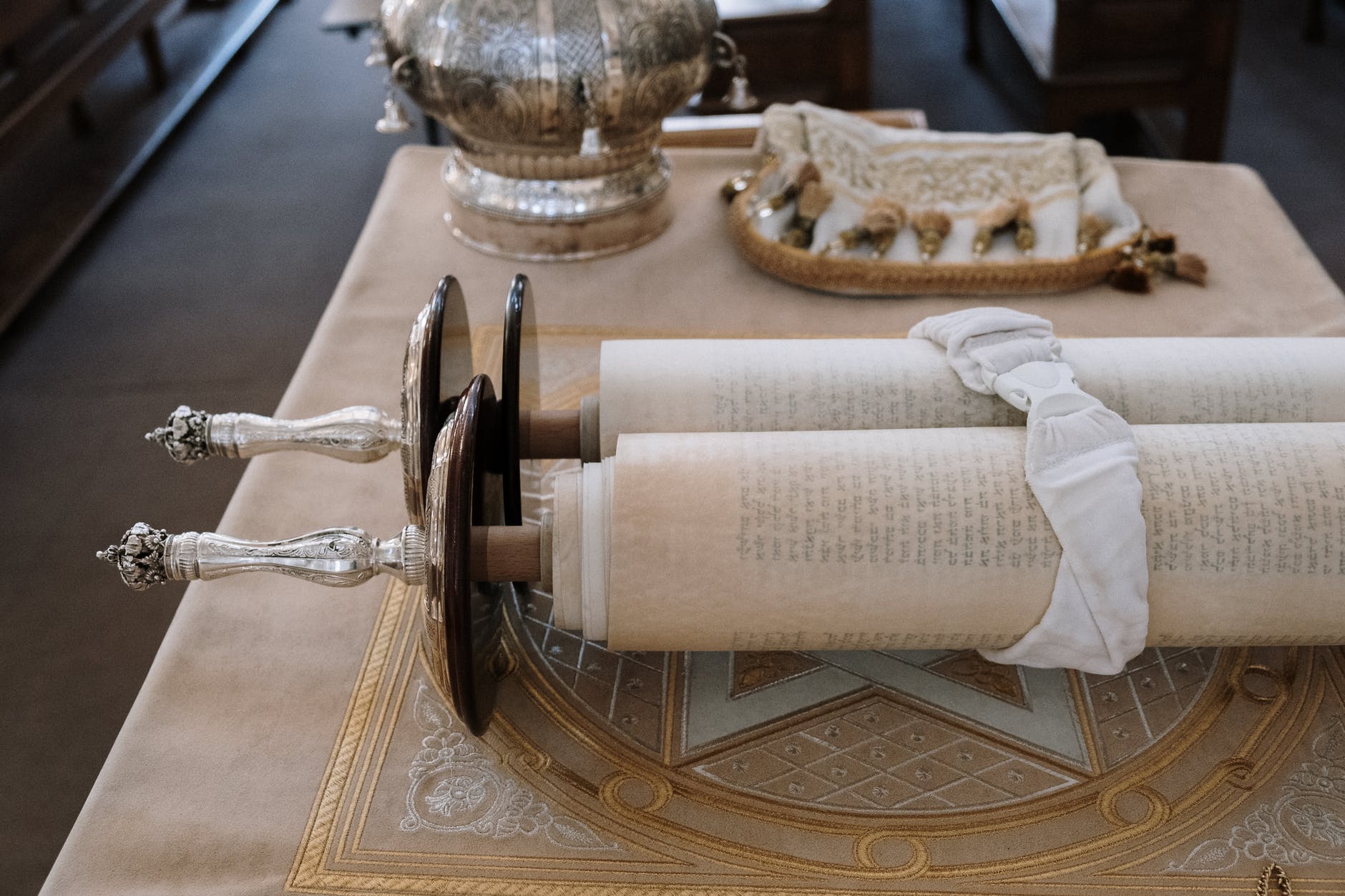
Jesus returned to Galilee in the power of the Spirit, and news about him spread through the whole countryside. He was teaching in their synagogues, and everyone praised him. He went to Nazareth, where he had been brought up, and on the Sabbath day he went into the synagogue, as was his custom. He stood up to read, and the scroll of the prophet Isaiah was handed to him. Unrolling it, he found the place where it is written:

‘The Spirit of the Lord is on me,
because he has anointed me
to proclaim good news to the poor.
He has sent me to proclaim freedom for the prisoners
and recovery of sight for the blind,
to set the oppressed free,
to proclaim the year of the Lord’s favour.’

Then he rolled up the scroll, gave it back to the attendant and sat down. The eyes of everyone in the synagogue were fastened on him. He began by saying to them, ‘Today this scripture is fulfilled in your hearing.’ Luke 4:14-21

This could be thought of as the manifesto of Jesus. He was setting out his mission as the Son of God, the Servant King.

Jesus had gone to worship at the synagogue in his hometown, and all the eyes of the people were fastened on him. There was great expectation. They were hoping for a sign, a sign that he was God’s Messiah, the one who would deliver the people from the oppression of Rome and bring political change.

He read to the people from the prophet Isaiah. Those words had been written many centuries before and described the deliverance of the people of Israel from exile in Babylon. There was a much deeper meaning though, pointing to a time when true freedom would come to the people. Jesus was saying there’s a worse poverty, captivity, blindness, and oppression.

This is what the Christian faith is all about. Jesus is central to the Bible, and the central message of the Bible is of God reaching out in love to humankind, and he reaches out supremely through the Cross of Jesus. Offering us release from spiritual poverty, captivity, blindness, and oppression.

Extravagance at Cana

Bible Reading: John 2:1-11

Everyone plans well for a party, especially making sure there’s enough food and drink for everyone. Throughout history people have celebrated together by feasting, and this is something we all really missed during the coronavirus pandemic because these gatherings were banned.

Events associated with feasting make good memories for the future, and even a funeral reception or wake can be a place of joy, nurtured by food and drink.

Of course, waste is a concern for everyone, but running short of food or drink is always a failure of hospitality. When we come to that beautiful account of the wedding at Cana, all those themes and more are woven into the fabric of John’s story telling.

On the surface, there is the embarrassing awfulness of a wedding that runs out of wine. At a deeper level, we see the extravagance of God’s love and grace. Here is an overabundance of giving made real in Jesus for those who were present with him then, and with all who celebrate his presence now. It also points ahead to the great feast when the Lord will bring his promises to their ultimate fulfilment.

I invite to dig deeper into this wonderful story for yourselves, to discover its depths of meaning that reveal the extravagance of God and his love for us.

God who touchest earth with beauty,
Make my heart anew;
With thy Spirit recreate me
Pure and strong and true.
Like thy springs and running waters,
Make me crystal pure;
Like thy rocks of towering grandeur,
Make me strong and sure.

Like thy dancing waves in sunlight,
Make me glad and free;
Like the straightness of the pine trees
Let me upright be.
Like the arching of the heavens,
Lift my thoughts above;
Turn my dreams to noble action,
Ministries of love.

Like the birds that soar while singing,
Give my heart a song;
May the music of thanksgiving
Echo clear and strong.
God who touchest earth with beauty,
Make my heart anew;
Keep me ever by thy Spirit
Pure and strong and true.

Salvation Army Song Book 320 (TB 303/Whitechapel)