Unknown Pleasures (1979)

Unknown Pleasures is the debut album by English post-punk band Joy Division, released on 15 June 1979 by Factory Records. Recorded over three weekends at Strawberry Studios in Stockport with producer Martin Hannett, the album’s sound was shaped by Hannett’s experimental techniques, lending it a haunting, atmospheric quality that set it apart from the raw energy of punk.

The stark black-and-white cover, designed by Peter Saville, features a pulsar signal graph and has since become an iconic image in music and fashion. Musically, the album is steeped in post-punk’s brooding textures, driven by Peter Hook’s melodic basslines, Bernard Sumner’s sharp guitar work, Stephen Morris’s mechanical drumming, and Ian Curtis’s deep, anguished vocals. Curtis’s lyrics, dark, poetic, and introspective, grapple with themes of isolation, disintegration, and despair, mirroring the gritty atmosphere of late ’70s Manchester.

Opening with the urgent pulse of Disorder, the album unfolds into a sequence of emotionally intense tracks. She’s Lost Control, influenced by Curtis’s struggles with epilepsy, delivers a cold, hypnotic groove, while Shadowplay and New Dawn Fades highlight the band’s ability to fuse relentless rhythm with emotional weight.

Though no singles were released from it, Unknown Pleasures gained acclaim for its innovation and mood, gradually growing in stature to become one of the most influential albums in modern music. It helped define the post-punk movement and inspired generations of artists with its bleak beauty.

Joy Division formed in 1976 in Salford after seeing the Sex Pistols perform. Originally called Warsaw, the band changed its name to Joy Division in 1977. Their first release, An Ideal for Living, led to their signing with Factory Records and the recording of Unknown Pleasures.

Tragically, this would be the only Joy Division album released during Ian Curtis’s lifetime. He died by suicide on 18 May 1980, just before their first American tour. The surviving members later formed New Order, continuing the legacy. Unknown Pleasures endures as a powerful, emotionally resonant work that continues to captivate listeners.

New World of Hope

In one of the final visions recorded in Revelation, John is shown a glimpse of the world as it will be when God’s work of redemption is complete. The old world vanishes and John sees something completely new, a new heaven and a new earth. The first ones are gone. Even the sea, often a symbol of chaos and distance, is no longer there. Then, coming down like a beautiful bride, a new Jerusalem appears, shining with the closeness of God. (Revelation 21:1-6).

This isn’t just a new scene, it’s redemption brought into full view. A loud voice declares, Look! God now lives with his people. Not visiting from time to time, not hidden in mystery, but living with us. As he once walked in the garden, he will walk with us again, no barrier, no distance, just face to face.

What follows is full of kindness. The one on the throne isn’t giving commands, he’s gently wiping away tears like a father who’s seen every hurt. And he doesn’t just comfort, he removes the reason for pain. Death will be gone. So will mourning, crying, and suffering. All of that belonged to the old world, and it’s over. There’ll be no sorrow in eternity. Heaven isn’t only gold and beauty; it’s a place where grief no longer exists.

Then comes a bold promise: I am making everything new! A promise so certain it’s written down, backed by the one whose word is always true. And maybe the most tender line of all: To the thirsty I will give water without cost from the spring of life. He knows our thirst, the deep, quiet ache that nothing else can reach, and he offers himself freely. No effort to earn it, no price to pay – just grace, poured out for the weary.

This is the hope that holds us steady. The story won’t end in ruin, but in glory. Not in loss, but in the joy of his presence. He’s the beginning and the end. And in him, we find our home.

See also: The Book of Revelation

The Pomodoro Technique

The Pomodoro Technique is a time management method developed by Francesco Cirillo in the late 1980s. Named after the tomato-shaped kitchen timer he used as a student, the technique breaks work into focused intervals, typically 25 minutes long, called “Pomodoros,” followed by short breaks.

To use the method, you choose a task, set a timer for 25 minutes, and work without interruption. Once the time is up, you take a 5-minute break. After completing four Pomodoros, you take a longer break of 15 to 30 minutes. This rhythm helps maintain focus while preventing mental fatigue.

The technique encourages working with time instead of against it. The ticking timer creates a sense of urgency, which often helps reduce distractions and procrastination. It also leads to greater awareness of how time is used, helping users plan and estimate tasks more effectively.

Though simple, the Pomodoro Technique also involves tracking completed intervals, noting interruptions, and reviewing progress. Over time, this builds a clearer picture of your working habits and areas for improvement.

It’s especially popular with students, writers, programmers, and others who benefit from structure and short bursts of concentration. While many apps support the method, all you really need is a timer and something to track your Pomodoros.

At its core, the Pomodoro Technique builds discipline by turning large, overwhelming tasks into manageable chunks. It fosters sustained focus and helps make productivity feel less stressful, one Pomodoro at a time.

Hope in Revelation

Revelation 7:9–17 offers a moment of deep hope and comfort amid the book’s intense scenes of judgment. As an interlude between the sixth and seventh seals, it reveals the divine purpose behind suffering and a promise of final rest for the faithful. John sees a vast, countless multitude from every nation, tribe, and language, clothed in white and standing before the throne and the Lamb. This gathering represents a redeemed, worshipping humanity, purified by Christ’s sacrifice and preserved through trial. Their white robes, made clean by the blood of the Lamb, embody the paradox of grace, life through death, purity through sacrifice.

This multitude proclaims, Salvation belongs to our God…and to the Lamb! Their worship isn’t ritualistic but heartfelt, answered by a sevenfold doxology from the angels and elders. It’s the natural response of seeing God as he is, majestic, merciful, and worthy. The repeated “Amen” frames the praise, affirming its truth and finality.

When one of the elders asks John who these people are, the answer reveals their journey: they are coming out of the great tribulation, having endured suffering, perhaps even martyrdom. The Greek verb “coming out” suggests a continuous gathering, believers being saved amid trials. This reflects not abstract theology but lived experience, relevant to the early Church and all who suffer for their faith.

Their reward is described in intimate terms. They serve before God’s throne, and he “shelters” them, evoking the tabernacle, where God dwelt among his people. The vision fulfills the promise that God would not remain distant but live among his own, offering not just protection but presence.

This care echoes Psalm 23. Just as the Lord is the shepherd who leads through the valley of death, so now the Lamb becomes the Shepherd who guides to springs of living water. Hunger, thirst, and suffering are gone. The valley has been left behind; the flock is home. Most tenderly, God will wipe away every tear, a personal, final act of healing.

Jesus’ words in John 10 confirm this hope: My sheep hear My voice…I give them eternal life, and no one will snatch them out of my hand. Revelation 7 fulfills that promise. The Shepherd knows his sheep, leads them through tribulation, and brings them into eternal joy. The Lamb still calls, and his hands still hold.

History Repeating

The 1930s in Germany began with a whisper of desperation and ended in a roar of destruction. In the shadows of World War I and the Great Depression, the German people were aching for stability, dignity, and hope. But what they got instead was a rising tide of far-right extremism that would plunge the world into its darkest abyss. The lessons of that decade still echo today, especially as far-right movements stir again across the globe, cloaked in new language but driven by the same old fears.

Germany’s democracy, the Weimar Republic, was fragile and battered. Inflation had shattered savings and unemployment soared. People were angry, disillusioned, and vulnerable to the promise of easy answers. Enter Adolf Hitler and the Nazi Party, a fringe movement that exploited the pain of a nation. With slogans about restoring greatness, purifying the nation, and crushing enemies from within, they wrapped fear in patriotic colours and made hatred feel like a duty.

When Hitler was appointed Chancellor in 1933, he moved fast. Civil liberties evaporated, the press was muzzled. Political opponents were silenced, imprisoned, or killed. The Nazis used propaganda not just to inform, but to mold reality itself – painting Jews, communists, intellectuals, and the disabled as threats to be neutralised. Step by step, they turned neighbours into enemies and bystanders into accomplices. The churches, too, wrestled with compromise and complicity, and many chose silence rather than risk.

At its heart, this was not just a German tragedy, it was a human one. It was about what happens when fear outweighs compassion, when power goes unchecked, and when a people forget that the stranger at the gate is often just a reflection of themselves.

And here we are again…

Across continents today, we hear echoes of that decade: the rise of nationalism that scapegoats the weak, the nostalgia for a glorified past that never truly existed, the distrust of the press, and the sneering disdain for democratic norms. We see it in the chants at rallies, in the conspiracies that spread like wildfire, in the tightening of borders and the loosening of empathy. The faces and flags have changed but the spirit is familiar: an idolising of strength, a demonising of difference.

Yet history doesn’t repeat itself word for word, it rhymes. And the echo of the 1930s isn’t a prophecy, but a warning. It tells us that democracy isn’t a given, it must be guarded. That kindness isn’t weakness, it’s the foundation of any society worth building. When we believe “it can’t happen here” we’ve stopped paying attention.

Light always begins small: a candle, a voice, a hand reaching out. But so does darkness. The far-right grew not just because of violence, but because of indifference. And that, more than anything, is what history urges us to resist. We must stay awake. We must speak up. We must remember.

Because the past is not dead, it waits to be repeated if we let it.

0patch Windows 10 EOS

0patch is a third-party security patching solution developed by Acros Security that offers micropatches, tiny, targeted fixes, to address vulnerabilities in software. Unlike traditional patching methods, which typically involve large update packages and system restarts, 0patch works by injecting small patches into a program’s memory during runtime. This allows vulnerabilities to be fixed almost instantly, often without requiring a reboot or the involvement of the software vendor. Its name zero patch reflects its goal of providing near-zero-impact security fixes.

0patch has become particularly significant in the context of Windows 10 reaching End of Support (EOS). Microsoft officially ended support for certain Windows 10 versions (like 21H2) in October 2023, and broader EOS is scheduled for October 2025. After EOS, systems no longer receive security updates from Microsoft, leaving them vulnerable to newly discovered threats. This is a serious concern for users and organizations that rely on hardware or software which cannot be easily upgraded.

Here’s where 0patch steps in. For a subscription fee, 0patch offers continued security patching for unsupported Windows versions, including Windows 7, Windows Server 2008 R2, and now Windows 10 post-EOS. It works by identifying vulnerabilities disclosed publicly or discovered through other means and deploying tiny patches to neutralize them. These micropatches are thoroughly tested and deployed much more quickly than vendor-issued updates, often within hours or days of a vulnerability becoming known.

For Windows 10 users facing EOS, 0patch offers a practical alternative to either upgrading immediately or running the system without protection. Many legacy applications or custom setups can’t run smoothly on newer Windows versions, and hardware limitations may prevent upgrading to Windows 11. In such cases, 0patch allows continued use of existing systems while maintaining a good level of security.

One of 0patch’s key strengths is its agility. Since micropatches are injected in-memory, they do not modify system files or binaries on disk. This means that patches can be added or removed almost instantly, without leaving a footprint, and without the risk of breaking unrelated functionality. For administrators managing large networks of legacy machines, this flexibility is invaluable.

However, it’s important to note that 0patch isn’t a complete substitute for vendor support. It focuses solely on security vulnerabilities and doesn’t provide feature updates, driver support, or compatibility improvements. Nor does it cover every possible security hole; its team selects which vulnerabilities to patch based on severity, exploitability, and relevance to its user base.

Despite these limitations, 0patch is increasingly viewed as a lifeline for those caught in the gap between end of vendor support and the practical realities of upgrading. It enables organizations to extend the safe use of systems beyond official support windows, without incurring the massive cost of replacing hardware or rewriting software prematurely. For users of Windows 10 post-EOS, 0patch may be the bridge they need to transition securely and on their own schedule.

See also: Windows is NOT the only OS

VE Day: Resilience in Modern Times

While it’s important to be cautious when comparing today’s world with the era of the Second World War, there are still meaningful lessons to be drawn. VE Day in 1945 symbolised more than just the defeat of a visible enemy; it also marked a triumph over destructive ideologies and deeply rooted fear. In our time, we face different but equally serious threats, ones that may not involve tanks or bombs but still cause disruption and anxiety. Misinformation, manipulation, and attacks on truth are among today’s adversaries. Had social media existed during the war, it likely would have become another front in the struggle for clarity and trust.

Just as people then had to remain alert to defend hard-won freedoms, we too must guard the values we often take for granted. The suffering endured during the war defies comprehension, yet today we continue to see suffering, though in different forms. Many are grieving, many are struggling, and often due to circumstances beyond their control. The threats we face now are not always visible but still challenge our sense of safety and stability. In such times, it becomes even more important to support and uplift each other, to offer reassurance in the face of uncertainty.

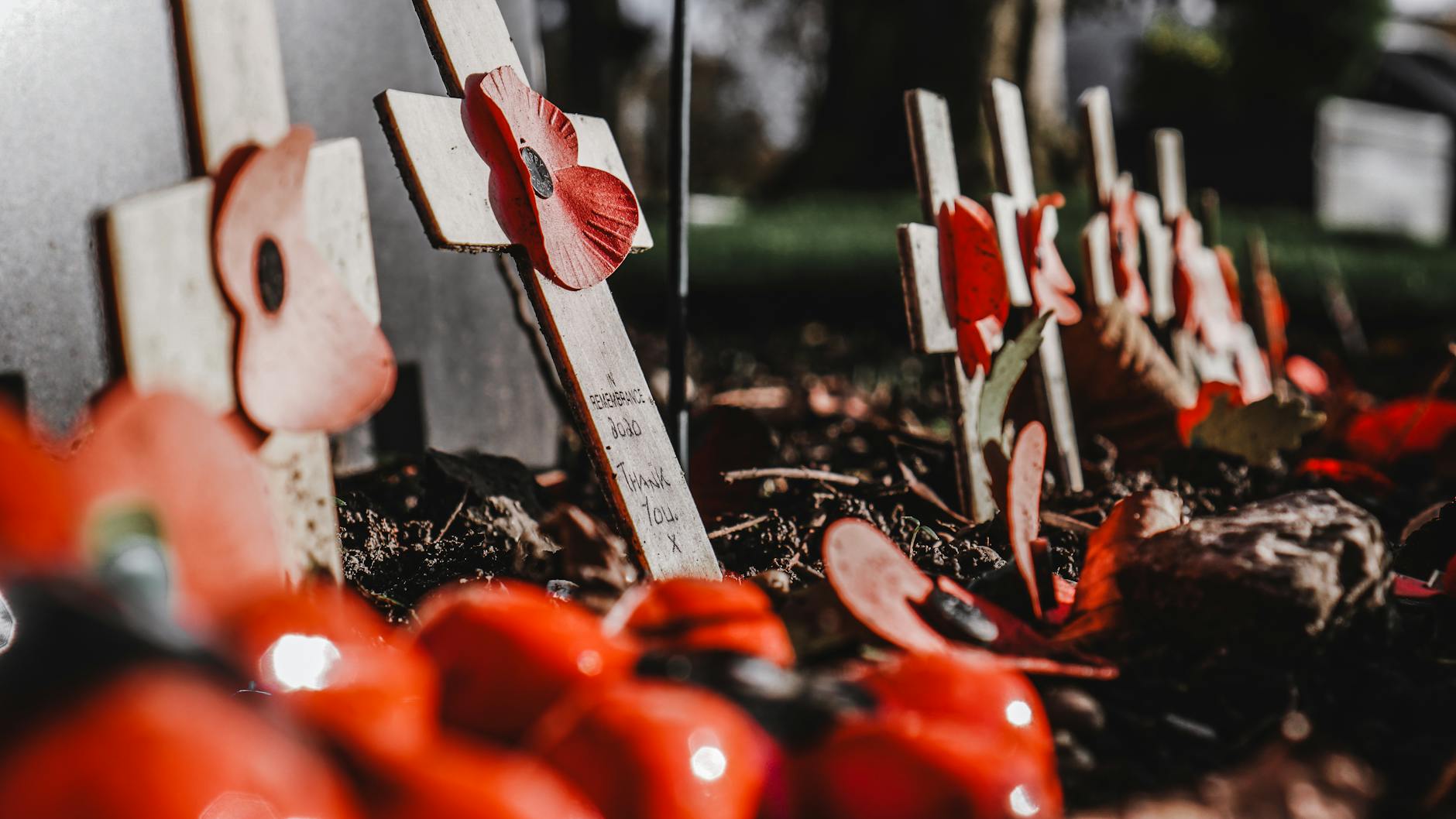
Not everyone greeted VE Day with simple joy. Though the war had ended, hardship remained. Food rationing continued, and the task of rebuilding was immense. Likewise, in our age, recovery from recent problems will not be immediate. But we can take inspiration from the resilience and courage shown then. Alongside the heroes of the past, we must celebrate those who serve society today, health workers, teachers, public servants, and countless others who keep daily life going. One of the greatest post-war legacies, the NHS, remains a powerful symbol of care and hope. So today, as we reflect, it’s worth asking: who are your heroes now? And how can you be a source of strength for someone else in the days to come?

VE Day 2020 (Republished)

large_000000

Whilst acknowledging the need to tread carefully and sensitively in any comparisons between the Second World War and the current coronavirus pandemic, I believe there are some useful ones we can make to help us in our thought processes and thereby benefit our collective mental health.

VE Day in 1945 reflected a victory over a visible enemy, although also an invisible enemy of evil thoughts and ideas. The enemy we face now is totally invisible and does not care one iota for those it harms. Fake news is not new, they faced it back then; had they had social media, that would simply have been another front on which the war would have been fought. Today, not only in the coronavirus pandemic, we face a war against those who would deceive us. We need to guard our way of life against those who would lie to us, who seek to destroy the freedoms won for us then.

The Second World War was marked by terrible suffering, the like of which is hard to process, along with the inhumanity of it all. Today, many have been devastated by an invisible enemy, and we pause to remember the lives lost and the families and friends grieving.

Back then the world faced life-treatening jeopardy and, for many today, this is the first time we have faced real jeopardy. Yes, I remember the Cold War, but that’s the only threat that comes anywhere near what we face today. There’s fear and anxiety everywhere, and so we need to affirm, encourage and support each like never before. It’s the same for everyone, yet we all have unique circumstances and all react individually.

Back then, not everyone was celebrating, and for those who were it was only a brief celebration. The world faced an uncertain future and there was much rebuilding to be done, it was many years until food rationing was eased for example. In our own time, we might celebrate relaxations to the lockdown, but we still face the reality of an uncertain future and the prospect of rebuilding society. Then it was a collective experience, so it is today and will be for us. I’m neither being optimistic nor pessimistic; just realistically reflecting that there’ll be much to do in the coming weeks, months and years.

Today we celebrate the heroes of yesterday’s battles, but we also celebrate the new heroes in the NHS and all the key workers fighting a very different battle today. Come to think about it, the creation of the NHS was one of the great rebuilding efforts after WWII, and we are reaping its benefits today.

Who are you celebrating today? What can you do to help and support someone today and in the uncertain future?

Postscript: Today is ‘Victory IN Europe Day’, not ‘Victory OVER Europe Day’ as some history revisionists are suggesting for their own agendas.

Note: I chose the photo for this post because it reminds me of my two youngest girls, Pollyanna (2) and Matilda (3).

Photo Credit: VE DAY IN LONDON, 8 MAY 1945 (HU 49414) Two small girls waving their flags in the rubble of Battersea, snapped by an anonymous American photographer. Copyright: © IWM.

Source: http://www.iwm.org.uk/collections/item/object/205018927

Candidates Sunday

Candidates Sunday is a significant event in The Salvation Army UK and Ireland Territory (as well as worldwide), dedicated to encouraging individuals to reflect on God’s calling in their lives, particularly towards spiritual leadership roles such as officership or territorial envoyship.

This day serves as a focal point for corps and communities to engage in prayer, worship, and discussion about vocation and service. Resources are typically provided by the Candidates Unit, including sermon outlines, creative prayer materials, and multimedia content to facilitate meaningful engagement.

For those feeling a call to ministry, The Salvation Army offers structured pathways through its application process, encompassing stages of interest, application, development, and assessment. This journey is supported by events like Design for Life, a weekend retreat aimed at helping individuals discern God’s purpose for their lives.

Candidates Sunday is more than a date on the calendar; it’s an invitation to explore one’s purpose and consider how to serve within The Salvation Army’s mission. Whether through formal leadership roles or active participation in community service, the day emphasizes the importance of responding to God’s call in various capacities.

For more information or to express interest in spiritual leadership, individuals are encouraged to contact the Candidates Unit at vocation@salvationarmy.org.uk or visit the official website.

Forgiveness and Commission

John 21:1–19 presents a deeply intimate and restorative encounter between the resurrected Jesus and his disciples, particularly Peter, by the Sea of Tiberias. This passage serves as both a continuation of the resurrection narrative and a profound moment of reconciliation and commissioning.

The chapter begins with seven of the disciples, Peter, Thomas, Nathanael, James and John (the sons of Zebedee), and two others, returning to their old profession of fishing. Peter, perhaps uncertain about the future or struggling with guilt after denying Jesus, takes the initiative. They fish all night but catch nothing, echoing a similar event from earlier in Jesus’ ministry (Luke 5). At dawn, Jesus appears on the shore, though they don’t recognize him at first. He calls out to them, asking if they’ve caught any fish, and when they say no, he instructs them to cast their net on the right side of the boat. They obey and suddenly the net fills with fish, an abundance too great to ignore.

It’s John who first realises, “It’s the Lord!” and tells Peter, who immediately dives into the sea to swim to Jesus. The others follow in the boat, dragging the full net. When they come ashore, they find a charcoal fire prepared, with fish and bread already laid out. Jesus invites them to bring some of their catch and share breakfast with him. He breaks the bread and gives it to them, just as he’d done at the feeding of the multitude and during the Last Supper. This quiet, tender moment reveals the character of the risen Christ; not distant or ethereal, but present, nurturing, and generous.

After the meal, Jesus turns to Peter in a personal exchange that mirrors Peter’s threefold denial. Jesus asks him three times, “Do you love me?” Each time Peter affirms his love, increasingly grieved by the repetition. With each response, Jesus commissions him: “Feed my lambs,” “Tend my sheep,” and “Feed my sheep.” This isn’t only a reinstatement of Peter’s role but a deep healing of his failure. The triple affirmation reestablishes Peter not just as forgiven, but as a trusted shepherd of Jesus’ followers.

The passage concludes with Jesus predicting Peter’s future martyrdom, using the imagery of being led where he does not want to go, an indication of the cost of discipleship. He finishes with the same words he used at the beginning of Peter’s journey: “Follow Me.”

This scene is rich with symbolism; nets bursting with fish, the charcoal fire recalling Peter’s denial, and the shared meal speaking of communion and fellowship. More than just a narrative, it’s a portrayal of the grace of Christ. He meets his followers in their confusion, provides for them, restores them, and calls them again into service. For Peter, and for every disciple, it’s a reminder that failure isn’t the end, and that love for Christ is the foundation of true leadership and mission.

Note: there’s actually a deeper meaning in the threefold commission, but that’s for another time.