In the UK right now, there’s a debate about people flying the national flag. It began when far-right groups launched a campaign called Operation Raise the Colours, encouraging everyone to display the Union Jack or England’s St George’s Cross to show pride in being British.
The problem is that many people see this campaign as less about healthy patriotism and more about exclusion. The far-right origins have made some feel the flags are being used to divide communities rather than unite them.
Former England footballer Gary Neville spoke about this recently. He said he took down a flag from one of his buildings because he felt it was being used “in a negative way.” His comment sparked strong reactions – some agreed with his stance, while others accused him of being unpatriotic, and worse.
So the discussion isn’t really about the flag itself, but about what it symbolises at this moment – pride or prejudice.
Volunteering at parkrun is more than keeping the event running; it’s a way of building confidence, learning responsibility, and feeling part of a welcoming community. For young people, roles such as marshalling, scanning barcodes, or timekeeping show them that others are depending on their contribution. Arriving on time, listening to instructions, and carrying out tasks carefully teaches responsibility in a practical and meaningful way.
Because under 18s must be supervised, they also learn how to work alongside supportive adults, gaining guidance while still being trusted to play their part. Mistakes sometimes happen, but the culture of encouragement at parkrun shows that responsibility isn’t about perfection, it’s about trying, learning, and growing. Confidence develops naturally when they see runners responding warmly to their encouragement or when they master a task they once found daunting.
Adults gain just as much from volunteering. For some, it offers purpose and connection at a time in life when confidence may be low or health prevents them from running. It brings people together across ages and backgrounds, building friendships and a sense of belonging. Taking on a role provides the chance to rediscover strengths, develop new skills, and experience the satisfaction that comes from giving something back.
For both young people and adults, parkrun is far more than a Saturday morning run; it’s a community built on teamwork, kindness, and encouragement. Each role, however small, is vital to the event’s rhythm. Over time, confidence grows, responsibility becomes second nature, and everyone involved leaves with a deeper sense of connection. Volunteering, in this way, helps shape resilient, compassionate people who carry these lessons into every part of their lives.
Paul’s words in Romans 12:1–2 are like a doorway into a new way of living: Therefore, I urge you, brothers and sisters, in view of God’s mercy, to offer your bodies as a living sacrifice, holy and pleasing to God – this is your true and proper worship. Do not conform to the pattern of this world, but be transformed by the renewing of your mind. Then you’ll be able to test and approve what God’s will is – his good, pleasing and perfect will.
Here Paul doesn’t speak of worship as an event, a song, or a moment in church. He calls it a life. Worship isn’t confined to Sunday; it’s the offering of ourselves – our bodies, our choices, our energy, our time – to God every day. And notice how he begins: in view of God’s mercy. We don’t give ourselves to earn God’s love, but because we’ve already received it. Our sacrifice flows from gratitude, not fear.
Paul also recognises that we’re always being shaped by something. The world presses its patterns onto us: self-centredness, consumerism, the chase for success and approval. Left unchecked, these moulds quietly define how we think and live. But Paul says there’s another way. Transformation comes as our minds are renewed – through Scripture, prayer, fellowship, and the Spirit’s gentle work. This is no quick fix. It’s a lifelong reshaping, like clay in the hands of a patient potter.
The promise is beautiful. As our minds are renewed, we begin to discern God’s will, not as a riddle to be solved but as a life that tastes of goodness, delight, and perfection. God’s will isn’t meant to crush us but to set us free, to align us with the one who knows us best.
So today, what might it look like for you to offer yourself as a living sacrifice? Perhaps it’s an act of kindness unseen by others, a choice for integrity when compromise would be easier, or a few quiet minutes of prayer instead of another scroll through your phone. Each moment offered to God becomes worship. Each small surrender allows the Spirit to renew you. And step by step, you find yourself walking in the rhythm of God’s good and perfect will.
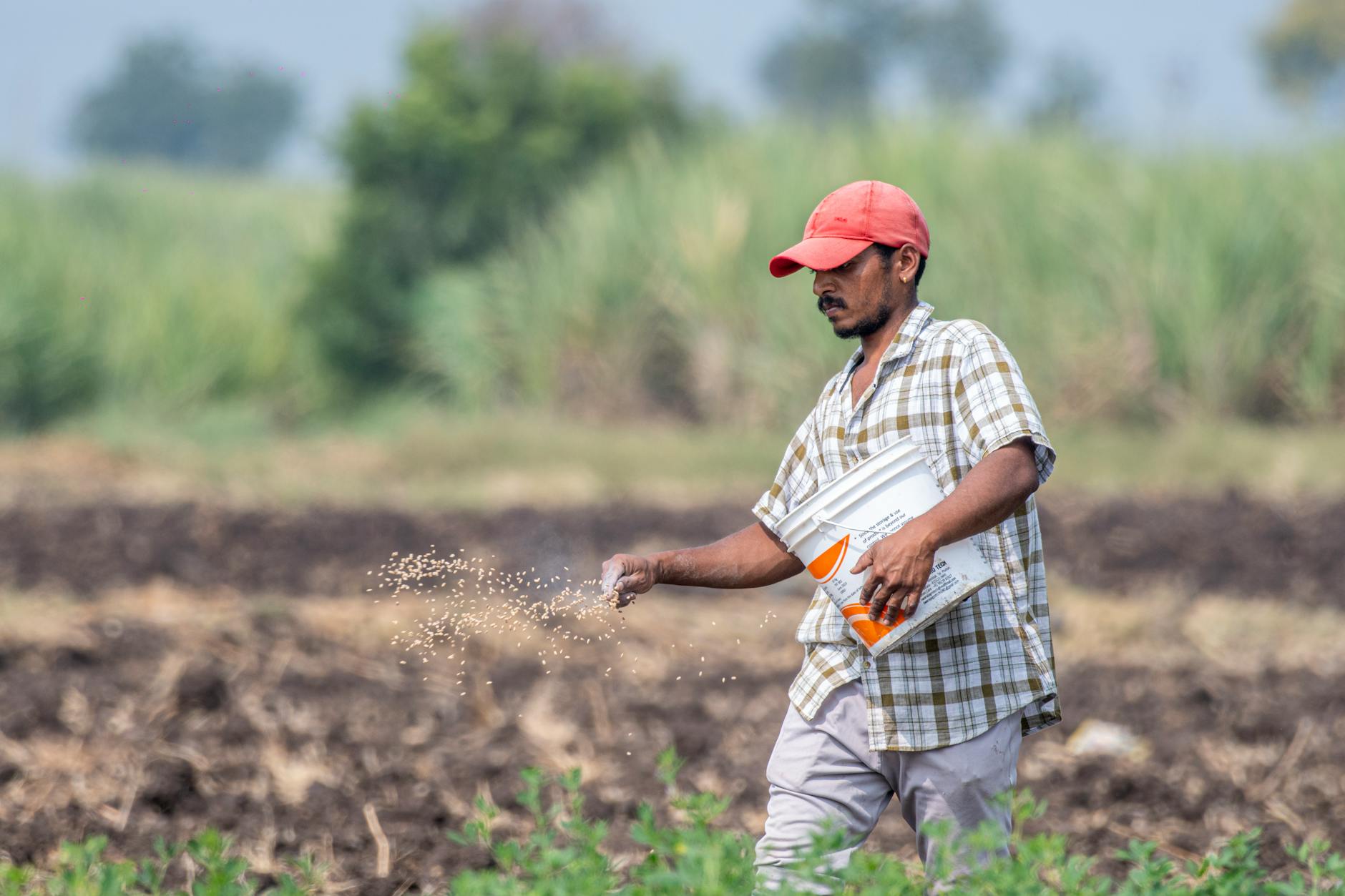
When Jesus told the Parable of the Sower in Matthew 13, he spoke of seeds that fell on rocky ground, sprang up quickly, and then withered for lack of moisture. TENDER PLANTS can look promising, yet without hidden strength they don’t last when the heat of trial comes. Jesus explained that these are people who receive the word with joy, but in times of testing they fall away. Faith isn’t proven by enthusiasm alone. What matters is whether God’s word sinks deeply into us, shaping our habits, convictions, and choices.
Jesus added, Consider carefully how you listen. Whoever has will be given more. To move beyond the fragility of tender plants, we need patient, careful listening. The heart is like soil; it must be open and prepared, or even the brightest new growth will quickly fade.
Other seed fell on good soil. It grew, flourished, and produced a harvest a hundred times more than was sown. The FERTILE SOIL represents those who hear the word, retain it, and by persevering produce a crop. It’s not a matter of hearing once and moving on, but of treasuring the word daily, returning to it repeatedly, letting it nourish every part of life.
The promise of abundant harvest is full of hope. When the gospel finds a ready heart, its impact overflows beyond the individual. A fertile life blesses others: kindness spreads, forgiveness softens hard places, generosity inspires, and hope multiplies. The fruit isn’t ours to boast of, it’s the Spirit’s work in us. Our role is to keep the soil of our lives soft and receptive, through prayer, humility, and obedience.
The contrast between shallow ground and DEEP ROOTS is striking. Roots are unseen, hidden beneath the surface, yet they enable a tree to withstand storms and bear fruit. In the same way, Jesus calls us not only to hear his word but to let it go deep. Roots grow as we practise what we hear, when the word moves from our ears into our hands and feet.
Jesus linked this with light, No one lights a lamp and hides it in a jar or puts it under a bed (Luke 8:16). A life rooted in the word inevitably shines. Deep roots produce visible witness, just as strong trees give shade and fruit.
So, the Parable of the Sower asks, what kind of soil am I offering today?
Tender plants will wither, but fertile soil, with deep roots will bear fruit that lasts.
Lord Jesus, you scatter your word like seed across every field of life. Sometimes my heart is hard, sometimes distracted, sometimes shallow. Yet you never give up sowing. Make my heart fertile soil, open to your Spirit’s work. Send roots deep into your love, so that when trials come I may stand firm, and may my life shine with your light, bearing fruit that blesses others and glorifies you. Amen.
The Book of Nehemiah opens (Nehemiah 1:1-11) not with walls being rebuilt, but with a heart breaking. When Nehemiah hears that Jerusalem’s walls are in ruins and its people are in disgrace, he doesn’t shrug it off as someone else’s problem. He sits down, weeps, fasts, and turns his whole being towards God. His prayer isn’t polished or detached, it’s raw with grief and yet rooted in deep trust. He confesses his nation’s sins, even naming himself and his family as part of the failure. And then he clings to God’s promise, if the people return, God will gather them back.
There’s something beautiful and searching in that. Nehemiah shows us that before restoration comes prayer, before building comes brokenness, before action comes humility. He doesn’t just mourn what’s been lost, he dares to believe that God’s covenant love hasn’t run dry. The ruins of Jerusalem might speak of shame and defeat, but Nehemiah’s prayer leans into a greater word: hope.
When we look at the world, or at parts of our own lives, and see what feels like ruins; relationships fractured, communities divided, faith worn thin. It’s tempting to despair. Yet Nehemiah reminds us that God listens to those who cry out, that his mercy is bigger than our failures, and that even scattered stones can be gathered into something strong again. As Paul later wrote, when I am weak, then I am strong (2 Corinthians 12:10), for God’s strength is revealed in our dependence.
So let Nehemiah’s first response be ours too: not a rush to fix, but a turning to God with tears, confession, and trust. For in prayer, the rebuilding begins.
Free speech is the foundation of democracy, because it allows people to express their thoughts, beliefs, and convictions without fear of repression or punishment. It ensures that every voice, whether popular or unpopular, has the right to be heard and considered. If we silence those we disagree with, we not only diminish the richness of public debate but also risk creating an environment where only certain viewpoints are tolerated, which undermines the very principles of freedom and equality that democracy is built upon. True progress comes through discussion, challenge, and the exchange of ideas, even when those ideas make us uncomfortable or force us to reflect more deeply.
That said, freedom of speech isn’t freedom from responsibility. Words have power. They can enlighten and inspire, but they can also wound, divide, and incite harm. That’s why free speech must always be exercised with a sense of responsibility and respect. A healthy democracy requires both courage in speaking the truth and care in how it is expressed, so that conversation builds understanding rather than fuels hostility.
When speech is grounded in honesty, integrity, and respect for the dignity of others, it becomes not just a personal right but a collective good, nurturing a society where freedom and justice can flourish for all.
parkrun isn’t just about running, it’s about making friends and building community. Each Saturday morning, as people gather in parks across the country, there’s a buzz that has little to do with competition and much to do with connection. Yes, some turn up eager to set a personal best, but many more come simply to share in the rhythm of moving together, side by side, regardless of age, ability, or background.
There’s a warmth in the way volunteers cheer and clap, calling out names, encouraging the weary, and celebrating every finisher. The front runner is applauded, but so is the person walking at the back, because the emphasis isn’t on who’s fastest but on the shared achievement of taking part. In that space, labels fall away: young or old, seasoned athlete or first-timer, everyone matters equally.
Conversations spring up naturally, sometimes in the pre-run hush, sometimes in the shared breathlessness afterwards. Friendships are forged over the kilometres, but also over post-run coffees, where people linger, laugh, and listen. For some, it becomes a lifeline, a chance to combat loneliness, to find encouragement in tough times, or to celebrate milestones both on and off the course.
parkrun embodies the simple truth that community thrives when people gather with purpose and openness. The act of running, jogging, or walking becomes a thread, stitching together stories that might never otherwise intersect. Someone recovering from illness runs alongside someone training for a marathon, a child dashes past, cheered on by grandparents, strangers become companions.
In a world often fractured and hurried, parkrun quietly insists on something different, that life is richer when we move together, when we notice one another, and when we create spaces where everyone belongs. And that’s the real finish line, friendship and community.
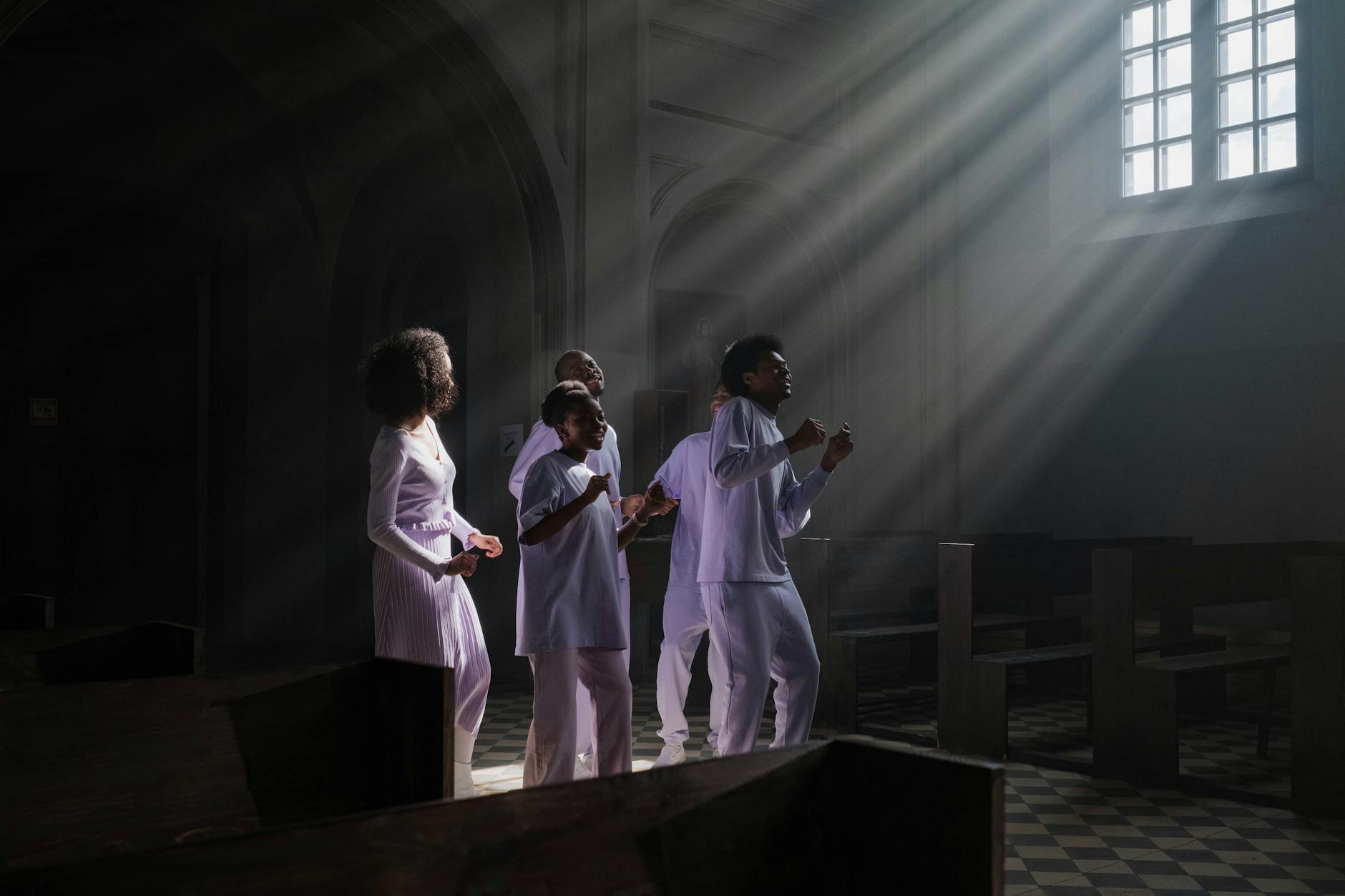
There are psalms that whisper comfort, psalms that lament in the shadows, and psalms that roar with joy. Psalm 100 is one of the latter, a jubilant summons to lift our voices in praise. It doesn’t speak of quiet meditation or hushed reverence, but of gladness, song, and overflowing thanksgiving. It’s as if the psalmist is saying: Come on, everyone, join the choir, join the dance, lift up your hearts.
We’re reminded to worship the Lord with gladness because he made us and we belong to him. That’s where our joy takes root. We’re not lost wanderers in an indifferent universe, but cherished sheep under a faithful shepherd’s care. To know that we’re his is to discover both identity and home.
The psalm beckons us further: Enter his gates with thanksgiving and his courts with praise. In the temple days, pilgrims would come streaming into Jerusalem, hearts and voices full of song. Today, the invitation is just as real. Every time we draw near, whether through prayer at the kitchen table, hymns in church, or even a whispered ‘thank you’ on a morning run, we step into God’s courts. Gratitude is our ticket of entry, praise the language of belonging.
The psalm closes with the surest anchor of all, For the Lord is good and his love endures for ever; his faithfulness continues through all generations. What steadies us in changing times is God’s unchanging character. His goodness isn’t fickle, his love doesn’t run dry, his faithfulness doesn’t skip a generation. What our grandparents knew, what we know, what our children and grandchildren will know, the same God holds us all.
The challenge is simple yet searching, do we let thanksgiving set the rhythm of our lives? Or do we allow complaint, worry, or weariness to be louder? Psalm 100 invites us to practice joy, to live gratefully, and to trust the love that will never let us go.
Beware when political leaders speak of restoring the so-called Judeo-Christian tradition, for more often than not they’re not reaching for the heart of faith, but for a convenient distortion of it. They take the language of Christianity, strip it of its compassion and humility, and reforge it into a tool of nationalism, designed to divide rather than to heal. Instead of the gospel’s call to love neighbour and stranger alike, they present a narrow, exclusionary creed that elevates their nation above others and demands loyalty to power over loyalty to God. In this way, what is sacred becomes a banner for building intolerant empires, where the vulnerable are cast aside and difference is treated as a threat rather than a gift.
The challenge for us is to recognise this twisting of faith and to live out a truer Christianity that reflects Christ’s radical love, justice, and mercy.
I lift my eyes to the hills, the psalmist begins, and in those words you can almost feel the ache of the soul searching for help. The hills might have looked beautiful, but they were also places of danger, full of shadows and uncertainty. And yet the psalm doesn’t linger on the fear, it pivots quickly to truth: my help comes from the Lord, the Maker of heaven and earth. In that shift lies the heart of faith, the quiet courage to trust that the Creator who set the stars in their place is the same one who watches over every step you take. Psalm 121.
This psalm is a song of journey, perhaps sung by pilgrims making their way to Jerusalem, weary and vulnerable on the road. They would remind one another that the God who never slumbers or sleeps is not distracted, not indifferent, but awake to every danger, every stumble, every long night of the soul. He is your shade at your right hand, says the psalmist, the intimate picture of protection so close you can almost feel his presence like a cool shadow on a burning day.
And then comes the promise, repeated with gentle insistence: the Lord will keep you. Not once, not sometimes, but always. He will keep your life. He will keep your coming and your going, both now and for evermore. It’s a promise that stretches across the whole landscape of time, enfolding both the small ordinary steps and the heavy unknowns with the same faithful care.
When you read these words, let them breathe hope into the places where your strength feels thin. Remember that the God who made heaven and earth doesn’t grow weary, and he hasn’t lost sight of you. Whatever road lies ahead, whether steep with challenge or shaded with uncertainty, he is the keeper of your soul, and his watch is constant, tender, and unending.








 John Ager's Home on the Web!