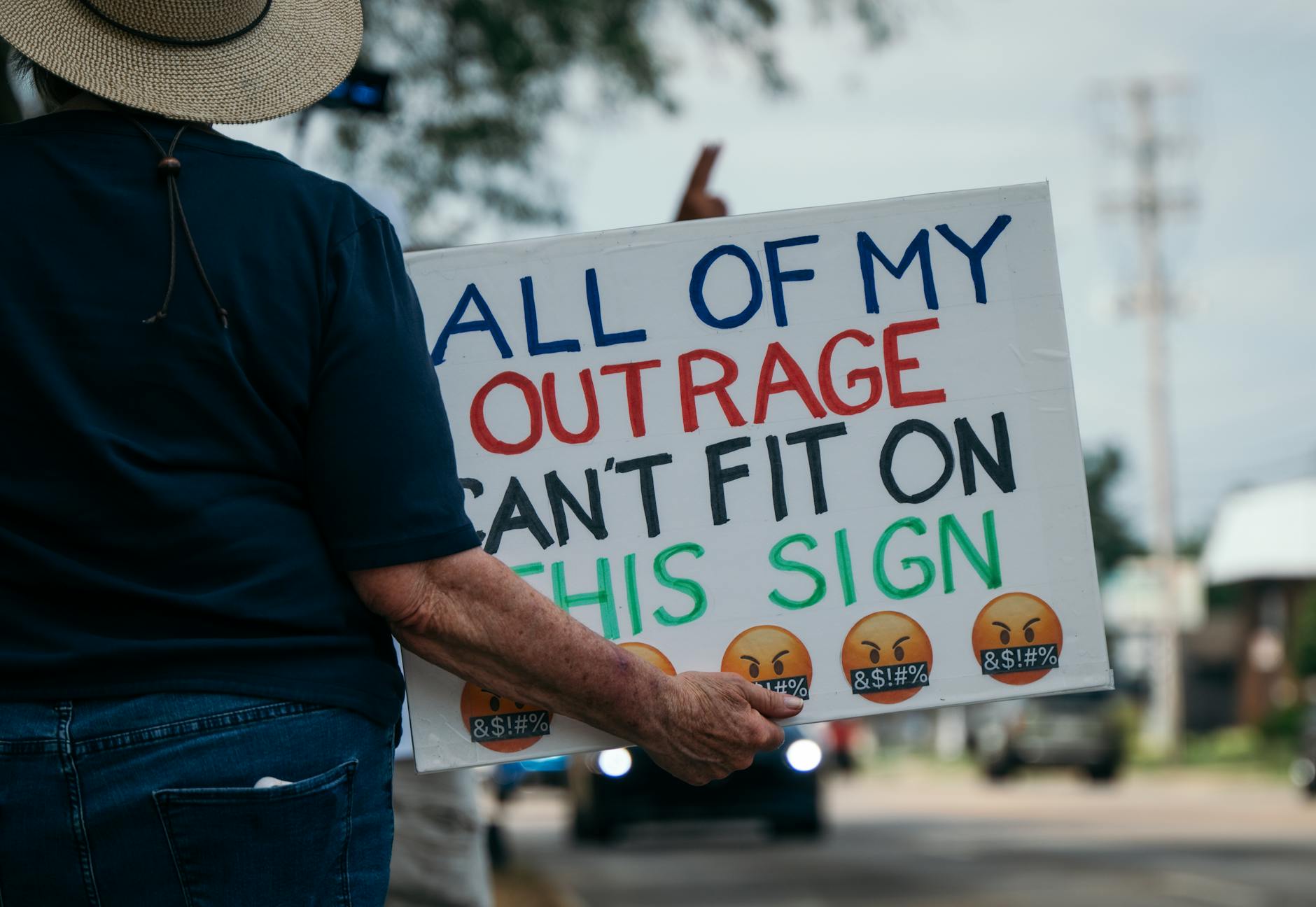
Whitewashing History

Whitewashing history always begins with a quiet stroke of omission, a gentle brushing-over of the uncomfortable, until the smoothed surface looks almost natural. Yet beneath that surface is the truth: history isn’t tidy, and the stories we inherit are often shaped as much by what’s left out as by what’s included. When nations tell their own story, there’s a temptation to look back with soft light and forgiving eyes, to protect a sense of pride or continuity. But when the past is edited to soothe rather than illuminate, we lose something essential: the ability to recognise the full humanity of those who came before us, and to understand how the present was shaped by their lives, their suffering, and their resilience.

One clear example of history being white-washed is the way many British schoolbooks for decades described the British Empire as a mostly benevolent force that “brought civilization”, while quietly downplaying or ignoring the brutality of colonial rule, the famines exacerbated by imperial policies, the suppression of independence movements, and the economic extraction that enriched Britain at the expense of colonized peoples. This softening of the truth didn’t just distort the past, it also shaped how generations understood power, identity, and responsibility, drifting away from the full, hard reality of what empire actually meant for those who lived under it.

Whitewashing doesn’t always come from malice; often it’s a product of the stories people were themselves told, passed down like heirlooms with cracks unnoticed or unspoken. But good intentions don’t undo the harm. When harmful truths are obscured, the voices of those who suffered are pushed further into the margins. Their experiences become footnotes, or disappear altogether. Without confronting those realities, we risk repeating patterns of inequality and injustice, because we never fully saw them in the first place.

Telling the whole truth doesn’t diminish a nation; it deepens it. It invites humility, maturity, and a more expansive understanding of who “we” are. When we face history honestly, with all its light and shadow, we gain the chance to grow into something better, something truer. And perhaps the most hopeful part of all is that it’s never too late to tell the fuller story, and to listen to the voices that were once left out.

Is History Subjective?

Whenever we look back, we’re not encountering the past in its raw form; we’re meeting it through the eyes of those who chose what to record, what to preserve, and what to pass on. Their choices shape the stories we inherit. Every source carries a viewpoint, every narrative has a tilt, and every retelling reflects questions and concerns that belong as much to the present as to the era being described. Yet it would be unfair to say that history is nothing more than personal perspective dressed up as fact.

This becomes especially clear when we consider how history has treated minorities. For centuries, whole communities found their experiences skimmed over, distorted, or erased, not because they were unimportant, but because power decided whose voices mattered. When stories are missing, societies lose more than detail; they lose truth, empathy, and the chance to understand the full richness of their own heritage. Restoring these overlooked voices doesn’t just fill gaps, it reshapes our understanding. It allows people to see themselves reflected where they were once invisible, and it encourages all of us to reckon more honestly with the world we’ve inherited.

Even so, history isn’t a free-for-all. The evidence left behind – letters, diaries, court records, ruins, census lists, artefacts, and countless other fragments – anchors interpretation. These traces act as guard-rails, keeping our reconstructions from drifting too far into fantasy. The past happened in particular ways, and while our understanding evolves, the underlying facts resist being bent beyond recognition. Historians listen carefully to the material they have, aware that fresh questions can bring new insights, and that each generation returns to the archive with different eyes.

Interpretation thrives in the spaces between those facts: in the motives we infer, the consequences we weigh, and the meanings we draw. Two people can study the same event and see different shades of significance, not because one is wrong, but because human experience is textured and complex. This isn’t a weakness; it’s a sign that history is alive and responsive to the needs and curiosities of each age.

So history lives in a delicate balance. It’s rooted in evidence, shaped by interpretation, and enriched by expanding the circle of voices allowed to speak. Its subjectivity doesn’t undermine it; rather, it encourages humility, compassion, and deeper listening as we try to understand who we are, where we’ve come from, and how the long human story continues to unfold.

Halfway Round the World

The line so often tossed around in public debate – “A lie is halfway round the world before the truth has got its boots on” – has a far older and richer story than most people realise. It’s usually pinned on Churchill or Twain, partly because it sounds like something either might have said, but the trail leads back more than two centuries before them, to a writer who understood human frailty with almost surgical clarity.

In 1710, Jonathan Swift published a piece in The Examiner in which he sighed over the power of falsehood to shape public opinion. His words still feel painfully current: “Falsehood flies, and truth comes limping after it, so that when men come to be undeceiv’d, it is too late; the jest is over, and the tale hath had its effect.” Swift saw how quickly a rumour could take on a life of its own, leaving truth to hobble along behind, patient, earnest, and too often ignored.

Over the next century and a half, writers, preachers, and pamphleteers repeated variations of Swift’s idea. The imagery softened, shifted, and picked up new colours as it passed from hand to hand. Then, in 1855, the Victorian preacher Charles Haddon Spurgeon offered the version that would change everything: “A lie will go round the world while truth is pulling its boots on.” With that single stroke, he transformed Swift’s lament into a vivid little proverb. Suddenly truth wasn’t limping, it was simply taking too long to get dressed, fumbling at the laces while lies dashed gleefully away.

From that moment, the wording began to crystallise. Newspapers and speakers adapted it freely; the boots sometimes became shoes, and the distance travelled grew from a circuit to half the globe. By the early twentieth century, the familiar modern form had settled into the language, sharpened and polished by repetition: “A lie is halfway round the world before the truth has got its boots on.”

The quote we know today isn’t the invention of a single brilliant mind, but the product of three centuries of observation: Swift’s sharp insight, Spurgeon’s memorable turn of phrase, and the slow, steady work of time. It reminds us that truth often arrives late, but it does, eventually, arrive.

No One-Sided Patriotism, Please

I bristle at the idea that you can only be a patriot if you support right-wing politics, because love of one’s country isn’t a narrow lane reserved for a single worldview, but a wide, living landscape shaped by all who call it home.

Patriotism, to me, is the quiet pride that comes from the familiar sights, the tenderness you feel for the winding streets and windswept coasts that have held your memories, and the hope that your nation can grow kinder, fairer, and more truthful than it was before. It’s the stubborn belief that we can face our history with honesty, learn from our mistakes, and still strive for a better future.

Reducing all that to a rigid political badge feels painfully small, almost like shrinking the soul of a country to fit a slogan. True patriotism doesn’t ask you to fall in line behind a single ideology. It invites you to love your nation enough to question it, challenge it, and seek its flourishing, even when that means swimming against the tide.

Reflection for a Church Anniversary

Although not able to attend Stockton Salvation Army this morning (Sunday 16 November 2025) I’ve been able to reflect on the Bible reading at home.

Exodus 13:17 to 14:14 is a gentle reminder that God’s guidance is often longer, slower, and wiser than the paths we’d choose. When Pharaoh finally lets the people go, God doesn’t take them by the quickest route but leads them by the desert road towards the Red Sea, knowing they aren’t ready for the shock of conflict. There’s something tender in that, something that speaks to the long story of every church and every believer: God doesn’t rush maturity, and he doesn’t abandon us when the journey bends in ways we never expected.

The pillar of cloud and fire becomes a symbol of that patient, steady presence. By day and by night, God stays ahead of his people, guiding them with a quiet constancy that doesn’t demand attention but offers reassurance. When I think of my own church celebrating its anniversary, I see echoes of that presence: the unexpected turns navigated with grace, the seasons of joy, the times of strain, and the quiet ways God has held the fellowship together. Even from a distance, I can be part of that gratitude.

Then comes the moment of fear: the roar of Pharaoh’s chariots behind, the sea blocking the way ahead, and the people crying out in panic. Their protests feel painfully human: Was it because there were no graves in Egypt that you brought us to the desert to die? It’s the voice we all know when pressure closes in and the future feels impossible. And into that fear, Moses speaks words that settle deeply into the heart of any congregation marking its years: Do not be afraid. Stand firm and you’ll see the deliverance the Lord will bring you today… the Lord will fight for you; you need only to be still (Exodus 14:13–14).

A church anniversary is a moment to breathe in those words again, to remember how many times God has made a way where none seemed open, and to trust that he’s still leading, still guiding, still walking ahead with a faithfulness that doesn’t falter. Even at home, I’m grateful for the journey so far and hopeful for the road still unfolding.

Running in Wet Weather

Running in wet weather carries its own quiet appeal. Rain softens the landscape, adds a shimmer to the pavements, and turns an ordinary route into something slightly untamed. Once you’re out in it, it’s often gentler than it first appeared, and there’s a subtle satisfaction in settling into the rhythm of moving through the rain rather than resisting it. Letting go of the idea of staying dry frees you to notice the atmosphere around you; the muted colours, the hum of rainfall, the way everything feels closer and more alive.

Wet ground changes how you run. Roads can become slick, leaves stick underfoot, and puddles can send a cold shock up your legs. Those small challenges encourage a more attentive stride, keeping you balanced and steady, rather than pushing for pace when the conditions ask for care. The rain sharpens your senses in unexpected ways; sound seems clearer, breath feels cleaner, and each step lands with more intention.

A few simple choices make wet-weather running more comfortable. A light, breathable layer helps fend off the chill without overheating. A cap can stop rain from blurring your vision. Since damp fabric can rub, a little anti-chafe balm and a good pair of socks are worthwhile, especially on longer outings. Shoes will inevitably get soaked, yet they dry, and the run tends to stay with you more vividly than the discomfort ever does.

There’s a distinctive clarity that comes from embracing the elements rather than waiting them out. You finish the run damp, tired, and somehow refreshed, reminded that even a grey day can offer its own kind of beauty.

Resurfacing Racism

It struck me again this morning how quickly the boundaries of acceptable public discourse have shifted. For years, it felt as though the UK was making genuine progress in challenging racism and nurturing a more generous, inclusive spirit. There was a shared sense that, while we weren’t perfect, we were moving in the right direction, learning to speak with more care, and recognising the dignity of every neighbour. Yet the regression we’re witnessing didn’t appear out of nowhere. You can trace a clear line back to the years of Brexit campaigning, when inflammatory language became normalised, and figures like Nigel Farage helped move harsh, exclusionary rhetoric from the fringes to the centre of national debate.

Once that boundary was crossed, others followed. What used to be unsayable in public life is now spoken without hesitation, and often with applause. Reform UK, along with a handful of MPs and public commentators, can now voice plainly racist ideas with little, or sometimes no, consequence. The moral guardrails that once held firm seem to have weakened, and we’re left facing a culture in which prejudice is treated as a legitimate political stance rather than a breach of the values we claim to cherish.

It’s painful to watch, because it reminds us how fragile progress can be, and how easily it’s undone when fear is stirred, and division is rewarded. Yet naming what’s happening matters, because racism thrives in silence. If we’re to rebuild a kinder, more truthful public square, we’ll need the courage to call out the rot, to speak with honesty, and to keep insisting that a better, more generous Britain is still possible.

Truth’s Melody in Creation

Psalm 98 rises like a bright dawn, calling us to lift our voices because God’s faithful love keeps breaking into the world, renewing what’s weary and reclaiming what’s lost. It remembers that God has made his salvation known and revealed his righteousness to the nations, and those words feel especially powerful when justice and truth seem fragile.

The psalm reminds us that God’s rescue isn’t hidden or selective; it’s public, generous, and rooted in a goodness that refuses to be diluted by human failure. When we’re tempted to believe that dishonesty carries the day, Psalm 98 quietly insists that truth still has weight, still has substance, still has a heartbeat.

The invitation to sing a new song becomes more than poetic instruction; it’s a gentle protest against despair. New songs rise when truth has been defended, when justice has been honoured, when mercy has touched what was broken. They rise when people refuse to succumb to cynicism, choosing instead to trust that God’s character remains steady. And while the psalm shimmers with joy, it’s not naïve joy. It’s the kind that knows darkness well yet refuses to let darkness write the ending.

Then creation joins in, rivers clapping, mountains shouting for joy, the whole earth exhaling praise as the true judge draws near. It isn’t the joy of avoidance, but of alignment. Creation longs for God’s judgement because his judgement isn’t cruel, it’s right. It sets things straight, restores dignity, exposes lies, and shelters the vulnerable. In a world where truth can be bent and justice delayed, the image of God coming to judge with equity feels like a deep breath for the soul.

Psalm 98 invites us into that hope, to stand with creation and sing, trusting that the God who loves truth and upholds justice is already at work, already moving, already drawing near.

Another Green World (Brian Eno)

Another Green World was released fifty years ago today (14 November 1975), and it remains one of Brian Eno’s most influential records. Made during a period of transition in his career, it marks the moment when his interest in structured songs and his experiments with ambient sound began to blend. Sitting between Taking Tiger Mountain (By Strategy) and the fully ambient Music for Airports, it captures that shift happening in real time. About half the tracks feature vocals, while the rest are instrumentals shaped from tape treatments, early synthesisers, and Eno’s emerging Oblique Strategies approach to creative problem-solving.

Many pieces grew out of studio exploration, with musicians like Phil Collins, Percy Jones, and Robert Fripp improvising ideas that Eno later edited, repitched, or rebuilt. This process produced a collection of concise, carefully sculpted tracks, even when their origins were loose. St. Elmo’s Fire, with Fripp’s brilliantly serrated guitar line, sits comfortably beside quiet sketches like Becalmed and In Dark Trees, showing how easily the album moves between songcraft, texture, and atmosphere.

Another Green World made little commercial impact on release, but its importance has only increased. Its blend of ambient colour, inventive production, and understated melodic clarity shaped the development of electronic music, post-rock, art-pop, and film scoring. It’s now widely recognised as a landmark, not just in Eno’s catalogue, but in modern music as a whole.

Fifty years on, it hasn’t aged so much as matured into its own quiet authority. Each listen nudges me towards stillness, wonder, and a way of paying attention that feels almost like contemplation. It remains one of my favourite records because it never stops opening, and because it keeps teaching me how to breathe.

Fighting for Truth Today

In an age where information moves at the speed of a click, fighting for truth has become one of our most essential responsibilities. The battle begins within ourselves.

Before sharing anything, pause. That moment between encountering a claim and forwarding it is where truth often lives or dies. Ask yourself: Do I actually know this is true? Or am I sharing it because it confirms what I already believe?

Getting comfortable with uncertainty is crucial. There’s power in saying “I don’t know.” This means actively seeking information that challenges our beliefs and checking multiple sources. The most viral content is rarely the most accurate, it’s the most emotionally provocative.

Learn to distinguish between facts, interpretations, and opinions. A fact is verifiable. An interpretation adds meaning. An opinion adds judgment. Conflating them is how truth gets obscured.

In our communities, respond to misinformation with curiosity rather than contempt: “Where did you see that?” This keeps dialogue open. Support quality journalism financially when possible, truth-seeking requires resources.

The hardest part isn’t about facts at all. It’s maintaining the social fabric that makes truth-seeking possible. Preserve relationships across disagreements. Acknowledge when your own “side” gets things wrong. Recognize that most people spreading falsehoods aren’t acting maliciously.

Most importantly, stay engaged without becoming cynical. Cynicism, believing there’s no truth or everyone’s lying, isn’t sophistication. It’s surrender. Truth exists, even when it’s hard to find. Every pause before sharing, every source you check, every curious question you ask contributes to a world where truth has a fighting chance.

See also: Truth Under Siege Today