It’s been announced today (Wednesday 17 December 2025) that the UK will be rejoining the EU Erasmus Scheme. This fantastic opportunity was stolen from our young people following a foolish Brexit decision and a disastrous deal.
Its return matters deeply because Erasmus is about far more than study placements or exchange terms. It opens doors to language learning, cultural understanding, friendship across borders, and the quiet confidence that comes from discovering you can belong in more than one place.
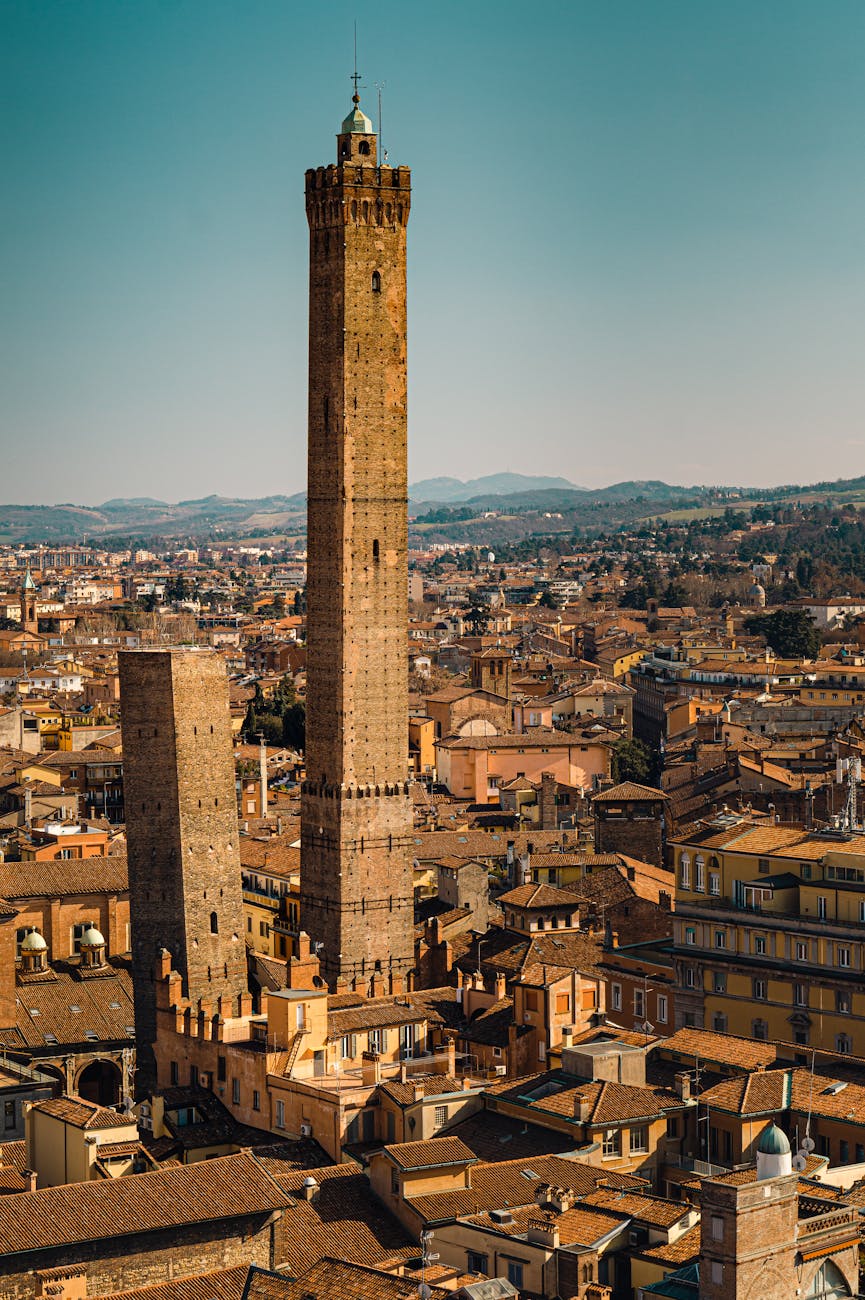
I saw this first-hand through my grown up daughter, Sarah, who benefited immensely from her time in Bologna. The experience shaped her academically, stretched her personally, and left her with friendships, memories, and a sense of Europe that no classroom alone could ever provide.
For countless students, particularly those from less privileged backgrounds, Erasmus was a first passport stamp, a first step beyond the familiar, and a powerful reminder that Europe isn’t an abstract idea but a shared human space. Rejoining sends a signal that we’re serious about investing in the next generation, trusting them to learn, travel, collaborate, and imagine bigger futures.
It won’t undo all the damage of Brexit, but it’s a meaningful act of repair, restoring opportunity, dignity, and hope where they were unnecessarily taken away.
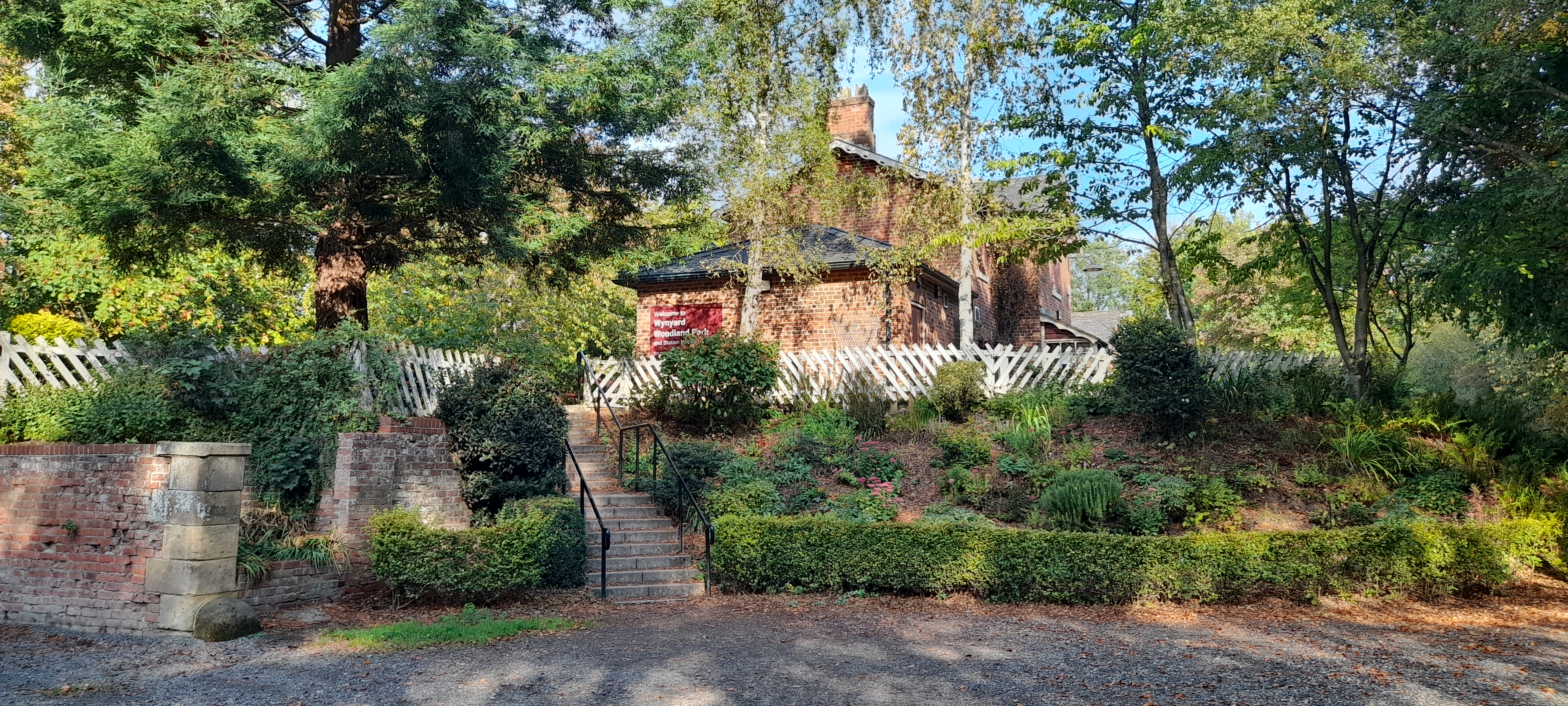
Wynyard Woodland Park occupies land that was once part of the nineteenth-century Clarence Railway, a line built to transport coal from the Durham coalfields to the River Tees. The railway served the industrial development of the region for many decades, passing through what is now Thorpe Thewles. When the line closed in the twentieth century, the trackbed and surrounding land were left unused until local authorities identified the opportunity to convert the disused route into a public green space.
The redevelopment created a linear park that follows the former railway corridor. New pathways, cycle routes, and planted woodlands were introduced, allowing visitors to move through the landscape along the old line. The former station house at Thorpe Thewles was restored and adapted to include visitor facilities, a small museum covering the history of the railway, and a café. As the site matured, the woodland areas developed greater ecological value, supporting a range of wildlife and providing a mix of open and shaded spaces for recreation.
Wynyard Woodland parkrun forms part of the park’s present-day use. Held every Saturday morning, it follows sections of the former railway route and attracts local runners, walkers, and volunteers. The event highlights how the park has shifted from an industrial transport corridor to a community-focused recreational area.
Today Wynyard Woodland Park serves as a practical example of how former industrial land can be repurposed for public benefit. Its combination of historical features, accessible paths, and expanding natural habitats makes it a valued local space for exercise, education, and outdoor leisure.
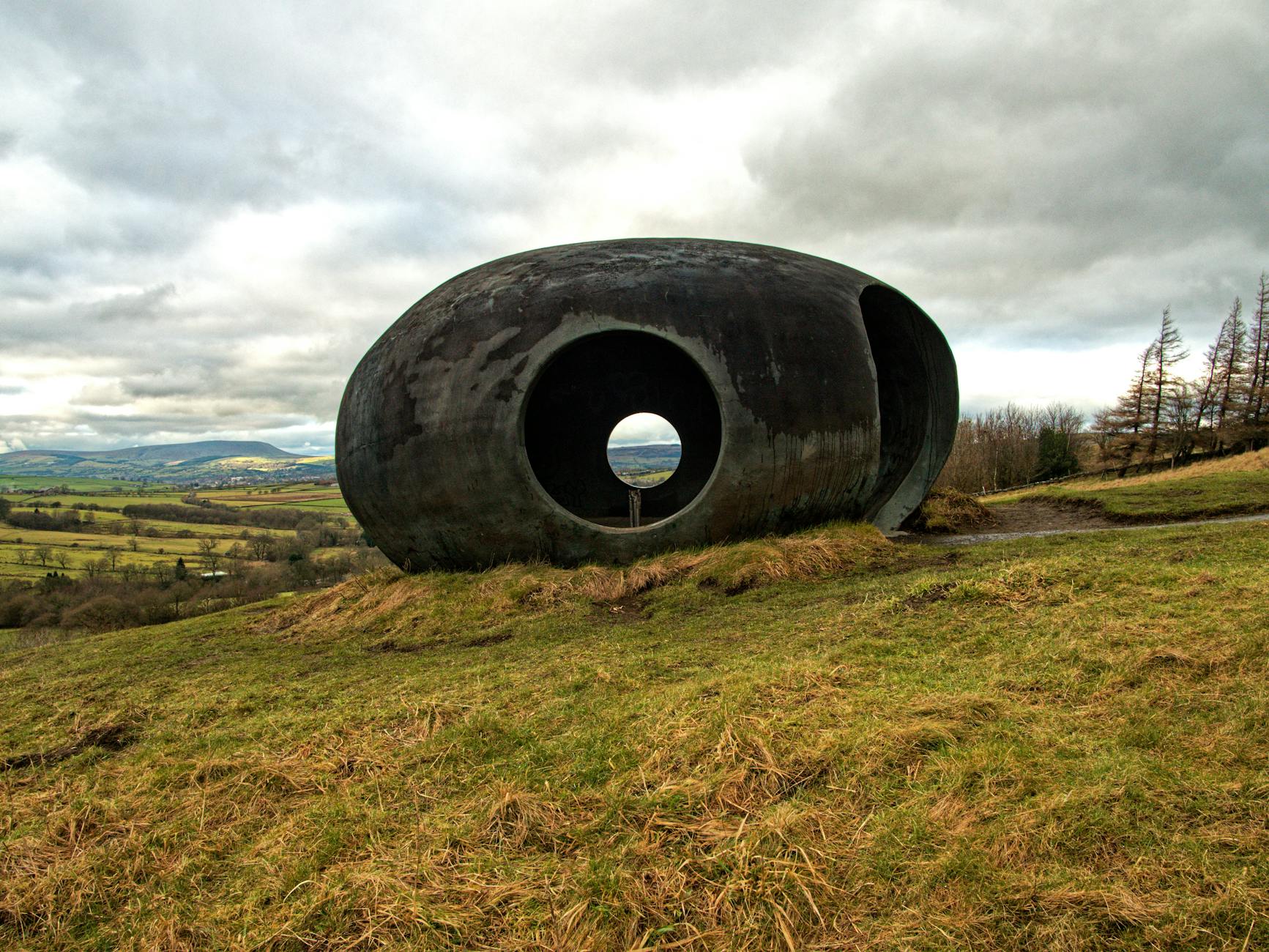
Lancashire Day, marked every year on 27 November, is a chance for people across the historic county to recognise and celebrate Lancashire’s heritage. The date commemorates the moment in 1295 when Lancashire first sent representatives to Parliament, which is why it’s often described as the county’s official “birthday”. Today, it’s used as an opportunity to highlight the history, culture, and identity of a region that’s played a significant role in shaping the UK.
Across the county, councils, community groups, and local organisations use Lancashire Day to promote everything from traditional food to local industry. You’ll often hear the official Lancashire Day proclamation read out, affirming loyalty to the county and reminding people of its historic boundaries, which are wider than the present administrative ones. Many residents still take pride in identifying with the traditional county rather than the modern divisions created in the 1970s.
Lancashire’s story is closely tied to the Industrial Revolution, the growth of the textile industry, and the development of seaside towns like Blackpool and Morecambe. Lancashire Day provides a simple way to reflect on these contributions and to acknowledge how the county continues to evolve through education, culture, sport, and innovation.
What stands out about the day is how grounded it is. There are no grand ceremonies; instead, it’s about local pride, a sense of belonging, and an appreciation for the everyday character of the county. Lancashire Day reminds people where the county has come from, and why its identity still matters to so many.
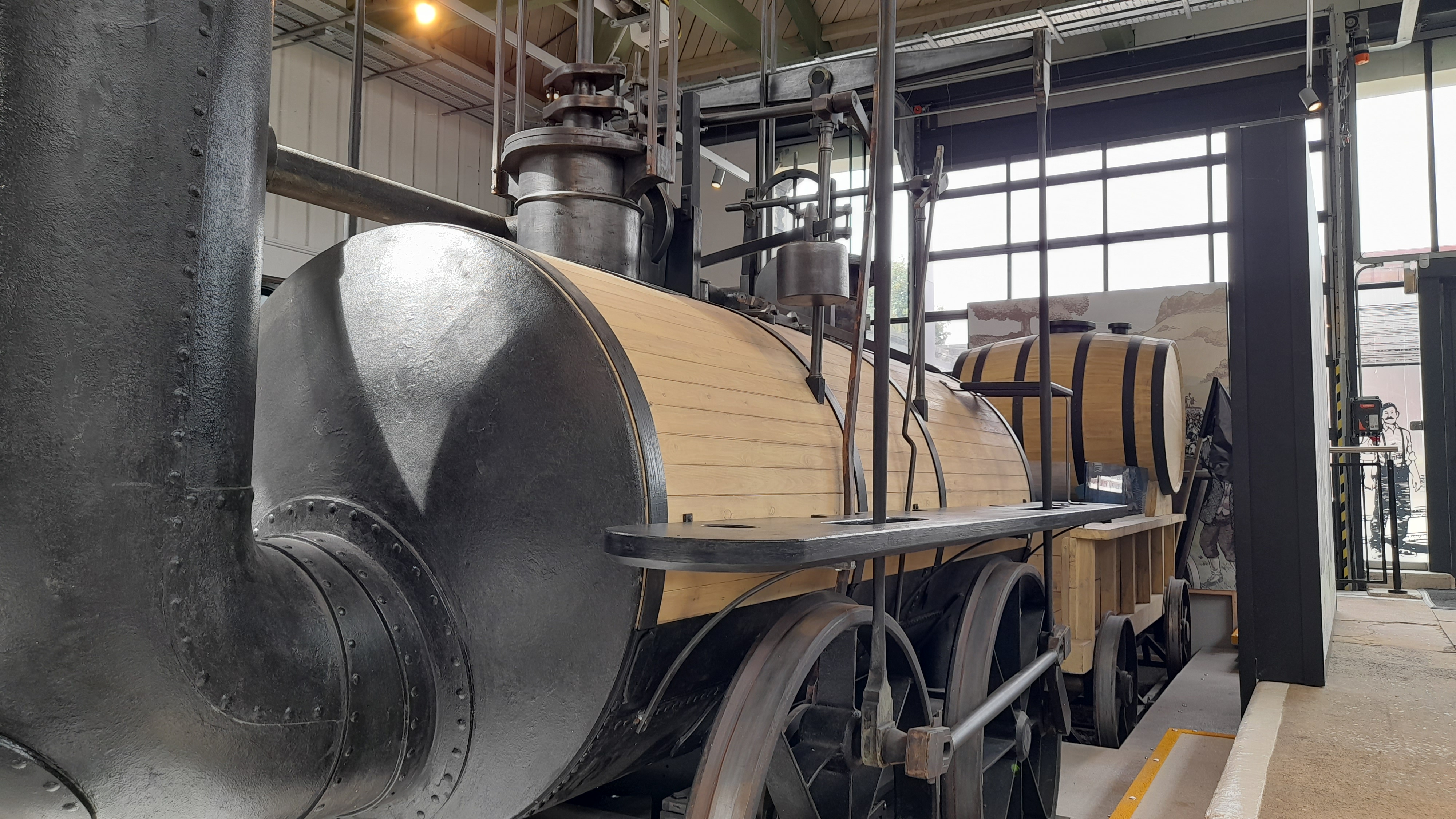
Darlington has long been known as the birthplace of the railway, and nowhere is that legacy celebrated more vividly than at Hopetown Darlington. Formerly the Head of Steam Museum, this reimagined 7.5 acre site blends heritage and innovation, telling the story of how the railways changed the world while inviting visitors to experience history in creative ways.
Visitors arrive through the 1833 Goods Shed, now transformed into a welcoming entrance with a café, shop, and interactive media. From there, the site opens up into a collection of historic buildings. The old North Road Station, built in 1842, houses displays about the birth of the Stockton & Darlington Railway. Nearby, the Carriage Works hosts exhibitions and archives, while also being home to the Darlington Locomotive Works, where the A1 Steam Locomotive Trust continues the tradition of steam engineering by constructing a new engine, the Prince of Wales.
Families are especially well-catered for. The imaginative Wagon Woods playground takes inspiration from railway inclines and wagons, designed for both accessibility and adventure. Outdoor spaces like Foundry Green host community events and seasonal festivals, making Hopetown as much a gathering place as a museum.
What makes it even more remarkable is that general admission is free. Visitors can explore the historic galleries, watch engineering in action, or simply enjoy the café and open grounds, with only certain exhibitions and activities carrying a small fee.
Hopetown reopened in 2024 after a £35 million redevelopment, complete with immersive attractions like the Experiment! 4D ride and creative programmes for schools and communities. It’s not just a museum but a celebration of heritage, imagination, and community where the past and future of rail come alive together.
I’ve always considered Brexit to be a mistake, but I understand the motivations of those supporting it: national pride, a desire for independence, and faith in Britain’s ability to succeed on its own. But the world has changed. Britain no longer holds the global power it once did as a colonial empire, and we can’t pretend otherwise. That past structure of influence is gone, and with it, much of the leverage we once relied on. Additionally, much of the rhetoric advocating Brexit was false or misleading, and often xenophobic in tone.
Despite this, we left the EU under the illusion we could thrive independently, yet instead of strengthening the country, Brexit has weakened it. It’s also taken away the freedoms and opportunities we once enjoyed within the European continent.
Brexit promised control and prosperity but has delivered economic strain and fewer opportunities. We’re all feeling it, higher food prices, soaring energy bills, struggling small businesses. UK-EU trade is down 15%, and the economy is set to be 4% smaller long-term; a £100 billion annual hit, or £1,000 per household. Inflation has jumped more than 20% since 2021, while wages have barely moved. Investment has fallen, bureaucracy has grown, and growth has slowed.
Far from taking back control, we gave it away, walking out of the world’s largest trading bloc and isolating ourselves from partnerships that helped us compete globally. The idea of ‘Global Britain’ was never a realistic replacement for EU membership. The US won’t bail us out, and Commonwealth countries are turning to the EU for trade. National pride doesn’t pay the bills, and nostalgia doesn’t drive prosperity.
This isn’t about disloyalty. It’s about honesty. Brexit has failed to deliver on its promises, and continuing down this path is harming the very country we’re trying to protect. The EU wasn’t perfect, but when we were inside, we had influence, access, and opportunity. Rejoining the Single Market isn’t surrender, it’s a step toward recovery. It’s how we can support businesses, lower costs, and rebuild trust.
Brexit has brought decline, division, and disappointment. The empire is gone. We can’t stand alone anymore. It’s time to stop the self-inflicted damage. Let’s rejoin the Single Market. Let’s return to the EU, not because we’re weak, but because we’re strong enough to admit when we were wrong.
In August 1999 I fulfilled a boyhood ambition of witnessing a total solar eclipse.
As I travelled down to Devon from South Wales (the eclipse was only going to be total in parts of Cornwall and Devon) I really started to capture the excitement when I stopped at a Service Area on the M5, as there was something of a party atmosphere.
I eventually parked on the waterfront at Kingsbridge, near some good public conveniences that were open 24 hours, and attempted to get some sleep in the car. Waking soon after 4.00 am I decided to make my way the coast, heading for Slapton Sands. I arrived at about 5.00 am and was totally unprepared for the level of traffic and activity going on.
There were some quite large car parks, and I managed to get one of the last spaces. It was right next to the beach, people were sleeping in cars and vans, in tents, and in sleeping bags on the beach itself. As it started to get light, there was no way I was going to get any more sleep, so I decided to get the bike out and go for an early morning cycle ride. There was a great buzz in the air; it was one of those occasions when people were drawn together by a shared experience, strangers found it easy to talk to each other. Telescopes, cameras and the like were being set up on the vantage points, and the smell of cooking was hanging in the air. By this time the authorities had closed off the car park entrances, and the refreshment vans were doing brisk business.
By about 8.00 am the traffic had become even busier, but there was nowhere to go, no sooner had people parked half on the road, half on the grass verges, they were moved on. Fields were opened up for the cars, but these eventually filled up, and still the cars were coming, causing chaos in the narrow country lanes.
I managed to see the eclipse at various stages, up to about 70% covered, but then the threatening darker clouds came and obscured the view, but nothing can prepare you for the experience of totality, and it’s impossible to adequately describe in words.
the approach of darkness the drop in temperature the quietness that descended on the crowds the expectation the moment of totality the darkness during the day the birds flying off the applause of the crowd
Because of the cloud cover, I saw nothing more of the eclipse as the Moon finished travelling across the Sun, although the Sun did break through later on.
And that’s my experience of the eclipse, something I will never forget. I was slightly disappointed that I didn’t actually see the full eclipse, but I experienced something equally unique; it was moody, eerie, and atmospheric, to be under cloudy skies when the shadow of the Moon travelled overhead at nearly 2000 mph, a very British eclipse.
During the school summer holiday in 2023, we visited Souter Lighthouse on the rugged coastline of South Tyneside, it stands as a striking sentinel of maritime history and engineering prowess. Completed in 1871, this iconic structure holds the distinction of being the first lighthouse in the world to be designed and built specifically to use alternating electric current, thanks to its visionary creator, Sir Thomas Matthews.
Souter Lighthouse’s unique octagonal design, crafted from bricks and surrounded by picturesque red and white stripes, immediately captures the attention of visitors. Rising to a height of 23 meters (75 feet), its light, visible from 26 miles away, played a crucial role in guiding ships safely through treacherous waters. The lighthouse’s lamp, initially powered by carbon arc lamps and later upgraded to more modern equipment, helped mariners navigate the perilous North Sea coastline.
Beyond its navigational significance, Souter Lighthouse has evolved into a cultural and historical treasure. The site features a visitor centre where guests can explore the lighthouse’s fascinating history and its impact on the maritime world. The charming coastal landscape surrounding Souter also beckons hikers and nature enthusiasts to explore its scenic beauty.
In 1988, Souter Lighthouse was decommissioned and is no longer an active aid to navigation, but it continues to stand as a symbol of maritime heritage. Its status as a Grade II listed building ensures its preservation for future generations to appreciate.
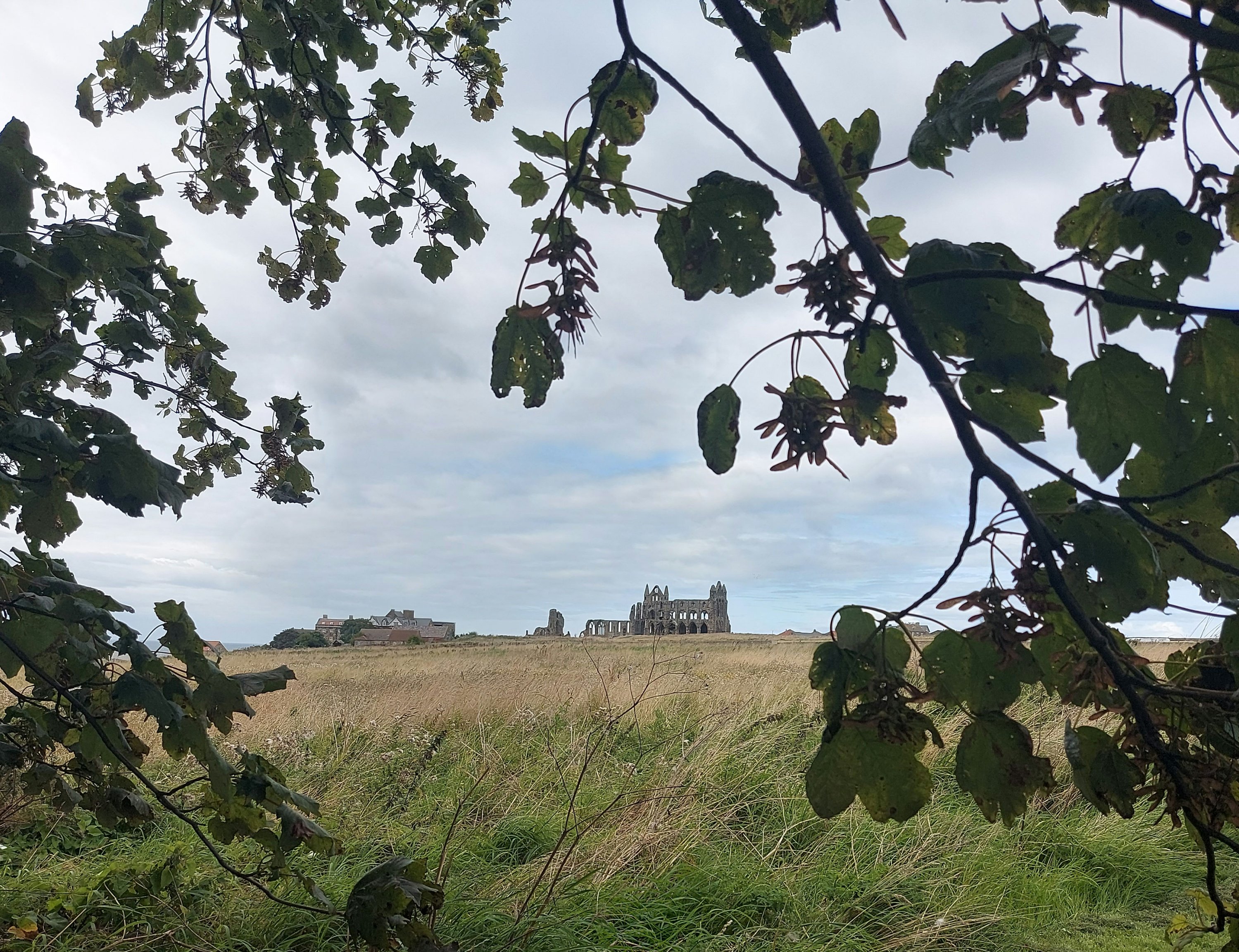
Following our visit to Goathland with friends in August 2023, we moved on to nearby Whitby, a unique place where history, seaside charm, and Gothic legends converge.
Nestled along the rugged Yorkshire coastline, Whitby is a coastal gem that seamlessly marries history, seaside charm, and an air of Gothic mystique. This picturesque town in North Yorkshire, England, is renowned for its rich maritime heritage, stunning cliffside views, and a literary legacy that has captured the imaginations of many.
Whitby’s history is deeply intertwined with the sea. Its harbour was once a bustling hub for shipbuilding and whaling.
Whitby’s charm extends to its sandy beaches, perfect for leisurely walks or traditional bucket-and-spade family outings. The town’s award-winning fish and chips are a must-try, enjoyed while taking in the panoramic views of Whitby’s iconic red-roofed houses, snugly nestled against the backdrop of lush green hills.
Whitby is forever etched into literary history thanks to Bram Stoker’s “Dracula.” The author was inspired by the town’s eerie ambience and the brooding ruins of Whitby Abbey. The abbey’s Gothic arches atop the East Cliff offer breathtaking vistas of the town and coastline.
We always enjoy a visit to Whitby, but (be warned) it can get very busy on some days.
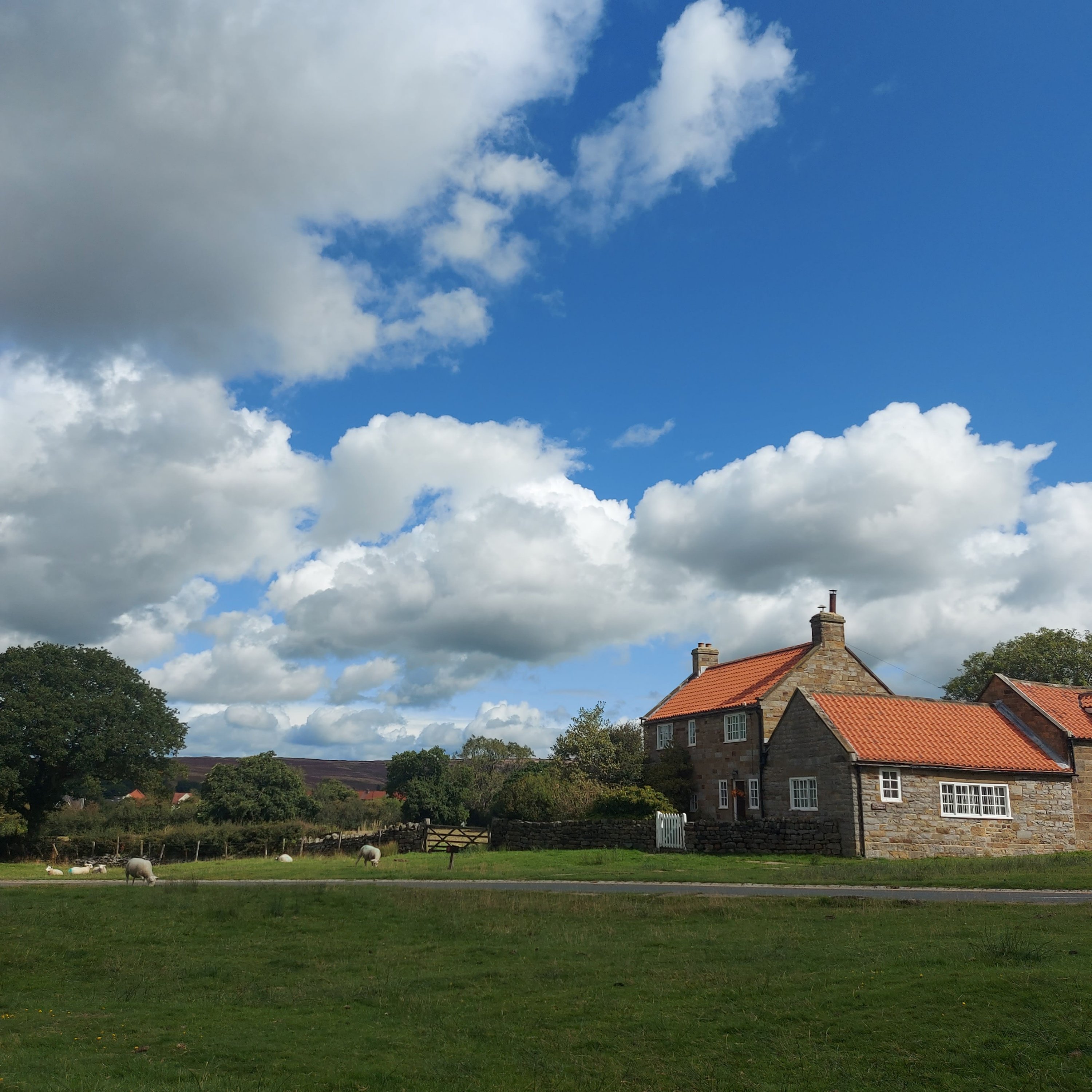
We visited this quintessential English village in August 2023 with family and friends. Goathland captivates with a blend of natural beauty, historic allure, and a touch of cinematic fame. This charming village in North Yorkshire offers an enchanting escape for nature enthusiasts, history buffs, and film aficionados alike.
Stepping into Goathland feels like stepping back in time. The village boasts a well-preserved historic character with its stone-built cottages, cobbled streets, and a sense of timeless beauty. As you wander through its quaint lanes you immerse yourself in the rich history that permeates the very air.
Goathland’s heritage railway station is a standout feature, exuding vintage charm, but it’s more than just a relic of the past; it played a pivotal role in the much-loved TV series “Heartbeat.” Additionally, it serves as a key stop on the North Yorkshire Moors Railway, a renowned heritage railway line that offers a scenic journey through the spectacular Yorkshire countryside.
Goathland has made its mark on the entertainment world as a favoured filming location. It’s famously known as “Aidensfield” in the TV series “Heartbeat.” For Harry Potter enthusiasts, it’s also the real-world counterpart of “Hogsmeade” station, adding a dash of magic to its allure.
Just a stone’s throw from Goathland, the Mallyan Spout waterfall awaits, a natural wonder offering a serene setting for a leisurely walk or a moment of contemplation. Beyond that, the North York Moors provide a vast playground for outdoor activities like hiking, cycling, and exploration.
Goathland is a village that captures the imagination and leaves an indelible mark on the heart.
In September 2020 I took Freddy with me to do some jobs in Stockton-on-Tees town centre, but we also had some fun and did some sightseeing.
Freddy got soaking wet in the fountains and had to walk back to the car in wet shorts and bare feet, fortunately there were some spare clothes in the car. You can see the photos here.
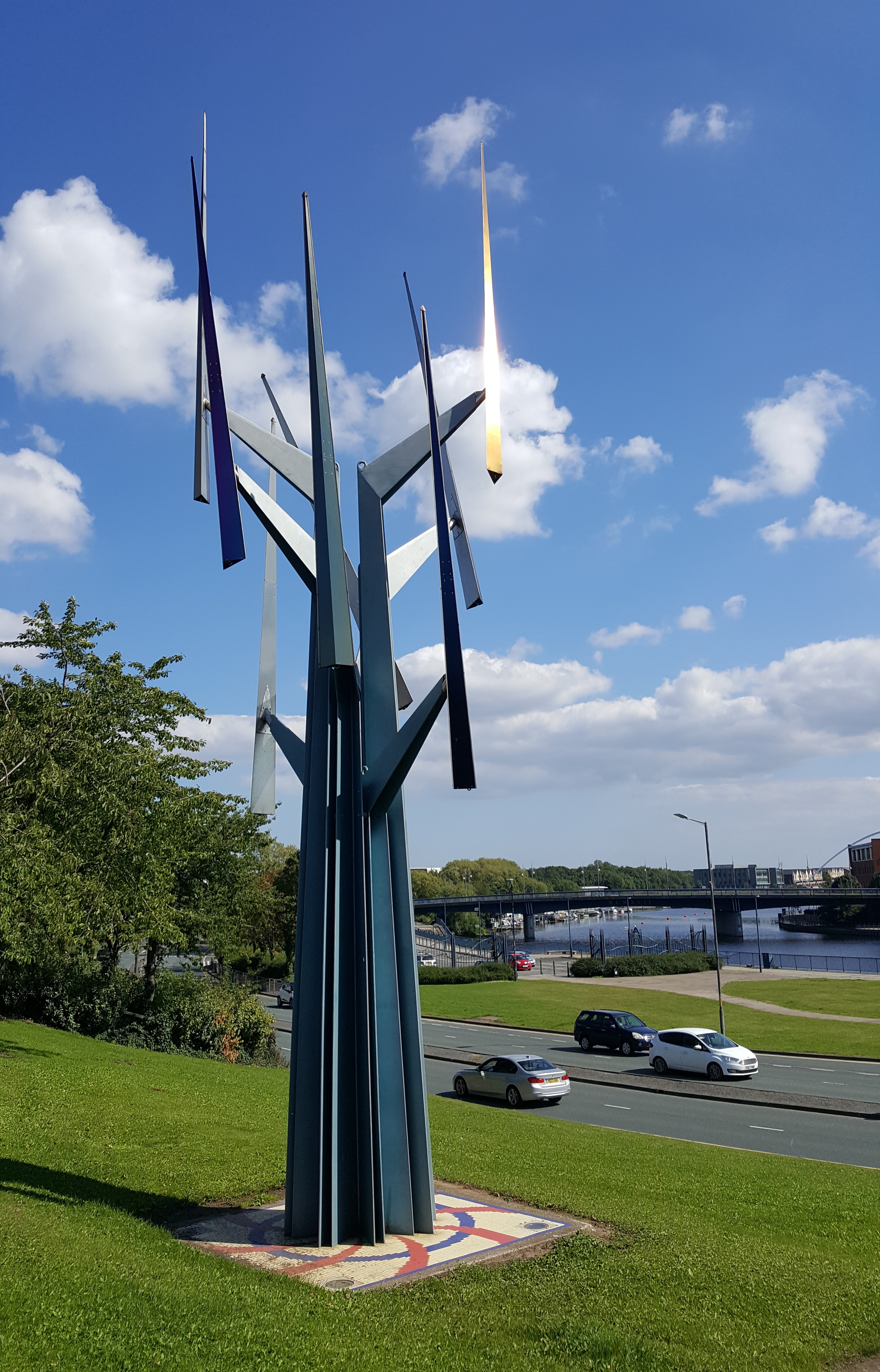
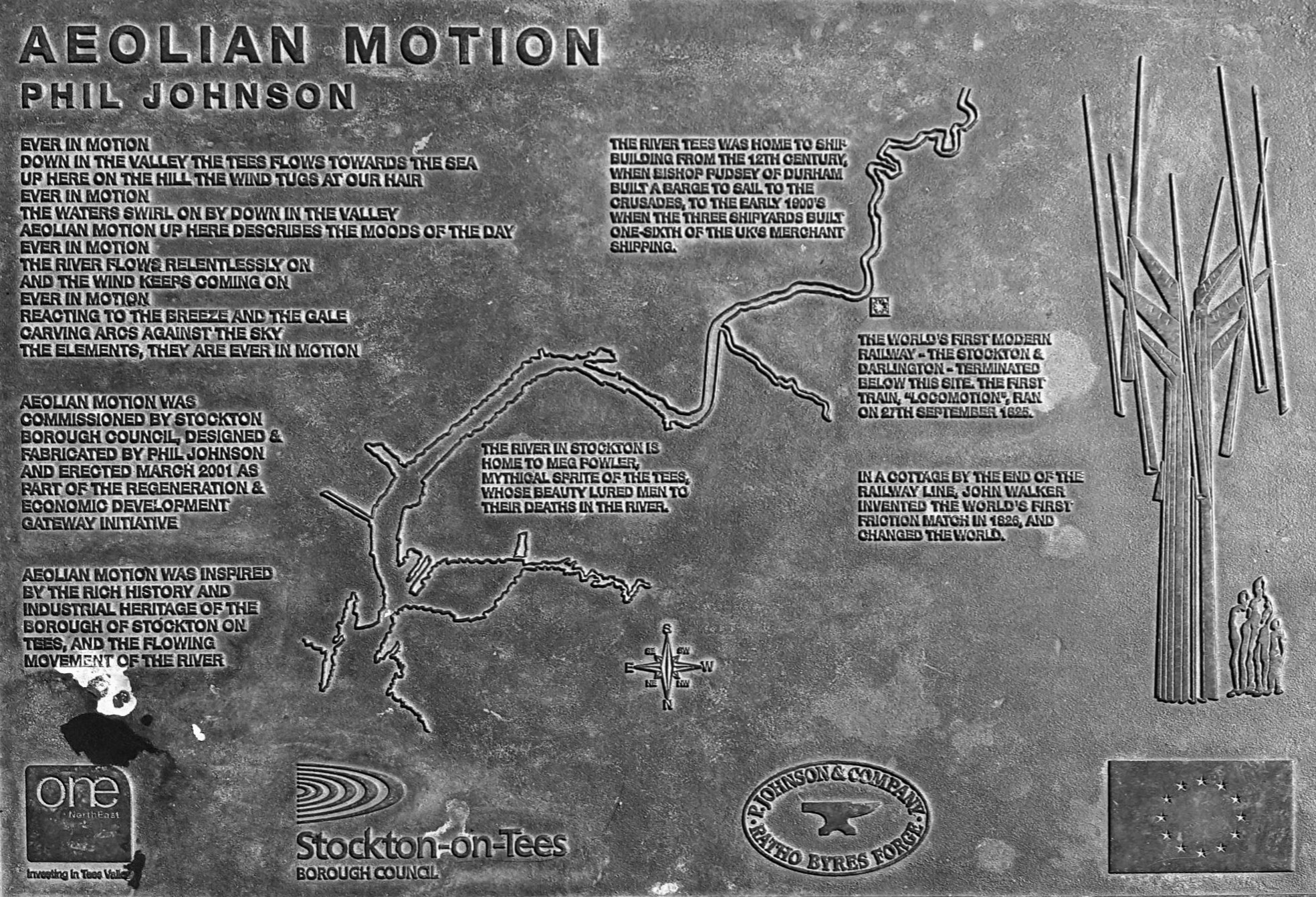
We also had a walk along the riverside, passing a striking piece of constantly moving public art entitled Aeolian Motion (Phil Johnson). It was erected in March 2001 as part of a regeneration plan for the area and was inspired by the endless flow of the river and its rich history (see plaque below).



 John Ager's Home on the Web!