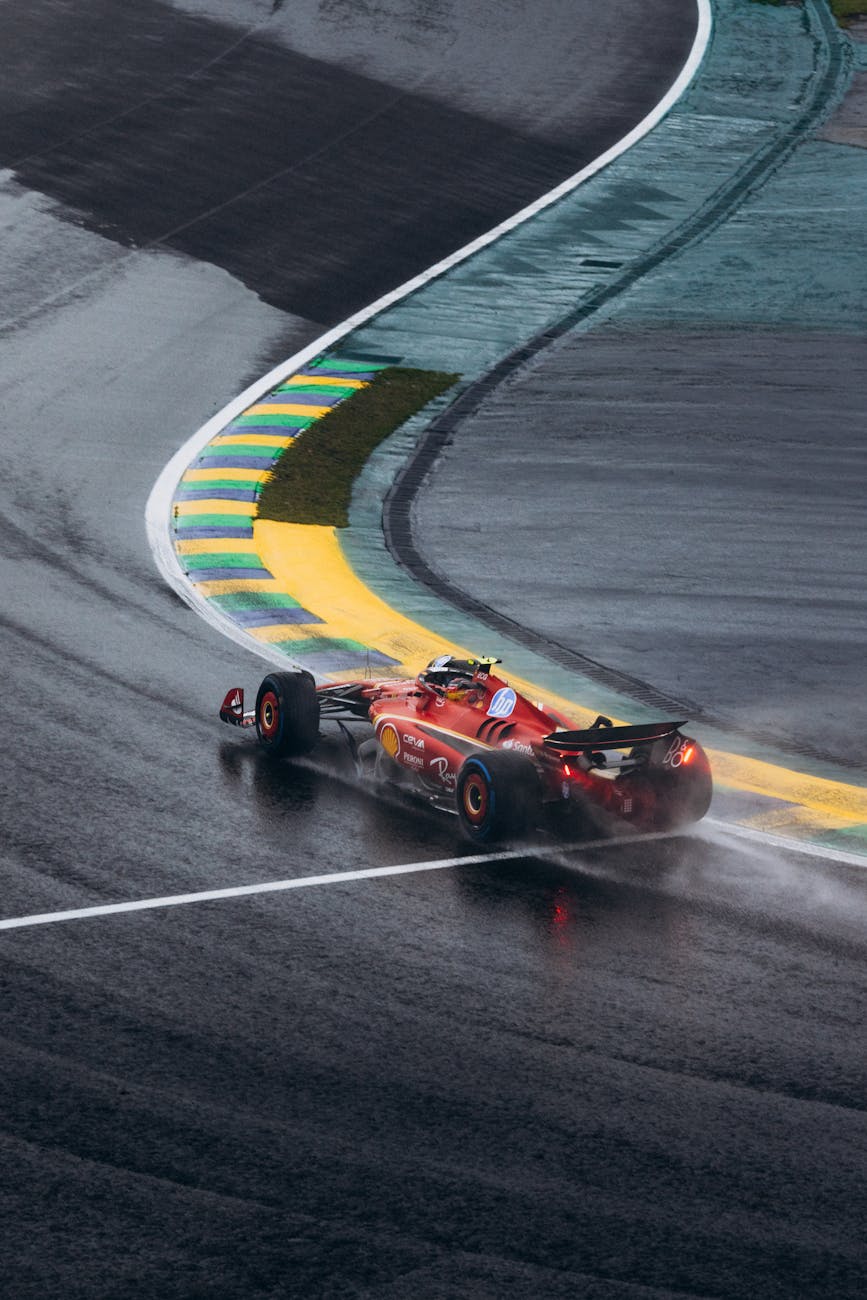
Rewriting F1 in 2026

Formula 1 in 2026 isn’t just another season, it ushers in a wholly new era. After years of incremental change, the sport is about to experience one of its most significant transformations, altering how cars look, perform, and how teams and drivers strategise. For fans, it promises innovation, unpredictability, and the kind of reset that could reshape the competitive landscape almost overnight.

At the heart of 2026 are sweeping regulations aimed at three main goals: sustainability, closer racing, and greater relevance to modern road-car technology. The cars will be smaller, lighter, and more agile, addressing long-standing concerns about bulk and weight. Aerodynamics are being completely reimagined, with active systems allowing wings to shift between high-downforce for corners and low-drag for straights. The familiar DRS is gone, replaced by a driver-controlled system combining aerodynamic changes with electrical energy deployment, making overtaking more strategic and dependent on driver judgement.

The biggest change comes in the power units. The 1.6-litre turbo V6 remains, but hybrid power now accounts for roughly half of a car’s performance, up from around 20% today. All cars will run on fully sustainable fuel, reinforcing F1’s commitment to environmental responsibility. This isn’t about slowing the sport; it’s about redefining performance for an era where efficiency and innovation matter as much as speed.

These changes have reignited manufacturer interest. Ferrari and Mercedes remain key players, Renault continues its long-term involvement, Honda returns as a works partner, Red Bull runs its own power unit with Ford, and Audi finally enters as a factory team. Success will hinge on how well teams integrate complex hybrid systems with chassis design.

On the grid, the established teams remain central. Red Bull looks to Max Verstappen to carry forward its dominance, Mercedes sees the reset as a chance to reclaim its edge, Ferrari aims to finally match its ambition with performance, and McLaren continues its resurgence. At the same time, new entries like Audi and other teams add unpredictability, with line-ups combining seasoned champions and hybrid-era talents. Mastery of energy management, active aero, and strategic racecraft will be crucial.

To help fans understand the technical changes, F1 and the FIA have updated terminology for new systems. “Overtake mode” replaces DRS, giving drivers a burst of electrical energy to assist overtakes. “Boost mode” allows tactical energy deployment from the hybrid system, while active aero adjusts wing angles for drag and downforce, and “Recharge” recovers energy through braking or coasting.

Cars themselves are smaller and lighter, with shorter wheelbases and narrower tyres, while downforce is reduced by 15–30% and drag cut by 40%. The hybrid systems are simplified with the removal of the MGU-H, emphasising a roughly 50-50 split between engine and electric power.

Ultimately, 2026 shows Formula 1 at its most authentic: evolving, risky, and open to reinvention. Some teams will adapt quickly, others slowly, but that uncertainty is what makes it compelling – a fresh story, starting from a bold new line rather than from zero.
Hamilton’s Nightmare F1 Season

Lewis Hamilton finished his first season with Ferrari in 2025 calling it a “nightmare” and the worst year of his Formula 1 career. For the first time in 19 seasons he failed to score a podium, and the emotional toll was clear as he spoke of anger, exhaustion, and a desire to disconnect completely over the winter. The move to Ferrari had begun with huge optimism, pairing the sport’s most successful driver with its most iconic team in pursuit of an eighth world title, but that promise quickly faded.

Ferrari’s car proved difficult and inconsistent, particularly due to skid wear problems that forced performance-limiting compromises. Although Hamilton won a sprint race in China, repeated technical issues and strategic limitations undermined race pace across the season. He struggled more than team-mate Charles Leclerc, who consistently out-qualified him and finished 86 points ahead, leading to unusually self-critical public comments from Hamilton. Team principal Frederic Vasseur downplayed these remarks as emotional reactions in an exceptionally tight field.

Ferrari’s first winless season since 2021 intensified scrutiny, and chairman John Elkann urged the drivers to focus more on driving and less on public commentary. Despite his frustrations, Hamilton insists he remains motivated, believing the sweeping rule changes coming in 2026 could reset the competitive order. Whether his struggles reflect car characteristics, team issues, or the effects of age remains uncertain, but his attempt to rebound next season is set to be one of F1’s defining stories.

Formula 1 Championship 2025

Photo: Liauzh / Wikimedia Commons (CC BY-SA 4.0)

The 2025 F1 World Championship was a season defined by tight competition and consistent performance. Lando Norris secured his first world championship at the final round in Abu Dhabi, finishing third in the race to edge Max Verstappen by just two points, ending the season with 423 to Verstappen’s 421. It was the closest title battle in years, with every race contributing to the final outcome.

The season highlighted the strength of McLaren as a team. Both Norris and his teammate Oscar Piastri claimed seven victories each, showing that success was shared and not dominated by a single driver. Piastri finished third overall, 13 points behind Norris, while Verstappen, despite eight wins, narrowly missed out on the championship. McLaren also secured the Constructors’ Championship, marking a return to the top after several seasons of near-misses.

What set this season apart was the consistency and strategic racing that defined the title fight. While individual race wins were important, it was the accumulation of points across the season, and the ability to avoid costly mistakes, that ultimately determined the champion. The competitiveness of the field, with multiple teams and drivers capable of winning races, made the championship unpredictable and engaging throughout the year.

For fans, 2025 will be remembered for its close margins and the way the championship was decided in the final race. Norris’s calm and precise driving under pressure contrasted with the aggressive style of his rivals, demonstrating that composure across a season is just as important as outright speed. The season also reinforced the idea that the F1 grid remains highly competitive, with multiple teams capable of challenging for both race wins and championships. Overall, the 2025 season combined excitement, strategy, and tight racing, providing a clear example of why Formula 1 continues to captivate audiences worldwide.