The Jewish Festival of Hanukkah

Today, 15 December in 2025, Jews around the world gather to celebrate the first day of Hanukkah, a festival rich in memory, meaning, and light. As winter deepens and days feel short and fragile, Hanukkah arrives as a quiet but resilient act of hope. It recalls a moment when faith was threatened by oppression and conformity, and when a small community chose courage, identity, and trust over fear.

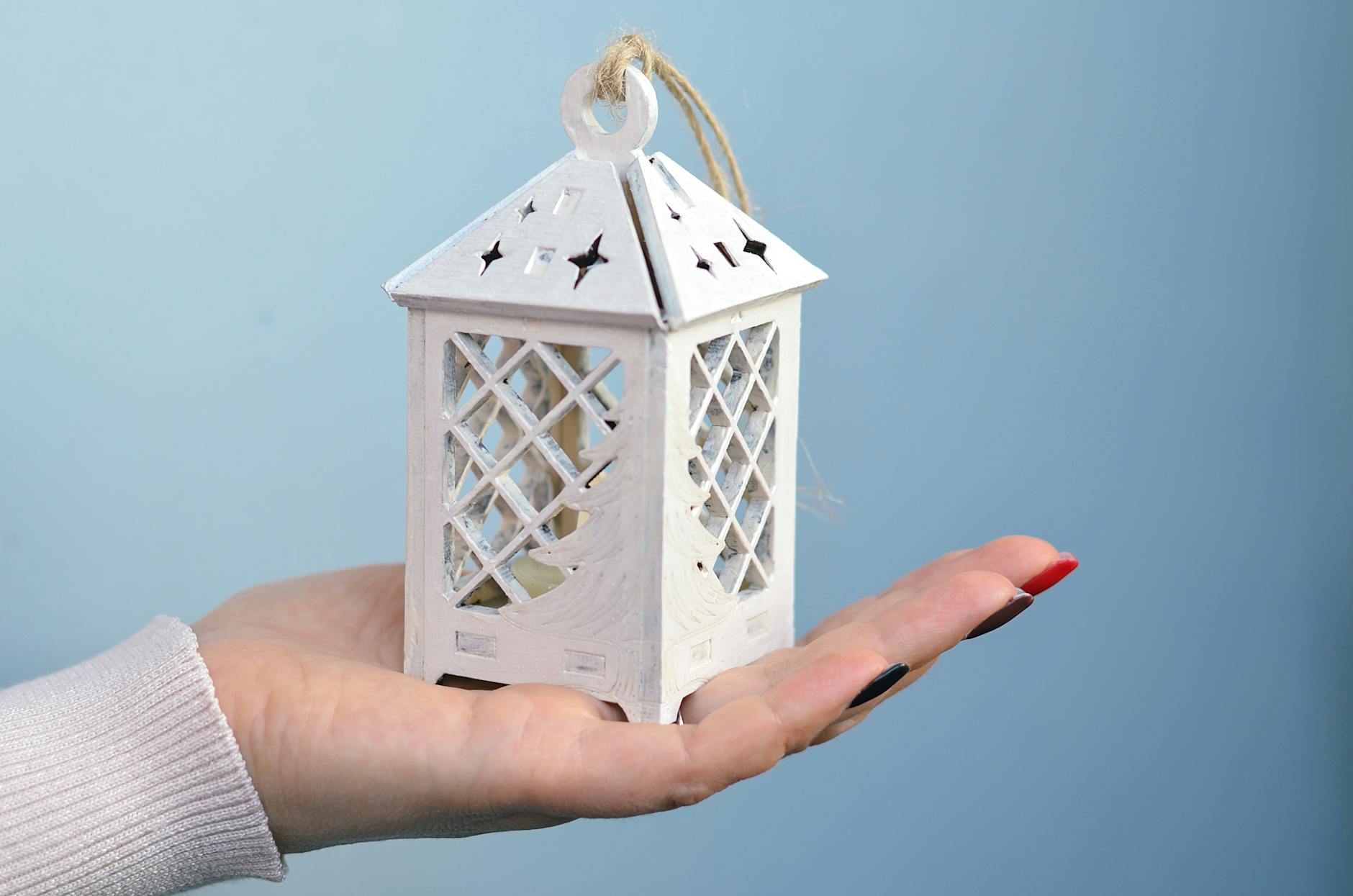
At the heart of Hanukkah is the lighting of the menorah, one candle on the first night, growing steadily brighter as each evening passes. It’s a gentle ritual, yet deeply powerful, reminding those who take part that light doesn’t need to be overwhelming to be transformative. Even a single flame can push back darkness, can offer warmth, can be seen from a window and shared with the world outside.

The festival remembers the rededication of the Temple in Jerusalem and the story of the oil that should have lasted one day but burned for eight. Whether heard as history, tradition, or sacred story, it speaks of endurance beyond expectation, of provision where none seemed possible. It invites reflection on what it means to stay faithful when resources are thin and the odds feel stacked against you.

Hanukkah is also a time of joy, family, food, song, and storytelling. Children play games, gifts are exchanged, and tables are filled with foods fried in oil, celebrating abundance in the midst of scarcity. In a fractured world, Hanukkah offers a steady, luminous reminder that identity matters, hope endures, and light, patiently tended, can still change everything.

Note: The date of Hanukkah changes each year because it follows the Jewish calendar rather than the Gregorian calendar used by most of the world. The Jewish calendar is lunisolar, shaped by both the moon and the sun. Months begin with the new moon and last 29 or 30 days. Hanukkah always starts on the 25th day of the Hebrew month of Kislev, but because the Jewish year doesn’t match the length of the solar year, the festival shifts when mapped onto the Gregorian calendar. To keep festivals in their proper seasons, the Jewish calendar occasionally adds an extra month. This prevents celebrations from drifting through the year, but the exact Gregorian date still varies, usually falling in late November or December. So while Hanukkah’s timing is fixed within Jewish tradition, it appears to move each year on modern calendars, reflecting an ancient, carefully balanced way of marking time.

St Lucy’s Day

St Lucy’s Day, celebrated on 13 December, sits quietly in the heart of Advent, carrying a gentle promise of light in the year’s darkest days. Lucy’s name comes from lux, meaning “light”, and over the centuries she’s become a symbol of hope that refuses to be extinguished, even when nights feel long and heavy. She was a young Christian woman from Syracuse in the fourth century, remembered for her courage, her generosity to the poor, and her refusal to let fear define her choices. The stories about her mix history and legend, yet they all circle around this conviction that light belongs to God and can’t be taken away.

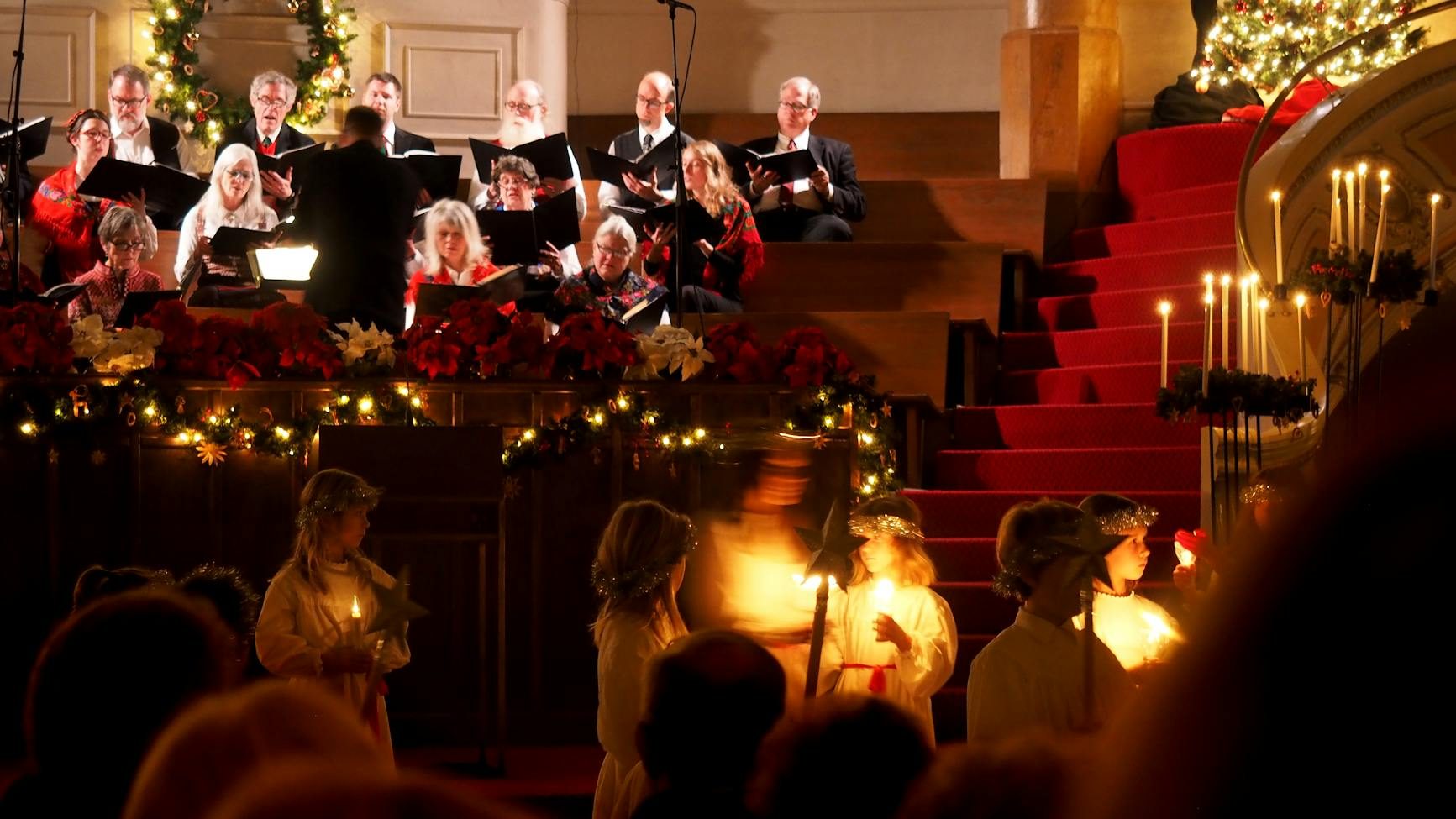
In Scandinavia the day has a luminous beauty all of its own. A girl dressed as Lucy wears a white robe and a crown of candles, moving through the early morning darkness while songs about light and peace are sung. It’s a simple ritual, yet it feels profoundly human, capturing that ache we all recognise: the longing for warmth, clarity, and kindness to break into the cold shadows of winter. Even without the candles and processions, the day invites a moment of quiet reflection, reminding us that small acts of courage and compassion shine far further than we imagine.

St Lucy’s Day whispers that light isn’t a spectacle, and it isn’t fragile. It’s something we carry, something we share, something that grows whenever we choose generosity over indifference, truth over convenience, or hope over cynicism. In the middle of December, it’s a gentle reassurance that dawn always comes.

Truth Twisting, Science Silenced

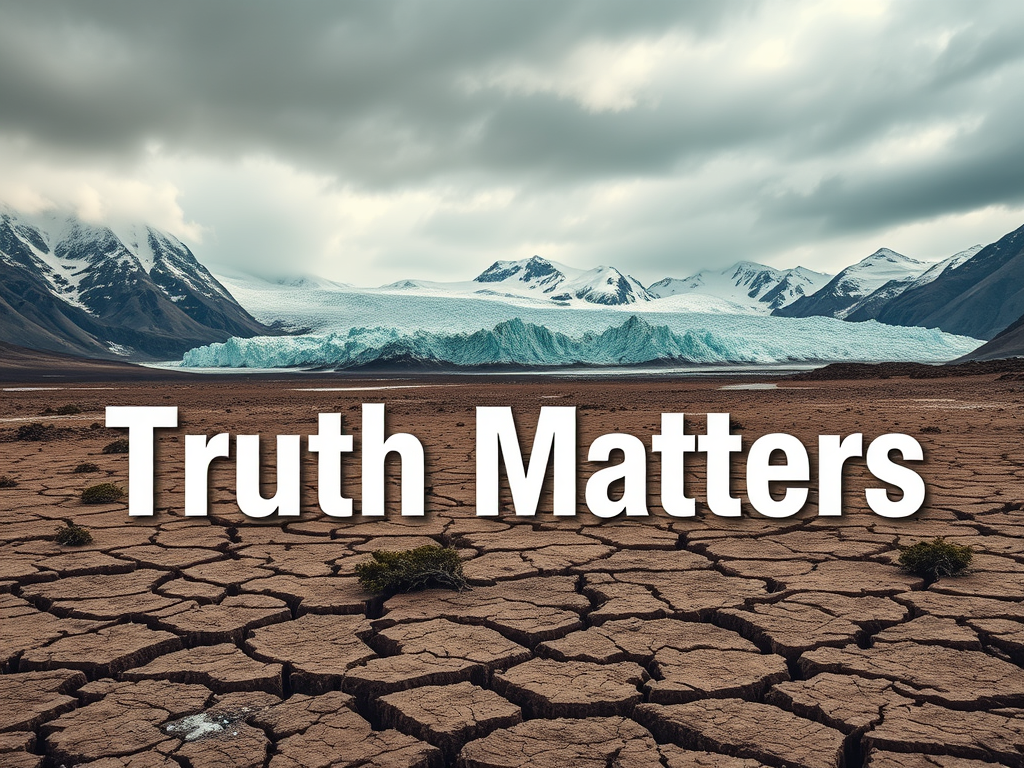
There’s a quiet but deeply troubling shift when official US government websites remove or rewrite scientific information about global warming. When the causes of climate change are presented as though they arise only from natural cycles, and when references to fossil fuels, rising emissions, or well-established impacts are deleted, something essential is lost. Science depends on clarity, transparency, and the willingness to face evidence even when it’s uncomfortable. When public institutions obscure that evidence, they weaken the trust people place in them and leave citizens less equipped to understand the world they live in.

These changes don’t alter the reality of global warming, but they make it harder for people to see the full picture. Without honest information, communities struggle to prepare for floods, heatwaves, and rising seas. Farmers, planners, schools, and local councils rely on accurate data to make decisions that shape people’s lives. Removing or downplaying that information doesn’t protect anyone; it simply masks the scale of the challenge.

There’s also a deeper danger here. When governments deny or distort science, they encourage a culture where facts become optional and evidence is treated as an inconvenience. That’s how societies drift downhill into ignorance. Once we start believing that inconvenient truths can be edited away, we create space for misinformation, mistrust, and division. Scientific understanding is one of humanity’s greatest achievements, a hard-won gift passed down through generations of curiosity and courage. To tamper with it for political comfort is to erode that gift.

We all deserve better, and the planet certainly does.

Keeping Christmas Truly Open

A carol service is an unconditional celebration of the love of God at Christmas; it’s a moment when music, scripture, and the soft glow of hope gather us into something far bigger than ourselves. I should know, because I’ve been organising them for years, although not in retirement. Those occasions always felt like an embrace. People arrived carrying the weight of the year, and somehow the familiar melodies, the gentle readings, and the story of a child born into vulnerability softened us all. There was no agenda except love, no priority except welcome, and no message except the astonishing truth that light still breaks into the world.

That’s why carol services must never be used for political purposes. They aren’t a platform to stir culture wars, promote nationalism, or draw battle lines between “us” and “them”. The moment you do that, the music stops being a gift and becomes a tool, and something holy is lost. Christmas speaks of peace on earth, goodwill to all, and that means everyone: neighbour, stranger, sceptic, seeker, and the person who disagrees with us completely.

A carol service is at its best when it gathers people without judgement, reminding us that divine love isn’t territorial, possessive, or partisan. It’s generous, surprising, and endlessly welcoming – and we honour it most when we let it stay that way.

Human Rights Day

Human rights aren’t abstract principles tucked away in treaties, they’re the everyday promise that every person is worthy of dignity, safety, and the chance to flourish. When we talk about rights, we’re really talking about people: children who deserve to learn without fear, women who deserve to walk home without being threatened, migrants who deserve compassion rather than suspicion, and communities who deserve to live without violence, exclusion, or silence. At its heart, human rights declare that no one is less than anyone else, and that simple truth still has the power to shake the world.

Yet we know how fragile that truth can be. In a world that often feels loud with anger and shrill with division, it’s easy to slip into cynicism, to shrug and say this is just how things are. But Human Rights Day nudges us to lift our heads, to notice the places where injustice still stalks the edges of our lives, and to realise that change begins not only with parliaments or courts, but with the way we choose to see one another. Every act of kindness, every moment of listening, every time we insist that someone’s story matters, we honour the promise made in the Universal Declaration of Human Rights.

It isn’t naïve to believe in this promise. It’s brave. It’s necessary. And it’s deeply hopeful. Because whenever we stand up for someone else’s dignity, we strengthen our own. Whenever we refuse to look away, we help build a world that’s gentler, fairer, and more human. On this day, and every day, we can choose that world, and it starts with how we treat the person right in front of us.

When Alliances Start Shifting

There’s a growing uneasiness across Europe right now, and it’s hard to shake the feeling that we’re being pulled into a darker, colder season. Putin’s behaviour makes it painfully clear that he has no real interest in peace with Ukraine; his actions speak of expansion, intimidation, and a calculated willingness to let suffering drag on. That alone casts an unsettling shadow over the whole region, reminding us that the peace we often take for granted is far more fragile than we’d like to believe.

Adding to that tension is Trump’s strange admiration for Putin, which seems to outshine his regard for Zelensky. It’s bewildering to watch a democratic figure praise an autocrat more readily than a leader defending his people from invasion. It deepens the instability, almost as if the moral compass of global leadership is spinning in odd and unpredictable ways.

What troubles me even more is the sense that the United States is drifting from its long-held partnership with Europe. For decades, that bond has been a pillar of democratic security, a reassuring constant in turbulent times. To see cracks widening now, when unity matters more than ever, feels like watching a bridge we depend on start to sway in the wind.

Altogether it paints a bleak, uneasy outlook, one filled with shifting loyalties and fading certainties. Yet even in this confusion, there’s still a stubborn hope that democracies can hold firm if we choose solidarity over cynicism, and courage over complacency.

Why use a VPN? (No, NOT that!)

A virtual private network has become one of the simplest, most dependable ways to stay safe online, especially when you’re moving through the world with a phone or laptop. Public Wi-Fi in cafés, hotels, trains, and airports feels convenient, yet it leaves your data exposed in ways most people never see. A VPN encrypts everything you send and receive, creating a private tunnel that shields your logins, messages, and personal details from anyone who might be snooping. It quietly restores a sense of safety at a time when digital life can feel far too porous.

It also offers a freedom that’s easy to underestimate. The internet is full of geographic walls – sites, services, and media locked to certain regions. A VPN removes many of those barriers. When you’re learning languages, this becomes genuinely exciting. It opens access to native news sites, streaming libraries, podcasts, and radio stations across Spain, France, Germany, Italy, and far beyond. It lets you immerse yourself in the authentic rhythms and cultural textures that simply don’t appear in textbooks or apps. It deepens understanding and makes language learning feel more alive.

Alongside all this, a VPN helps you push back against the quiet background tracking that follows most of us online. It limits the amount of profiling companies can do, softening the sense that every click is being watched. It’s a small, practical way to reclaim a little privacy and a little dignity, allowing you to move through the digital world with confidence, curiosity, and far fewer compromises.

Free WiFi is NOT Safe

Free WiFi can feel like a small delight when you’re out and about, offering an easy way to stay connected without dipping into your data allowance. Yet the moment you join one of these open networks, you step into a space that’s far less secure than it appears. There’s something disarming about seeing that simple “Free WiFi” prompt, almost as if the friendliness of the offer guarantees safety, but behind the scenes the reality is very different. Anyone with basic know-how can sit on the same network and quietly observe the flow of information, as if peering through an unlocked window.

The risks grow the instant you start doing things that matter. Logging into email, checking social media, or accessing online banking sends personal details across a connection that offers no real protection. Passwords, account information, and small digital traces of your day can be intercepted without you noticing anything unusual. There’s no warning sign, no gentle nudge to be careful – just a normal screen that hides the fact that your privacy is exposed to anyone determined enough to exploit it.

A safer approach is remarkably simple. Choosing mobile data instead of public WiFi keeps your information within a far more secure environment, and when you must use a public network, a trusted VPN wraps your connection in a protective layer that makes it far harder for anyone to snoop. It’s a quiet, thoughtful act of digital self-care, a way of keeping what matters truly yours in a world where so much of life moves through invisible channels.

Christmas Love not Nationalism

Christmas should be one of the gentlest moments in our shared cultural life, a season of light breaking into darkness, of compassion stretching itself wide enough to hold everyone. Yet in recent years, it’s been unsettling to watch Christian nationalists try to hijack it. They frame Christmas as a symbol of cultural supremacy, a line in the sand, a test of loyalty to a particular version of identity. It turns something soft into something sharp, something generous into something guarded, and it jars with the spirit of the season.

Because at its heart, Christmas has never been about drawing boundaries. It’s about hospitality, humility, and a love that refuses to stay small or confined. It tells a story of welcome that begins on the margins, in obscurity, in vulnerability. When people attempt to pull Christmas into a narrative of exclusion or cultural fear, they aren’t defending it, they’re distorting it. They miss the quiet courage of the story, the way it invites us to see strangers as neighbours and neighbours as cherished parts of a shared human family.

The good news is that Christmas still holds its shape. It keeps nudging us toward kindness, solidarity, and the courage to imagine a broader, softer way of being together. And no matter how loudly others try to claim it as a weapon in a culture war, it keeps slipping through their fingers, returning again to warmth, generosity, and the beautifully simple call to make room for one another.

Wynyard Woodland Country Park

Wynyard Woodland Park occupies land that was once part of the nineteenth-century Clarence Railway, a line built to transport coal from the Durham coalfields to the River Tees. The railway served the industrial development of the region for many decades, passing through what is now Thorpe Thewles. When the line closed in the twentieth century, the trackbed and surrounding land were left unused until local authorities identified the opportunity to convert the disused route into a public green space.

The redevelopment created a linear park that follows the former railway corridor. New pathways, cycle routes, and planted woodlands were introduced, allowing visitors to move through the landscape along the old line. The former station house at Thorpe Thewles was restored and adapted to include visitor facilities, a small museum covering the history of the railway, and a café. As the site matured, the woodland areas developed greater ecological value, supporting a range of wildlife and providing a mix of open and shaded spaces for recreation.

Wynyard Woodland parkrun forms part of the park’s present-day use. Held every Saturday morning, it follows sections of the former railway route and attracts local runners, walkers, and volunteers. The event highlights how the park has shifted from an industrial transport corridor to a community-focused recreational area.

Today Wynyard Woodland Park serves as a practical example of how former industrial land can be repurposed for public benefit. Its combination of historical features, accessible paths, and expanding natural habitats makes it a valued local space for exercise, education, and outdoor leisure.