The Danger of Lazy Thinking

Trust in politicians may be at an all-time low; yet there’s a quieter, and in many ways deeper, threat to democracy in the way feelings and opinions are so often allowed to overshadow facts and expert insight. When that happens, public conversation becomes blurred, as if clarity itself has slipped out of reach. Confident claims start to carry the same weight as careful evidence, and the people who shout the loudest begin to drown out those who’ve spent years studying the issues that shape our common life.

It’s easy to see why this happens. Facts can feel slow, demanding, or inconvenient, while opinions offer something quicker and simpler, a shortcut that seems to spare us the effort of wrestling with complexity. Yet democracy rests on the willingness of ordinary people to stop, listen, and think with generosity and humility. Experts aren’t flawless, but their work – tested, challenged, and refined – gives us the best chance of understanding the world as it really is, rather than as we wish it to be.

If we want a healthier public square, we need to nurture a spirit of curiosity. That means reading beyond the surface, noticing where information comes from, and speaking with people who see things differently without slipping into suspicion or scorn. It asks us to value substance over spectacle, patience over instant certainty, and truth over the comfort of hearing only what we want to hear. Democracy grows stronger when we choose that slower, braver path: the one that leads us back to honesty, compassion, and shared responsibility.

Don’t Share Rage Bait!

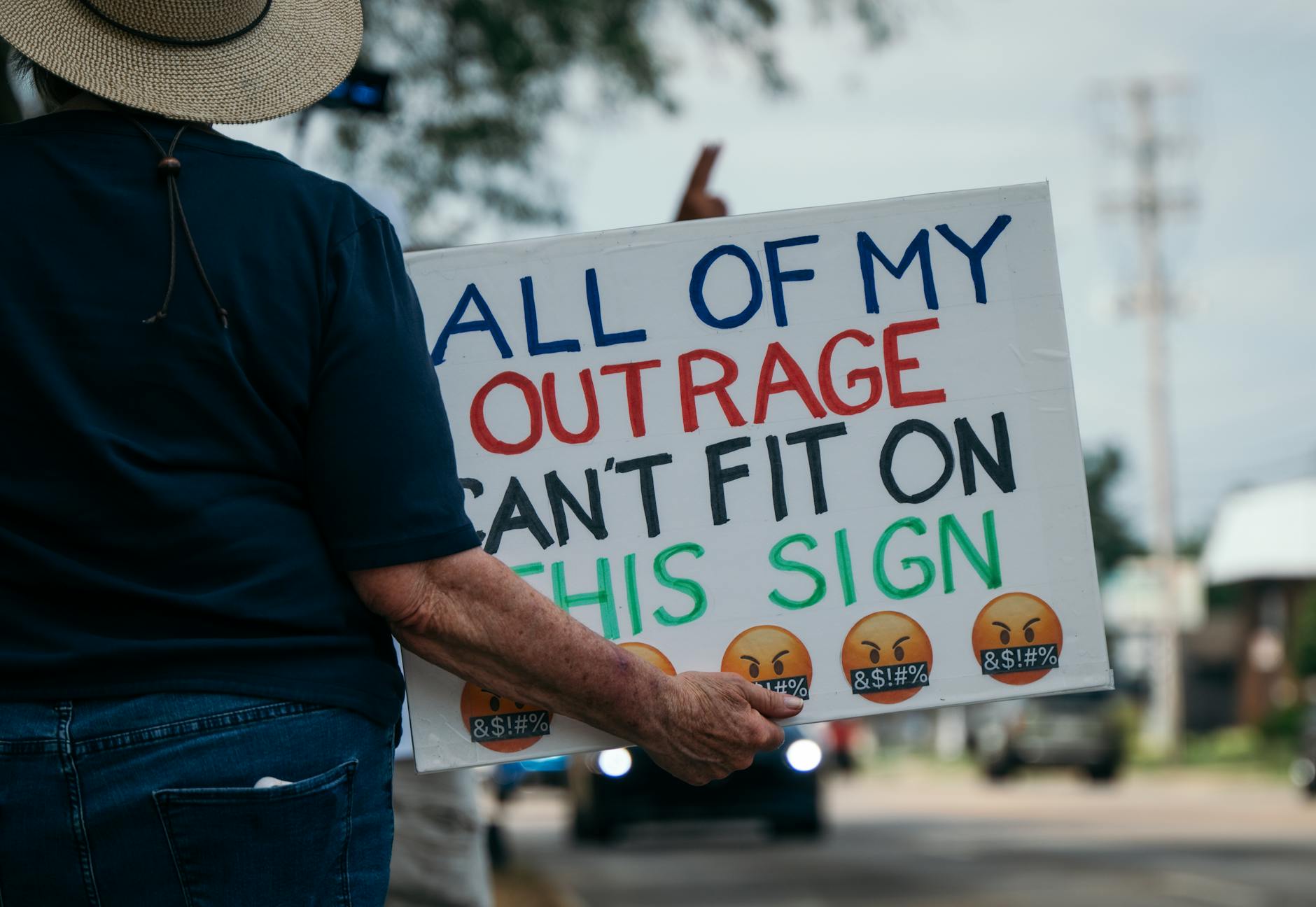
Rage bait has become one of the defining features of our online lives; it slips into news feeds, social networks, and comment threads with a quiet ease, stirring us before we’ve even realised what’s happening. It’s crafted to provoke a sharp emotional reaction, often anger or disgust, because those feelings are powerful drivers of clicks and shares.

The content doesn’t need to be accurate, fair, or thoughtful; it only needs to be provocative enough to pull us in. Once we’re hooked, the algorithms reward the engagement, and the cycle repeats: outrage breeds interaction, interaction amplifies visibility, visibility shapes perception.

It’s tempting to think we’re immune, yet rage bait works precisely because it appeals to our sense of justice, our frustrations with the world, and our desire to defend what matters. It can leave us feeling riled and drained, as though we’ve spent energy on something hollow. Over time, it dulls our compassion, erodes trust, and narrows our ability to listen. It also strips away nuance, replacing it with a simplified ‘us versus them’ worldview that doesn’t honour the messy, complicated truth of real human experience.

Choosing not to take the bait is an act of quiet resistance. It asks us to pause, breathe, and treat our attention as something precious. It invites us to look for stories that build rather than break, and conversations that nourish rather than consume. In that pause, there’s space for curiosity, gentleness, and the recognition that most people are far more than the headlines designed to make us hate them.

Manufactured Outrage

Tabloid newspapers and social media manufacture outrage to promote sales and encourage clicks, but constant outrage about nothing is bad for us. A careless headline or a clipped video is enough to spark a wave of indignation that spreads faster than any calm explanation, and before we realise it, we’ve been drawn into yet another cycle of anger that leaves us feeling drained. This constant agitation isn’t harmless; it shapes the way we see the world and nudges us towards suspicion, cynicism, and fear. It also quietly erodes our mental health, because the human mind isn’t designed to live in a permanent state of alert.

When Jesus said, “do not let your hearts be troubled” (John 14:1 NIVUK), he wasn’t speaking into a peaceful world but into one where fear and confusion were daily companions. His words still meet us there, reminding us that peace isn’t naïve or passive; it’s a form of holy resistance. We can choose to step back, breathe, and seek whatever is true, noble, right, pure, lovely, and admirable, letting that shape our minds instead of the noise.

Halfway Round the World

The line so often tossed around in public debate – “A lie is halfway round the world before the truth has got its boots on” – has a far older and richer story than most people realise. It’s usually pinned on Churchill or Twain, partly because it sounds like something either might have said, but the trail leads back more than two centuries before them, to a writer who understood human frailty with almost surgical clarity.

In 1710, Jonathan Swift published a piece in The Examiner in which he sighed over the power of falsehood to shape public opinion. His words still feel painfully current: “Falsehood flies, and truth comes limping after it, so that when men come to be undeceiv’d, it is too late; the jest is over, and the tale hath had its effect.” Swift saw how quickly a rumour could take on a life of its own, leaving truth to hobble along behind, patient, earnest, and too often ignored.

Over the next century and a half, writers, preachers, and pamphleteers repeated variations of Swift’s idea. The imagery softened, shifted, and picked up new colours as it passed from hand to hand. Then, in 1855, the Victorian preacher Charles Haddon Spurgeon offered the version that would change everything: “A lie will go round the world while truth is pulling its boots on.” With that single stroke, he transformed Swift’s lament into a vivid little proverb. Suddenly truth wasn’t limping, it was simply taking too long to get dressed, fumbling at the laces while lies dashed gleefully away.

From that moment, the wording began to crystallise. Newspapers and speakers adapted it freely; the boots sometimes became shoes, and the distance travelled grew from a circuit to half the globe. By the early twentieth century, the familiar modern form had settled into the language, sharpened and polished by repetition: “A lie is halfway round the world before the truth has got its boots on.”

The quote we know today isn’t the invention of a single brilliant mind, but the product of three centuries of observation: Swift’s sharp insight, Spurgeon’s memorable turn of phrase, and the slow, steady work of time. It reminds us that truth often arrives late, but it does, eventually, arrive.

Resurfacing Racism

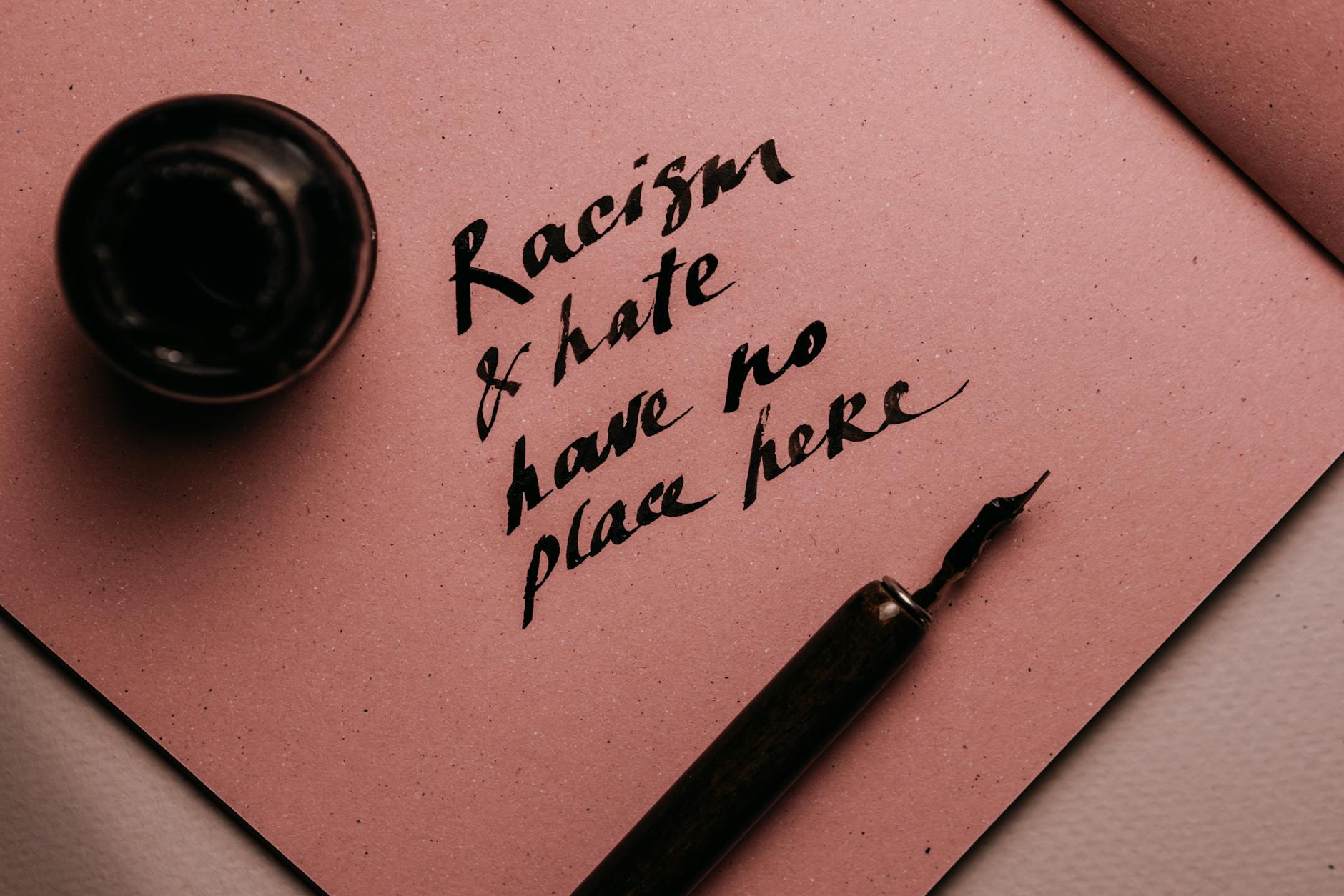
It struck me again this morning how quickly the boundaries of acceptable public discourse have shifted. For years, it felt as though the UK was making genuine progress in challenging racism and nurturing a more generous, inclusive spirit. There was a shared sense that, while we weren’t perfect, we were moving in the right direction, learning to speak with more care, and recognising the dignity of every neighbour. Yet the regression we’re witnessing didn’t appear out of nowhere. You can trace a clear line back to the years of Brexit campaigning, when inflammatory language became normalised, and figures like Nigel Farage helped move harsh, exclusionary rhetoric from the fringes to the centre of national debate.

Once that boundary was crossed, others followed. What used to be unsayable in public life is now spoken without hesitation, and often with applause. Reform UK, along with a handful of MPs and public commentators, can now voice plainly racist ideas with little, or sometimes no, consequence. The moral guardrails that once held firm seem to have weakened, and we’re left facing a culture in which prejudice is treated as a legitimate political stance rather than a breach of the values we claim to cherish.

It’s painful to watch, because it reminds us how fragile progress can be, and how easily it’s undone when fear is stirred, and division is rewarded. Yet naming what’s happening matters, because racism thrives in silence. If we’re to rebuild a kinder, more truthful public square, we’ll need the courage to call out the rot, to speak with honesty, and to keep insisting that a better, more generous Britain is still possible.

Fighting for Truth Today

In an age where information moves at the speed of a click, fighting for truth has become one of our most essential responsibilities. The battle begins within ourselves.

Before sharing anything, pause. That moment between encountering a claim and forwarding it is where truth often lives or dies. Ask yourself: Do I actually know this is true? Or am I sharing it because it confirms what I already believe?

Getting comfortable with uncertainty is crucial. There’s power in saying “I don’t know.” This means actively seeking information that challenges our beliefs and checking multiple sources. The most viral content is rarely the most accurate, it’s the most emotionally provocative.

Learn to distinguish between facts, interpretations, and opinions. A fact is verifiable. An interpretation adds meaning. An opinion adds judgment. Conflating them is how truth gets obscured.

In our communities, respond to misinformation with curiosity rather than contempt: “Where did you see that?” This keeps dialogue open. Support quality journalism financially when possible, truth-seeking requires resources.

The hardest part isn’t about facts at all. It’s maintaining the social fabric that makes truth-seeking possible. Preserve relationships across disagreements. Acknowledge when your own “side” gets things wrong. Recognize that most people spreading falsehoods aren’t acting maliciously.

Most importantly, stay engaged without becoming cynical. Cynicism, believing there’s no truth or everyone’s lying, isn’t sophistication. It’s surrender. Truth exists, even when it’s hard to find. Every pause before sharing, every source you check, every curious question you ask contributes to a world where truth has a fighting chance.

See also: Truth Under Siege Today

Truth Under Siege Today

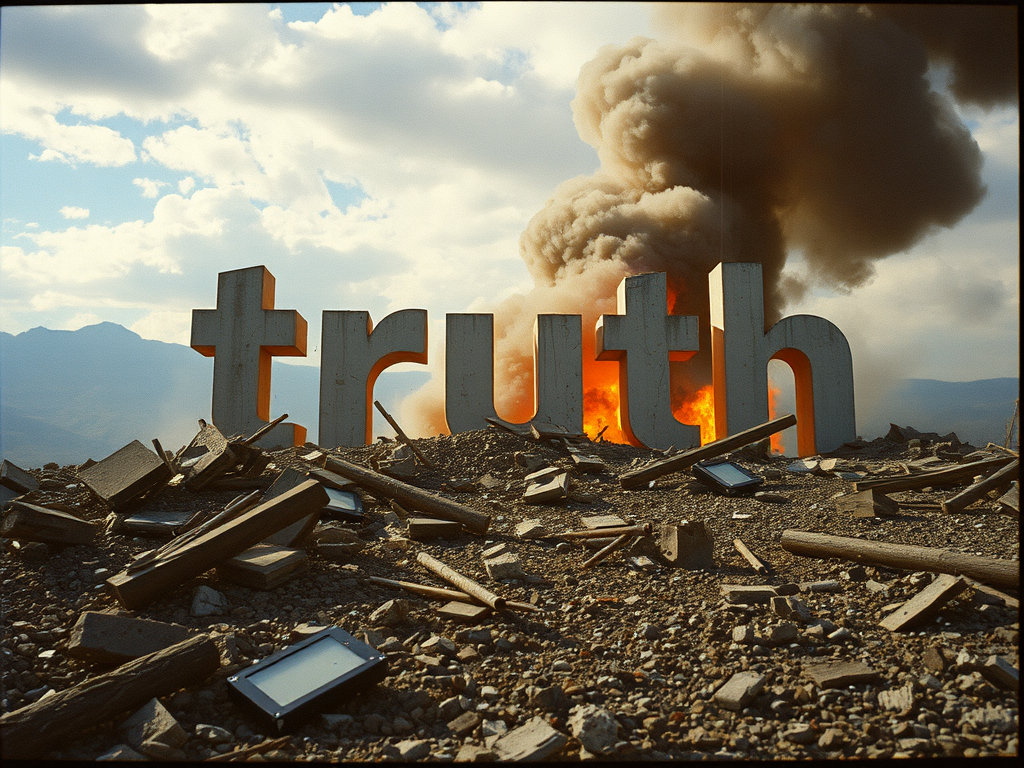
The sheer volume of fake news and misinformation circulating today threatens not only trust in news media but the very fabric of democracy itself. When truth becomes subjective and every claim seems to have an alternative version, people struggle to discern what’s real and what’s fabricated.

This erosion of confidence in credible journalism allows lies to spread faster than facts, feeding cynicism and division.

As people retreat into echo chambers that confirm their biases, public debate becomes polarised, and the shared foundation of truth on which democratic societies depend begins to crumble. Journalists, once trusted to hold power to account, are dismissed as biased or corrupt, while conspiracy theorists and influencers with no accountability gain vast audiences. In such a climate, reasoned discussion gives way to outrage, and manipulation becomes easier for those seeking to sow discord or exploit fear for political gain.

Ultimately, misinformation isn’t just a problem of falsehoods, it’s an attack on the common understanding that democracy requires: informed citizens capable of making fair and rational choices.

Rebuilding that trust means defending the principles of accuracy, transparency, and integrity in public communication, and encouraging people to seek truth rather than comfort in what they choose to believe.

See also: Fighting for Truth Today

World Kindness Day

Kindness is simple, just a kind word, a thoughtful gesture, or a small act of compassion. It doesn’t require effort or expense. Yet, it can transform someone’s day, bringing light to their world.

When we choose kindness, we open the door to compassion. Each act fosters a ripple effect, spreading warmth, understanding, and connection. In doing so, we don’t just improve someone’s mood, we help to build a more empathetic, caring world.

It’s not about grand gestures. It’s about presence. It’s about noticing someone’s struggle, offering a smile, or listening without judgment. These moments matter, because they remind others that they are seen, valued, and not alone.

Kindness is free. And in a world that often feels fast and cold, it’s one of the most powerful forces we have.

Finding Truth in Nuance

Seeing nuance in issues that others view as black and white can be both enriching and exhausting. It’s a strange kind of loneliness to stand in the grey areas, aware that truth rarely fits neatly into one camp or another. When I try to express that complexity, I’m often misunderstood by both sides; too cautious for one, too compromising for the other. Yet real life, real people, and real morality are far more intricate than slogans or hashtags can capture.

It’s entirely possible, even healthy, to agree and disagree at the same time. You can recognise the value in someone’s argument while still questioning their conclusions. You can want justice yet doubt the methods used to pursue it. You can admire tradition while welcoming change. Holding conflicting opinions doesn’t make you indecisive; it makes you honest about the world’s complexity and the limits of your own understanding.

At times, it’s draining to live in this tension, to resist the comfort of easy answers. But perhaps it’s also where empathy grows, in the willingness to listen deeply, to imagine why someone might see things differently. The world doesn’t need more certainty; it needs more curiosity, more grace for contradiction, and more people willing to dwell in the in-between spaces. That’s where we find truth, not as a fixed point, but as a living, shifting conversation that keeps us humble, human, and connected.

Elon Musk’s Political Interference

Sky News have produced an exceptional piece of journalism exploring how Elon Musk, via his ownership of X (formerly Twitter), is increasingly shaping political discourse in the UK, particularly by boosting right-wing and fringe voices. The investigation involved creating nine new British X accounts (three left-leaning, three right-leaning, three neutral) and collecting roughly 90,000 posts from about 22,000 accounts. The key finding was that over 60% of political content shown to these accounts came from right-wing sources, while only about 32% came from left-wing ones, and just 6% from non-partisan sources. Left-leaning users still saw nearly as much right-wing content as left. Neutral users saw twice as much right-wing content as left.

Musk himself has publicly endorsed or amplified figures like Rupert Lowe and Ben Habib, whose posts saw notable upticks in engagement when Musk replied or retweeted them. For example, Lowe’s tweets got roughly five times more reach when Musk engaged with them. The article suggests this is more than coincidence, the algorithm appears to favour right-wing and extreme content, with 72% of posts from ‘extreme’ authors coming from the right.

The piece also examines the broader shift: Musk’s overhaul of the platform, the drastic staff reductions after his takeover of Twitter, and a move towards open-sourcing the algorithm (though experts say the publicly available code offers limited transparency). Meanwhile UK regulators under the Online Safety Act are grappling with how to deal with these developments. Many voices quoted argue that unconstrained platform power coupled with algorithmic bias poses a threat to democratic discourse.