At Christmas, the difference between happiness and joy comes into sharper focus. The season itself is often wrapped in happiness, familiar songs, warm lights, shared meals, laughter, and moments of comfort and nostalgia. This kind of happiness is good and gift-like, but it’s also fragile. It depends on things lining up, relationships feeling easy, finances holding steady, and the ache of loss staying quietly in the background. When those things don’t fall into place, Christmas happiness can feel thin, or even painful.
Christian joy tells a deeper story. The joy of Christmas isn’t rooted in perfect circumstances but in the astonishing claim that God chose to draw near, not in power or certainty, but in vulnerability. The birth of Jesus doesn’t arrive in a calm, well-ordered world. It comes amid fear, displacement, political oppression, and ordinary human anxiety. That matters, because it means joy isn’t the denial of darkness, it’s light entering it.
Joy, in this sense, is a steady confidence that God is with us, not just when the table is full and the house is warm, but when the heart feels heavy or the season stirs grief as much as gratitude. It allows space for sorrow without surrendering hope. It says that love has taken flesh and pitched its tent among us, and that nothing, not loss, not uncertainty, not brokenness, has the final word.
Although not able to attend Stockton Salvation Army this morning (Sunday 16 November 2025) I’ve been able to reflect on the Bible reading at home.
Exodus 13:17 to 14:14 is a gentle reminder that God’s guidance is often longer, slower, and wiser than the paths we’d choose. When Pharaoh finally lets the people go, God doesn’t take them by the quickest route but leads them by the desert road towards the Red Sea, knowing they aren’t ready for the shock of conflict. There’s something tender in that, something that speaks to the long story of every church and every believer: God doesn’t rush maturity, and he doesn’t abandon us when the journey bends in ways we never expected.
The pillar of cloud and fire becomes a symbol of that patient, steady presence. By day and by night, God stays ahead of his people, guiding them with a quiet constancy that doesn’t demand attention but offers reassurance. When I think of my own church celebrating its anniversary, I see echoes of that presence: the unexpected turns navigated with grace, the seasons of joy, the times of strain, and the quiet ways God has held the fellowship together. Even from a distance, I can be part of that gratitude.
Then comes the moment of fear: the roar of Pharaoh’s chariots behind, the sea blocking the way ahead, and the people crying out in panic. Their protests feel painfully human: Was it because there were no graves in Egypt that you brought us to the desert to die? It’s the voice we all know when pressure closes in and the future feels impossible. And into that fear, Moses speaks words that settle deeply into the heart of any congregation marking its years: Do not be afraid. Stand firm and you’ll see the deliverance the Lord will bring you today… the Lord will fight for you; you need only to be still (Exodus 14:13–14).
A church anniversary is a moment to breathe in those words again, to remember how many times God has made a way where none seemed open, and to trust that he’s still leading, still guiding, still walking ahead with a faithfulness that doesn’t falter. Even at home, I’m grateful for the journey so far and hopeful for the road still unfolding.
This is my Remembrance Sunday Sermon at Stockton Salvation Army on Sunday 9 November 2025.
It starts with three short Bible readings (each with brief context), moves into two quotes (which I come back to later in the sermon), and then the sermon itself. There is an additional prayer at the end.
Psalm 51:3–5
For I know my transgressions, and my sin is always before me. 4 Against you, you only, have I sinned and done what is evil in your sight; so you are right in your verdict and justified when you judge. 5 Surely I was sinful at birth, sinful from the time my mother conceived me.
David recognises the depth of sin not just in his actions but in his very nature, expressing the idea that human brokenness is inherited and universal.
Luke 6:43–45
‘No good tree bears bad fruit, nor does a bad tree bear good fruit. 44 Each tree is recognised by its own fruit. People do not pick figs from thorn-bushes, or grapes from briers. 45 A good man brings good things out of the good stored up in his heart, and an evil man brings evil things out of the evil stored up in his heart. For the mouth speaks what the heart is full of.
Jesus uses simple imagery to show that goodness can flow from a good heart. It shows that goodness isn’t foreign to us, it springs from within, from the heart shaped by God’s image and nurtured by his grace. It reminds us that the human heart, though capable of terrible wrong, still holds the seed of goodness that God can help grow.
Galatians 5:22–23
But the fruit of the Spirit is love, joy, peace, forbearance, kindness, goodness, faithfulness, 23 gentleness and self-control. Against such things there is no law.
Paul describes how the Holy Spirit brings forth goodness and other virtues in those who open their hearts to God. This reminds us that genuine goodness isn’t merely human effort, but the Spirit’s life within us. Even though we’re marked by sin, the Spirit cultivates in us a new nature, one that reflects the goodness of God himself.
True lament is not born from that trite sentiment that the world is bad but rather from a deep conviction that it is worthy of goodness.
We are not meant for war, For target-seeking arms, For blood that stains a fun-meant shore, For shells that scream alarms.
Before we speak of Remembrance, we begin with lament – the honest naming of pain and the longing for goodness.
Remembrance Sunday invites us to pause between the silence of loss and the call of hope. It’s a day when memory feels sacred, when we remember those who gave their lives, and the terrible cost of human pride, fear, and sin.
Psalm 51 reminds us that brokenness runs deep, not only in history but in every human heart. David’s confession, surely I was sinful at birth, acknowledges a truth we’d rather avoid, that the seeds of destruction lie not only in nations but in us.
Yet Jesus, in Luke 6, speaks of another seed, goodness that can still grow within the human heart. A good tree bears good fruit, he says, hinting that beneath the ash of sin, the image of God remains – a spark of life that grace can fan into flame.
Paul takes us further, describing the fruit of the Spirit, love, joy, peace, and the rest, as evidence that goodness isn’t lost but renewed. It isn’t our achievement, but God’s own life flowering within us. So even as we lament the wars of the past and the wars still raging in hearts and lands, we dare to believe that goodness is possible.
So as we hold these scriptures together, we face a paradox that reaches to the heart of our faith…
Original sin reminds us we’re all touched by brokenness. The image of God reminds us we’re all capable of goodness. The first shows our need for grace, the second reveals our dignity and our hope.
This paradox has deep roots in Christian theology. It stretches back to the debates between Augustine, who emphasised humanity’s inherited sinfulness, and Pelagius, who believed in the innate capacity for goodness and moral choice. Over the centuries, theologians have wrestled with this tension, seeking to balance the reality of sin with the redeeming grace that restores human goodness through Christ.
On the one hand, the doctrine of original sin teaches that humanity is marked by a brokenness inherited from Adam and Eve, a bent towards self-centredness that no one can escape. On the other, the Scriptures affirm that every person bears the image of God, and so carries the possibility of goodness, love, and truth.
The reconciliation lies in holding both truths together without letting one cancel out the other. Original sin doesn’t mean humanity is utterly evil, but rather that even our best intentions are tinged with self-interest, fear, or pride.
Augustine and later theologians stressed that while sin distorts the image of God in us, it doesn’t erase it. That divine imprint remains, like a flame flickering under ash.
So, the possibility of goodness is real, but it isn’t self-sufficient. Our goodness always points back to God’s sustaining grace, the Spirit moving within us. Paul speaks of people who do by nature things required by the law, showing that even those outside the covenant can reflect God’s goodness written on the heart. And yet he also says, all have sinned and fall short of the glory of God.
The paradox is that both can be true: goodness is possible because of God’s image within us, but salvation and wholeness require grace beyond us.
In that way, original sin underscores the need for redemption, while the possibility of goodness affirms our dignity and responsibility. We are neither condemned to despair nor able to save ourselves by our own light; instead, we’re invited to trust the God who renews the image already planted within us.
Let’s return to that first quote:
True lament is not born from that trite sentiment that the world is bad but rather from a deep conviction that it is worthy of goodness. Cole Arthur Riley
This striking quote reframes what it means to grieve. Lament isn’t shallow pessimism or complaint. It doesn’t flow from cynicism, the shrug that says the world is hopeless and always will be. Instead, Riley shows that lament is rooted in love, in the belief that the world can and should be different. To cry out against injustice or brokenness is to affirm that goodness is possible, that life is meant for something more.
Lament demands both courage and imagination, asking us to recognize current pain while envisioning better possibilities. It resists giving in to suffering or cruelty and instead acts as a form of hope, those who mourn deeply often do so because they truly believe in meaning, justice, and beauty.
Riley’s understanding of lament turns it into a form of witness. To lament is to stand against indifference, to speak truth to the world’s brokenness, and to demand something better. It’s an active testimony, one that refuses to let the world settle for less than goodness.
Through her writing, Riley insists on a more human and liberating expression of faith; one that makes space for grief and tenderness yet never gives up on goodness. In her vision, lament is not weakness but love, not despair but hope strong enough to weep.
True remembrance is more than sorrow, it’s a cry of faith. Like she says, lament is born not of cynicism but of conviction that the world is worthy of goodness. We remember, then, not just to mourn what’s been lost, but to nurture what can yet grow: peace, mercy, and the Spirit’s fruit in every heart.
And so, we remember not just with tears, but with longing – longing for peace, for goodness, for the renewal of all things in God.
Harry Read was a wireless operator in the 6th Airborne Division when he was parachuted into Normandy in the early hours of 6 June 1944, aged 20.
As Commissioner Harry Read, he was a much-loved Salvation Army Officer, who served with distinction, and in later life shared his poetry on Facebook. These poems have been compiled into anthologies, books I treasure especially as he was my Training Principal.
These are his words:
We are not meant for war, For target-seeking arms, For blood that stains a fun-meant shore, For shells that scream alarms.
We are not meant to kill Or, even worse, to maim Because of some despotic will, And do it in God’s name.
We are not meant to mourn, Have chilling memories; Of youth and innocence be shorn, Call good men enemies.
We are not meant to hate And hate with gathering force, Because our hate we cultivate And poison reason’s source.
But we are meant for peace And joy and harmony, For hearts that know a blest release From hate and enmity.
And we are meant for God, For whom our spirits yearn, Who has our war-torn pathways trod In hope of our return.
[Pause]
Prayer for Remembrance Sunday
God of peace and mercy, we come before you with hearts full of gratitude and sorrow. We remember those who gave their lives in war— those who fell in foreign fields, those who never came home, and those whose wounds, seen and unseen, carried the weight of the world’s brokenness.
We remember, too, those who still serve today, striving to keep peace in troubled lands; and we pray for all who live with the grief, fear, or silence that war leaves behind.
Teach us, Lord, to remember not only with words, but with lives that honour their sacrifice— by seeking peace where there is hatred, by building bridges where there are walls, by loving even our enemies, as Christ loved us.
May your Spirit comfort the sorrowing, strengthen the weary, and guide all nations in the ways of justice and compassion. Until that day when swords are beaten into ploughshares, and your kingdom of peace reigns over all the earth.
Candidates Sunday is a significant event in The Salvation Army UK and Ireland Territory (as well as worldwide), dedicated to encouraging individuals to reflect on God’s calling in their lives, particularly towards spiritual leadership roles such as officership or territorial envoyship.
This day serves as a focal point for corps and communities to engage in prayer, worship, and discussion about vocation and service. Resources are typically provided by the Candidates Unit, including sermon outlines, creative prayer materials, and multimedia content to facilitate meaningful engagement.
For those feeling a call to ministry, The Salvation Army offers structured pathways through its application process, encompassing stages of interest, application, development, and assessment. This journey is supported by events like Design for Life, a weekend retreat aimed at helping individuals discern God’s purpose for their lives.
Candidates Sunday is more than a date on the calendar; it’s an invitation to explore one’s purpose and consider how to serve within The Salvation Army’s mission. Whether through formal leadership roles or active participation in community service, the day emphasizes the importance of responding to God’s call in various capacities.
For more information or to express interest in spiritual leadership, individuals are encouraged to contact the Candidates Unit at vocation@salvationarmy.org.uk or visit the official website.
This Sunday Devotional is for Stockton Corps on our 150th Anniversary.
This weekend (23/24 November 2024) marks the 150th Anniversary of Stockton Corps. None of us were here 150 years ago, but we’re part of a continuing story. We’re all part of a rich and proud heritage, of productive years of ministry and service, and have an ongoing privilege and responsibility now and into the future.
There may be those of you who remember the Centenary 50 years ago, when you would have looked back and been encouraged by what had been achieved from those early beginnings.
As we look back today, we can be similarly encouraged by what has been achieved; but 2024 is a very different world to 1974, and we’ll be aware of vast changes in culture, demographics, attitudes, technology and the like.
• What was in the news then? • What do we take for granted that we didn’t have then?
Going back even further, the birth of the Salvation Army, and the commencement of the work in Stockton are events, not of the last century, but of the one before that. We live in a vastly different age, and that’s both an encouragement and a challenge. The encouragement is that the Christian message is the same as it’s always been, but every generation has the challenge to communicate it in the present age.
Jesus Christ is the same yesterday, today, and forever. Hebrews 3:18
We thank God for everything that’s been achieved in his name over the past 150 years; spiritual victories won in worship and service given in compassionate care. But, at the same time, we don’t forget what is being achieved now, nor do we neglect the need to move forward in faith into an uncertain future.
We celebrate those who have come to know Jesus as Saviour and Lord through the ministry of the Salvation Army in Stockton, because whenever the word of God has been declared, God’s will has been done.
We celebrate today all those who have been touched with the love of God through the ministry of the Salvation Army in Stockton, because whenever we’ve reached out with the compassion of Jesus, God’s will has been done.
We celebrate today the faithful officers, soldiers, adherents and friends who have been vital to the ministry of the Salvation Army in Stockton, because whenever lives have been dedicated to him, God’s will has been done.
Jesus commanded his disciples to go and make disciples of all the nations, baptizing them in the name of the Father and the Son and the Holy Spirit. Teach these new disciples to obey all the commands I have given you. And be sure of this: I am with you always, even to the end of the age.Matthew 28:16-20.
These words are a challenge and an encouragement, words that motivated those who opened this corps in Stockton all those years ago and have motivated all those in the corps since. May they be our motivation and encouragement for the future.
We celebrate the bonds of friendship and fellowship that have been sustained and strengthened in Christ through the years, because whenever our fellowship has been built up, God’s will has been done.
Paul wrote to the Philippians: Is there any encouragement from belonging to Christ? Any comfort from his love? Any fellowship together in the Spirit? Are your hearts tender and compassionate? Then make me truly happy by agreeing wholeheartedly with each other, loving one another, and working together with one mind and purpose. Don’t be selfish; don’t try to impress others. Be humble, thinking of others as better than yourselves. Don’t look out only for your own interests, but take an interest in others, too. You must have the same attitude that Christ Jesus had. Philippians 2:1-5
The reality of Christian fellowship has been lived in this corps over the years. Yes, there may have been times of disappointment and loss, but underlying it all has been that rich strand of fellowship binding us to each other, and binding us to Christ.
May our fellowship be richer and deeper in the future, for therein lies the way of effective Christian ministry and service.
We also celebrate today all those who have been ministered to in time of need or hardship, because whenever we have cared for others in Christ’s name, God’s will has been done.
Our Christian gospel is for the whole person; body, mind and spirit. Let’s make sure that as we move forward, we look for the face of Jesus in the face of everyone we meet, and serve them in his name.
There’s a sense in which we’re always turning a page in our continuing story of faith and service; in our own lives and that of the corps. This anniversary is only a date after all, but it’s good to have significant milestones and signposts.
As participants in this continuing story we’re reminded of the need to declare the word of God in words and actions, to build up our fellowship, and to care for others in the name of Jesus.
We remember those who have gone before us and have done God’s will, and we take our place and follow in their footsteps. We honour their memory by living the same life of faith in obedience to the heavenly vision.
We’ve already been reminded that the Lord will always be with us. So, let’s thank God for the past, and claim in faith all that God wants to do in us and through us by committing ourselves fully to him and his work as we go in the strength of the Lord.
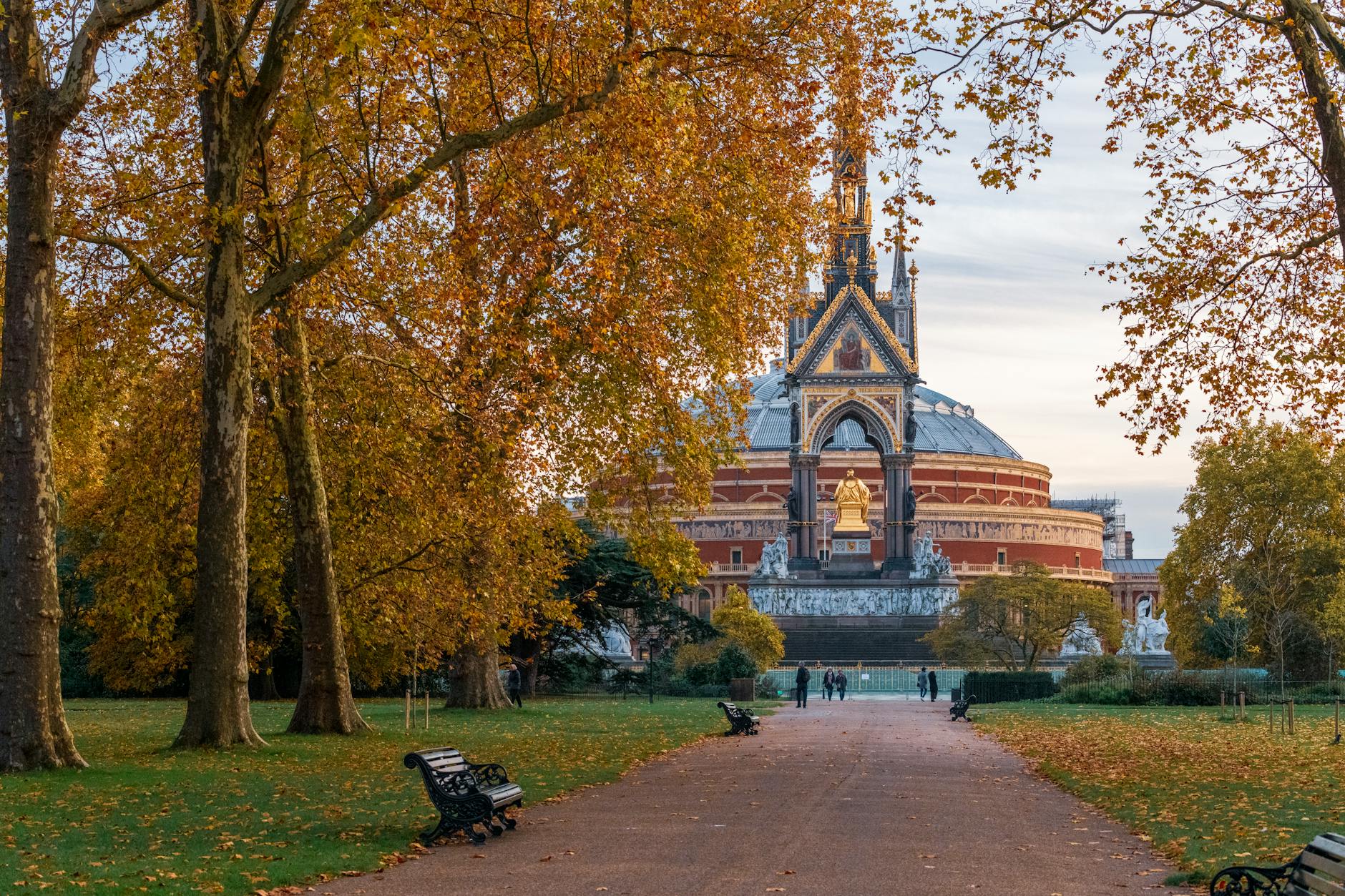
On this day (23 May 1980) I was ordained and commissioned as a Salvation Army Officer (Minister of Religion) in the Royal Albert Hall, London. This significant anniversary comes in a world that’s vastly different from the one in which I commenced my vocation, but one that continues in my retirement.
There’s so much I could write, but here’s just one memory of the day. My mother was chosen to come onto the stage to receive her Silver Star badge (presented then to mothers and now to both parents of officers) as a representative mother. Unfortunately, she couldn’t find her way through the tunnels in the bowels of the building in true This is Spinal Tap tradition. Fortunately, she had the presence of mind to come back up to the auditorium and make a grand entrance via the central stairs onto the stage!
Note: My commissioning was in Spring (May 1980) but I like this Autumn photo!
I’m pleased to share this post by fellow Salvation Army Officer John Clifton…
Following a training programme is crucial to being able to complete any physical event. Towards the end of 2022, I signed up to do an iron-distance triathlon. Knowing I couldn’t just turn up and complete it on the day, I followed, in a manner that could be called ‘religious’, the ‘Be Iron Fit’ programme by Don Fink. It is a 30-week programme that, starting on January 1st, 2023, meant that the event day landed perfectly on July 30th, the race day for Outlaw Nottingham Full. The format of the programme is clearly structured. Monday is rest day (there was an addictive dopamine-rush of achievement from ticking off completion of the first training session on January 1 – a Monday!); Tuesday was swim and run; Wednesday was the brick session (google it); Thursday was swim and cycle; Friday was run (then also swim at a later phase of the programme); Saturday was a long cycle (then followed by a short run brick session; again, google it) and then Sunday was a short cycle and a longer run (not back-to-back, so not a ‘brick’… Ok, here you go…).
I first met Howard Webber back in the 1970s while working in the Pathology Department of Northampton General Hospital and studying to become Medical Laboratory Scientific Officer. Howard was also in the same line of work and moved to Northampton to take up a position in the Biochemistry Department, the branch of pathology in which I had decided to specialise.
We soon realised that we were both Salvationists, and later discovered we also shared the call of God to change direction from our chosen careers to follow vocations as full-time Salvation Army Officers, ministers of religion appointed to corps (church) leadership or other areas of Christian ministry. We both took this step of faith independently, and the majority of both our working lives have been following this calling. Howard is now an officer in retirement like me.
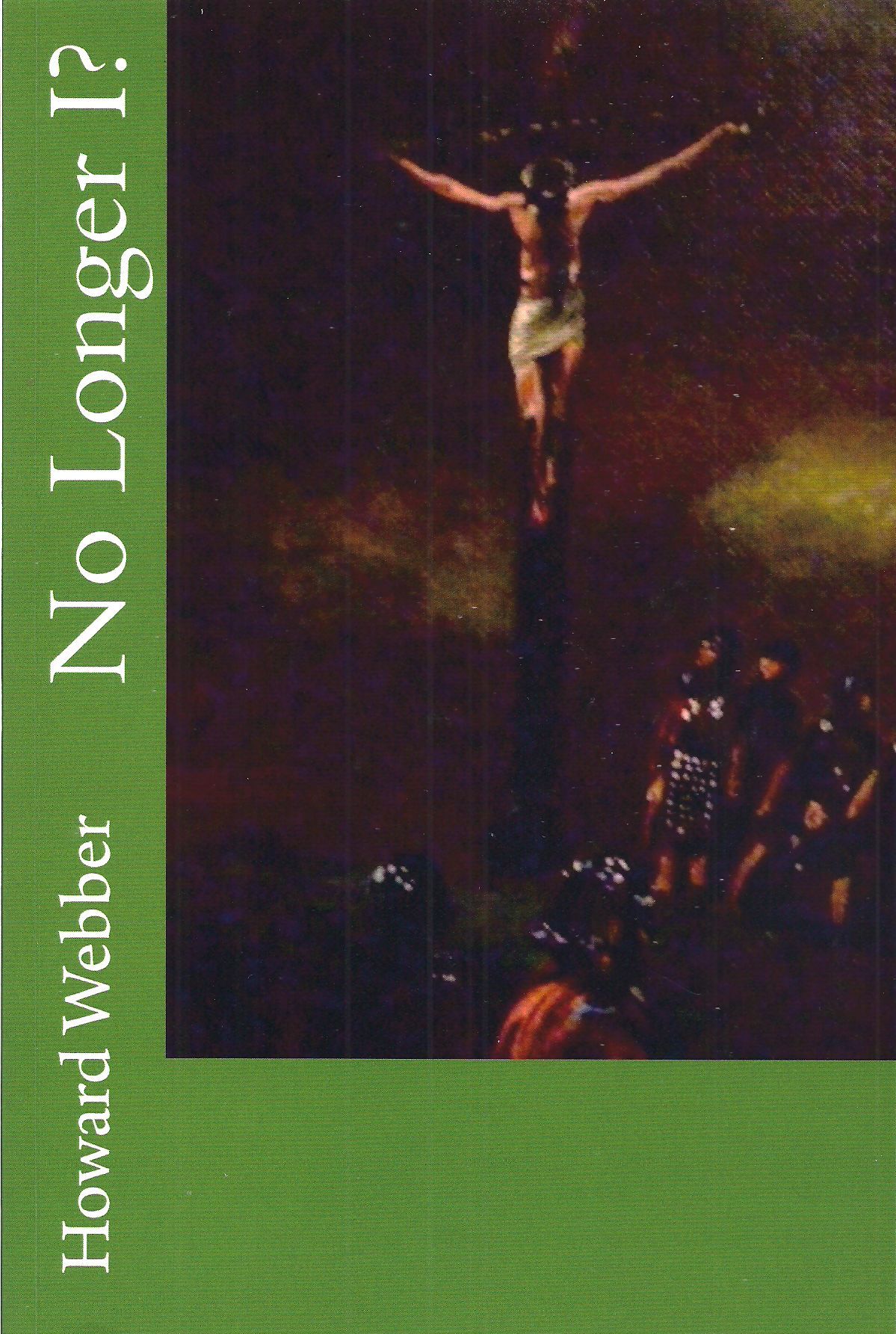
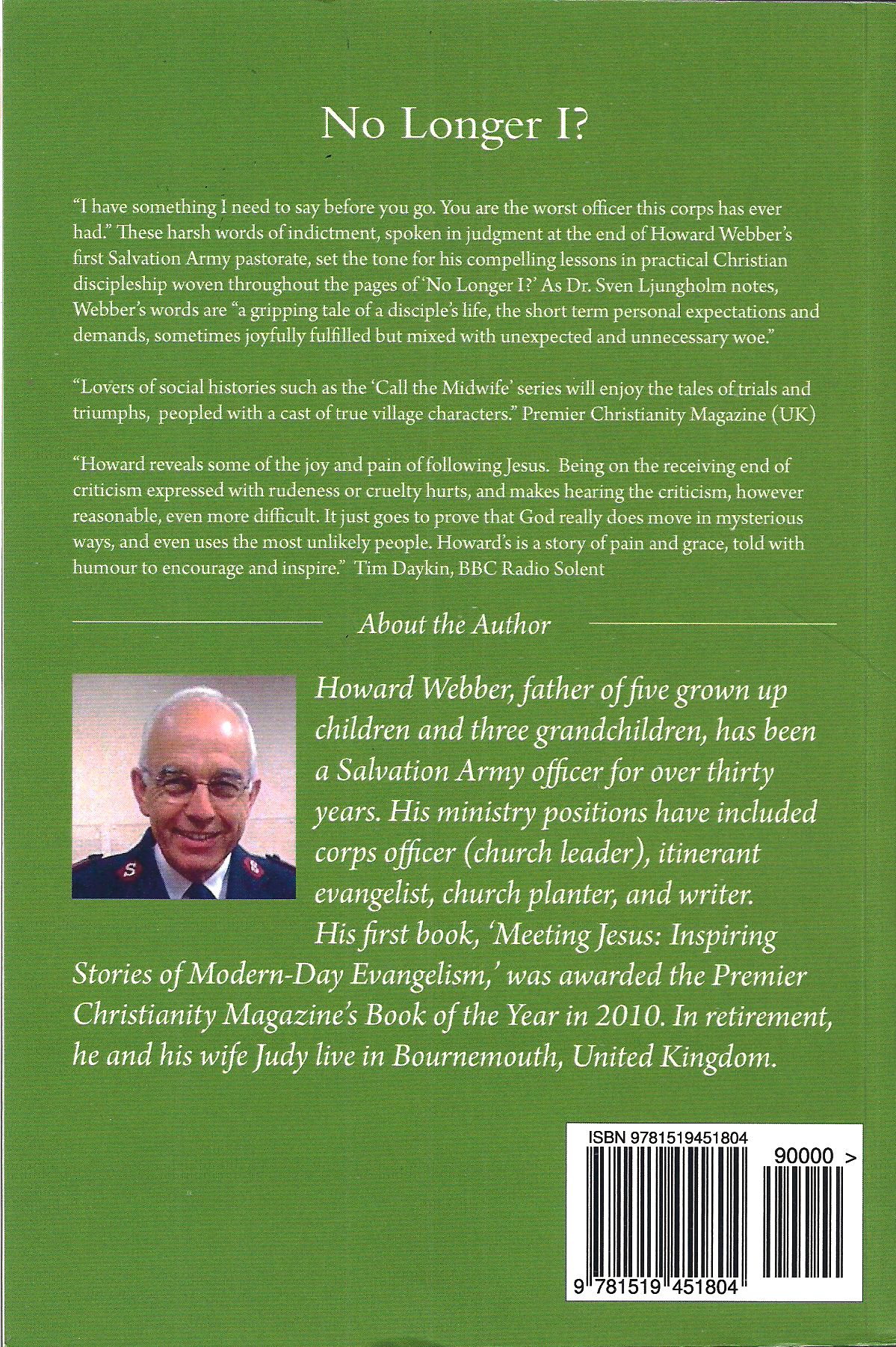
The first part of Howard’s book ‘No Longer I?’ is a candid account of his rich and various experiences in corps life, along with his struggles in those situations (some intensely personal) and the eventual discovery of answers. The second part explores those issues in the light of scripture and is more devotional in style. Both parts work well together, as Howard describes and explores the ups and downs, the joys and the sorrows, on his own journey of faith. He tells it as it is, and I found his writing refreshingly open, honest and powerful.
Let me quote the opening paragraph: I have something I need to say before you go, ‘Miss Barrett called out as I closed the lounge door, so I opened it again and stepped back into the room. Following a brief preamble she got to the point of why she had called me back, ‘I need to tell you that you are the worst officer (minister) this corps (church) has ever had!’ Those harsh words of indictment, spoken in judgment at the end of his first appointment, set the tone for compelling lessons in practical Christian discipleship woven throughout the pages of the book.
This isn’t just a book for Salvationists, but one for anyone desiring to reach into the heart of Christian life and ministry.
Note: The title of the book comes from Paul’s Letter to the Galatians: I have been crucified with Christ; it is no longer I who live, but Christ who lives in me; and the life I now live in the flesh I live by faith in the Son of God, who loved me and gave himself for me. (Galatians 2:20 RSV)
I’m grateful to my friend Stephen Poxon (author and writer) for contributing this guest post about William Booth. You can find his books here.
William Booth: Founder of The Salvation Army, Christian evangelist, reformer, friend of royalty, champion of the marginalised, wit, entrepreneur, and master of the soundbite.
So far, so good, but we must remember that Booth was preaching his message and espousing his spiritual and moral philosophy before any of the advantages of modern communications technology could be exploited. His was an era of voice projection and oratory that went largely unaided except by, maybe, primitive devices for amplification.
All the more remarkable, therefore, is the fact that so many of William Booth’s quotations have survived into the present age. Granted, many were recorded by stenographers and biographers, but General Booth’s feat is still special, especially as much of his (prophetic?) wisdom retains a fresh touch.
Such as, for example, his utterance that there might come a time when the fires of scorching faith that burned within his bones would somehow become
“Religion without the Holy Ghost, Christianity without Christ, forgiveness without repentance, salvation without regeneration, politics without God, heaven without hell”.
Forgive the pun, but this is hot stuff; not for the faint-hearted (but then, faint-heartedness was a concept Booth never understood).
Was the old man right, though?
Take a look around. See for yourself a market-place swarming with pseudo-Christian philosophies (touchy-feely-feel-good mantras of consolation paraded in the name of some churches) and you might concede, he made a reasonable point! Denominations, I mean, that sometimes appear not to know their convictions from their desperate strivings to be ultra-relevant, and which, consequently (inevitably) dilute their ancient mandate to the point of it being nothing in particular and of little use to anyone.
And as for the penultimate utterance in Booth’s list of concerns, who can forget Alastair Campbell’s famous interruption of Tony Blair, reminding the then Prime Minister that “We don’t do God”?
How about this absolute corker:
“Don’t instil, or allow anybody else to instil into the hearts of your girls the idea that marriage is the chief end of life. If you do, don’t be surprised if they get engaged to the first empty, useless fool they come across.”
He wasn’t holding back, was he! Anyone voicing such opinions nowadays would be faced with any number of charges before they could say political correctness. Yet, allowing the dust to settle, we might just find ourselves agreeing with the outspoken warrior, albeit only grudgingly, on behalf of our children and grandchildren. Is it even possible we might only, eventually, accuse him of speaking downright common sense?
Try this one: “The greatness of the man’s power is the measure of his surrender”.
Notwithstanding the gender bias of the statement, how much does a contemporary age rail against notions of surrender, obedience, deference or conformity; in civil and legal matters, relationships, education, religion, societal structures, international political diplomacy, and the workplace (and so on)? Are we, can we honestly claim, the better for such prevailing tendencies and the tacit approval of creeping anarchy in the name of entitlement?






 John Ager's Home on the Web!