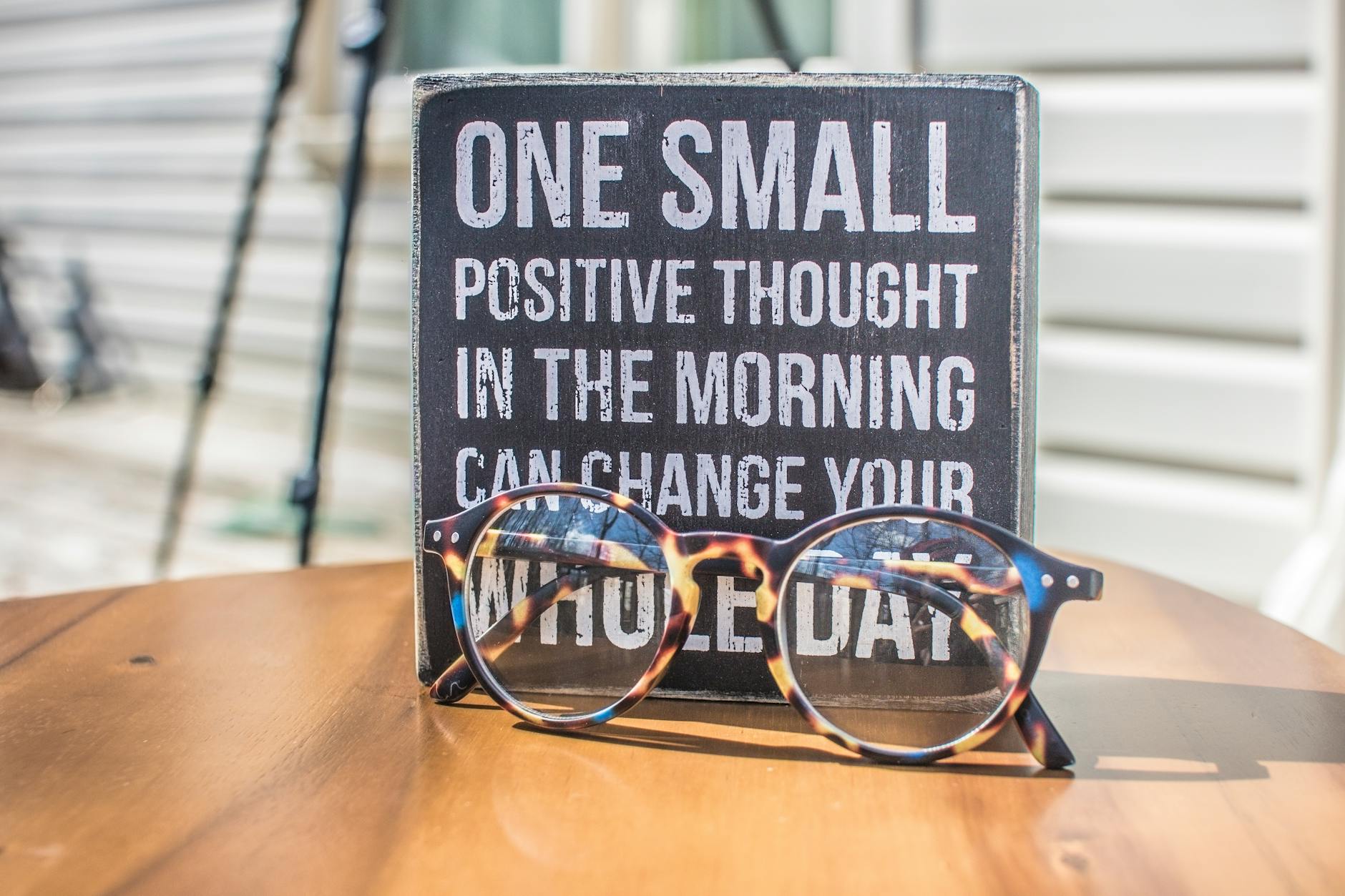
The Quiet Art of Positivity

With so much negativity about, it might seem difficult to remain positive. This reflection is about how I see the challenge, and what I try to do to keep my balance on the plus side.

Positivity isn’t about pretending life’s perfect or ignoring difficulties; it’s about choosing to notice what’s good, even when things aren’t easy. It’s a mindset that favours hope over cynicism, gratitude over complaint, and calm over worry. Small, intentional habits can make a big difference.

Start with gratitude. Each evening, take a moment to reflect on three things you’re thankful for, a warm drink, a friendly smile, a moment of peace. Gratitude gradually retrains your mind to focus on what’s right rather than what’s missing. Be gentle with yourself, too. When negative thoughts appear, ask, “Is there another, kinder way to see this?” Over time, that simple question can change your inner voice from critic to encourager.

Surround yourself with positive influences; people, books, music, and conversations that lift your mood and bring out your best. Do something small and kind each day. A thoughtful message, a smile, or a helping hand can spark connection and joy that spreads both ways.

Learn to accept what you can’t control. Much of life’s stress comes from trying to manage the unmanageable. When you focus instead on what you can change, your actions, your outlook, your response, you create space for peace and perspective.

Finally, make room for rest and reflection. Pause, breathe, and allow quiet moments to reset your thoughts. Positivity grows in that stillness, helping you meet each day with balance, compassion, and gratitude.

Why Doom-Scrolling is Addictive

Doom-scrolling is addictive because it taps into deep instincts that once helped us survive but now keep us glued to screens. It plays on the brain’s reward and threat systems at the same time. When we scroll, we’re seeking information, especially about danger or uncertainty, which the brain interprets as staying safe.

In the past, being alert to threats was vital; now that instinct locks us into endless feeds of bad news.

Each swipe brings something new, and that unpredictability releases dopamine, the same chemical linked to gambling or social media likes. Sometimes we find shock, sometimes relief or outrage, and each hit keeps the cycle going. This variable reward system makes the habit stronger.

There’s also a strange comfort in doom-scrolling, it gives an illusion of control. In anxious times, we try to manage uncertainty by consuming more information, as if knowing enough will protect us. Instead, it feeds stress and helplessness.

Digital platforms amplify the effect. They’re built to maximise engagement, showing emotionally charged content that provokes fear or anger, because strong emotions keep us scrolling. The more we scroll to calm anxiety, the deeper it pulls us in. Breaking the pattern means recognising what’s happening and setting clear boundaries; curating calmer news sources, limiting screen time, or replacing the habit with something that restores peace and presence.

Reclaiming Your Digital Life

All the apps on your smartphone are designed to draw you in, and this can be unhealthy. So, think about turning OFF notifications and choosing when you access social media and the like.

Every ping, buzz, and pop-up is crafted to capture your attention, keeping you scrolling longer than you meant to. What begins as a quick check of messages or news often turns into half an hour lost to endless feeds and fleeting updates. These platforms aren’t neutral; they’re engineered to manipulate human psychology, using likes, alerts, and endless refresh loops to reward your brain just enough to keep you hooked.

It’s easy to feel that you’re in control because you choose what to click, but often it’s the algorithms choosing for you. They decide what you see, what you think about, and how long you stay. Over time, this constant digital noise can increase anxiety, shorten your attention span, and leave you oddly unsatisfied.

Breaking free doesn’t mean rejecting technology altogether. It means reclaiming your time and focus. Try setting boundaries; keep your phone out of reach during meals, resist checking it first thing in the morning, and take moments of quiet without the screen. Notice how your thoughts clear, how real conversations deepen, how silence feels less awkward.

You’ll discover that connection, creativity, and calm are still possible beyond the glow of your phone. Take back control. Don’t let the apps control you. Apps are tools NOT masters. Life is more important.

How to be a Peacemaker

Peace is a wonderful state of being free from conflict, violence, and war. It’s a condition of harmony, tranquility, and stability that we all strive for. In a broader sense, peace is a universal human aspiration that transcends geographical boundaries, cultures, and ideologies. It’s a fundamental human need that’s essential for individual and collective well-being.

Internal peace is a state of inner calm and contentment, free from mental and emotional turmoil. It’s a state of being that allows individuals to feel at peace with themselves and their surroundings. Imagine being able to wake up every morning feeling refreshed, renewed, and ready to take on the day.

On the other hand, external peace is a state of harmony and stability in relationships, communities, and societies. It’s a state where individuals and groups can live together in mutual respect and understanding. Just think about it – a world where everyone gets along, and we can all live in harmony with one another.

Global peace is a state of international cooperation, understanding, and peaceful resolution of conflicts. It’s a state where nations and international organizations work together to address common challenges and promote peace and stability. Can you imagine a world where countries put aside their differences and work together for the greater good?

Achieving peace requires effort and commitment from individuals, communities, and nations. It involves promoting understanding, tolerance, and empathy, as well as addressing the root causes of conflict, such as poverty, inequality, and injustice. We can all play a role in creating a more peaceful world by being kind, compassionate, and open-minded.

Peace is a dynamic and ongoing process that requires continuous effort and dedication. It’s not a static state that can be achieved once and for all, but rather a continuous journey that requires constant attention and commitment. But the benefits of peace are so worth it – improved mental and physical health, increased economic growth and development, enhanced social cohesion and community engagement, and greater international cooperation and understanding.

So, let’s work together to create a more peaceful and harmonious world where individuals and communities can thrive. We can do this by educating ourselves and others about the importance of peace, engaging in respectful dialogue, and promoting human rights and dignity. Together, we can make a difference and create a brighter, more peaceful future for all.

Stop Taking Things Personally

Constantly taking things personally can be very destructive to our mental health and wellbeing. When you get too attached to how others think or feel about you, it can cause anxiety and hurt feelings. This makes it hard to talk to people and resolve conflicts.

When you don’t tie your self-worth to what others think, you can think more clearly and communicate better. This helps you handle tough conversations and maintain healthy relationships. When you’re not trying to be right or be liked, you can listen better and respond with kindness. This helps calm down tense situations and creates a positive atmosphere. Think of feedback as a chance to learn and grow, not as a personal attack. This helps you become more resilient and open to new ideas.

Additionally, from a faith perspective, when you start to see yourself through God’s eyes rather than through the eyes of others, everything changes. You remember that you’re already loved, already chosen, already enough. As the psalmist wrote, I praise you because I am fearfully and wonderfully made (Psalm 139:14). When your confidence rests in that truth, other people’s opinions lose their power. You can listen without fear, speak without pride, and forgive without resentment. Each moment becomes an opportunity to reflect Christ’s gentleness and strength, trusting that your worth is secure in him, not in what anyone else says or thinks.

So, try to avoid getting caught up in drama and negativity. Focus on your own thoughts, feelings, and actions. This helps you live a more authentic and happy life, free from others’ expectations.

Building confidence at parkrun

Volunteering at parkrun is more than keeping the event running; it’s a way of building confidence, learning responsibility, and feeling part of a welcoming community. For young people, roles such as marshalling, scanning barcodes, or timekeeping show them that others are depending on their contribution. Arriving on time, listening to instructions, and carrying out tasks carefully teaches responsibility in a practical and meaningful way.

Because under 18s must be supervised, they also learn how to work alongside supportive adults, gaining guidance while still being trusted to play their part. Mistakes sometimes happen, but the culture of encouragement at parkrun shows that responsibility isn’t about perfection, it’s about trying, learning, and growing. Confidence develops naturally when they see runners responding warmly to their encouragement or when they master a task they once found daunting.

Adults gain just as much from volunteering. For some, it offers purpose and connection at a time in life when confidence may be low or health prevents them from running. It brings people together across ages and backgrounds, building friendships and a sense of belonging. Taking on a role provides the chance to rediscover strengths, develop new skills, and experience the satisfaction that comes from giving something back.

For both young people and adults, parkrun is far more than a Saturday morning run; it’s a community built on teamwork, kindness, and encouragement. Each role, however small, is vital to the event’s rhythm. Over time, confidence grows, responsibility becomes second nature, and everyone involved leaves with a deeper sense of connection. Volunteering, in this way, helps shape resilient, compassionate people who carry these lessons into every part of their lives.

The Pomodoro Technique

The Pomodoro Technique is a time management method developed by Francesco Cirillo in the late 1980s. Named after the tomato-shaped kitchen timer he used as a student, the technique breaks work into focused intervals, typically 25 minutes long, called “Pomodoros,” followed by short breaks.

To use the method, you choose a task, set a timer for 25 minutes, and work without interruption. Once the time is up, you take a 5-minute break. After completing four Pomodoros, you take a longer break of 15 to 30 minutes. This rhythm helps maintain focus while preventing mental fatigue.

The technique encourages working with time instead of against it. The ticking timer creates a sense of urgency, which often helps reduce distractions and procrastination. It also leads to greater awareness of how time is used, helping users plan and estimate tasks more effectively.

Though simple, the Pomodoro Technique also involves tracking completed intervals, noting interruptions, and reviewing progress. Over time, this builds a clearer picture of your working habits and areas for improvement.

It’s especially popular with students, writers, programmers, and others who benefit from structure and short bursts of concentration. While many apps support the method, all you really need is a timer and something to track your Pomodoros.

At its core, the Pomodoro Technique builds discipline by turning large, overwhelming tasks into manageable chunks. It fosters sustained focus and helps make productivity feel less stressful, one Pomodoro at a time.