Aesthetic & Architectural Vandalism

By destroying the Rose Garden and demolishing the East Wing of the White House, Donald Trump has committed acts of aesthetic and architectural vandalism that go far beyond mere changes in landscaping or design.

The Rose Garden, once a serene space shaped by the elegance and restraint of Jackie Kennedy and the careful stewardship of generations that followed, symbolised continuity, grace, and democracy’s softer face. Its balance of tradition and simplicity reflected an understanding that beauty and symbolism matter in a place where history is made daily. To strip it bare, to erase its living memory for the sake of personal vanity or ideological imprint, is to disregard the cultural inheritance it represents.

The East Wing, too, has long stood as a vital part of the White House’s identity, both functional and symbolic: a space that housed the offices of the First Lady and staff who helped humanise the institution. To demolish it is to deny that softer, civic side of leadership, the one that serves the people rather than the ego.

Architecture carries meaning; it tells the story of a nation’s values through form, proportion, and grace. When that story is rewritten in the name of self-aggrandisement, something precious is lost; not only bricks and roses, but the quiet dignity that connects past to present. Trump’s interventions, rather than renewing an icon, have scarred it, revealing a profound disregard for the history, harmony, and humanity that such a space should embody.

The Cost of Political Apathy

Believing all politicians are as bad as each other empowers the worst, diminishes the best, and damages democracy. When cynicism takes hold, it creates a fog of apathy in which corruption thrives. Those who care least about truth or service often benefit most when people give up on believing that integrity in politics is even possible. It’s an abdication of responsibility disguised as realism. Of course, politics attracts flawed people, it always has, but so does every sphere of life. The difference is that in a democracy, citizens have the power to choose, to discern, and to hold their representatives accountable.

To say “they’re all the same” is to silence that responsibility. It’s a convenient shrug that excuses disengagement and hands power to those who’ll exploit it. Meanwhile, good, honest politicians, those who genuinely want to serve, are undermined by blanket distrust. They become targets of the same contempt that should be reserved for those who lie, cheat, or misuse authority.

Democracy depends on participation, on people who still care enough to ask questions, read manifestos, and vote with conscience rather than despair. It’s imperfect, slow, and sometimes infuriating, but it’s also one of the few systems that allows correction, renewal, and moral progress. The temptation to give up on politics altogether might feel cleansing, but it’s actually corrosive. To protect democracy, we must resist cynicism, reward integrity where we see it, and remember that hope itself is a political act.

Climate Change and Pollution

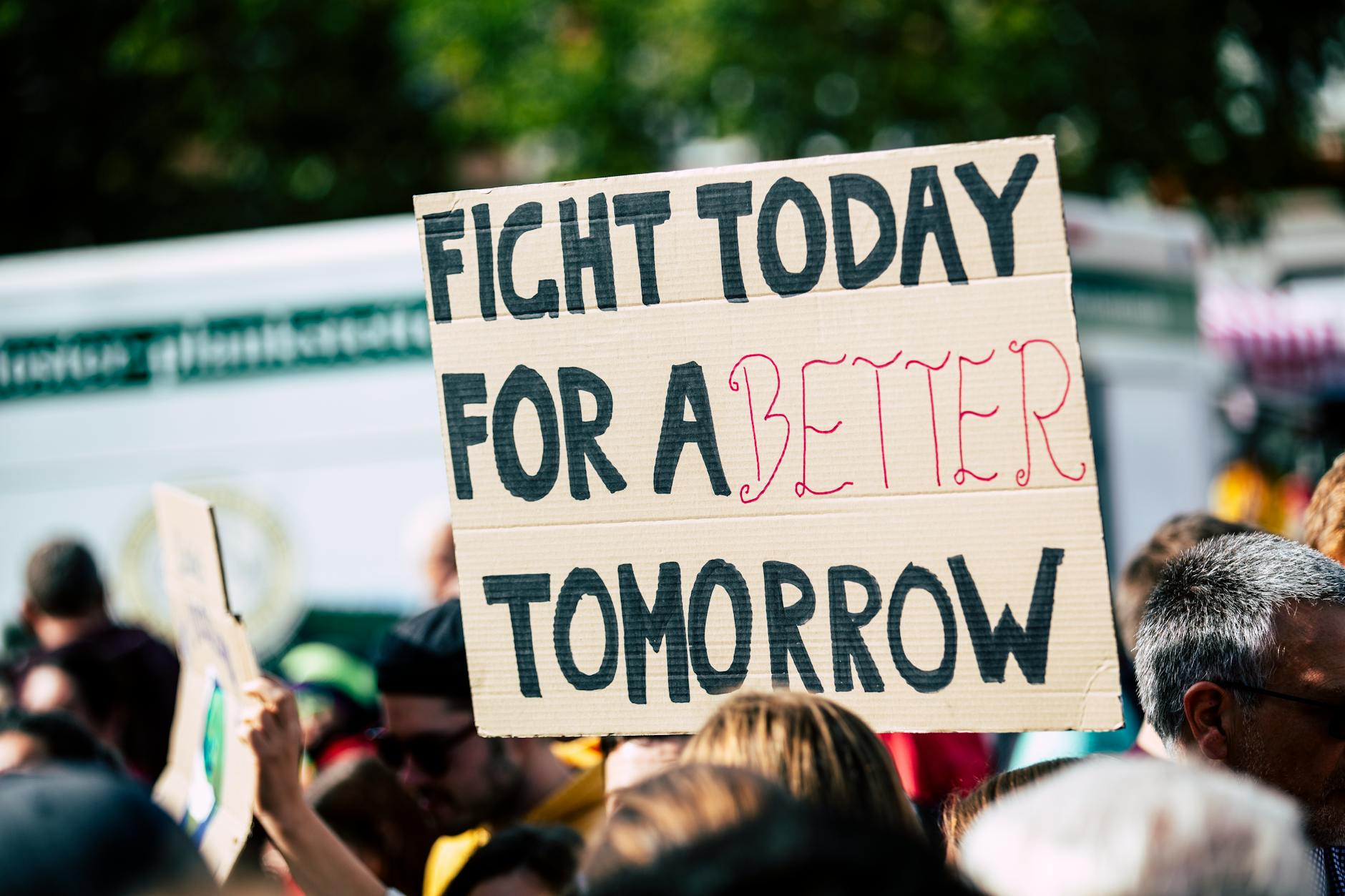
When it comes to climate change and pollution, we’re all hypocrites. There’s no inconsistency here, and that’s the point of the protests as I understand them. This is so bound up to our whole way of life that radical change is needed. As individuals we can only do so much, corporations and governments have to make the changes for the wellbeing of the planet.

Every one of us depends on systems that damage the environment, transport, food, technology, energy, even healthcare. It’s impossible to live in the modern world without leaving a carbon footprint, and yet we’re rightly alarmed by the damage being done. The hypocrisy isn’t moral failure; it’s a symptom of being trapped within a system that’s built on unsustainable foundations. Protesters aren’t pretending to be pure; they’re acknowledging the truth that we’re all implicated, but still calling for something better. They remind us that caring about the planet doesn’t require perfection; it requires persistence, honesty, and courage.

Recycling, eating less meat, or driving electric cars are valuable acts, but they’re not enough to counteract industries that pour billions of tonnes of carbon into the atmosphere each year. Systemic change demands bold political leadership and corporate accountability. Governments must legislate for cleaner energy, fairer trade, and sustainable agriculture. Corporations must stop externalising costs to the environment and start treating the planet as a partner, not a resource to exploit.

Humanity is capable of extraordinary cooperation when the stakes are high, and they couldn’t be higher than this. If we can face our shared hypocrisy with humility and hope, perhaps that’s where true change begins.

When Flags Eclipse the Cross

Christian nationalism is a dangerous distortion of both faith and politics. It arises when the message of Jesus is bound too tightly to national identity, power, and cultural dominance. The gospel ceases to be good news for all people and becomes instead a tool for exclusion, control, and fear. History offers painful reminders of what happens when Christianity is co-opted by nationalism: it becomes a flag to wave, a weapon to wield, and a mask to justify prejudice.

At its heart, Christian nationalism places the nation above the kingdom of God. Jesus taught that his kingdom is not of this world, yet Christian nationalism insists otherwise, often presenting one country or culture as uniquely chosen and blessed. This not only fosters pride and superiority, but it also blinds believers to the global and inclusive nature of God’s love. It narrows the expansive message of Christ into a political ideology, one that often resists humility, repentance, and compassion for outsiders.

The danger isn’t simply theoretical. Christian nationalism has been linked with hostility towards immigrants, resistance to racial justice, and the suppression of religious freedom for others. When Christianity is equated with patriotism, dissenting voices are silenced, and those who don’t conform are seen as enemies. The cross becomes overshadowed by the flag, and worship of God risks becoming entangled with loyalty to the state. In such an environment, the church loses its prophetic voice and instead baptises the status quo.

True Christianity should never seek dominance but should model service, reconciliation, and peace. As Paul reminds us in Philippians, “our citizenship is in heaven,” and it’s from there that we find our identity, not in earthly power structures. To resist Christian nationalism isn’t to reject one’s love of country, but to insist that no nation may claim divine supremacy. The kingdom of God is wider, deeper, and more just than any political project.

Christians are called to bear witness to a love that crosses borders, heals divisions, and refuses to be hijacked by ideology. To confuse God with nation is to risk idolatry, to follow Christ faithfully is to place love above power.

How to be a Peacemaker

Peace is a wonderful state of being free from conflict, violence, and war. It’s a condition of harmony, tranquility, and stability that we all strive for. In a broader sense, peace is a universal human aspiration that transcends geographical boundaries, cultures, and ideologies. It’s a fundamental human need that’s essential for individual and collective well-being.

Internal peace is a state of inner calm and contentment, free from mental and emotional turmoil. It’s a state of being that allows individuals to feel at peace with themselves and their surroundings. Imagine being able to wake up every morning feeling refreshed, renewed, and ready to take on the day.

On the other hand, external peace is a state of harmony and stability in relationships, communities, and societies. It’s a state where individuals and groups can live together in mutual respect and understanding. Just think about it – a world where everyone gets along, and we can all live in harmony with one another.

Global peace is a state of international cooperation, understanding, and peaceful resolution of conflicts. It’s a state where nations and international organizations work together to address common challenges and promote peace and stability. Can you imagine a world where countries put aside their differences and work together for the greater good?

Achieving peace requires effort and commitment from individuals, communities, and nations. It involves promoting understanding, tolerance, and empathy, as well as addressing the root causes of conflict, such as poverty, inequality, and injustice. We can all play a role in creating a more peaceful world by being kind, compassionate, and open-minded.

Peace is a dynamic and ongoing process that requires continuous effort and dedication. It’s not a static state that can be achieved once and for all, but rather a continuous journey that requires constant attention and commitment. But the benefits of peace are so worth it – improved mental and physical health, increased economic growth and development, enhanced social cohesion and community engagement, and greater international cooperation and understanding.

So, let’s work together to create a more peaceful and harmonious world where individuals and communities can thrive. We can do this by educating ourselves and others about the importance of peace, engaging in respectful dialogue, and promoting human rights and dignity. Together, we can make a difference and create a brighter, more peaceful future for all.

Operation Raise the Colours

In the UK right now, there’s a debate about people flying the national flag. It began when far-right groups launched a campaign called Operation Raise the Colours, encouraging everyone to display the Union Jack or England’s St George’s Cross to show pride in being British.

The problem is that many people see this campaign as less about healthy patriotism and more about exclusion. The far-right origins have made some feel the flags are being used to divide communities rather than unite them.

Former England footballer Gary Neville spoke about this recently. He said he took down a flag from one of his buildings because he felt it was being used “in a negative way.” His comment sparked strong reactions – some agreed with his stance, while others accused him of being unpatriotic, and worse.

So the discussion isn’t really about the flag itself, but about what it symbolises at this moment – pride or prejudice.

Words Shape Our Future

Free speech is the foundation of democracy, because it allows people to express their thoughts, beliefs, and convictions without fear of repression or punishment. It ensures that every voice, whether popular or unpopular, has the right to be heard and considered. If we silence those we disagree with, we not only diminish the richness of public debate but also risk creating an environment where only certain viewpoints are tolerated, which undermines the very principles of freedom and equality that democracy is built upon. True progress comes through discussion, challenge, and the exchange of ideas, even when those ideas make us uncomfortable or force us to reflect more deeply.

That said, freedom of speech isn’t freedom from responsibility. Words have power. They can enlighten and inspire, but they can also wound, divide, and incite harm. That’s why free speech must always be exercised with a sense of responsibility and respect. A healthy democracy requires both courage in speaking the truth and care in how it is expressed, so that conversation builds understanding rather than fuels hostility.

When speech is grounded in honesty, integrity, and respect for the dignity of others, it becomes not just a personal right but a collective good, nurturing a society where freedom and justice can flourish for all.

Distorting Judeo-Christian Values

Beware when political leaders speak of restoring the so-called Judeo-Christian tradition, for more often than not they’re not reaching for the heart of faith, but for a convenient distortion of it. They take the language of Christianity, strip it of its compassion and humility, and reforge it into a tool of nationalism, designed to divide rather than to heal. Instead of the gospel’s call to love neighbour and stranger alike, they present a narrow, exclusionary creed that elevates their nation above others and demands loyalty to power over loyalty to God. In this way, what is sacred becomes a banner for building intolerant empires, where the vulnerable are cast aside and difference is treated as a threat rather than a gift.

The challenge for us is to recognise this twisting of faith and to live out a truer Christianity that reflects Christ’s radical love, justice, and mercy.

Our UK Refugee Obligations

The UK has clear obligations under international and domestic law to accept and fairly consider the claims of asylum seekers. The most important of these comes from the 1951 Refugee Convention, which the UK helped to shape and has signed along with its 1967 Protocol. This agreement requires that people fleeing persecution, because of their race, religion, nationality, political opinion, or membership of a particular social group, must not be sent back to a country where their lives or freedom would be in danger. It also makes clear that asylum seekers cannot be punished for how they arrive, since escaping persecution often means travelling without proper documents or through irregular routes.

Alongside this, the UK is bound by the European Convention on Human Rights, which underpins protections like the right to life and the ban on torture or degrading treatment. These rights reinforce the principle that no one should be returned to a place where they would face serious harm. Taken together, these commitments mean that while the UK controls its borders, it also has a legal and moral duty to open them to those in genuine need, to hear their cases fairly, and to offer refuge where it is justified. In practice, this balance reflects both the rule of law and the longstanding British tradition of protecting the vulnerable.

Why are refugees mainly men?

Most people arriving in the UK by small boats are young men. Home Office figures suggest about 75–85% are adult males under forty. This reflects wider patterns, as families often send younger men first to make the dangerous journey and later apply for family reunion.

But it’s not only young men: women, children, and vulnerable people also cross, though in smaller numbers. While the stereotype is partly true, it doesn’t lessen the legitimacy of their asylum claims, many of which come from war, persecution, or forced conscription.

Families are part of the story, but they’re often less visible than the young men. Many families do remain in war-torn countries, either because the journey is too dangerous for children or because they don’t have the money to move everyone at once. In other cases, wives and children may be in neighbouring countries like Turkey, Jordan, or Pakistan, living in refugee camps or in precarious rented housing.

Some families are in northern France too, including Calais, but the camps there are harsh and not well suited for children. That’s partly why you see fewer women and children making the small-boat crossings, the risks are just too high.

When men make the journey first, it’s often with the hope of applying for family reunion once they’ve been granted refugee status in the UK. Under current rules, recognised refugees can usually bring over their spouse and dependent children through a legal route, but not parents, siblings, or adult children. The backlog and strict rules mean that many families remain separated for long periods, which adds to the suffering.