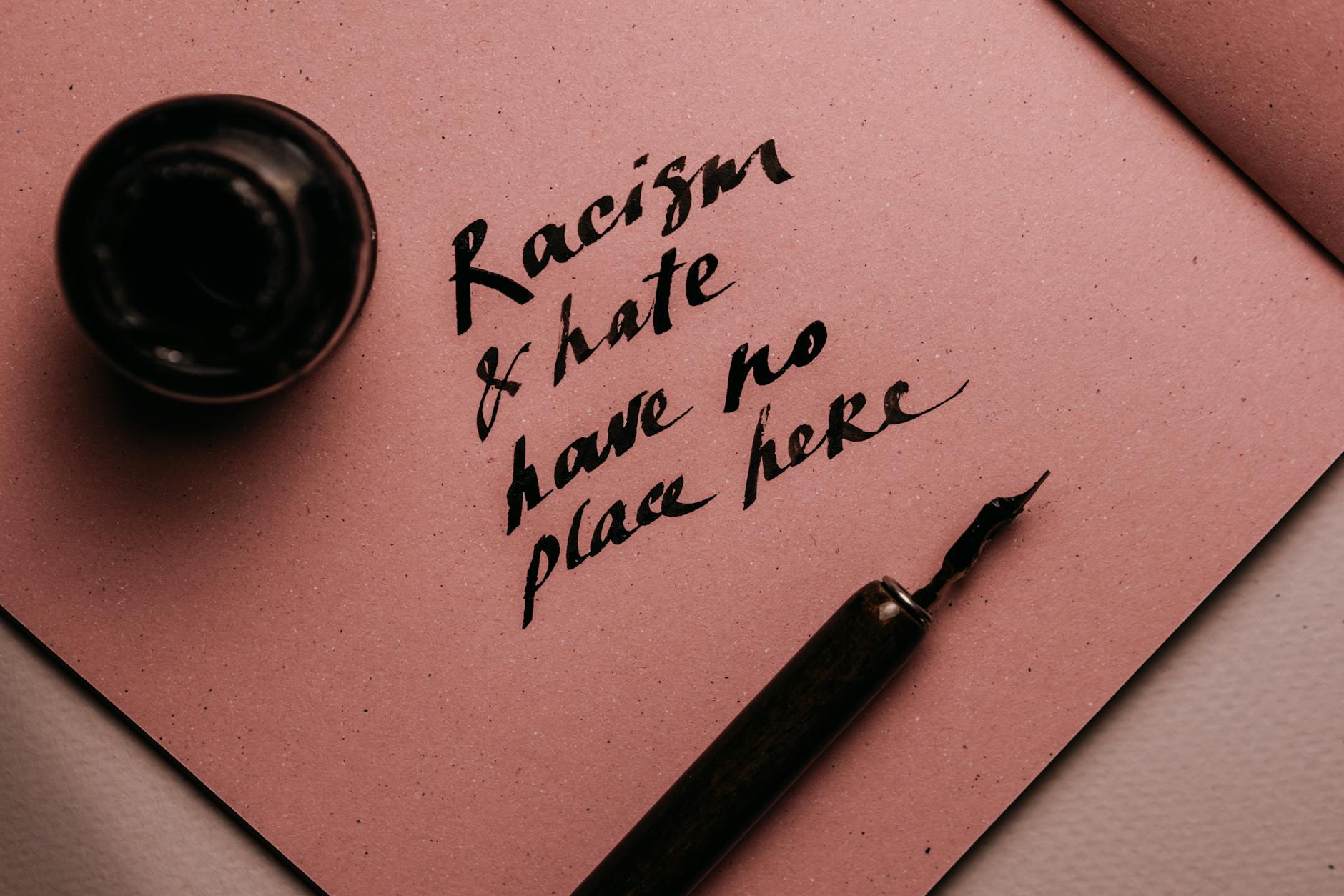
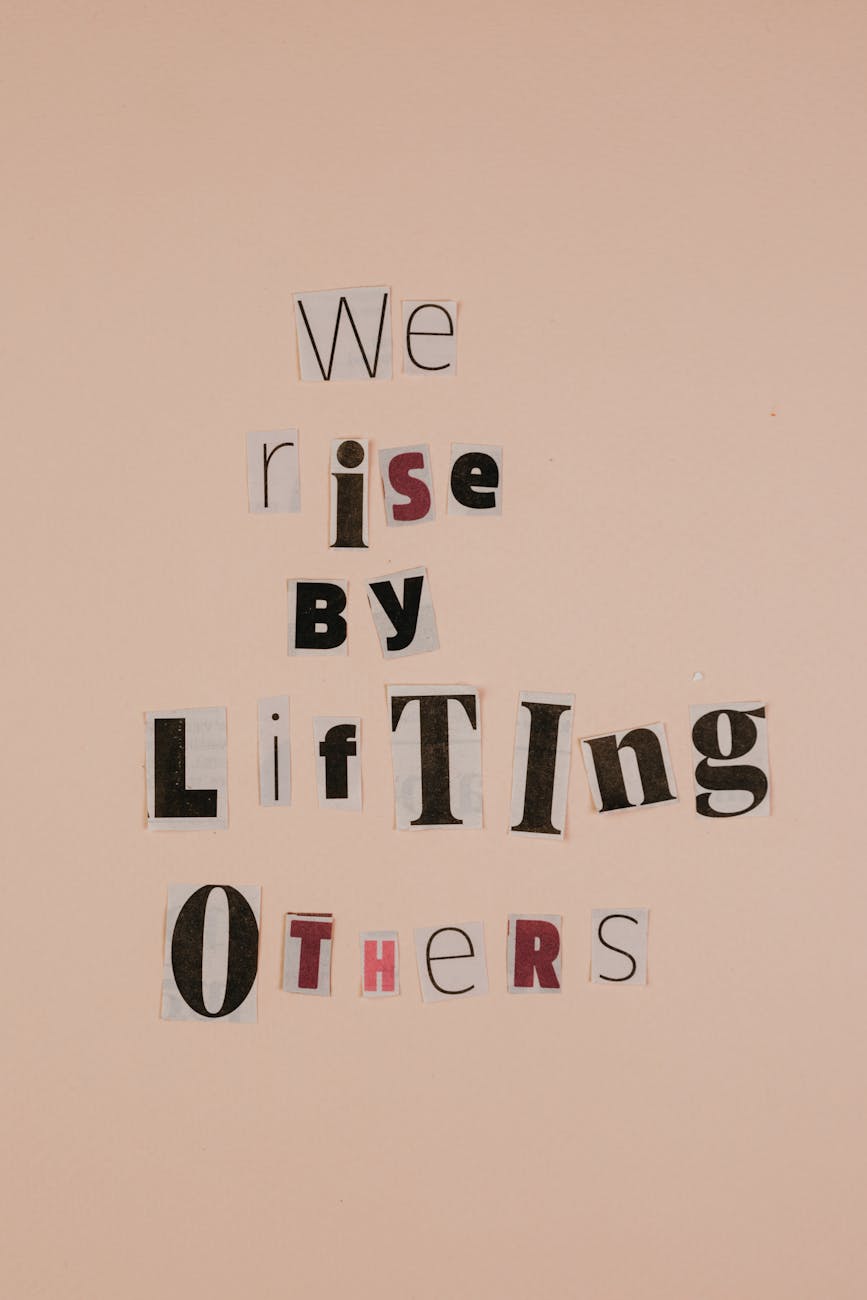
Kindness is simple, just a kind word, a thoughtful gesture, or a small act of compassion. It doesn’t require effort or expense. Yet, it can transform someone’s day, bringing light to their world.
When we choose kindness, we open the door to compassion. Each act fosters a ripple effect, spreading warmth, understanding, and connection. In doing so, we don’t just improve someone’s mood, we help to build a more empathetic, caring world.
It’s not about grand gestures. It’s about presence. It’s about noticing someone’s struggle, offering a smile, or listening without judgment. These moments matter, because they remind others that they are seen, valued, and not alone.
Kindness is free. And in a world that often feels fast and cold, it’s one of the most powerful forces we have.
When it comes to same-sex relationships and equal marriage within Christianity, we can’t continue with our collective head in the sand, stifling discussion and not allowing room for the possibility of a theology that treats the lesbian, gay, bisexual and transgender community with respect. I say this as a straight man whose heart breaks to see individuals and same-sex couples excluded by dogma and rejected by the church, lose faith in the inclusive love of God, and (in the worst cases) take their own lives.
The Christian tradition, rooted in love, compassion, and the teachings of Jesus, has always emphasized the dignity of every person created in the image of God. Jesus’ actions, such as healing the sick, welcoming the outcast, and dining with sinners, demonstrate a radical inclusivity that challenges exclusionary interpretations of scripture. When we interpret scripture through a lens of exclusion, we risk distorting the very message of grace and mercy that defines Christianity.
The Gospel calls us to love our neighbours as ourselves, and that includes loving those who live in same-sex relationships, who identify as LGBTQ+, or who face societal marginalization. Theologians throughout history have long argued that love, not rigid categorizations, is the central tenet of Christian faith. The church must move beyond outdated traditions that were shaped by cultural and historical contexts that no longer reflect the spirit of Christ.
Equal marriage isn’t a political demand, it’s a moral imperative grounded in the biblical call to justice and equality. It’s not about changing God’s will, but about aligning our understanding of God’s love with the reality of human diversity. When we affirm same-sex relationships as valid expressions of love and commitment, we aren’t rejecting Christianity, we’re deepening it. We’re honoring the commandment to love one another, to forgive, to serve, and to embrace all people without judgment.
The church must become a place of healing, not division. It must provide safe spaces where LGBTQ+ individuals can find belonging, support, and spiritual growth. This isn’t a compromise of faith, it’s a fulfillment of it. In embracing inclusion, the church becomes more faithful to the teachings of Jesus, who saw no one as unworthy of love. True Christian witness isn’t found in exclusion, but in radical acceptance.
Paul’s words in 1 Corinthians 12:12–27 offer a beautiful picture of what it means to belong to the body of Christ. Just as the human body is made up of many parts, each with its own function, so too the body of Christ is made up of many members, each with a distinct role and gift. For just as the body is one and has many members, but all the members of the body, though many, are one body, so it is with Christ.
Paul paints vivid images of the eye, the ear, the hand, and the foot, reminding us that no part can say to another, “I don’t need you.” Every member matters. The eye can’t replace the ear, nor can the hand dismiss the foot; each one contributes to the whole. When one part suffers, the rest of the body feels it; when one part is honoured, the whole body rejoices. It’s a powerful reminder of how deeply we’re connected to one another in Christ.
Paul concludes, Now you are the body of Christ, and each one of you is a part of it. These words cut against the grain of individualism. We aren’t isolated believers but members of something larger, bound together by grace and called to serve one another. This passage calls us to unity in diversity, to value each person’s gift, and to recognise that only together do we reflect the fullness of Christ’s living body in the world.
Halloween, celebrated each year on 31 October, has deep and ancient roots that stretch back over two thousand years. Its origins lie in the Celtic festival of Samhain, marking the end of the harvest and the beginning of winter, a time associated with death and the thinning of the veil between the living and the dead. The Celts, who lived across Ireland, Britain, and northern France, believed that on this night, spirits could roam the earth. Bonfires were lit to ward off evil, and people wore disguises to confuse wandering souls.
As Christianity spread through Europe, the Church sought to replace pagan traditions with Christian observances. In the eighth century, Pope Gregory III established 1 November as All Saints’ Day (also known as All Hallows’ Day), a time to honour saints and martyrs. The evening before became All Hallows’ Eve, eventually shortened to Halloween. This blending of ancient customs with Christian remembrance created a rich, layered festival combining solemn reflection with folk ritual.
When European immigrants brought these traditions to North America, they evolved further. In colonial times, Halloween was modest, but in the 19th century, especially with the arrival of Irish immigrants fleeing the potato famine, it began to flourish. Communities embraced parties, games, and storytelling. The practice of trick-or-treating emerged in the early 20th century, influenced by the old custom of “souling,” where children went door to door offering prayers for the dead in exchange for food.
Today, Halloween is a vibrant blend of the sacred and the secular: a night of carved pumpkins, ghost stories, costumes, and playful fright. Beneath the fun, however, lies a profound awareness of life’s mystery and mortality, echoing Ecclesiastes 3:1 There is a time for everything, and a season for every activity under the heavens. For many, Halloween remains a moment to pause between autumn’s glow and winter’s shadow, to remember the past, and to delight in imagination and wonder.
What began as a ritual to honour the cycle of life and death has become a celebration of community and creativity, a reminder that even in the darkest night, the light of human spirit endures.
Christian nationalism is a dangerous distortion of both faith and politics. It arises when the message of Jesus is bound too tightly to national identity, power, and cultural dominance. The gospel ceases to be good news for all people and becomes instead a tool for exclusion, control, and fear. History offers painful reminders of what happens when Christianity is co-opted by nationalism: it becomes a flag to wave, a weapon to wield, and a mask to justify prejudice.
At its heart, Christian nationalism places the nation above the kingdom of God. Jesus taught that his kingdom is not of this world, yet Christian nationalism insists otherwise, often presenting one country or culture as uniquely chosen and blessed. This not only fosters pride and superiority, but it also blinds believers to the global and inclusive nature of God’s love. It narrows the expansive message of Christ into a political ideology, one that often resists humility, repentance, and compassion for outsiders.
The danger isn’t simply theoretical. Christian nationalism has been linked with hostility towards immigrants, resistance to racial justice, and the suppression of religious freedom for others. When Christianity is equated with patriotism, dissenting voices are silenced, and those who don’t conform are seen as enemies. The cross becomes overshadowed by the flag, and worship of God risks becoming entangled with loyalty to the state. In such an environment, the church loses its prophetic voice and instead baptises the status quo.
True Christianity should never seek dominance but should model service, reconciliation, and peace. As Paul reminds us in Philippians, “our citizenship is in heaven,” and it’s from there that we find our identity, not in earthly power structures. To resist Christian nationalism isn’t to reject one’s love of country, but to insist that no nation may claim divine supremacy. The kingdom of God is wider, deeper, and more just than any political project.
Christians are called to bear witness to a love that crosses borders, heals divisions, and refuses to be hijacked by ideology. To confuse God with nation is to risk idolatry, to follow Christ faithfully is to place love above power.
Peace is a wonderful state of being free from conflict, violence, and war. It’s a condition of harmony, tranquility, and stability that we all strive for. In a broader sense, peace is a universal human aspiration that transcends geographical boundaries, cultures, and ideologies. It’s a fundamental human need that’s essential for individual and collective well-being.
Internal peace is a state of inner calm and contentment, free from mental and emotional turmoil. It’s a state of being that allows individuals to feel at peace with themselves and their surroundings. Imagine being able to wake up every morning feeling refreshed, renewed, and ready to take on the day.
On the other hand, external peace is a state of harmony and stability in relationships, communities, and societies. It’s a state where individuals and groups can live together in mutual respect and understanding. Just think about it – a world where everyone gets along, and we can all live in harmony with one another.
Global peace is a state of international cooperation, understanding, and peaceful resolution of conflicts. It’s a state where nations and international organizations work together to address common challenges and promote peace and stability. Can you imagine a world where countries put aside their differences and work together for the greater good?
Achieving peace requires effort and commitment from individuals, communities, and nations. It involves promoting understanding, tolerance, and empathy, as well as addressing the root causes of conflict, such as poverty, inequality, and injustice. We can all play a role in creating a more peaceful world by being kind, compassionate, and open-minded.
Peace is a dynamic and ongoing process that requires continuous effort and dedication. It’s not a static state that can be achieved once and for all, but rather a continuous journey that requires constant attention and commitment. But the benefits of peace are so worth it – improved mental and physical health, increased economic growth and development, enhanced social cohesion and community engagement, and greater international cooperation and understanding.
So, let’s work together to create a more peaceful and harmonious world where individuals and communities can thrive. We can do this by educating ourselves and others about the importance of peace, engaging in respectful dialogue, and promoting human rights and dignity. Together, we can make a difference and create a brighter, more peaceful future for all.
Volunteering at parkrun is more than keeping the event running; it’s a way of building confidence, learning responsibility, and feeling part of a welcoming community. For young people, roles such as marshalling, scanning barcodes, or timekeeping show them that others are depending on their contribution. Arriving on time, listening to instructions, and carrying out tasks carefully teaches responsibility in a practical and meaningful way.
Because under 18s must be supervised, they also learn how to work alongside supportive adults, gaining guidance while still being trusted to play their part. Mistakes sometimes happen, but the culture of encouragement at parkrun shows that responsibility isn’t about perfection, it’s about trying, learning, and growing. Confidence develops naturally when they see runners responding warmly to their encouragement or when they master a task they once found daunting.
Adults gain just as much from volunteering. For some, it offers purpose and connection at a time in life when confidence may be low or health prevents them from running. It brings people together across ages and backgrounds, building friendships and a sense of belonging. Taking on a role provides the chance to rediscover strengths, develop new skills, and experience the satisfaction that comes from giving something back.
For both young people and adults, parkrun is far more than a Saturday morning run; it’s a community built on teamwork, kindness, and encouragement. Each role, however small, is vital to the event’s rhythm. Over time, confidence grows, responsibility becomes second nature, and everyone involved leaves with a deeper sense of connection. Volunteering, in this way, helps shape resilient, compassionate people who carry these lessons into every part of their lives.
Free speech is the foundation of democracy, because it allows people to express their thoughts, beliefs, and convictions without fear of repression or punishment. It ensures that every voice, whether popular or unpopular, has the right to be heard and considered. If we silence those we disagree with, we not only diminish the richness of public debate but also risk creating an environment where only certain viewpoints are tolerated, which undermines the very principles of freedom and equality that democracy is built upon. True progress comes through discussion, challenge, and the exchange of ideas, even when those ideas make us uncomfortable or force us to reflect more deeply.
That said, freedom of speech isn’t freedom from responsibility. Words have power. They can enlighten and inspire, but they can also wound, divide, and incite harm. That’s why free speech must always be exercised with a sense of responsibility and respect. A healthy democracy requires both courage in speaking the truth and care in how it is expressed, so that conversation builds understanding rather than fuels hostility.
When speech is grounded in honesty, integrity, and respect for the dignity of others, it becomes not just a personal right but a collective good, nurturing a society where freedom and justice can flourish for all.
Before faith came, we were hemmed in, watched over by the law like children under a guardian. Galatians 3:23–29 opens a door to freedom, wide and startling. Paul is urging his readers to see that something radical has happened: through Jesus, the old divisions no longer define us. The law had its time, a tutor for the soul, but now the classroom has given way to real life.
It’s easy to forget how fiercely people clung to those old boundaries. Jew or Gentile. Slave or free. Male or female. Each one had its place, each one a label heavy with meaning and consequence. But Paul writes with conviction, with fire: in Christ Jesus you are all children of God through faith. Not some of you. Not the ones who follow the right rituals or belong to the right tribe. All.
There’s something disarming about how Paul builds this argument, not by dismissing identity, but by transcending it. He doesn’t say that we all become the same, but that we all belong. To be clothed in Christ is to carry a new kind of dignity, one that isn’t earned or inherited but given.
For those of us trying to follow Jesus today, this passage is more than an ancient manifesto, it’s a call to live as if these words were true in our own community. To see no one as ‘other’. To listen harder, love better, and dismantle every hierarchy that says someone is less worthy. Paul isn’t offering cheap unity; he’s describing a deep, costly grace that reorders everything.
And maybe it’s also a challenge to look in the mirror. Where do we still live under the old rules? Where do we still draw lines (subtle or sharp) that divide and exclude? This isn’t about being ‘woke’ for the sake of it. It’s about being awake to the Spirit of God who knits us together, who refuses to let any of us stand alone.
If we truly belong to Christ, Paul says, then we are Abraham’s heirs. Not by blood, but by promise. A family bound not by sameness, but by the radical, unbreakable love of God.
In a world overflowing with technology and wealth, it’s easy to forget that millions of people still lack something as basic as clean water. That’s where WaterAid comes in, a quiet but determined force tackling one of the greatest injustices of our time.
Since 1981, WaterAid has worked to ensure that everyone, everywhere, has access to clean water, decent toilets and good hygiene. Not as a handout, but as a matter of dignity and human rights. It partners with communities across Africa, Asia, and Latin America, listening first, then helping to build lasting solutions; from wells and taps to toilets and hygiene education. It also campaigns tirelessly to get governments and institutions to prioritise these essentials.
The impact is transformative. A working tap in a village means children can go to school instead of fetching water. A toilet at home means privacy, safety and dignity; especially for girls and women. Clean water in a health clinic can mean the difference between life and death.
What makes WaterAid stand out is its commitment to sustainable, community-led change. It’s not just about infrastructure, it’s about justice, resilience, and hope.
In a time when global headlines often feel overwhelming, WaterAid offers something different: quiet, practical progress. One tap. One toilet. One transformed life at a time.