Keeping Christmas Truly Open

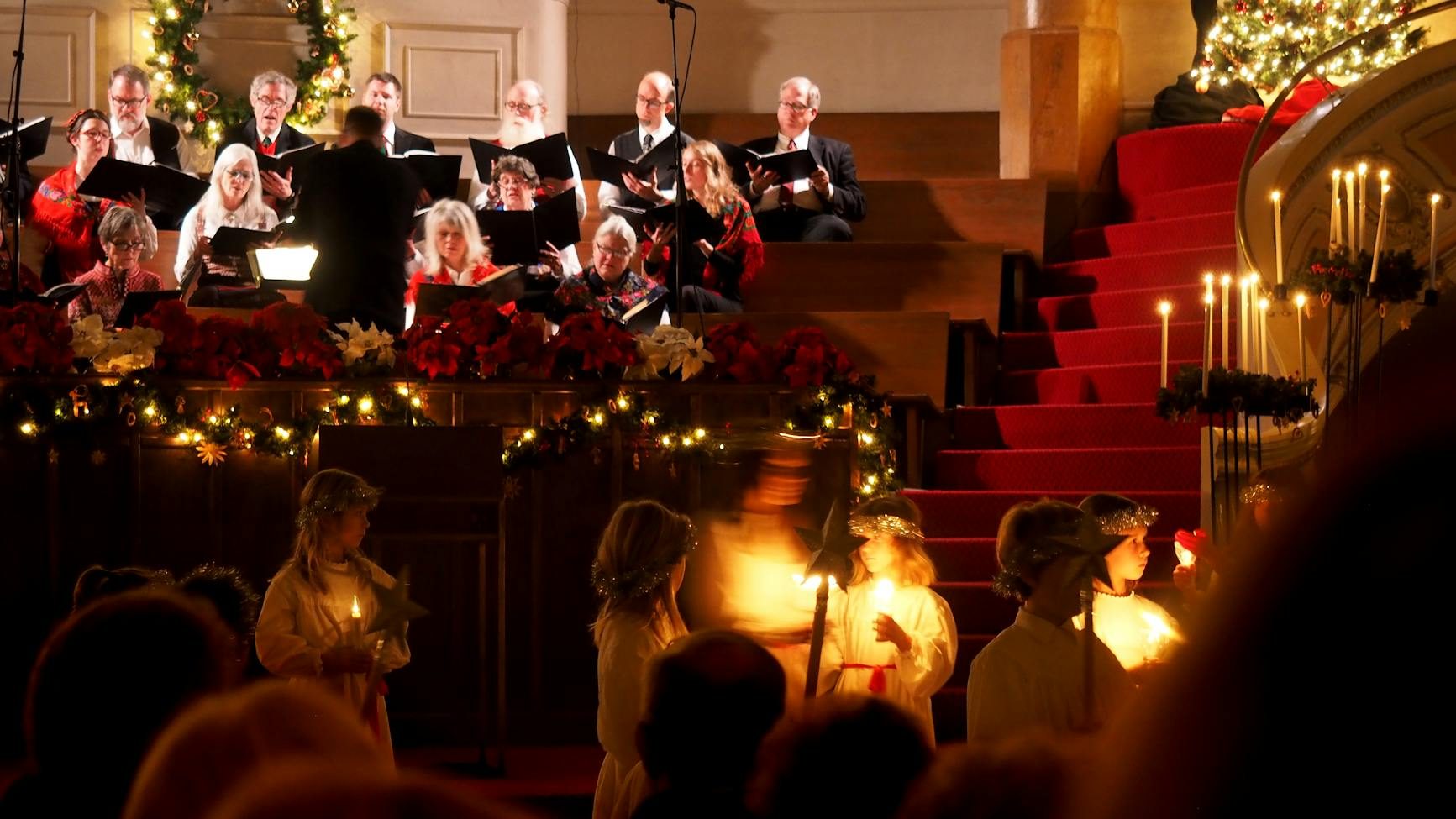
A carol service is an unconditional celebration of the love of God at Christmas; it’s a moment when music, scripture, and the soft glow of hope gather us into something far bigger than ourselves. I should know, because I’ve been organising them for years, although not in retirement. Those occasions always felt like an embrace. People arrived carrying the weight of the year, and somehow the familiar melodies, the gentle readings, and the story of a child born into vulnerability softened us all. There was no agenda except love, no priority except welcome, and no message except the astonishing truth that light still breaks into the world.

That’s why carol services must never be used for political purposes. They aren’t a platform to stir culture wars, promote nationalism, or draw battle lines between “us” and “them”. The moment you do that, the music stops being a gift and becomes a tool, and something holy is lost. Christmas speaks of peace on earth, goodwill to all, and that means everyone: neighbour, stranger, sceptic, seeker, and the person who disagrees with us completely.

A carol service is at its best when it gathers people without judgement, reminding us that divine love isn’t territorial, possessive, or partisan. It’s generous, surprising, and endlessly welcoming – and we honour it most when we let it stay that way.

Human Rights Day

Human rights aren’t abstract principles tucked away in treaties, they’re the everyday promise that every person is worthy of dignity, safety, and the chance to flourish. When we talk about rights, we’re really talking about people: children who deserve to learn without fear, women who deserve to walk home without being threatened, migrants who deserve compassion rather than suspicion, and communities who deserve to live without violence, exclusion, or silence. At its heart, human rights declare that no one is less than anyone else, and that simple truth still has the power to shake the world.

Yet we know how fragile that truth can be. In a world that often feels loud with anger and shrill with division, it’s easy to slip into cynicism, to shrug and say this is just how things are. But Human Rights Day nudges us to lift our heads, to notice the places where injustice still stalks the edges of our lives, and to realise that change begins not only with parliaments or courts, but with the way we choose to see one another. Every act of kindness, every moment of listening, every time we insist that someone’s story matters, we honour the promise made in the Universal Declaration of Human Rights.

It isn’t naïve to believe in this promise. It’s brave. It’s necessary. And it’s deeply hopeful. Because whenever we stand up for someone else’s dignity, we strengthen our own. Whenever we refuse to look away, we help build a world that’s gentler, fairer, and more human. On this day, and every day, we can choose that world, and it starts with how we treat the person right in front of us.

Christmas Love not Nationalism

Christmas should be one of the gentlest moments in our shared cultural life, a season of light breaking into darkness, of compassion stretching itself wide enough to hold everyone. Yet in recent years, it’s been unsettling to watch Christian nationalists try to hijack it. They frame Christmas as a symbol of cultural supremacy, a line in the sand, a test of loyalty to a particular version of identity. It turns something soft into something sharp, something generous into something guarded, and it jars with the spirit of the season.

Because at its heart, Christmas has never been about drawing boundaries. It’s about hospitality, humility, and a love that refuses to stay small or confined. It tells a story of welcome that begins on the margins, in obscurity, in vulnerability. When people attempt to pull Christmas into a narrative of exclusion or cultural fear, they aren’t defending it, they’re distorting it. They miss the quiet courage of the story, the way it invites us to see strangers as neighbours and neighbours as cherished parts of a shared human family.

The good news is that Christmas still holds its shape. It keeps nudging us toward kindness, solidarity, and the courage to imagine a broader, softer way of being together. And no matter how loudly others try to claim it as a weapon in a culture war, it keeps slipping through their fingers, returning again to warmth, generosity, and the beautifully simple call to make room for one another.

Lifting the two-child benefit cap

Lifting the two-child benefit cap is often painted as indulgent and unfair, yet it carries clear social and economic advantages that ripple far beyond individual families. It recognises that children aren’t responsible for the circumstances they’re born into, and that society’s strength is measured by how we treat its most vulnerable.

Removing the cap helps prevent families from slipping into deep poverty; it gives parents room to breathe, make wiser choices, and build a more stable home. When families aren’t constantly fighting scarcity, children thrive: better nutrition, better school attendance, and a calmer emotional climate. Those outcomes echo into adulthood, breaking patterns of hardship rather than entrenching them.

Economically, it’s a long-term investment. Child poverty costs the UK billions every year in lost potential, higher health needs, and greater strain on public services. Supporting families early reduces those pressures. And it restores a principle that many feel had been eroded: benefits should meet actual need, not punish family size.

Whose Flag Is It?

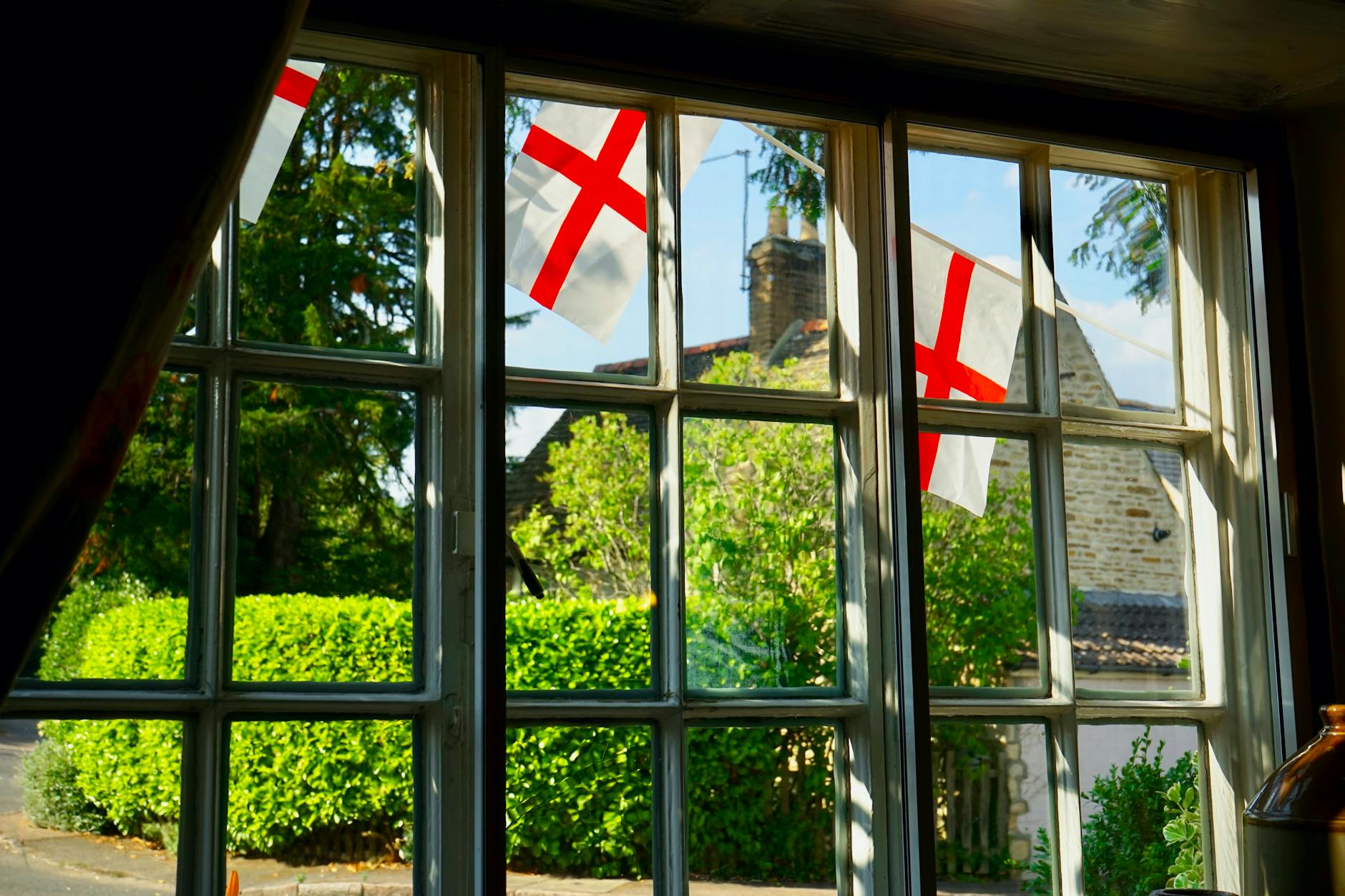
The Raise the Colours campaign in the UK (Summer 2025) was presented as a simple celebration of English identity, yet the evidence surrounding its organisation, its supporters, and the reactions of affected communities pointed to something more troubling.

Far-right groups, including Britain First, donated flags and promoted the movement, creating an atmosphere in which a patriotic gesture was easily co-opted into a display of dominance. Councils and community groups warned that the campaign risked intimidating already marginalised communities, especially where its supporters had been linked to anti-migrant activism and street intimidation.

Reports from Birmingham and other towns described residents feeling unsettled as groups of men arrived to plant flags, sometimes accompanied by harassment or racist language. Anti-racist organisations called the movement a coordinated attempt to unsettle asylum seekers, migrants, and Muslims, noting that it often appeared alongside anti-migrant protests. This sense of threat wasn’t imagined: attacks on mosques involved English and British flags, folded into a wider narrative of Christian-nationalist hostility rather than civic pride.

Surveys showed the depth of mistrust. Around half of ethnic minority adults in the UK said the St George’s flag had become a racist symbol, with even higher numbers among British Muslims. When a symbol was experienced this way by the very people it claimed to represent, its widespread and unsolicited display felt less like celebration, and more like a warning.

Taken together, these reports, perceptions, and patterns made it clear that Raise the Colours wasn’t simply about patriotism; for many, it carried the weight of exclusion, pressure, and fear.

International Men’s Day

International Men’s Day, celebrated each year on 19 November, offers a gentle pause in the calendar, inviting us to look with honesty, compassion, and gratitude at the diverse experiences of men and boys. It isn’t about elevating men above anyone else, nor is it a counterpoint to the vital work of International Women’s Day; instead, it’s a moment to acknowledge the responsibilities, pressures, joys, and vulnerabilities that shape men’s lives, and to encourage healthier, kinder ways of being in the world.

Too often, men are expected to be unshakeable: strong without faltering, providers without rest, problem-solvers who mustn’t admit fear, sadness, or loneliness. These expectations may look admirable on the surface, but they quietly restrict the full range of human expression. International Men’s Day encourages men to speak with honesty, to seek help when they need it, and to recognise that strength and tenderness aren’t opposites, but threads woven together into a fuller, freer life.

The day also calls attention to the relationships that help men flourish: friendships that allow vulnerability, families shaped by love rather than duty, workplaces where asking for support isn’t seen as weakness, and communities where men help to lift others up. It celebrates positive role models, those who show that empathy, fairness, and courage can coexist; those who challenge harmful stereotypes; those who raise boys with gentleness and integrity.

At its heart, International Men’s Day is an invitation towards wholeness. It’s a reminder that every man, whatever his story, is at his best when he’s allowed to be fully human: strong and soft, steady and questioning, responsible and deeply loved.

Whitewashing History

Whitewashing history always begins with a quiet stroke of omission, a gentle brushing-over of the uncomfortable, until the smoothed surface looks almost natural. Yet beneath that surface is the truth: history isn’t tidy, and the stories we inherit are often shaped as much by what’s left out as by what’s included. When nations tell their own story, there’s a temptation to look back with soft light and forgiving eyes, to protect a sense of pride or continuity. But when the past is edited to soothe rather than illuminate, we lose something essential: the ability to recognise the full humanity of those who came before us, and to understand how the present was shaped by their lives, their suffering, and their resilience.

One clear example of history being white-washed is the way many British schoolbooks for decades described the British Empire as a mostly benevolent force that “brought civilization”, while quietly downplaying or ignoring the brutality of colonial rule, the famines exacerbated by imperial policies, the suppression of independence movements, and the economic extraction that enriched Britain at the expense of colonized peoples. This softening of the truth didn’t just distort the past, it also shaped how generations understood power, identity, and responsibility, drifting away from the full, hard reality of what empire actually meant for those who lived under it.

Whitewashing doesn’t always come from malice; often it’s a product of the stories people were themselves told, passed down like heirlooms with cracks unnoticed or unspoken. But good intentions don’t undo the harm. When harmful truths are obscured, the voices of those who suffered are pushed further into the margins. Their experiences become footnotes, or disappear altogether. Without confronting those realities, we risk repeating patterns of inequality and injustice, because we never fully saw them in the first place.

Telling the whole truth doesn’t diminish a nation; it deepens it. It invites humility, maturity, and a more expansive understanding of who “we” are. When we face history honestly, with all its light and shadow, we gain the chance to grow into something better, something truer. And perhaps the most hopeful part of all is that it’s never too late to tell the fuller story, and to listen to the voices that were once left out.

Is History Subjective?

Whenever we look back, we’re not encountering the past in its raw form; we’re meeting it through the eyes of those who chose what to record, what to preserve, and what to pass on. Their choices shape the stories we inherit. Every source carries a viewpoint, every narrative has a tilt, and every retelling reflects questions and concerns that belong as much to the present as to the era being described. Yet it would be unfair to say that history is nothing more than personal perspective dressed up as fact.

This becomes especially clear when we consider how history has treated minorities. For centuries, whole communities found their experiences skimmed over, distorted, or erased, not because they were unimportant, but because power decided whose voices mattered. When stories are missing, societies lose more than detail; they lose truth, empathy, and the chance to understand the full richness of their own heritage. Restoring these overlooked voices doesn’t just fill gaps, it reshapes our understanding. It allows people to see themselves reflected where they were once invisible, and it encourages all of us to reckon more honestly with the world we’ve inherited.

Even so, history isn’t a free-for-all. The evidence left behind – letters, diaries, court records, ruins, census lists, artefacts, and countless other fragments – anchors interpretation. These traces act as guard-rails, keeping our reconstructions from drifting too far into fantasy. The past happened in particular ways, and while our understanding evolves, the underlying facts resist being bent beyond recognition. Historians listen carefully to the material they have, aware that fresh questions can bring new insights, and that each generation returns to the archive with different eyes.

Interpretation thrives in the spaces between those facts: in the motives we infer, the consequences we weigh, and the meanings we draw. Two people can study the same event and see different shades of significance, not because one is wrong, but because human experience is textured and complex. This isn’t a weakness; it’s a sign that history is alive and responsive to the needs and curiosities of each age.

So history lives in a delicate balance. It’s rooted in evidence, shaped by interpretation, and enriched by expanding the circle of voices allowed to speak. Its subjectivity doesn’t undermine it; rather, it encourages humility, compassion, and deeper listening as we try to understand who we are, where we’ve come from, and how the long human story continues to unfold.

No One-Sided Patriotism, Please

I bristle at the idea that you can only be a patriot if you support right-wing politics, because love of one’s country isn’t a narrow lane reserved for a single worldview, but a wide, living landscape shaped by all who call it home.

Patriotism, to me, is the quiet pride that comes from the familiar sights, the tenderness you feel for the winding streets and windswept coasts that have held your memories, and the hope that your nation can grow kinder, fairer, and more truthful than it was before. It’s the stubborn belief that we can face our history with honesty, learn from our mistakes, and still strive for a better future.

Reducing all that to a rigid political badge feels painfully small, almost like shrinking the soul of a country to fit a slogan. True patriotism doesn’t ask you to fall in line behind a single ideology. It invites you to love your nation enough to question it, challenge it, and seek its flourishing, even when that means swimming against the tide.

Resurfacing Racism

It struck me again this morning how quickly the boundaries of acceptable public discourse have shifted. For years, it felt as though the UK was making genuine progress in challenging racism and nurturing a more generous, inclusive spirit. There was a shared sense that, while we weren’t perfect, we were moving in the right direction, learning to speak with more care, and recognising the dignity of every neighbour. Yet the regression we’re witnessing didn’t appear out of nowhere. You can trace a clear line back to the years of Brexit campaigning, when inflammatory language became normalised, and figures like Nigel Farage helped move harsh, exclusionary rhetoric from the fringes to the centre of national debate.

Once that boundary was crossed, others followed. What used to be unsayable in public life is now spoken without hesitation, and often with applause. Reform UK, along with a handful of MPs and public commentators, can now voice plainly racist ideas with little, or sometimes no, consequence. The moral guardrails that once held firm seem to have weakened, and we’re left facing a culture in which prejudice is treated as a legitimate political stance rather than a breach of the values we claim to cherish.

It’s painful to watch, because it reminds us how fragile progress can be, and how easily it’s undone when fear is stirred, and division is rewarded. Yet naming what’s happening matters, because racism thrives in silence. If we’re to rebuild a kinder, more truthful public square, we’ll need the courage to call out the rot, to speak with honesty, and to keep insisting that a better, more generous Britain is still possible.