A Continuing Story

This Sunday Devotional is for Stockton Corps on our 150th Anniversary.

This weekend (23/24 November 2024) marks the 150th Anniversary of Stockton Corps. None of us were here 150 years ago, but we’re part of a continuing story. We’re all part of a rich and proud heritage, of productive years of ministry and service, and have an ongoing privilege and responsibility now and into the future.

There may be those of you who remember the Centenary 50 years ago, when you would have looked back and been encouraged by what had been achieved from those early beginnings.

As we look back today, we can be similarly encouraged by what has been achieved; but 2024 is a very different world to 1974, and we’ll be aware of vast changes in culture, demographics, attitudes, technology and the like.

• What was in the news then?
• What do we take for granted that we didn’t have then?

Going back even further, the birth of the Salvation Army, and the commencement of the work in Stockton are events, not of the last century, but of the one before that. We live in a vastly different age, and that’s both an encouragement and a challenge. The encouragement is that the Christian message is the same as it’s always been, but every generation has the challenge to communicate it in the present age.

Jesus Christ is the same yesterday, today, and forever. Hebrews 3:18

We thank God for everything that’s been achieved in his name over the past 150 years; spiritual victories won in worship and service given in compassionate care. But, at the same time, we don’t forget what is being achieved now, nor do we neglect the need to move forward in faith into an uncertain future.

  • We celebrate those who have come to know Jesus as Saviour and Lord through the ministry of the Salvation Army in Stockton, because whenever the word of God has been declared, God’s will has been done.
  • We celebrate today all those who have been touched with the love of God through the ministry of the Salvation Army in Stockton, because whenever we’ve reached out with the compassion of Jesus, God’s will has been done.
  • We celebrate today the faithful officers, soldiers, adherents and friends who have been vital to the ministry of the Salvation Army in Stockton, because whenever lives have been dedicated to him, God’s will has been done.

Jesus commanded his disciples to go and make disciples of all the nations, baptizing them in the name of the Father and the Son and the Holy Spirit. Teach these new disciples to obey all the commands I have given you. And be sure of this: I am with you always, even to the end of the age. Matthew 28:16-20.

These words are a challenge and an encouragement, words that motivated those who opened this corps in Stockton all those years ago and have motivated all those in the corps since. May they be our motivation and encouragement for the future.

  • We celebrate the bonds of friendship and fellowship that have been sustained and strengthened in Christ through the years, because whenever our fellowship has been built up, God’s will has been done.

Paul wrote to the Philippians:
Is there any encouragement from belonging to Christ? Any comfort from his love? Any fellowship together in the Spirit? Are your hearts tender and compassionate? Then make me truly happy by agreeing wholeheartedly with each other, loving one another, and working together with one mind and purpose. Don’t be selfish; don’t try to impress others. Be humble, thinking of others as better than yourselves. Don’t look out only for your own interests, but take an interest in others, too. You must have the same attitude that Christ Jesus had. Philippians 2:1-5

The reality of Christian fellowship has been lived in this corps over the years. Yes, there may have been times of disappointment and loss, but underlying it all has been that rich strand of fellowship binding us to each other, and binding us to Christ.

May our fellowship be richer and deeper in the future, for therein lies the way of effective Christian ministry and service.

  • We also celebrate today all those who have been ministered to in time of need or hardship, because whenever we have cared for others in Christ’s name, God’s will has been done.

Our Christian gospel is for the whole person; body, mind and spirit. Let’s make sure that as we move forward, we look for the face of Jesus in the face of everyone we meet, and serve them in his name.

There’s a sense in which we’re always turning a page in our continuing story of faith and service; in our own lives and that of the corps. This anniversary is only a date after all, but it’s good to have significant milestones and signposts.

As participants in this continuing story we’re reminded of the need to declare the word of God in words and actions, to build up our fellowship, and to care for others in the name of Jesus.

We remember those who have gone before us and have done God’s will, and we take our place and follow in their footsteps. We honour their memory by living the same life of faith in obedience to the heavenly vision.

We’ve already been reminded that the Lord will always be with us. So, let’s thank God for the past, and claim in faith all that God wants to do in us and through us by committing ourselves fully to him and his work as we go in the strength of the Lord.

A Very British Eclipse

In August 1999 I fulfilled a boyhood ambition of witnessing a total solar eclipse.

As I travelled down to Devon from South Wales (the eclipse was only going to be total in parts of Cornwall and Devon) I really started to capture the excitement when I stopped at a Service Area on the M5, as there was something of a party atmosphere.

I eventually parked on the waterfront at Kingsbridge, near some good public conveniences that were open 24 hours, and attempted to get some sleep in the car. Waking soon after 4.00 am I decided to make my way the coast, heading for Slapton Sands. I arrived at about 5.00 am and was totally unprepared for the level of traffic and activity going on.

There were some quite large car parks, and I managed to get one of the last spaces. It was right next to the beach, people were sleeping in cars and vans, in tents, and in sleeping bags on the beach itself. As it started to get light, there was no way I was going to get any more sleep, so I decided to get the bike out and go for an early morning cycle ride. There was a great buzz in the air; it was one of those occasions when people were drawn together by a shared experience, strangers found it easy to talk to each other. Telescopes, cameras and the like were being set up on the vantage points, and the smell of cooking was hanging in the air. By this time the authorities had closed off the car park entrances, and the refreshment vans were doing brisk business.

By about 8.00 am the traffic had become even busier, but there was nowhere to go, no sooner had people parked half on the road, half on the grass verges, they were moved on. Fields were opened up for the cars, but these eventually filled up, and still the cars were coming, causing chaos in the narrow country lanes.

I managed to see the eclipse at various stages, up to about 70% covered, but then the threatening darker clouds came and obscured the view, but nothing can prepare you for the experience of totality, and it’s impossible to adequately describe in words.

the approach of darkness
the drop in temperature
the quietness that descended on the crowds
the expectation
the moment of totality
the darkness during the day
the birds flying off
the applause of the crowd

Because of the cloud cover, I saw nothing more of the eclipse as the Moon finished travelling across the Sun, although the Sun did break through later on.

And that’s my experience of the eclipse, something I will never forget. I was slightly disappointed that I didn’t actually see the full eclipse, but I experienced something equally unique; it was moody, eerie, and atmospheric, to be under cloudy skies when the shadow of the Moon travelled overhead at nearly 2000 mph, a very British eclipse.

Climate Change is REAL

As a Christian with a scientific background, who sees no conflict between faith and science, I find it incomprehensible that anyone can deny the reality of climate change and global warming.

Similarly, I find it puzzling how people can believe and share dubious articles that have no basis in empirical evidence, sometimes combining this with a belief that God alone is responsible for the planet and it’s nothing to do with us. It’s so much easier to pass the blame onto someone else (even if that person is God) than face the consequences of our own actions.

As I understand it, climate change is cyclical (earth’s history shows this), but global warming (since the start of the Industrial Revolution) is largely the result of human activity. This is accepted by the vast majority of the worldwide scientific community. Unfortunately, many people confuse climate with weather, just because you’re experiencing a cold spell doesn’t negate the overall global trend.

My responsibility as a human being and as a Christian is to care for the planet and its inhabitants. God doesn’t expect us to be careless and irresponsible towards his creation. We all need to play our part to look after our home, the planet that has been entrusted to us for our children and future generations.

Easter Sunday (The Early Church)

Acts 10:34-43 captures a key moment in the early Christian church, depicting Peter’s realisation of the universality of God’s message and the inclusion of Gentiles in the Christian faith. This passage marks a significant shift in the understanding of God’s plan of salvation.

In these verses, Peter, who was a devout Jew and one of Jesus’ disciples, addresses a Gentile audience, specifically Cornelius, a Roman centurion. Peter begins by acknowledging that God shows no partiality, meaning that his love and salvation are not limited to any particular group or ethnicity. This revelation challenges the traditional Jewish understanding that salvation was exclusive to the Jewish people.

Peter then proceeds to proclaim the core message of Christianity: the gospel of Jesus Christ. He emphasises that Jesus is Lord of all, regardless of nationality or background. Peter recounts the ministry of Jesus, highlighting his baptism by John the Baptist, his anointing with the Holy Spirit, and his acts of healing and liberation. This serves to establish Jesus’ authority and credentials as the Messiah.

Peter also emphasises Jesus’ death and resurrection, declaring that Jesus was crucified, but God raised him from the dead on the third day. This central tenet of Christianity underscores the power of God over death and sin, offering hope and salvation to all who believe.

Moreover, Peter testifies to the eyewitness accounts of Jesus’ ministry and resurrection, affirming the reliability of the Christian message. He emphasises that Jesus commanded his disciples to preach and bear witness to him, thus validating their role as messengers of the gospel.

Furthermore, Peter highlights the role of Jesus as the appointed judge of the living and the dead, underscoring the accountability of all people before God. He stresses that through faith in Jesus, forgiveness of sins is available to everyone who believes in him.

This passage concludes with Peter affirming the prophetic testimony concerning Jesus, stating that all who believe in him receive forgiveness of sins through his name. Here, Peter extends the invitation to salvation to his Gentile audience, emphasising that faith in Jesus is the means by which all people can experience reconciliation with God.

Acts 10:34-43 is a turning point in the Book of Acts, illustrating the expansion of the Christian message beyond its Jewish origins and the inclusion of Gentiles in the community of believers. It serves as a foundational text for understanding the universal scope of God’s redemptive plan through Jesus Christ.

Thought: Live as Easter people in a Good Friday world.

Palm Sunday 2024 (Óscar Romero)

Palm Sunday this year falls on the day we remember Óscar Romero, the Archbishop of San Salvador who championed the cause of the poor and marginalised. He was assassinated on Monday, 24 March 1980, at the age of 62.

So, instead of concentrating on the events of the first Palm Sunday, I’d like to celebrate Óscar Romero and learn from the life of this extraordinary man, a hero of faith, prayer, and justice.

Óscar Romero was the Archbishop of San Salvador at a time of terrible violence and oppression during El Salvador’s civil war. He was a contemplative and conservative man, but a fierce opponent of economic inequality and of the kidnapping, torture, and murder of his people.

He became a beacon of hope for the poor. Although his killers were never identified, it’s almost certain that Romero’s very public stand against the injustice of the military government was the reason he was shot dead as he celebrated Mass.

Romero saw that love can’t be theoretical, neither is it soft or weak, but there is a violence to love. Not a violence that hurts people, but a violence that resists anything that harms people. It stands up to the powers that exploit and destroy others; it’s this kind of love that Jesus demonstrated on the cross.

Read: Philippians 2:5-11 (one of the Lectionary Bible readings for today).

Óscar Romero wrote: “All of us, if we really want to know the meaning of conversion and of faith and confidence in another, must become poor, or at least make the cause of the poor our own inner motivation. That is when one begins to experience faith and conversion: when one has the heart of the poor, when one knows that financial capital, political influence, and power are worthless, and that without God we are nothing. To feel that need of God is faith and conversion.”

“The violence we preach is not the violence of the sword, the violence of hatred. It is the violence of love, of brotherhood, the violence that wills to beat weapons into sickles for work.”

On this Palm Sunday, let’s reflect on the life of Óscar Romero and consider how he followed Jesus, the one who rode into Jerusalem as the Prince of Peace.

St. Patrick’s Day

St. Patrick’s Day, which falls on 17th March, is all about celebrating the legendary patron saint of Ireland, St. Patrick. He was actually born in Roman Britain way back in the late 4th century. He was kidnapped when he was just 16 and taken to Ireland to work as a slave, but he managed to escape. He later returned to Ireland around 432 CE with a mission, to convert the Irish to Christianity. He used a humble shamrock to explain the Holy Trinity, which eventually became a symbol of this day.

For over a thousand years, the Irish have been celebrating this day, sticking to their traditions. They usually start with a morning church service and then dive into festivities in the afternoon, especially since it falls during Lent when the rules about meat-eating get relaxed a bit. That means it’s time for some serious feasting on Irish classics like bacon and cabbage.

Interestingly, the first-ever St. Patrick’s Day parade didn’t happen in Ireland, but in America! Back in 1601, in a Spanish colony that’s now St. Augustine, Florida. And then in 1772, Irish soldiers in the English military based in New York City decided to honour St. Patrick with their own parade. Over the years, these parades became a big deal, showing off Irish pride among immigrants in America.

Fast forward to today, and St. Patrick’s Day is all about parades, wearing anything and everything green, and of course, indulging in delicious Irish food and drinks. It’s a massive celebration, not just in Ireland but all over the globe, especially in places with lots of Irish folks. But beyond the fun, it’s also a time to think about Irish heritage and culture.

Sure, over time, the day’s meaning might have shifted a bit, but it’s still all about honouring those Irish traditions and remembering the work St. Patrick did in spreading Christianity. Yeah, some people might grumble about how commercialised it’s become or how it sometimes plays into stereotypes, but for many, it’s a day of cultural pride and religious reflection, a reminder of the incredible legacy left by Ireland’s favourite saint.

A Brief History of Pi

Pi, denoted as π, is the mathematical constant representing the ratio of a circle’s circumference to its diameter. This transcendental number is approximately equal to 3.14159 and is crucial in various fields of science, mathematics, and engineering.

The quest to understand π has spanned several millennia. Ancient Babylonians and Egyptians used approximations of π for practical computations, with the Babylonians using a value of 3.125 and the Egyptians 3.1605. The first rigorous calculation of π was by Archimedes of Syracuse, who used the Pythagorean Theorem to approximate the area of a circle with polygons, deducing that π was between 3 1/7 and 3 10/71.

In the 5th Century, Chinese mathematician Zu Chongzhi calculated π to be 355/113, a remarkably accurate figure for the time. He achieved this by starting with a 24,576-sided polygon and performing extensive square root calculations.

The symbol π itself was introduced by Welsh mathematician William Jones in 1706 and later popularised by Swiss mathematician Leonhard Euler in 1737. The 18th Century saw further developments, such as Georges Buffon’s probability method to calculate π.

Modern computational power has allowed mathematicians to calculate π to trillions of digits. These efforts are not just for record-breaking but also test the limits of algorithms and computer hardware.

Pi Day, celebrated on March 14th (3/14), honours this enigmatic number. It’s a day for mathematical fun and education, reflecting on the significance of π and its place in the history of mathematics.

February 29

Ever wondered why February gets an extra day every four years? Well, it’s all about keeping our clocks and calendars in sync with the Earth’s orbit around the sun. You see, our orbit takes approximately 365.2422 days, but the Gregorian calendar, which we use, only has 365 days. So, to make up for this discrepancy, we add leap years.

The idea of adding an extra day to February goes back to Julius Caesar’s time. Augustus Caesar later added two days to August, which caused February to lose out on its length.

Leap years happen every year that’s divisible by four, except for years divisible by one hundred but not by four hundred. This fine-tuning ensures our calendar stays accurate. The Gregorian calendar, introduced in 1582, made further adjustments by skipping three days every four hundred years. Additionally, leap seconds are occasionally added to align Earth’s rotation with atomic time and prevent drift.

Interestingly, leap years are also linked to the tradition of women proposing to men. This tradition stems from a 5th Century Irish legend involving St. Bridget and St. Patrick, and it gained popularity in Scotland in the 19th Century.

If you’re born on February 29, you’re called a leapling! In non-leap years, leaplings celebrate their birthdays on February 28 or March 1.

Popular culture has embraced leap years too. Works like Gilbert & Sullivan’s “Pirates of Penzance” and the film “Leap Year” explore leap year themes. While there’s no specific leap year cuisine, dishes like frogs’ legs and recipes involving the number four are often associated with leap year traditions.

Anthony, Texas, proudly calls itself the Leap Year Capital of the World and hosts a four-day festival every leap year. Superstitions about leap years are reflected in proverbs from various cultures, and some believe leap years bring bad luck for marriages.

Fun fact: Rare Disease Day is observed on February 29.

In conclusion, leap years play a crucial role in keeping our calendars accurate, and they’re woven into various cultural traditions and beliefs. So, every four years, let’s celebrate that extra day in February!

Christian Remembrance

Remembrance Sunday is observed on the second Sunday in November in the UK and some Commonwealth nations. It’s a day to honour and remember the sacrifices made by those who lost their lives in times of war. It holds deep significance for Christians, interweaving both historical and spiritual elements in its observance.

At the heart of the Christian faith lies the principle of love, echoed in Jesus Christ’s teachings to “love your neighbour as yourself.” Remembrance Sunday aligns with this core belief, emphasising the sacrificial love shown by soldiers and civilians who laid down their lives for the well-being of others. Christians view this sacrifice as reflective of Christ’s own sacrificial love, embodied in his death on the cross.

For many Christian denominations, the act of remembrance itself is profoundly rooted in their faith. It’s a time to reflect on the virtues of courage, selflessness, and service exemplified by those who served in the armed forces. Christians recognise and honour the dedication and commitment of these individuals, echoing Christ’s message of service to others.

Church services on Remembrance Sunday often incorporate themes of peace, reconciliation, and the call for a world free from conflict. The prayers and hymns during these services focus on the hope for peace, drawing inspiration from biblical passages that speak of peace and the cessation of violence. It’s a moment to pray for global peace and for the families who continue to suffer due to the consequences of war.

The act of remembrance, marked by the two-minute silence at 11.00 am, stands as a solemn acknowledgment of the sacrifice made by so many. This silence is an act of collective honour and gratitude, echoing the Christian value of reverence, humility, and thankfulness.

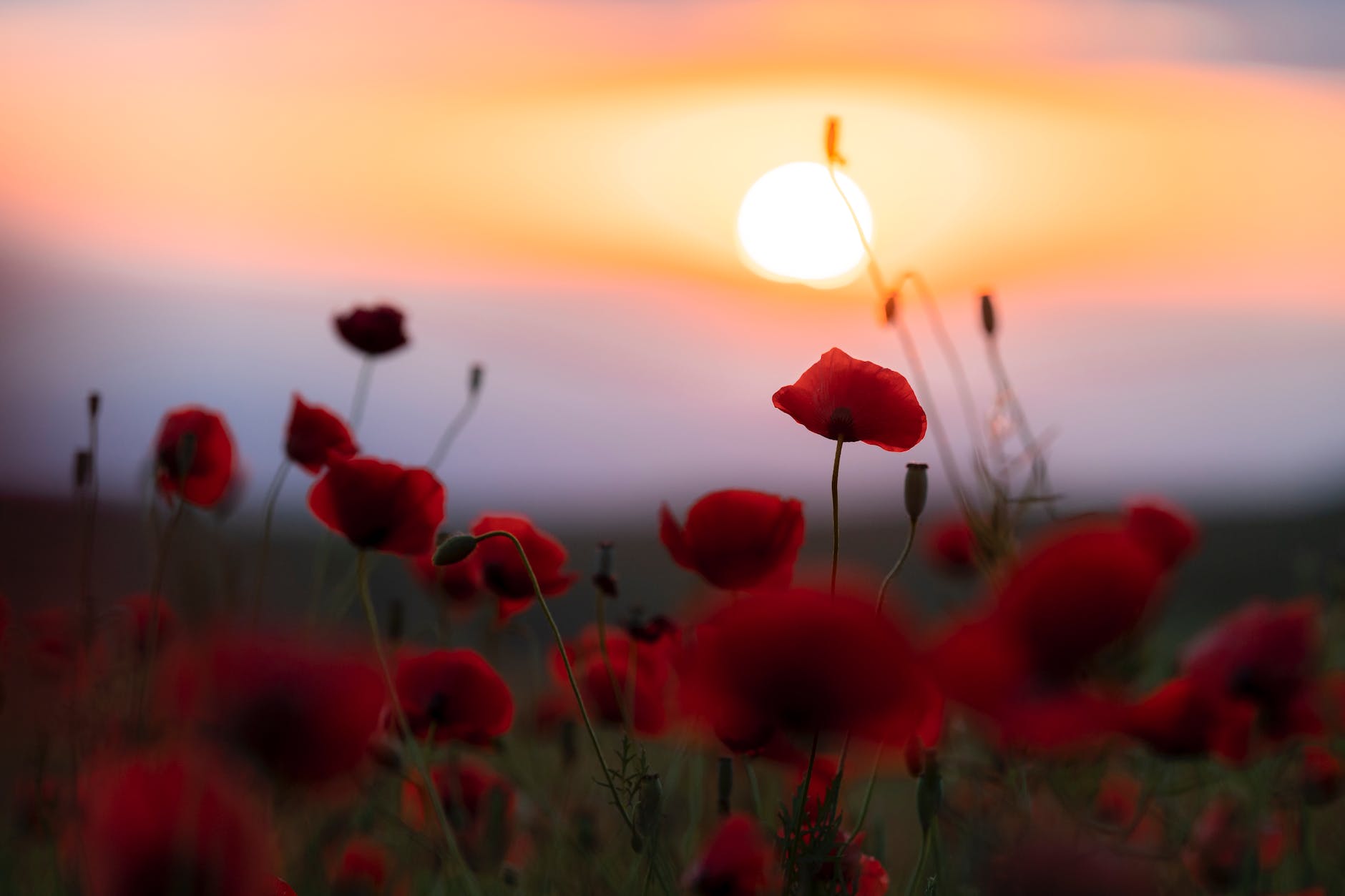
Moreover, the red poppy, often worn during this time, symbolises both loss and hope. While it signifies the bloodshed and sacrifices of war, it also represents the hope for a peaceful future. In a Christian context, the red poppy can be likened to the redemptive nature of Christ’s sacrifice, offering hope and renewal even in the face of immense suffering.

The Christian perspective on Remembrance Sunday also incorporates a plea for learning from history. It encourages reflection on the tragic consequences of war and the importance of pursuing peace, justice, and reconciliation. This aligns with the Christian ideals of forgiveness and understanding, emphasising the need to work towards preventing conflict and promoting harmony in society. Some wear a white poppy for this reason.

Ultimately, for Christians, Remembrance Sunday is a time to pay homage to the fallen, to reflect on the virtues of sacrifice, courage, and service, and to recommit to the pursuit of peace in a world often marred by conflict. It’s a day that highlights the interconnectedness of remembrance, faith, and the aspiration for a future guided by love, harmony, and unity.

Israel-Palestine Conflict Overview

The Israel-Palestine conflict, one of the most protracted and deeply entrenched disputes in the world, revolves around historical claims to land, national identity, and sovereignty in the Middle East. It’s a complex and multifaceted issue with roots dating back to the late 19th and early 20th centuries.

At the heart of this conflict is the clash between Jewish Zionists and Arab Palestinians over territory, primarily the land that now comprises Israel, the West Bank, and the Gaza Strip. The Zionist movement emerged in the late 19th century, aiming to establish a Jewish homeland in Palestine, which was then part of the Ottoman Empire. The migration of Jewish immigrants into Palestine, primarily in the early 20th century, resulted in increasing tensions between the Jewish and Arab communities.

The situation escalated in the aftermath of World War II and the Holocaust, prompting international sympathy and support for Jewish survivors and the Zionist cause. In 1947, the United Nations proposed a partition plan, dividing Palestine into separate Jewish and Arab states, with Jerusalem designated as an international city. The plan was accepted by the Jewish leadership but rejected by the Arab states and Palestinian leadership.

In 1948, following the declaration of the State of Israel, the Arab-Israeli War broke out. Israel emerged victorious and expanded its territory beyond the UN-allocated borders. This led to the displacement of hundreds of thousands of Palestinian Arabs, creating a refugee crisis that remains unresolved to this day.

Subsequent conflicts, most notably the Six-Day War in 1967, further reshaped the territorial landscape, with Israel capturing the West Bank, Gaza Strip, Sinai Peninsula, and the Golan Heights. The occupation of these territories has been a central point of contention in the conflict.

Core issues in the Israel-Palestine conflict include:

Jerusalem: Both Israelis and Palestinians claim Jerusalem as their capital, with the city holding deep religious significance for Jews, Muslims, and Christians. The status of Jerusalem remains a major obstacle to a comprehensive peace agreement.

Borders: The borders of a future Palestinian state and the security concerns of Israel are fundamental issues. Palestinians seek a state based on pre-1967 borders, while Israel emphasizes the need for secure borders.

Refugees: The Palestinian refugee issue is a matter of great importance. Millions of Palestinians are descendants of those who were displaced during the 1948 and 1967 conflicts. They demand the right of return or compensation, while Israel is concerned about the demographic implications of such a return.

Security: Ensuring the security of Israel and its citizens has been a paramount concern, given historical conflicts and acts of violence. The demilitarization of a future Palestinian state and other security arrangements are central to negotiations.

Efforts to resolve the Israel-Palestine conflict have involved various peace negotiations, international initiatives, and accords. The Oslo Accords of the 1990s aimed at a two-state solution, where Israel and Palestine would coexist peacefully side by side. However, the implementation of these agreements faced numerous obstacles, including violence and political disputes.

The situation on the ground remains tense, marked by recurring violence, settlement expansion in the West Bank, and restrictions on the movement of Palestinians. International involvement, including mediation by the United States, the United Nations, and regional actors, continues in attempts to reach a comprehensive and lasting resolution to the conflict.

The Israel-Palestine conflict has significant regional and global implications, impacting stability in the Middle East and international diplomacy. Finding a just and sustainable solution remains a formidable challenge, with the hope that a negotiated settlement can eventually bring about a peaceful coexistence between Israelis and Palestinians.