The Bottle of Notes & MIMA

Tucked into the heart of Middlesbrough, the Bottle of Notes and the Middlesbrough Institute of Modern Art (MIMA) stand as two bold declarations that this proud post-industrial town has never lost its creative spark. Together, they form a kind of artistic gateway (one outdoors, one within) both inviting passers-by to pause, to look up, and to wonder.

The Bottle of Notes, created by Claes Oldenburg and Coosje van Bruggen in 1993, was the UK’s first public sculpture by international artists of that stature. It’s a twisting, open steel bottle, standing over nine metres tall, scribed with words from the journals of Captain James Cook, one of Middlesbrough’s most famous sons. The sculpture weaves his words with Coosje’s own poetic reflections, looping them together in English and French. It’s as if the sculpture itself is a message tossed into the sea of public space: fragmentary, fluid, beautifully unexpected. You don’t just look at the Bottle, you walk around it, beneath it, inside its gentle chaos. And if you let the words wash over you, you might just catch a glimpse of adventure.

Just a short stroll away is MIMA, one of the UK’s leading contemporary art galleries. It opened in 2007 with a striking glass façade that reflects both the sky and the people walking past. Inside, it’s a thoughtful space that doesn’t shout, but listens. MIMA champions not just visual art, but social change. Its exhibitions range from internationally acclaimed artists to community-rooted projects that give voice to the region’s lived experience. It’s not a place where art sits on a pedestal, it’s where art meets life.

Together, the Bottle of Notes and MIMA tell a quiet but powerful story: that Middlesbrough is a place of imagination and resilience. In steel and glass, poetry and paint, they remind us that art can belong to everyone, and that every place, no matter its past, can shape a creative future.

Attention Moon Landing Deniers!

Healthy scepticism is important, and questioning what we’re told is a vital part of being human. But when it comes to the Moon landings, the evidence is so overwhelming, so beautiful in its scale and collaboration, to deny it is laughable.

Let’s start with this: the Apollo missions weren’t just a few astronauts and a secretive NASA control room. They involved over 400,000 people, scientists, engineers, programmers, builders, planners, many of whom weren’t even working in the same place or under the same leadership. To fake something of that size, and keep it hidden for over half a century, would require a conspiracy larger and more intricate than anything the world has ever seen. And that kind of silence? It just doesn’t happen!

But it’s not just about the people involved. We brought back rocks. Moon rocks. Not pebbles anyone could fake in a lab, but samples that have been studied and confirmed by independent scientists all over the world, including those in countries that weren’t exactly friendly with the USA at the time. These rocks are unlike anything we’ve found on Earth: their composition, age, and exposure to cosmic radiation tell a story that only the Moon could have written.

And then there’s the technology. Space agencies in other countries, Russia, China, India, have tracked and mapped the Moon using their own satellites. They’ve seen the sites. Some of these spacecraft have even captured images of the Apollo landers still sitting there, untouched, in the grey lunar dust. The reflectors the astronauts left behind still bounce laser beams back to Earth. You can test it yourself, if you’ve got access to the right equipment.

I understand the mistrust that fuels conspiracy theories. We live in a world where institutions have sometimes failed us, where secrets get kept and stories get twisted. It makes sense to wonder. But the Moon landings aren’t a lie. They’re one of humanity’s greatest stories, of courage, intelligence, teamwork, and imagination.

To believe we didn’t go sells short what we’re capable of. It turns a collective triumph into a cynical illusion. And maybe most tragically, it robs us of wonder. Because when we look up at the Moon, knowing we’ve stood there, not once, but six times, we get to feel something rare and precious – AWE!

And I don’t want to give that up!

Reject Christian Zionism

Christian Zionism is a religious, political, and military movement couched in biblical ideas and imagery. There are clearly wrong actions from both sides in the Israel/Palestine conflict; neither Hamas (for example) nor Israel is without blame, yet both have legitimate claims.

For me, Christian Zionism is negative and counterproductive in the movement for peace, as well as being contrary to the character of Jesus portrayed in the Gospels. It doesn’t advance the values of the Kingdom. The way of Jesus was one of vulnerability, supremely demonstrated on the Cross, not the way of triumphalism.

Indeed, Jesus condemned the nationalism of the Jews on the first Palm Sunday and rightly predicted the downfall of Jerusalem in 70 CE as a result. Peacemaking in this area of longstanding tension and conflict requires sensitive understanding and diplomacy, not unilateral action and triumphalism.

My genuine hope and prayer is for a two-state solution to this seemingly intractable conflict, where (as so often) it’s the innocent who suffer and die. In recent times, Hamas have been provocative, and Israel have overreacted. I weep as innocent suffering continues.

I’m neither anti-Israel nor pro-Palestine; I’m on the side of justice and peace for all, pro-humanity you could call it. Selective interpretation of the Bible is not in keeping with its overall message, the character of Jesus, nor the values of the Kingdom.

Unknown Pleasures (1979)

Unknown Pleasures is the debut album by English post-punk band Joy Division, released on 15 June 1979 by Factory Records. Recorded over three weekends at Strawberry Studios in Stockport with producer Martin Hannett, the album’s sound was shaped by Hannett’s experimental techniques, lending it a haunting, atmospheric quality that set it apart from the raw energy of punk.

The stark black-and-white cover, designed by Peter Saville, features a pulsar signal graph and has since become an iconic image in music and fashion. Musically, the album is steeped in post-punk’s brooding textures, driven by Peter Hook’s melodic basslines, Bernard Sumner’s sharp guitar work, Stephen Morris’s mechanical drumming, and Ian Curtis’s deep, anguished vocals. Curtis’s lyrics, dark, poetic, and introspective, grapple with themes of isolation, disintegration, and despair, mirroring the gritty atmosphere of late ’70s Manchester.

Opening with the urgent pulse of Disorder, the album unfolds into a sequence of emotionally intense tracks. She’s Lost Control, influenced by Curtis’s struggles with epilepsy, delivers a cold, hypnotic groove, while Shadowplay and New Dawn Fades highlight the band’s ability to fuse relentless rhythm with emotional weight.

Though no singles were released from it, Unknown Pleasures gained acclaim for its innovation and mood, gradually growing in stature to become one of the most influential albums in modern music. It helped define the post-punk movement and inspired generations of artists with its bleak beauty.

Joy Division formed in 1976 in Salford after seeing the Sex Pistols perform. Originally called Warsaw, the band changed its name to Joy Division in 1977. Their first release, An Ideal for Living, led to their signing with Factory Records and the recording of Unknown Pleasures.

Tragically, this would be the only Joy Division album released during Ian Curtis’s lifetime. He died by suicide on 18 May 1980, just before their first American tour. The surviving members later formed New Order, continuing the legacy. Unknown Pleasures endures as a powerful, emotionally resonant work that continues to captivate listeners.

History Repeating

The 1930s in Germany began with a whisper of desperation and ended in a roar of destruction. In the shadows of World War I and the Great Depression, the German people were aching for stability, dignity, and hope. But what they got instead was a rising tide of far-right extremism that would plunge the world into its darkest abyss. The lessons of that decade still echo today, especially as far-right movements stir again across the globe, cloaked in new language but driven by the same old fears.

Germany’s democracy, the Weimar Republic, was fragile and battered. Inflation had shattered savings and unemployment soared. People were angry, disillusioned, and vulnerable to the promise of easy answers. Enter Adolf Hitler and the Nazi Party, a fringe movement that exploited the pain of a nation. With slogans about restoring greatness, purifying the nation, and crushing enemies from within, they wrapped fear in patriotic colours and made hatred feel like a duty.

When Hitler was appointed Chancellor in 1933, he moved fast. Civil liberties evaporated, the press was muzzled. Political opponents were silenced, imprisoned, or killed. The Nazis used propaganda not just to inform, but to mold reality itself – painting Jews, communists, intellectuals, and the disabled as threats to be neutralised. Step by step, they turned neighbours into enemies and bystanders into accomplices. The churches, too, wrestled with compromise and complicity, and many chose silence rather than risk.

At its heart, this was not just a German tragedy, it was a human one. It was about what happens when fear outweighs compassion, when power goes unchecked, and when a people forget that the stranger at the gate is often just a reflection of themselves.

And here we are again…

Across continents today, we hear echoes of that decade: the rise of nationalism that scapegoats the weak, the nostalgia for a glorified past that never truly existed, the distrust of the press, and the sneering disdain for democratic norms. We see it in the chants at rallies, in the conspiracies that spread like wildfire, in the tightening of borders and the loosening of empathy. The faces and flags have changed but the spirit is familiar: an idolising of strength, a demonising of difference.

Yet history doesn’t repeat itself word for word, it rhymes. And the echo of the 1930s isn’t a prophecy, but a warning. It tells us that democracy isn’t a given, it must be guarded. That kindness isn’t weakness, it’s the foundation of any society worth building. When we believe “it can’t happen here” we’ve stopped paying attention.

Light always begins small: a candle, a voice, a hand reaching out. But so does darkness. The far-right grew not just because of violence, but because of indifference. And that, more than anything, is what history urges us to resist. We must stay awake. We must speak up. We must remember.

Because the past is not dead, it waits to be repeated if we let it.

VE Day: Resilience in Modern Times

While it’s important to be cautious when comparing today’s world with the era of the Second World War, there are still meaningful lessons to be drawn. VE Day in 1945 symbolised more than just the defeat of a visible enemy; it also marked a triumph over destructive ideologies and deeply rooted fear. In our time, we face different but equally serious threats, ones that may not involve tanks or bombs but still cause disruption and anxiety. Misinformation, manipulation, and attacks on truth are among today’s adversaries. Had social media existed during the war, it likely would have become another front in the struggle for clarity and trust.

Just as people then had to remain alert to defend hard-won freedoms, we too must guard the values we often take for granted. The suffering endured during the war defies comprehension, yet today we continue to see suffering, though in different forms. Many are grieving, many are struggling, and often due to circumstances beyond their control. The threats we face now are not always visible but still challenge our sense of safety and stability. In such times, it becomes even more important to support and uplift each other, to offer reassurance in the face of uncertainty.

Not everyone greeted VE Day with simple joy. Though the war had ended, hardship remained. Food rationing continued, and the task of rebuilding was immense. Likewise, in our age, recovery from recent problems will not be immediate. But we can take inspiration from the resilience and courage shown then. Alongside the heroes of the past, we must celebrate those who serve society today, health workers, teachers, public servants, and countless others who keep daily life going. One of the greatest post-war legacies, the NHS, remains a powerful symbol of care and hope. So today, as we reflect, it’s worth asking: who are your heroes now? And how can you be a source of strength for someone else in the days to come?

VE Day 2020 (Republished)

large_000000

Whilst acknowledging the need to tread carefully and sensitively in any comparisons between the Second World War and the current coronavirus pandemic, I believe there are some useful ones we can make to help us in our thought processes and thereby benefit our collective mental health.

VE Day in 1945 reflected a victory over a visible enemy, although also an invisible enemy of evil thoughts and ideas. The enemy we face now is totally invisible and does not care one iota for those it harms. Fake news is not new, they faced it back then; had they had social media, that would simply have been another front on which the war would have been fought. Today, not only in the coronavirus pandemic, we face a war against those who would deceive us. We need to guard our way of life against those who would lie to us, who seek to destroy the freedoms won for us then.

The Second World War was marked by terrible suffering, the like of which is hard to process, along with the inhumanity of it all. Today, many have been devastated by an invisible enemy, and we pause to remember the lives lost and the families and friends grieving.

Back then the world faced life-treatening jeopardy and, for many today, this is the first time we have faced real jeopardy. Yes, I remember the Cold War, but that’s the only threat that comes anywhere near what we face today. There’s fear and anxiety everywhere, and so we need to affirm, encourage and support each like never before. It’s the same for everyone, yet we all have unique circumstances and all react individually.

Back then, not everyone was celebrating, and for those who were it was only a brief celebration. The world faced an uncertain future and there was much rebuilding to be done, it was many years until food rationing was eased for example. In our own time, we might celebrate relaxations to the lockdown, but we still face the reality of an uncertain future and the prospect of rebuilding society. Then it was a collective experience, so it is today and will be for us. I’m neither being optimistic nor pessimistic; just realistically reflecting that there’ll be much to do in the coming weeks, months and years.

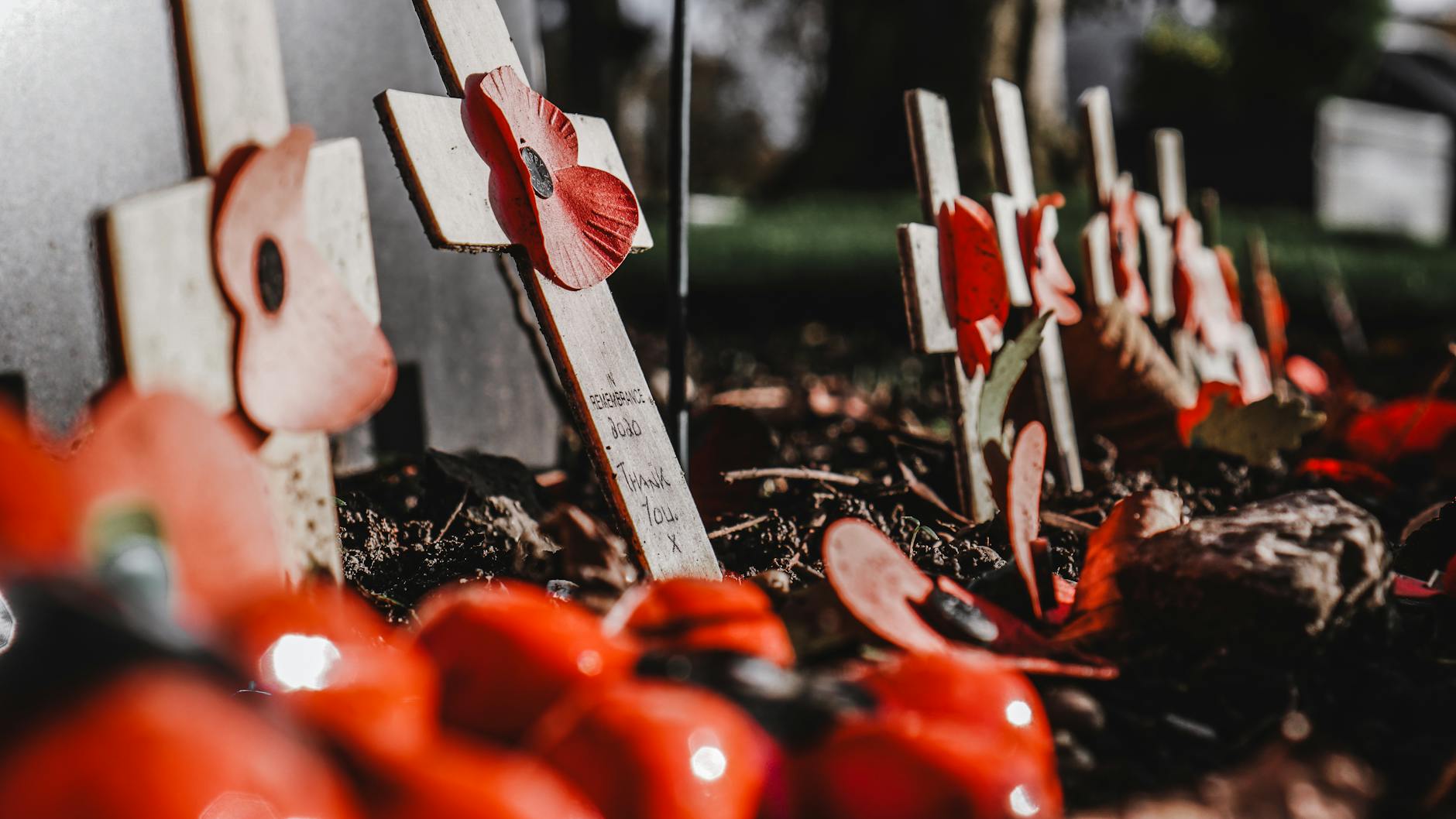
Today we celebrate the heroes of yesterday’s battles, but we also celebrate the new heroes in the NHS and all the key workers fighting a very different battle today. Come to think about it, the creation of the NHS was one of the great rebuilding efforts after WWII, and we are reaping its benefits today.

Who are you celebrating today? What can you do to help and support someone today and in the uncertain future?

Postscript: Today is ‘Victory IN Europe Day’, not ‘Victory OVER Europe Day’ as some history revisionists are suggesting for their own agendas.

Note: I chose the photo for this post because it reminds me of my two youngest girls, Pollyanna (2) and Matilda (3).

Photo Credit: VE DAY IN LONDON, 8 MAY 1945 (HU 49414) Two small girls waving their flags in the rubble of Battersea, snapped by an anonymous American photographer. Copyright: © IWM.

Source: http://www.iwm.org.uk/collections/item/object/205018927

St George’s Day

St George is one of the most enduring figures in Christian tradition, revered as a martyr and the patron saint of England. Though much of his life is wrapped in legend, it’s generally believed that George was a Roman soldier born in the 3rd century in Cappadocia, a region in modern-day Turkey. He served under Emperor Diocletian but refused to renounce his Christian faith during a time of intense persecution. For this, he was tortured and ultimately executed, dying around the year 303.

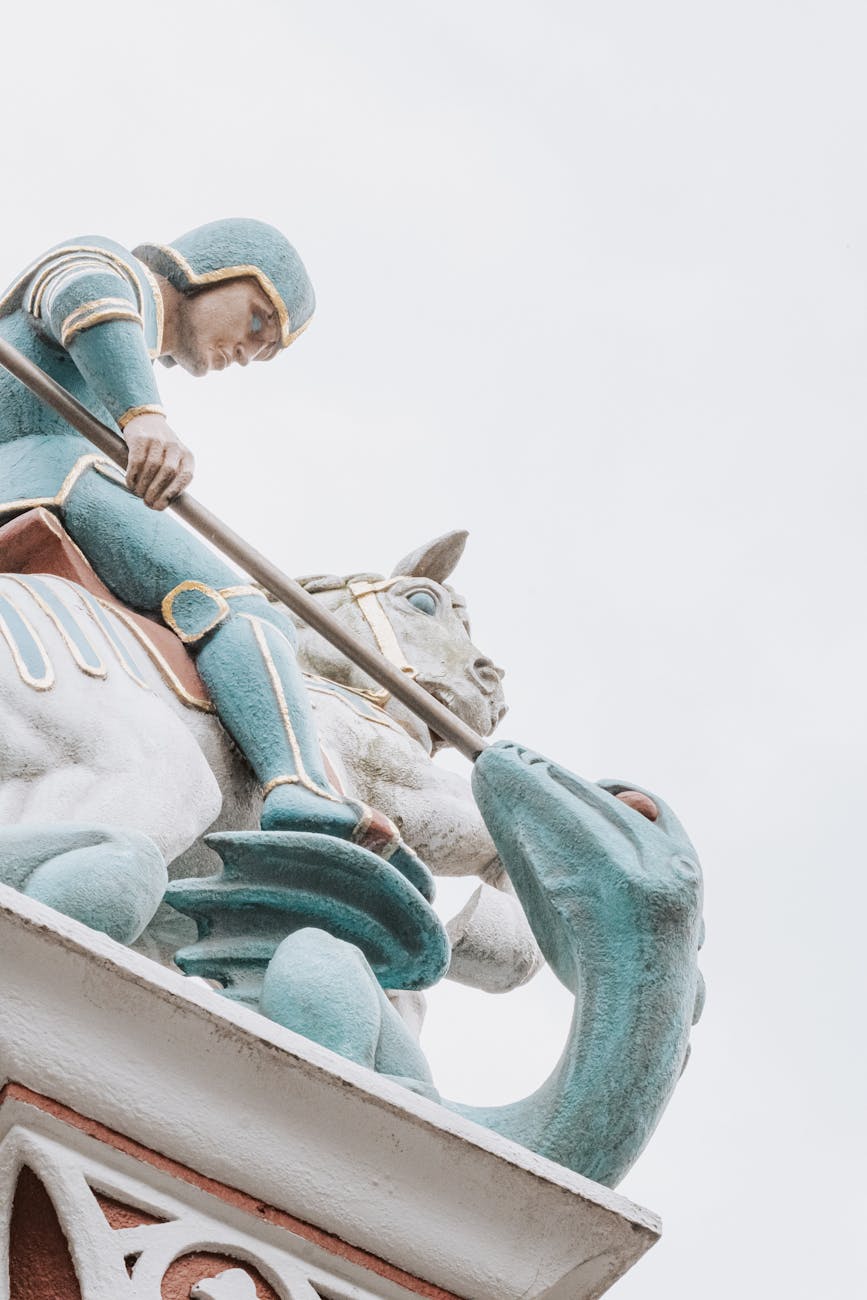
The most famous legend surrounding St George is that of him slaying a dragon. According to the tale, a town was being terrorized by a dragon, and in a bid to appease it, the townspeople offered it sheep, and eventually, their own children. When a princess was chosen to be sacrificed, George intervened, tamed the dragon, and killed it, saving the princess and converting the town to Christianity. While clearly mythical, the story symbolizes the triumph of good over evil and faith over fear.

St George’s cult spread rapidly across Europe during the Middle Ages, and he became a symbol of chivalry and courage. He was adopted as the patron saint of England in the 14th century by Edward III, and his red cross on a white background became a national emblem. His feast day, April 23rd, is still celebrated in many countries. Despite the blurred lines between fact and legend, St George’s legacy remains one of steadfast faith and heroic virtue.

Why is February shorter?

Have you ever wondered why February is the shortest month? OK, maybe not, but I’m going to tell you anyway!

The problem (because that’s what it was) originates from the fact that all calendars were once lunar, and the number of lunar months does not equal the solar year. Additionally, the solar year is not exactly 365 days, and this simply compounds the problem. That’s why we add an extra day occasionally to keep the calendar in line with our annual journey around the Sun.

The problem with February goes back to the Romans, and what have they ever done for us? They used a lunar calendar, but thought it would be a good idea if winter didn’t have months. eventually (around 713 BCE) they added two months (January and February) to the end of the year, because they considered the year started with the spring equinox in March.

There was still a problem for many centuries though, because there was all sorts of tinkering for all sorts of reasons. Julius Caesar eventually initiated calendar reform creating the Julian calendar, but even then there were still problems. The months now had either thirty one or thirty days, but the year was slightly too long. They resolved this by removing one day from February and returning it once every four years.

Having more or less solved the problem, they started counting leap years every three years and messed everything up again. Emperor Augustus corrected the issue, and all was well again – until it was decided to name a month after him. Now his month (I’ll leave you to work out which one) had one less day than the one honouring Julius Caesar (you can work it out), and that was out of the question.

So, what did they do? They took another day off poor February and added it to August, obviously! Hence, February has only twenty eight days, except in a leap year. There just remained a little adjustment to the months after August, so as to avoid having three consecutive months with thirty one days.

Note: Many centuries later, most of the world moved to the Gregorian calendar, but that’s another story.

Celebrating Candlemas

The Christian festival of Candlemas (2nd February) has deep historical and cultural significance. It commemorates the Presentation of Jesus at the Temple found in Luke 2:22-40, where Mary and Joseph took the infant Jesus to the temple in Jerusalem, fulfilling Jewish law.

The name derives from the tradition of blessing and distributing candles during church services. These candles symbolise Jesus as the Light of the World as proclaimed by Simeon in the temple when he recognised Jesus as the Messiah. The practice of lighting and carrying candles in processions became a central aspect of the celebration, signifying spiritual enlightenment and protection against darkness.

Candlemas has its roots in both Christian and pre-Christian traditions. Before Christianity, the Romans celebrated Lupercalia, a festival of purification and fertility. In Celtic traditions, Imbolc, honouring the goddess Brigid, was celebrated around the same time, marking the midpoint between the winter solstice and the spring equinox. When Christianity spread, elements of these older traditions merged with the new religious observances.

In mediaeval Europe, Candlemas was an important date in the agricultural calendar. People believed that the weather on this day could predict the coming of spring. A popular English saying states:

If Candlemas Day be fair and bright,
Winter will have another flight.
If Candlemas Day be dull with rain,
Winter is gone and will not come again.

Different countries and Christian denominations observe Candlemas with unique customs. In the Roman Catholic Church, it remains a significant feast day, with candlelit processions and blessings. In Eastern Orthodox Christianity, the event is known as the Feast of the Meeting of the Lord, often including processions and special hymns.

In Mexico and parts of Latin America, Día de la Candelaria is widely celebrated. Families dress figurines of the baby Jesus in fine clothes and take them to church to be blessed. Traditional foods, such as tamales, are shared in gatherings, continuing the festive spirit from Epiphany.

In England, Candlemas was once a key date for settling debts and rents, much like Quarter Days. It also marked the end of the Christmas season in some traditions, when greenery and nativity scenes were finally taken down. Some churches still follow this practice, extending the Christmas period beyond Twelfth Night.

Though its significance has diminished in modern times, Candlemas remains an important religious and cultural festival. Its themes of light, purification, and hope continue to resonate, making it a poignant moment in the Christian calendar. Whether observed through religious services, traditional weather lore, or community gatherings, Candlemas serves as a reminder of faith, renewal, and the gradual return of longer, brighter days.