We are not meant…

This is my Remembrance Sunday Sermon at Stockton Salvation Army on Sunday 9 November 2025.

It starts with three short Bible readings (each with brief context), moves into two quotes (which I come back to later in the sermon), and then the sermon itself. There is an additional prayer at the end.


Psalm 51:3–5

For I know my transgressions,
    and my sin is always before me.
Against you, you only, have I sinned
    and done what is evil in your sight;
so you are right in your verdict
    and justified when you judge.
Surely I was sinful at birth,
    sinful from the time my mother conceived me.

David recognises the depth of sin not just in his actions but in his very nature, expressing the idea that human brokenness is inherited and universal.

Luke 6:43–45 

‘No good tree bears bad fruit, nor does a bad tree bear good fruit. 44 Each tree is recognised by its own fruit. People do not pick figs from thorn-bushes, or grapes from briers. 45 A good man brings good things out of the good stored up in his heart, and an evil man brings evil things out of the evil stored up in his heart. For the mouth speaks what the heart is full of.

Jesus uses simple imagery to show that goodness can flow from a good heart. It shows that goodness isn’t foreign to us, it springs from within, from the heart shaped by God’s image and nurtured by his grace. It reminds us that the human heart, though capable of terrible wrong, still holds the seed of goodness that God can help grow. 

Galatians 5:22–23

But the fruit of the Spirit is love, joy, peace, forbearance, kindness, goodness, faithfulness, 23 gentleness and self-control. Against such things there is no law.

Paul describes how the Holy Spirit brings forth goodness and other virtues in those who open their hearts to God. This reminds us that genuine goodness isn’t merely human effort, but the Spirit’s life within us. Even though we’re marked by sin, the Spirit cultivates in us a new nature, one that reflects the goodness of God himself.


True lament is not born from that trite sentiment that the world is bad but rather from a deep conviction that it is worthy of goodness.

We are not meant for war,
For target-seeking arms,
For blood that stains a fun-meant shore,
For shells that scream alarms.


Before we speak of Remembrance, we begin with lament – the honest naming of pain and the longing for goodness.

Remembrance Sunday invites us to pause between the silence of loss and the call of hope. It’s a day when memory feels sacred, when we remember those who gave their lives, and the terrible cost of human pride, fear, and sin.

Psalm 51 reminds us that brokenness runs deep, not only in history but in every human heart. David’s confession, surely I was sinful at birth, acknowledges a truth we’d rather avoid, that the seeds of destruction lie not only in nations but in us.

Yet Jesus, in Luke 6, speaks of another seed, goodness that can still grow within the human heart. A good tree bears good fruit, he says, hinting that beneath the ash of sin, the image of God remains – a spark of life that grace can fan into flame.

Paul takes us further, describing the fruit of the Spirit, love, joy, peace, and the rest, as evidence that goodness isn’t lost but renewed. It isn’t our achievement, but God’s own life flowering within us. So even as we lament the wars of the past and the wars still raging in hearts and lands, we dare to believe that goodness is possible.

So as we hold these scriptures together, we face a paradox that reaches to the heart of our faith…

Original sin reminds us we’re all touched by brokenness. The image of God reminds us we’re all capable of goodness. The first shows our need for grace, the second reveals our dignity and our hope.

This paradox has deep roots in Christian theology. It stretches back to the debates between Augustine, who emphasised humanity’s inherited sinfulness, and Pelagius, who believed in the innate capacity for goodness and moral choice. Over the centuries, theologians have wrestled with this tension, seeking to balance the reality of sin with the redeeming grace that restores human goodness through Christ.

On the one hand, the doctrine of original sin teaches that humanity is marked by a brokenness inherited from Adam and Eve, a bent towards self-centredness that no one can escape. On the other, the Scriptures affirm that every person bears the image of God, and so carries the possibility of goodness, love, and truth.

The reconciliation lies in holding both truths together without letting one cancel out the other. Original sin doesn’t mean humanity is utterly evil, but rather that even our best intentions are tinged with self-interest, fear, or pride.

Augustine and later theologians stressed that while sin distorts the image of God in us, it doesn’t erase it. That divine imprint remains, like a flame flickering under ash.

So, the possibility of goodness is real, but it isn’t self-sufficient. Our goodness always points back to God’s sustaining grace, the Spirit moving within us. Paul speaks of people who do by nature things required by the law, showing that even those outside the covenant can reflect God’s goodness written on the heart. And yet he also says, all have sinned and fall short of the glory of God.

The paradox is that both can be true: goodness is possible because of God’s image within us, but salvation and wholeness require grace beyond us.

In that way, original sin underscores the need for redemption, while the possibility of goodness affirms our dignity and responsibility. We are neither condemned to despair nor able to save ourselves by our own light; instead, we’re invited to trust the God who renews the image already planted within us.

Let’s return to that first quote:

True lament is not born from that trite sentiment that the world is bad but rather from a deep conviction that it is worthy of goodness. Cole Arthur Riley

This striking quote reframes what it means to grieve. Lament isn’t shallow pessimism or complaint. It doesn’t flow from cynicism, the shrug that says the world is hopeless and always will be. Instead, Riley shows that lament is rooted in love, in the belief that the world can and should be different. To cry out against injustice or brokenness is to affirm that goodness is possible, that life is meant for something more.

Lament demands both courage and imagination, asking us to recognize current pain while envisioning better possibilities. It resists giving in to suffering or cruelty and instead acts as a form of hope, those who mourn deeply often do so because they truly believe in meaning, justice, and beauty.

Riley’s understanding of lament turns it into a form of witness. To lament is to stand against indifference, to speak truth to the world’s brokenness, and to demand something better. It’s an active testimony, one that refuses to let the world settle for less than goodness.

Through her writing, Riley insists on a more human and liberating expression of faith; one that makes space for grief and tenderness yet never gives up on goodness. In her vision, lament is not weakness but love, not despair but hope strong enough to weep.

True remembrance is more than sorrow, it’s a cry of faith. Like she says, lament is born not of cynicism but of conviction that the world is worthy of goodness. We remember, then, not just to mourn what’s been lost, but to nurture what can yet grow: peace, mercy, and the Spirit’s fruit in every heart.

And so, we remember not just with tears, but with longing – longing for peace, for goodness, for the renewal of all things in God.


Harry Read was a wireless operator in the 6th Airborne Division when he was parachuted into Normandy in the early hours of 6 June 1944, aged 20.

As Commissioner Harry Read, he was a much-loved Salvation Army Officer, who served with distinction, and in later life shared his poetry on Facebook. These poems have been compiled into anthologies, books I treasure especially as he was my Training Principal.

These are his words:

We are not meant for war,
For target-seeking arms,
For blood that stains a fun-meant shore,
For shells that scream alarms.

We are not meant to kill
Or, even worse, to maim
Because of some despotic will,
And do it in God’s name.

We are not meant to mourn,
Have chilling memories;
Of youth and innocence be shorn,
Call good men enemies.

We are not meant to hate
And hate with gathering force,
Because our hate we cultivate
And poison reason’s source.

But we are meant for peace
And joy and harmony,
For hearts that know a blest release
From hate and enmity.

And we are meant for God,
For whom our spirits yearn,
Who has our war-torn pathways trod
In hope of our return.

[Pause]


Prayer for Remembrance Sunday

God of peace and mercy,
we come before you with hearts full of gratitude and sorrow.
We remember those who gave their lives in war—
those who fell in foreign fields,
those who never came home,
and those whose wounds, seen and unseen,
carried the weight of the world’s brokenness.

We remember, too, those who still serve today,
striving to keep peace in troubled lands;
and we pray for all who live with the grief, fear, or silence
that war leaves behind.

Teach us, Lord, to remember not only with words,
but with lives that honour their sacrifice—
by seeking peace where there is hatred,
by building bridges where there are walls,
by loving even our enemies,
as Christ loved us.

May your Spirit comfort the sorrowing,
strengthen the weary,
and guide all nations in the ways of justice and compassion.
Until that day when swords are beaten into ploughshares,
and your kingdom of peace reigns over all the earth.

In Jesus’ name we pray.
Amen.


In Quiet Strength, We Remember

Remembrance Sunday calls us to pause, to remember, and to seek peace. James writes, Who is wise and understanding among you? Let them show it by their good life, by deeds done in the humility that comes from wisdom. James 3:13-18. True wisdom, he says, isn’t about cleverness or control, but about gentleness and sincerity, qualities that echo the quiet strength of those we honour today.

As we remember the fallen, we think of lives given not in pursuit of pride, but in the hope of peace. James contrasts earthly wisdom, driven by envy and selfish ambition, with wisdom from above, which is pure, peace-loving, considerate, submissive, full of mercy and good fruit, impartial and sincere. Such wisdom doesn’t roar; it whispers through acts of courage, compassion, and costly love.

War is the tragic failure of wisdom, yet even in its shadows we see glimpses of heaven’s light. The peacemaker who comforts the broken, the nurse who tends the wounded, the soldier who lays down his life for others, all reflect the divine wisdom that sows peace.

So on this Remembrance Sunday, as the bugle’s call fades and silence falls, may we not only remember the cost of peace but also commit ourselves to live wisely, to be people whose humility and mercy sow peace in our homes, our communities, and our world. For, as James reminds us, Peacemakers who sow in peace reap a harvest of righteousness.

The History of Bonfire Night

Every year on the 5th of November, skies across Britain come alive with fireworks, bonfires, and the smell of burning wood and toffee apples. Bonfire Night, or Guy Fawkes Night, is one of the nation’s most distinctive traditions, an autumn ritual of light, noise, and remembrance with roots that go back over four centuries.

Its story begins in 1605, during the reign of King James I. A group of English Catholics, angered by the King’s refusal to grant them greater religious tolerance, plotted to blow up the Houses of Parliament during its State Opening. Their aim was to kill the King and much of the Protestant establishment, hoping to spark a Catholic uprising. Among the conspirators was Guy Fawkes, an experienced soldier who’d fought for Catholic Spain. He was the one chosen to guard the barrels of gunpowder hidden beneath the House of Lords.

But the plan was discovered. An anonymous letter warned a nobleman to stay away from Parliament, and in the early hours of 5th November, Fawkes was caught red-handed in the cellar. He was tortured, forced to reveal the names of his fellow plotters, and later executed. The failure of the Gunpowder Plot was celebrated across the country as divine deliverance, and Parliament soon passed a law making 5th November a day of thanksgiving.

Early observances were deeply political, bonfires symbolised victory over treason, and effigies of the Pope were burned. Over time, however, the focus shifted. By the 18th century, communities were lighting bonfires, setting off fireworks, and parading homemade “Guys” through the streets for pennies. The religious animosity faded, replaced by something more communal and festive.

Today, Bonfire Night is a blend of history and celebration. The flames that once marked political survival now bring people together in parks and gardens, sharing sparklers, hot chocolate, and stories from a past that shaped the nation. As the fireworks burst overhead, it’s a reminder of the fragile balance between faith and power, rebellion and unity, and how history can be retold not through hatred, but through light.

The Gift of Later Fatherhood

I’ve been reflecting on being an older father with young children and wanting the best for them in the future (I also have two grown up children). Bringing up children today is far more challenging than it was just a generation ago, mainly because of the rise of technology and the Internet, but there are also huge societal changes that affect parenthood. Even though I’m a Baby Boomer, I can relate to my young children, and I remain in good health; but the problems facing the UK present their own challenge.

The age demographics of the United Kingdom have changed steadily over the past few decades, reflecting longer lives, lower birth rates, and patterns of migration that have reshaped communities. The overall population continues to grow, but that growth is most visible in older age groups. The median age has risen from just under forty at the start of the last decade to over forty now, with projections showing it will keep climbing in the years to come. The number of people aged sixty-five and over has grown significantly, while the proportion of children and young people has declined slightly. Wales and many rural areas have older populations on average than England’s major cities, where younger adults and families are more concentrated.

These shifts are largely the result of longer life expectancy, fewer children being born, and the ageing of large generations born after the Second World War. Many people now have children later in life, and some have fewer or none at all, which lowers the share of younger age groups. At the same time, advances in healthcare and living standards have extended lifespans, meaning that people spend more years in retirement than before. Migration has also played a key part in shaping the balance of ages, with younger workers arriving from overseas to fill gaps in the labour market and contribute to the economy.

An ageing population brings both challenges and opportunities. On one hand, there’s growing demand for healthcare, social care, and suitable housing, alongside pressure on pension systems and public finances. The ratio of working-age adults to those who are retired is slowly narrowing, which can strain services funded by taxation. On the other hand, an older population can mean a more experienced workforce, strong community engagement, and new possibilities for volunteering, learning, and connection between generations.

The pattern of change is uneven. Urban areas often remain younger and more diverse, while coastal and rural regions are ageing faster. Policymakers and local authorities are increasingly aware of the need to adapt schools, housing, transport, and health provision to reflect these demographic realities. The long-term trend is clear: Britain is becoming older as a nation, but with that comes the opportunity to rethink how society values every stage of life and how generations support one another in a changing world.

As I look at my own family against this backdrop of a changing nation, I feel both the weight of responsibility and the quiet gift of perspective. Being an older father means I see my young children’s future through the lens of experience, mindful of how fragile and precious time really is. I want them to inherit a country that values compassion over division, wisdom over noise, and hope over cynicism. Technology and social change will continue to reshape their world, but what endures (that I can still offer) is love, stability, curiosity, and faith in their potential. Perhaps that’s what connects the generations most deeply: the belief that, however uncertain the times, there’s always something worth passing on, something good still growing in the soil of tomorrow.

The Remembrance Poppy

Remembrance Sunday, observed on the second Sunday of November, remains a deeply significant day in the UK. A time to honour those who gave their lives in war, and to reflect on the cost of peace.

Its roots lie in the aftermath of the First World War, when Armistice Day on 11 November marked the end of the fighting in 1918.

Over time, as more conflicts followed, the nation’s focus broadened beyond that single war to remember all who have served, suffered, or died in the defence of freedom.

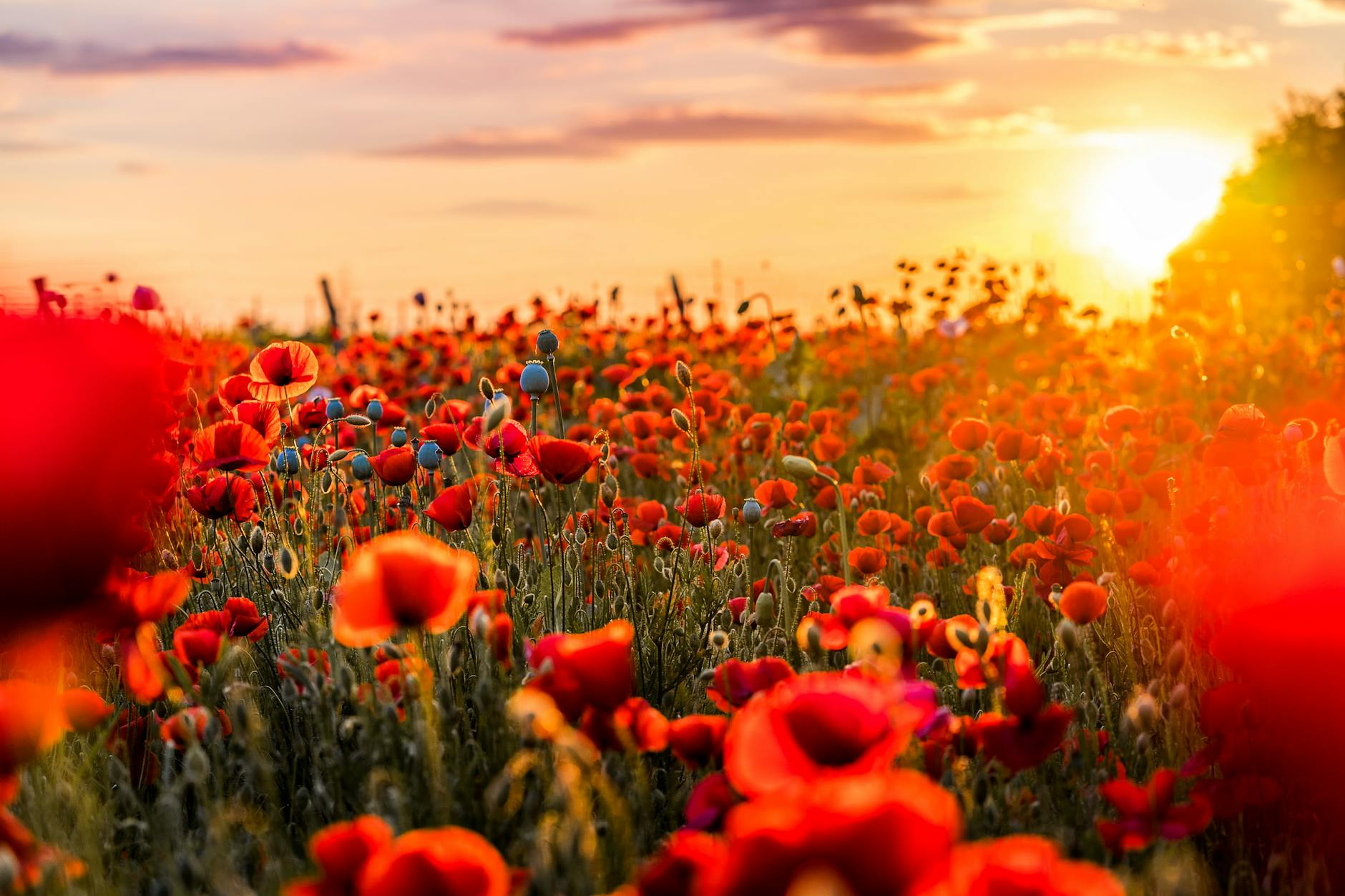
Today, Remembrance Sunday carries both solemnity and relevance. While the generation who fought in the world wars has largely passed, their legacy lives on in the freedoms and democracy we enjoy. The poppy, inspired by the resilient flowers that grew on the battlefields of Flanders, has become a living symbol of remembrance, its vivid red reminding us of sacrifice, courage, and hope renewed.

The two-minute silence and the Cenotaph ceremony remain powerful acts of collective memory and gratitude. Yet remembrance has also evolved, it now embraces not just soldiers of past wars, but those who’ve served in more recent conflicts, from the Falklands to Iraq and Afghanistan, as well as civilians caught up in the violence of war.

In our own time, when conflict still scars the world and peace often feels fragile, Remembrance Sunday invites reflection on humanity’s shared responsibility. It’s not about glorifying war, but about acknowledging sacrifice, seeking understanding, and recommitting ourselves to reconciliation.

Many find meaning in the words of Jesus, Blessed are the peacemakers, for they will be called children of God (Matthew 5:9). In that spirit, Remembrance Sunday becomes not just an act of looking back, but a call to live differently – to value compassion, to work for peace, and to remember that remembrance itself is a moral choice: to never forget, and never cease striving for a world made whole.

Is the Monarchy in danger?

The British monarchy isn’t in immediate danger of collapse, but its stability feels shakier after the recent fall from grace of Andrew Mountbatten Windsor. Once Prince Andrew, Duke of York, he’s now been formally stripped of all royal titles, honours, and privileges by King Charles III.

The decision follows renewed scrutiny of his links to Jeffrey Epstein and fresh attention from Virginia Giuffre’s memoir, in which she repeats her allegations of sexual abuse, claims Andrew continues to deny. He’s also been told to vacate his longtime residence at Royal Lodge, Windsor Great Park, and will move to a smaller home on the Sandringham estate, supported by a private allowance from the King.

Such decisive action against a senior royal is almost unprecedented in modern times and shows how determined the King is to protect the monarchy’s credibility. Yet it also exposes the institution’s vulnerability. Public trust, especially among younger generations, is fragile, and every scandal chips away at the mystique that once shielded the Crown. For many, Andrew’s case reinforces the perception of an outdated system struggling to live by the standards the public expects.

Still, the monarchy endures through continuity, service, and symbolism. Charles’s measured reforms and the steadfast popularity of the Prince and Princess of Wales give the institution breathing room. But it must keep evolving, showing that no one is above accountability. If the Crown can embody integrity and relevance rather than privilege alone, it may yet sustain its place in a changing Britain.

The History of Halloween

Halloween, celebrated each year on 31 October, has deep and ancient roots that stretch back over two thousand years. Its origins lie in the Celtic festival of Samhain, marking the end of the harvest and the beginning of winter, a time associated with death and the thinning of the veil between the living and the dead. The Celts, who lived across Ireland, Britain, and northern France, believed that on this night, spirits could roam the earth. Bonfires were lit to ward off evil, and people wore disguises to confuse wandering souls.

As Christianity spread through Europe, the Church sought to replace pagan traditions with Christian observances. In the eighth century, Pope Gregory III established 1 November as All Saints’ Day (also known as All Hallows’ Day), a time to honour saints and martyrs. The evening before became All Hallows’ Eve, eventually shortened to Halloween. This blending of ancient customs with Christian remembrance created a rich, layered festival combining solemn reflection with folk ritual.

When European immigrants brought these traditions to North America, they evolved further. In colonial times, Halloween was modest, but in the 19th century, especially with the arrival of Irish immigrants fleeing the potato famine, it began to flourish. Communities embraced parties, games, and storytelling. The practice of trick-or-treating emerged in the early 20th century, influenced by the old custom of “souling,” where children went door to door offering prayers for the dead in exchange for food.

Today, Halloween is a vibrant blend of the sacred and the secular: a night of carved pumpkins, ghost stories, costumes, and playful fright. Beneath the fun, however, lies a profound awareness of life’s mystery and mortality, echoing Ecclesiastes 3:1 There is a time for everything, and a season for every activity under the heavens. For many, Halloween remains a moment to pause between autumn’s glow and winter’s shadow, to remember the past, and to delight in imagination and wonder.

What began as a ritual to honour the cycle of life and death has become a celebration of community and creativity, a reminder that even in the darkest night, the light of human spirit endures.

Christianity and Halloween

I think Christianity should embrace Halloween, not reject it. The festival, in its truest sense, is born from the church’s own calendar, All Hallows’ Eve, the night before All Saints’ Day. Long before it became a celebration of pumpkins, costumes, and sweets, it was a sacred vigil honouring those who’ve gone before us. To reclaim Halloween isn’t to condone fear or darkness, but to recognise that our story as Christians is one of light shining through the shadows. Death and evil aren’t things to deny or dread, they’re realities already defeated in Christ’s resurrection.

By engaging with Halloween rather than avoiding it, the church can speak into people’s fears and fascinations with hope and grace. Children dressing as ghosts or skeletons don’t glorify death, they play with its imagery, safely, often without understanding that our faith proclaims victory over it. When Christians shut their doors on Halloween night, we miss a rare opportunity for neighbourliness and connection. When we open them, offering welcome, warmth, and perhaps even a word of love, we embody the gospel more powerfully than any tract could.

The light of Christ doesn’t shrink from the dark; it transforms it.

So perhaps the best way for Christians to respond to Halloween isn’t through rejection, but redemption – to reclaim it as a night of joy, remembrance, and hospitality. As Jesus said, You are the light of the world… let your light shine before others, (Matthew 5:14–16).

Problems Facing the UK

Looking at the problems faced by the UK, they go back decades. Successive governments have failed to build enough affordable and social housing, leaving millions struggling with high rents, unstable tenancies, and the near-impossibility of buying a home. This housing shortage has rippled through society, deepening inequality and fuelling resentment, while local communities have borne the strain of overstretched services and eroded trust.

Short-termism in politics and policy has compounded these challenges. Decisions are too often driven by electoral cycles rather than long-term national interest, leading to underinvestment in infrastructure, public services, and skills. The austerity years that followed the 2008 financial crisis weakened essential institutions (local councils, the NHS, and social care) leaving them fragile and underfunded. Brexit added further disruption, introducing new trade barriers and labour shortages that continue to weigh on productivity and growth. Then came Covid, which exposed the fault lines of inequality and deepened the divide between those who could work from home and those who could not.

The result is a country at a crossroads, still rich in creativity, compassion, and potential, but held back by political timidity and a reluctance to face hard truths. We need leaders who will speak honestly about the scale of the challenge, who’ll resist the temptation to offer comforting illusions or populist slogans. Real recovery will demand patience, sacrifice, and a shared sense of purpose. As a nation, we must find the courage to swallow the hard medicine: investing in people and places that have been left behind, reforming systems that no longer serve us, and building for the future rather than merely managing decline. Easy answers are the language of denial; only truth, courage, and collective effort can begin to heal what’s broken.

Accountability Behind Palace Gates

In the twenty-first century, the monarchy can no longer exist behind a veil of mystery. The public deserves full transparency in every aspect of royal life that involves finance, property, business, and influence. This isn’t about hostility towards the institution, but about accountability in an age that demands openness from every other public body.

When taxpayers contribute to royal finances, when estates and properties are maintained with public funds, or when royal connections quietly shape political or economic outcomes, the public has a right to know.

True transparency doesn’t weaken the monarchy, it strengthens trust. In a democracy, secrecy breeds suspicion, while honesty builds legitimacy. The monarchy has long been a symbol of continuity and stability, but for it to remain relevant, it must also embody the values of fairness and integrity that define modern Britain. If the royal family’s wealth and dealings are beyond scrutiny, then they risk alienating a generation raised on equality, accountability, and truth.

Complete openness would also clarify where public responsibility ends and private privilege begins. Citizens should know what the Crown Estate contributes to the nation, what revenues are personal, and how influence is exercised – whether through patronage, lobbying, or quiet conversations with government. Transparency would not strip the monarchy of its dignity, but rather reveal whether that dignity is deserved.

The twenty-first century is no place for shadows and secrets. Every institution that serves the people must be answerable to them; and the monarchy, if it wishes to endure, must lead by example.

To remain a unifying force rather than a relic of entitlement, it should open its books, show its workings, and earn respect not through inherited status, but through integrity and honesty before the people it represents.