Lancashire Day

Lancashire Day, marked every year on 27 November, is a chance for people across the historic county to recognise and celebrate Lancashire’s heritage. The date commemorates the moment in 1295 when Lancashire first sent representatives to Parliament, which is why it’s often described as the county’s official “birthday”. Today, it’s used as an opportunity to highlight the history, culture, and identity of a region that’s played a significant role in shaping the UK.

Across the county, councils, community groups, and local organisations use Lancashire Day to promote everything from traditional food to local industry. You’ll often hear the official Lancashire Day proclamation read out, affirming loyalty to the county and reminding people of its historic boundaries, which are wider than the present administrative ones. Many residents still take pride in identifying with the traditional county rather than the modern divisions created in the 1970s.

Lancashire’s story is closely tied to the Industrial Revolution, the growth of the textile industry, and the development of seaside towns like Blackpool and Morecambe. Lancashire Day provides a simple way to reflect on these contributions and to acknowledge how the county continues to evolve through education, culture, sport, and innovation.

What stands out about the day is how grounded it is. There are no grand ceremonies; instead, it’s about local pride, a sense of belonging, and an appreciation for the everyday character of the county. Lancashire Day reminds people where the county has come from, and why its identity still matters to so many.

Broken Brexit Britain

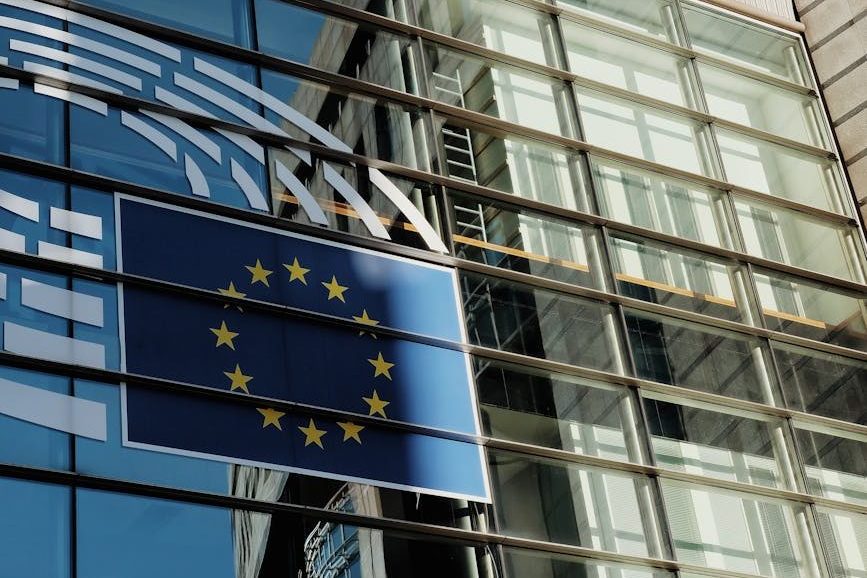
Brexit hasn’t just nudged the UK off course, it’s pulled us steadily into a poorer, smaller, and more divided version of ourselves. The promises that once shimmered with confidence have evaporated, leaving us with slower growth, weaker trade, and a constant sense that the country is working harder for less. Businesses have been saddled with paperwork that no one asked for, investment has drifted to Europe, and young people have lost freedoms that older generations took for granted. Prices are higher, opportunities are thinner, and the dream of a nimble, global Britain has shrunk into something far more fragile.

Politically, we were told we’d take back control, yet control is exactly what we’ve lost: influence in Europe, trust in government, and even harmony within our own Union. Scotland feels further away than ever, Northern Ireland remains caught in a web of compromises, and the country as a whole seems stuck in a permanent argument about who we are and where we’re going.

Brexit has left a mark on our national spirit too. It sharpened old divides and opened wounds that still haven’t healed. Most people now see leaving the EU as a mistake, and that quiet shift in mood says everything. This isn’t the confident leap into the world we were promised; it’s a slow unravelling, a sense of potential slipping through our fingers. Britain deserved better than this, and deep down, we know it.

Free Speech Under Threat

It’s hard to ignore the chill that runs through moments like this. A respected historian, Rutger Bregman, delivered a thoughtful lecture for BBC Radio 4, only to discover that a key line had been removed from the broadcast. The line wasn’t inflammatory, nor was it reckless; it was simply his assessment that Donald Trump was “the most openly corrupt president in American history.” When he learnt it had vanished, he said the decision came “from the highest levels within the BBC” and that he was “genuinely dismayed” by the quiet edit.

And honestly, it’s difficult not to share his dismay. Free speech isn’t just threatened by governments or dramatic acts of censorship; sometimes it’s chipped away by small, silent decisions that trim the edges of honest conversation. Public broadcasters should be places where we can hear carefully argued perspectives, especially when they touch on uncomfortable truths. If historians can’t speak plainly about the subjects they study, even when those subjects are controversial, then our collective understanding grows narrower, not richer.

There’s something troubling about the BBC shielding listeners from a historically grounded criticism simply because it mentions a polarising figure. It risks creating a culture in which anything remotely sensitive gets softened, diluted, or cut altogether. And once that happens, we lose more than a sentence about Trump; we lose confidence that open debate is still welcome.

Moments like this remind us how precious free speech is, and how easily it can be lost.

A Truly British Achievement

The early Covid-19 vaccination roll-out was a great UK achievement, not a Brexit one. This is something to celebrate amongst all the failures and mistakes. If we believe the lies (mainly by disgraced former Prime Minister Boris Johnson) we diminish a truly great British achievement.

Brexit didn’t meaningfully enable the UK to roll out Covid-19 vaccines earlier. The UK was still in the post-Brexit transition period in late 2020, which meant it remained under EU rules. Crucially, EU law allowed any member state or transitioning state to issue its own emergency authorisation for medicines. The UK used that existing mechanism through the MHRA. It didn’t need to leave the EU to do so, and countries inside the EU could’ve done the same if they’d chosen to.

Where the UK did move faster was in planning, procurement, and regulatory readiness. The MHRA worked at extraordinary speed, the NHS had a well-organised distribution plan, and the government pre-ordered large quantities of vaccine early. Those advantages came from national decisions and infrastructure, not from Brexit itself.

UK Government Covid-19 Failures

The UK Covid-19 Inquiry concludes that the government’s response in March 2020 was simply too little, too late. It paints a picture of a moment when decisive action was needed and, instead, hesitation allowed the virus to spread unchecked. According to the report, bringing in lockdown just a week earlier would likely have saved around 23,000 lives during the first wave in England. That single week, the inquiry suggests, became the difference between containment and tragedy.

Yet the inquiry goes further, arguing that lockdown might not have been necessary at all if basic measures such as early social distancing and the prompt isolation of those with symptoms had been introduced. The implication is stark: a different approach, taken earlier and with clearer communication, could have altered the entire trajectory of the pandemic’s opening months.

The report also criticises the government for failing to learn from its early mistakes. Missteps that should have prompted urgent reflection weren’t addressed, leading to further avoidable harm during later waves. This failure, the inquiry says, was inexcusable. At the heart of the problem lay what it describes as a toxic and chaotic culture within government, a climate that clouded judgement and made good decision-making harder. It highlights how the leadership of the time, including then-Prime Minister Boris Johnson, struggled to confront and correct these challenges.

Taken together, the inquiry’s findings offer a sobering reflection on the cost of delay, confusion, and poor communication at a moment when clarity and courage were needed most.

Whitewashing History

Whitewashing history always begins with a quiet stroke of omission, a gentle brushing-over of the uncomfortable, until the smoothed surface looks almost natural. Yet beneath that surface is the truth: history isn’t tidy, and the stories we inherit are often shaped as much by what’s left out as by what’s included. When nations tell their own story, there’s a temptation to look back with soft light and forgiving eyes, to protect a sense of pride or continuity. But when the past is edited to soothe rather than illuminate, we lose something essential: the ability to recognise the full humanity of those who came before us, and to understand how the present was shaped by their lives, their suffering, and their resilience.

One clear example of history being white-washed is the way many British schoolbooks for decades described the British Empire as a mostly benevolent force that “brought civilization”, while quietly downplaying or ignoring the brutality of colonial rule, the famines exacerbated by imperial policies, the suppression of independence movements, and the economic extraction that enriched Britain at the expense of colonized peoples. This softening of the truth didn’t just distort the past, it also shaped how generations understood power, identity, and responsibility, drifting away from the full, hard reality of what empire actually meant for those who lived under it.

Whitewashing doesn’t always come from malice; often it’s a product of the stories people were themselves told, passed down like heirlooms with cracks unnoticed or unspoken. But good intentions don’t undo the harm. When harmful truths are obscured, the voices of those who suffered are pushed further into the margins. Their experiences become footnotes, or disappear altogether. Without confronting those realities, we risk repeating patterns of inequality and injustice, because we never fully saw them in the first place.

Telling the whole truth doesn’t diminish a nation; it deepens it. It invites humility, maturity, and a more expansive understanding of who “we” are. When we face history honestly, with all its light and shadow, we gain the chance to grow into something better, something truer. And perhaps the most hopeful part of all is that it’s never too late to tell the fuller story, and to listen to the voices that were once left out.

Is History Subjective?

Whenever we look back, we’re not encountering the past in its raw form; we’re meeting it through the eyes of those who chose what to record, what to preserve, and what to pass on. Their choices shape the stories we inherit. Every source carries a viewpoint, every narrative has a tilt, and every retelling reflects questions and concerns that belong as much to the present as to the era being described. Yet it would be unfair to say that history is nothing more than personal perspective dressed up as fact.

This becomes especially clear when we consider how history has treated minorities. For centuries, whole communities found their experiences skimmed over, distorted, or erased, not because they were unimportant, but because power decided whose voices mattered. When stories are missing, societies lose more than detail; they lose truth, empathy, and the chance to understand the full richness of their own heritage. Restoring these overlooked voices doesn’t just fill gaps, it reshapes our understanding. It allows people to see themselves reflected where they were once invisible, and it encourages all of us to reckon more honestly with the world we’ve inherited.

Even so, history isn’t a free-for-all. The evidence left behind – letters, diaries, court records, ruins, census lists, artefacts, and countless other fragments – anchors interpretation. These traces act as guard-rails, keeping our reconstructions from drifting too far into fantasy. The past happened in particular ways, and while our understanding evolves, the underlying facts resist being bent beyond recognition. Historians listen carefully to the material they have, aware that fresh questions can bring new insights, and that each generation returns to the archive with different eyes.

Interpretation thrives in the spaces between those facts: in the motives we infer, the consequences we weigh, and the meanings we draw. Two people can study the same event and see different shades of significance, not because one is wrong, but because human experience is textured and complex. This isn’t a weakness; it’s a sign that history is alive and responsive to the needs and curiosities of each age.

So history lives in a delicate balance. It’s rooted in evidence, shaped by interpretation, and enriched by expanding the circle of voices allowed to speak. Its subjectivity doesn’t undermine it; rather, it encourages humility, compassion, and deeper listening as we try to understand who we are, where we’ve come from, and how the long human story continues to unfold.

Halfway Round the World

The line so often tossed around in public debate – “A lie is halfway round the world before the truth has got its boots on” – has a far older and richer story than most people realise. It’s usually pinned on Churchill or Twain, partly because it sounds like something either might have said, but the trail leads back more than two centuries before them, to a writer who understood human frailty with almost surgical clarity.

In 1710, Jonathan Swift published a piece in The Examiner in which he sighed over the power of falsehood to shape public opinion. His words still feel painfully current: “Falsehood flies, and truth comes limping after it, so that when men come to be undeceiv’d, it is too late; the jest is over, and the tale hath had its effect.” Swift saw how quickly a rumour could take on a life of its own, leaving truth to hobble along behind, patient, earnest, and too often ignored.

Over the next century and a half, writers, preachers, and pamphleteers repeated variations of Swift’s idea. The imagery softened, shifted, and picked up new colours as it passed from hand to hand. Then, in 1855, the Victorian preacher Charles Haddon Spurgeon offered the version that would change everything: “A lie will go round the world while truth is pulling its boots on.” With that single stroke, he transformed Swift’s lament into a vivid little proverb. Suddenly truth wasn’t limping, it was simply taking too long to get dressed, fumbling at the laces while lies dashed gleefully away.

From that moment, the wording began to crystallise. Newspapers and speakers adapted it freely; the boots sometimes became shoes, and the distance travelled grew from a circuit to half the globe. By the early twentieth century, the familiar modern form had settled into the language, sharpened and polished by repetition: “A lie is halfway round the world before the truth has got its boots on.”

The quote we know today isn’t the invention of a single brilliant mind, but the product of three centuries of observation: Swift’s sharp insight, Spurgeon’s memorable turn of phrase, and the slow, steady work of time. It reminds us that truth often arrives late, but it does, eventually, arrive.

Remembrance Day (Naomi Ager)

On the eleventh hour of the day,
When silent, solemn people pray,
A brazen standard slowly raised,
And every passing thought it fazed.

A bugle holds its notes depressed,
It grips the grief within its breast,
Awakening from a quiet sleep,
The mournful memories that we keep.

The Last Post call begins to climb,
Above the march of wounded time,
A rising sound, so clear and high,
A final poignant, last goodbye.

It is the soldier’s evening bell,
That duties over, all is well.
The mind recalls a distant sound,
Of footprints lost on foreign ground.

A memory stirs, the lists we keep,
Of Grandfathers who did live…or sleep.
They bore the shield, they saw the cost,
the battle won, the loved ones lost.

The shell did burst, the flash of white…
Such darkness born within the light.
The shrapnel’s kiss upon the brow…
A battle fought, still fighting now.

Though home he stood, a heavy toll,
A silence broken in his soul.
This memory allowed no full release,
of one who gave his mind for peace.

The crimson poppies newly laid,
The costly heavy debt that’s paid.
The world hold still for one brief space,
with sorrow etched on every face.

In two small minutes, fast and slow,
the deepest truths of war come through.
And when the final note ascends,
The price was paid for me and you.