When the sun’s high and the air feels heavy, staying hydrated becomes more than just good advice, it’s survival. Not every drink helps, though. Some replenish and restore. Others leave us thirstier than before.
Water, as always, is king. Cold or not, sipped steadily through the day, it quietly does exactly what we need. But sometimes, especially after lots of sweat or activity, water needs a little backup.
That’s where oral rehydration solutions come in. With the right mix of salts and sugars, they help your body absorb water more efficiently, perfect after a long run, garden work, or a pounding headache.
Coconut water’s another gentle ally: full of potassium, lightly sweet, and refreshingly natural. It’s a lovely alternative to sugary sports drinks. Herbal teas, cooled and poured over ice, also work wonders, peppermint or hibiscus are especially refreshing and caffeine-free.
Diluted juice (half juice, half water) gives flavour and a little natural sugar, without overwhelming. And don’t underestimate milk. Cold, semi-skimmed, it’s surprisingly good at rehydration, especially after activity.
Infused water can also lift the ordinary. Add cucumber, mint, berries, or citrus, suddenly water’s more inviting, more likely to tempt you for another glass.
Avoid alcohol, fizzy sodas, and high-caffeine energy drinks. They might seem refreshing, but they quietly take more than they give.
Hydration isn’t about gulping gallons. It’s about listening, sipping often, and choosing drinks that care for your body, especially when the world turns hot.
In a world overflowing with technology and wealth, it’s easy to forget that millions of people still lack something as basic as clean water. That’s where WaterAid comes in, a quiet but determined force tackling one of the greatest injustices of our time.
Since 1981, WaterAid has worked to ensure that everyone, everywhere, has access to clean water, decent toilets and good hygiene. Not as a handout, but as a matter of dignity and human rights. It partners with communities across Africa, Asia, and Latin America, listening first, then helping to build lasting solutions; from wells and taps to toilets and hygiene education. It also campaigns tirelessly to get governments and institutions to prioritise these essentials.
The impact is transformative. A working tap in a village means children can go to school instead of fetching water. A toilet at home means privacy, safety and dignity; especially for girls and women. Clean water in a health clinic can mean the difference between life and death.
What makes WaterAid stand out is its commitment to sustainable, community-led change. It’s not just about infrastructure, it’s about justice, resilience, and hope.
In a time when global headlines often feel overwhelming, WaterAid offers something different: quiet, practical progress. One tap. One toilet. One transformed life at a time.
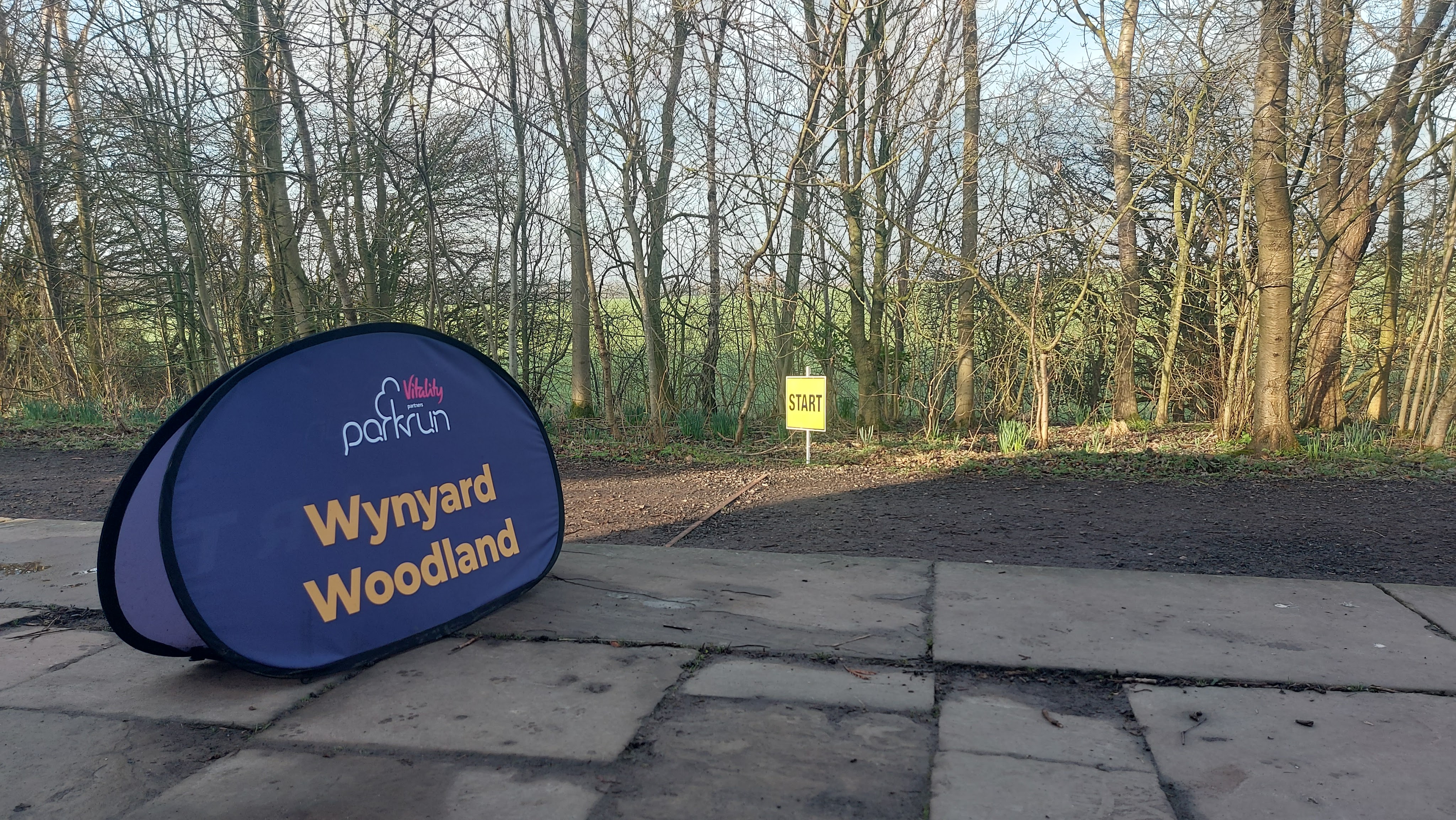
parkwalk is an initiative by parkrun UK launched globally in October 2022 to celebrate parkrun’s 18th anniversary and promote walking as a valued and inclusive part of their weekly 5k events. Recognising that not everyone feels ready to run or jog, parkwalk was designed to break down barriers to participation and support people of all fitness levels, especially those new to physical activity or managing long-term health conditions.
Every Saturday morning, participants gather at local parks across the UK and beyond to walk, jog, or run the 5k course. There’s no time pressure, people are encouraged to go at their own pace. Importantly, the Tail Walker volunteer ensures that no one finishes last, reinforcing the core value that parkrun is for everyone.
In support of the campaign, a new volunteer role called the parkwalker was introduced. Positioned between the runners and the Tail Walker, parkwalkers wear light blue vests and walk the route while offering encouragement and companionship to others walking, helping to foster a stronger sense of community and belonging.
Walking itself brings proven health benefits, such as improved cardiovascular fitness, reduced stress, and better mental wellbeing. According to parkrun, research shows walking 5,000 steps three times per week can significantly lower the risk of early death.
Since its launch, over one million walks have been completed globally, showing that parkwalk has not only increased participation but has also created a more welcoming and inclusive environment for all.
Volunteering at parkrun offers far more than a chance to give back. It brings a host of benefits that positively impact mental, emotional, and even professional wellbeing. Many regular volunteers speak of a deep sense of fulfilment and satisfaction that comes from contributing to the event’s success each week. Studies support this, showing that volunteering can lift mood, reduce stress, and enhance overall wellbeing.
One of the most rewarding aspects of volunteering at parkrun is the sense of community it builds. Whether you’re marshalling, timing, scanning barcodes, or cheering people on, you’re surrounded by like-minded individuals who share a passion for health, connection, and community spirit. These shared moments often lead to lasting friendships and a richer appreciation for the value of local engagement.
Volunteering at parkrun is also a fantastic way to develop and strengthen key life skills. Each role provides opportunities to improve communication, teamwork, problem-solving, and time management. Whether you’re coordinating a finish funnel or supporting first-timers, every task contributes to both personal and professional growth.
From a career perspective, volunteering at parkrun is a valuable addition to your CV. It demonstrates initiative, reliability, and a genuine willingness to contribute to something bigger than yourself. For jobseekers, students, or anyone looking to stand out, regular volunteering shows commitment, people skills, and the ability to work under pressure, all traits employers value highly.
Most importantly, parkrun volunteering can be a journey of self-discovery. It invites you to try new roles, push beyond your comfort zone, and sometimes uncover talents you didn’t know you had. In serving others, you often gain just as much in return, whether it’s confidence, clarity, or simply the joy of making someone’s Saturday morning a little brighter.
Overall, parkrun volunteering is a win-win. It strengthens communities, supports wellbeing, and enriches personal and professional lives. Every barcode scan, every time check, every cheer matters, and so do the people who give their time to make it all happen. Why not have a go?
Not as many books read as I’d hoped, as my aim was 24 in 2024.
The Hobbit (J. R. R. Tolkien) I enjoyed listening to this while walking Rufus.
Everything Is F*cked (Mark Manson) Don’t be put off by the title, an excellent book to guide you through life and manage your expectations and mental health.
Tin Men (Christopher Golden) Great science fiction with a good human element and twists.
Alien (Alan Dean Foster) A novel based on the movie, what happens when you don’t listen to a smart woman with a cat.
She/He/They/Me (Robyn Ryle) An interactive book that guides you through the issue of gender, your journey depends on your answers to questions.
Wrong Place Wrong Time (Gillian McAllister) A journey backwards in time to understand a murder.
Eating Robots (Stephen Oram) Short stories that anticipate the near future of technology, often shocking.
Biohacked & Begging (Stephen Oram) Another series of short stories to pull you up sharp and challenge your thinking.
Fathomless Riches (Rev. Richard Coles) A brutally honest autobiography that covers attempted suicide, time in a mental hospital, London’s gay scene, drugs, pop stardom, broadcasting, writing, and life as a vicar – and that’s just for starters! Not for the easily offended.
Beyond the Burn Line (Paul McAuley) A science fiction novel set in the distant future that addresses big issues. I rarely give up on a book but, like many other people, I gave up with this one. My advice, avoid like the plague!
How to Sleep Well (Dr. Neil Stanley) An excellent book covering all aspects of sleep.
Aliens (Jim Al-Khalili/Editor) A comprehensive study about the possibility of life elsewhere in the universe from a variety of authors and experts.
Night Sky Almanac 2024 (Storm Dunlop & Wil Tirion) This is a yearbook I wouldn’t be without; each year’s edition is always by my side.
So, my aim is now at least 25 in 2025, and I’m off to a good start.
Volunteering encompasses a multitude of benefits that extend beyond altruism. Engaging in acts of service fosters a profound sense of fulfilment and satisfaction. Research indicates that volunteerism correlates with improved mood, reduced stress levels, and enhanced overall wellbeing.
Furthermore, volunteering cultivates a stronger sense of community. By participating in local initiatives, individuals forge connections with like-minded individuals and develop a deeper understanding of societal needs.
Volunteering also serves as a platform for skill development. Volunteers hone essential competencies such as communication, teamwork, problem-solving, and time management. These experiences contribute to personal and professional growth, enriching one’s repertoire of abilities.
From a pragmatic standpoint, volunteering enhances your curriculum vitae (resume). Employers value candidates who demonstrate initiative, passion, and a willingness to contribute to the greater good. Volunteering serves as tangible evidence of these qualities, distinguishing individuals in competitive job markets.
Volunteering is a catalyst for personal growth and self-discovery. It offers opportunities to step outside comfort zones, confront challenges, and unearth hidden talents. Through service to others, individuals embark on a journey of continuous learning and development.
Overall, the benefits of volunteering are manifold, encompassing emotional, social, professional, and personal dimensions. Engaging in acts of service not only enriches the lives of others but also nurtures individual wellbeing and fosters a stronger, more interconnected society.
We all know the value of drinking plenty of water, but equally we don’t always get around to doing it. That was certainly the case for me, but since retiring I’m making a concerted effort to look after myself, especially with three young children to care for.
A few years ago, I started to drink at least five glasses of water a day (one as soon as I wake up). It’s made easier because we have one of those convenient cold-water dispensers on our fridge. I also drink herbal tea in addition to my regular drinks and restrict coffee to one a day no later than 2.00 pm if possible.
I have to say I feel much better as a result. Keeping hydrated is so essential and has many health benefits, both physical and mental. Any downsides? Not really, although I do have to go to the toilet more often!
This article is extremely helpful, along with many other you can find with Google.
Today is the third Monday in January, a day designated as Blue Monday, the most depressing day of the year in the northern hemisphere.
Unfortunately, this trivial label damages our understanding of mental health, just for the sake of a superficial piece of clickbait. Yes, my title is itself clickbait, but if this article helps you to understand actual depression better it will have achieved its purpose.
We all know that in a normal year January can be a difficult month for our mental health (for a variety of reasons) but recent years have been tough. So, even though the concept of Blue Monday appears to make sense, I feel we should reject it even more this year. The very real challenges we face this January make my premise even stronger this year, Blue Monday just isn’t real.
You’ll hear people say that it’s been worked out using a ‘scientific formula’. In fact, it first appeared as part of an advertising campaign for a holiday company, hardly the rigorous, evidence-based approach we might expect. Even the person whose name was on the original press release has since distanced himself from Blue Monday, admitting he was paid to help sell holidays. He now campaigns against Blue Monday.
Having said all that, the date continues to surface every January, and is increasingly linked to mental health and depression. In fact, it’s simply a day when we’re all supposed to feel a bit down, but even that is far-fetched if you give it some thought and view it through the lens of common sense.
A few years ago, the charity Mind attempted to dispel the myth that Blue Monday had anything to do with depression.
Depression is NOT something that happens one day and disappears the next, as if it has trivial ’causes’. Blue Monday is mumbo jumbo, pseudoscience that only serves to add to damaging preconceptions about depression and trivialises a serious illness that can be life-threatening. Depression has nothing to do with the third Monday in January.
The idea that depression is basically the same as feeling low is very pervasive within society, as if it’s ’caused’ by trivial things with the ‘cure’ a matter of ‘pulling yourself together’. Facile responses to depression, such as ‘cheer up’, merely reinforce the preconception it can easily be shaken off with determination and effort. This is not the case, depression is NOT the same as having a bad day.
Depression is way more than simply feeling a bit low, and this is what’s difficult for some people to grasp. It’s about guilt, feelings of worthlessness, lack of motivation, and a sense of emptiness, with simple tasks seemingly impossible to achieve. But there’s also the physical symptoms; headaches, aches and pains, lack of appetite, and sleep disturbances. On top of this can come insidious suicidal thoughts.
It’s an insult to think that the mental and physical complexity of depression can be encapsulated in a catchy named day. The negative things in everyday life that get us down are NOT the things that cause depression, it’s NOT something ‘catch’ from our circumstances. Yes, they can affect our mental health adversely, but they don’t cause depression. Depression can happen in good times.
The ‘why’ of depression is a complex and multi-faceted question. Please don’t trivialise it by falling for a gimmick, reject Blue Monday!
Finally, here’s a Blue Monday we mustn’t reject, enjoy! Click here.
The world can be a confusing and unsettling place, especially with technology at our fingertips and 24/7 news. Making sense of it all can take its toll on our inner life. In this context, preserving our mental health is essential.
Here’s some strategies that work for me:
Limit your news consumption. Constant exposure to distressing news can lead to anxiety and stress. Set aside specific times to check the news and avoid it during the rest of the day. Consider turning off news notifications on your devices.
Choose reliable news sources. Verify the credibility of the news sources you follow and ask questions, such as, why is this person saying a certain thing, for example. This can reduce fear and uncertainty.
Focus on what you can control. It’s easy to feel powerless in the face of global crises. Concentrate on actions you can take in your own life, like supporting local charities, volunteering, or making environmentally conscious choices.
Establish a daily routine to bring stability and predictability. Regular sleep patterns, exercise, and work schedules can all help you maintain a sense of normality. Do what works for you.
Talk to people. Human connection is vital for mental wellbeing. Even when you can’t meet in person, stay connected with friends and family through phone calls, video chats, or online social groups. Sharing your feelings and experiences can be comforting. Smile at people and talk to strangers.
Develop the art of self-care. Dedicate time to activities that help you relax and unwind. Exercise, meditation, deep breathing, and hobbies can all reduce stress and improve your mood.
Seek help. If you find yourself struggling to cope with the constant stream of negative news, don’t hesitate to reach out for professional help. A therapist or counsellor can provide valuable guidance and support.
Stay informed, but not obsessed. Whilst staying informed is important, obsessing over the news can lead to information overload and increased anxiety. Set boundaries and avoid overconsumption.
Remember, preserving your mental health is a priority, it’s okay to take breaks from the news and practice self-compassion. By implementing these strategies, you can better navigate a world of bad news while maintaining your mental wellbeing.
Sadly, anxiety, depression, and other mental health pressures are constant companions in the modern world, and no one is immune from these unwelcome visitors. So, anything that can boost our mood is welcome.
Breathe is a free Android app (with no adverts) that I find beneficial. Breathing exercises are a helpful way of relieving anxiety and stress, and this app helps you tackle them. The app is great for keeping calm and promoting sleep and provides daily reminders and encouragement for hitting monthly goals and the like.
If you like the app there’s an option to support its development with affordable ranges of one-off payments or a monthly subscription.







 John Ager's Home on the Web!