These things are written…

John 20:19-31 recounts the powerful and intimate moments between Jesus and his disciples after his resurrection. It begins on the evening of the first day of the week, when the disciples were gathered behind locked doors, fearful of the Jewish leaders. Into that tense, uncertain space, Jesus suddenly appears among them, not as a ghost, but fully alive, and greets them with peace. His first words, “Peace be with you,” are not just calming but deeply restorative, carrying the weight of reconciliation and healing after the trauma of the crucifixion.

To assure them he is truly himself, Jesus shows them his hands and his side, bearing the wounds of the cross. The disciples’ fear turns to joy as they recognize their Lord. Again, he speaks peace over them, and then he does something deeply significant, he breathes on them and says, “Receive the Holy Spirit.” This echoes God breathing life into Adam and signals a new creation, a rebirth, where his followers are not only comforted but commissioned. They are given authority to continue Christ’s ongoing redemptive work.

Thomas, one of the Twelve, wasn’t there that evening. When the others tell him they’ve seen Jesus, he famously refuses to believe unless he can touch the wounds himself. A week later, Jesus appears again, and this time Thomas is present. Jesus, knowing his doubts, invites him to do exactly what he had demanded, put his fingers into the nail marks and his hand into his side. Overwhelmed, Thomas doesn’t just acknowledge the resurrection, he makes the boldest confession yet: “My Lord and my God!” Jesus gently affirms his faith but adds that those who believe without seeing are blessed, widening the circle to future believers.

The chapter closes by stating that Jesus did many other signs not written in this book, but these things are written that readers may believe Jesus is the Christ, the Son of God, and by believing, may have life in his name. It’s a purposeful ending, drawing the reader into the ongoing story of faith.

This passage moves from fear to faith, from hiding to sending, and from doubt to declaration, making it a deeply human and profoundly divine encounter that continues to speak across generations.


St George’s Day

St George is one of the most enduring figures in Christian tradition, revered as a martyr and the patron saint of England. Though much of his life is wrapped in legend, it’s generally believed that George was a Roman soldier born in the 3rd century in Cappadocia, a region in modern-day Turkey. He served under Emperor Diocletian but refused to renounce his Christian faith during a time of intense persecution. For this, he was tortured and ultimately executed, dying around the year 303.

The most famous legend surrounding St George is that of him slaying a dragon. According to the tale, a town was being terrorized by a dragon, and in a bid to appease it, the townspeople offered it sheep, and eventually, their own children. When a princess was chosen to be sacrificed, George intervened, tamed the dragon, and killed it, saving the princess and converting the town to Christianity. While clearly mythical, the story symbolizes the triumph of good over evil and faith over fear.

St George’s cult spread rapidly across Europe during the Middle Ages, and he became a symbol of chivalry and courage. He was adopted as the patron saint of England in the 14th century by Edward III, and his red cross on a white background became a national emblem. His feast day, April 23rd, is still celebrated in many countries. Despite the blurred lines between fact and legend, St George’s legacy remains one of steadfast faith and heroic virtue.

Easter People (Easter Sunday)

I often say that Christians should be Easter people in a Good Friday world. In other words, to be people who bring light into the darkness, to be positive people in a world of negativity, and to be people who live the resurrection life of Jesus.

Colossians 3:1-4 in the Bible relates to this thought and, although not the Easter story as such, speaks about living a better life; a resurrection life.

Since, then, you have been raised with Christ, set your hearts on things above, where Christ is, seated at the right hand of God. Set your minds on things above, not on earthly things. For you died, and your life is now hidden with Christ in God. When Christ, who is your life, appears, then you also will appear with him in glory.

Paul challenges us to a new way of thinking that results in a new lifestyle. So, in a world where Christians can be seen as judgemental and negative, let’s bring light, life, and love. Easter people in a Good Friday world.

Palm Sunday to Easter

Easter Sunday stands as the most important day in the Christian calendar, celebrating the resurrection of Jesus Christ from the dead. Its full significance becomes clearer when seen in the light of the events of Holy Week, which leads believers on a journey from joy to sorrow and then to hope.

Holy Week begins with Palm Sunday, when Jesus enters Jerusalem as a king, greeted by crowds waving palm branches and shouting ‘Hosanna’. It’s a moment of triumph, but also one of deep irony. The same people who welcomed him would soon call for his crucifixion. As the week continues, Jesus openly challenges the religious leaders, cleanses the temple, and teaches with increasing urgency. Tensions mount, and by Thursday, he shares a final meal with his disciples. This Last Supper is where he breaks bread and shares wine, symbolising his body and blood, and teaches them about love, humility, and sacrifice by washing their feet.

That night, Jesus prays in the Garden of Gethsemane, wrestling with the weight of what lies ahead. He’s soon betrayed by Judas and arrested. What follows is a series of unjust trials, brutal beatings, and finally, crucifixion. On Good Friday, Jesus is nailed to the cross and dies in agony. The sky darkens, the temple curtain tears, and his followers are left heartbroken and confused. Saturday brings silence, as his body lies in the tomb and all seems lost.

Then, on Easter Sunday, everything changes. At dawn, women come to the tomb and find it empty. Angels announce that Jesus is risen. He appears to his followers, not as a ghost or a memory, but alive, transformed, and triumphant over death. At that moment, the sorrow of Friday and the silence of Saturday give way to the joy of new life.

Easter Sunday is significant because it confirms Jesus as the Son of God and proves that his sacrifice wasn’t in vain. As Paul writes in 1 Corinthians 15, if Christ had not been raised, faith would be useless. But because he lives, Christians believe they too will rise. The resurrection defeats death, not just for Jesus, but for all who trust in him. It turns the cross into a symbol of hope, and the tomb into a gateway of life.

Seen through the lens of Holy Week, Easter doesn’t ignore pain, it redeems it. The resurrection gives meaning to the suffering and shows that love is stronger than death. It calls believers to live with hope, courage, and purpose, knowing that no darkness is final, and no tomb is sealed forever. Easter Sunday declares that the story is not over, and never will be.

The Bible in 40 Posts

Each post in the series The Bible in 40 Posts covers one or more of the 66 books of the Bible. It aims to present a simple overview of Bible to understand its overall message, the inherent theme at its heart, and to show the centrality of Jesus in both Old and New Testaments.

The series serves as a basic reference point, as a simple Lent Course, or as a 40 day devotional to be used at any time. Each post contains links to the previous and next posts in the sequence, these will open in a new tab. You can find an index page here.

It’s for those of all faiths and none. I hope it’ll clear up any misunderstandings or negative perceptions and that you’ll find it helpful.

The Book of Revelation

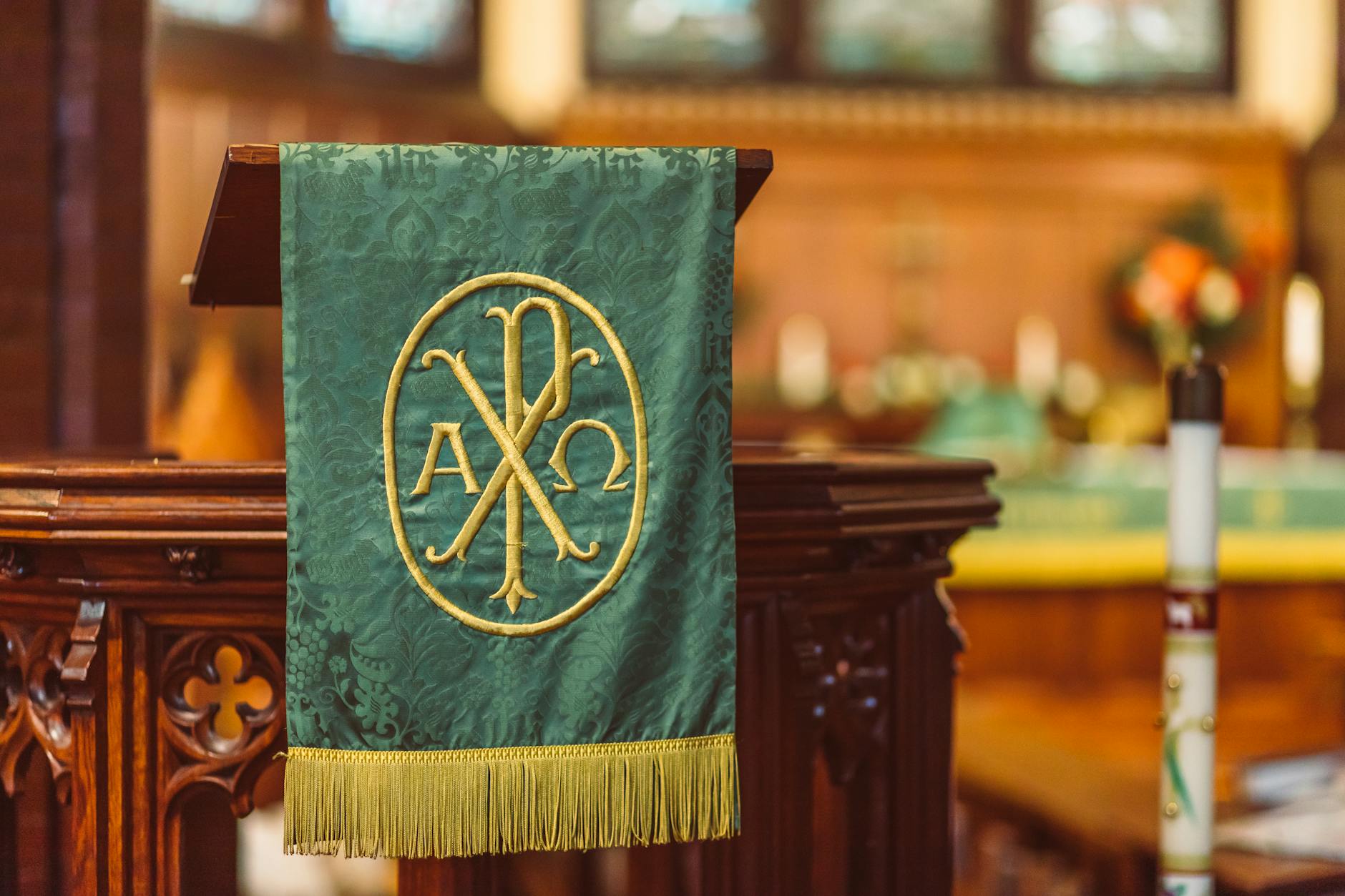
We began our journey in Genesis and have now reached Revelation, the final book of the Bible. From start to finish, the Bible tells the story of Jesus Christ, the Alpha and the Omega, the beginning and the end. He’s the thread that runs through every page, the central figure, the Saviour and Lord of humankind.

Revelation is a book filled with hope. Despite the turmoil and darkness we may see in the world, its message is clear: God will triumph over evil. It encourages believers to remain faithful and to live holy lives so they may share in the victory of God’s eternal kingdom.

At the same time, Revelation issues a warning, not to fall away from faith in Christ. It assures those who remain true to him that they will be part of his ultimate victory.

The book belongs to a genre called apocalyptic literature. The term ‘apocalypse’ comes from a Greek word meaning ‘unveiling’ or ‘revelation’. Through vivid imagery and powerful symbols, it reveals how evil will be conquered and replaced by the peace and goodness of God’s kingdom.

John writes of a vision where he sees a new heaven and a new earth, for the old had passed away. He describes the New Jerusalem coming down from heaven, beautiful like a bride, and hears a voice declaring that God’s dwelling is now with his people. He will wipe every tear from their eyes. There will be no more death, no more sorrow, crying, or pain, for the old order is gone (Revelation 21:1–4).

This is the future God promises to his people. He will dwell with them, personally present, bringing comfort and peace. Suffering, sickness, and hate will disappear forever.

Then, the One on the throne proclaims, I am making everything new! and affirms the trustworthiness of his words. He declares, It is done. I am the Alpha and the Omega, the Beginning and the End. To all who thirst, he offers the water of life freely. Those who overcome will inherit all this. I will be their God and they will be my children (Revelation 21:5–7).

Revelation calls us to endure and remain loyal to Jesus the King. The challenge is to stand firm and stay on his side.

Master, thou wilt keep us,
By thy grace divine,
Always on the Lord’s side,
Saviour, always thine.

This is the last of a series of posts outlining all the books of the Bible. Previous

The Letters of 1 & 2 Peter & Jude

1 & 2 Peter and Jude focus on encouraging believers to stay faithful in the face of suffering, false teaching, and spiritual opposition. These letters remind us that following Jesus isn’t about popularity or ease, it’s about perseverance and reflecting his character in a hostile world.

Peter’s audience initially rejoiced in their newfound faith, but soon found themselves targeted and mistreated just for being Christians. This led them to question whether continuing in faith was truly worthwhile. Peter urged them not to give up, assuring them that God cares for them deeply and that they’re not alone in their suffering. He painted a vivid picture of the Christian journey: believers are strangers in this world, temporarily passing through on their way to an eternal inheritance kept in heaven.

He reminded them that their redemption came not through worldly wealth, but through the precious blood of Christ. In the face of spiritual attack and hardship, Peter encouraged them to cast their anxiety on God, resist the devil, and stand firm in faith, knowing that after suffering for a little while, God himself would restore, strengthen, and uphold them.

Jude echoed similar themes. Both he and Peter addressed the danger of false teachers who were leading some astray. Their counsel was clear, don’t engage with or follow these deceivers. Instead, remain rooted in the truth and the love of Christ.

Ultimately, all three letters urge believers to follow Jesus wholeheartedly and reflect him to others. As we journey through a world that may not understand or welcome us, we’re to be Jesus to those around us, demonstrating his forgiveness, mercy, and love in all we do.

This is one of a series of posts outlining all the books of the Bible. Previous Next

The Letters of James & 1-3 John

We now turn to the Letters of James and John. Both writers offer profound insight into what gives life its true value: being someone to someone else, living in relationship and purpose through God’s perspective.

James urges readers to start by gaining the right perspective on life, which he defines as wisdom from above. He contrasts this with worldly wisdom, showing how your chosen perspective shapes your actions and the direction of your life. From God’s viewpoint, wisdom isn’t about intellect or ambition, it’s about a life marked by humility, peace, and mercy. This divine wisdom produces good fruit and nurtures peace, whereas human wisdom, driven by envy and selfish ambition, leads only to disorder.

James’s message is deeply practical. He stresses that true faith naturally results in action. Faith without deeds, he says plainly, is dead. Living a meaningful life means aligning your choices with God’s wisdom, allowing that perspective to shape everything you do.

John, on the other hand, focuses on love as the defining feature of a life that matters. He reminds us that Jesus Christ’s sacrifice is the ultimate demonstration of love, and that we’re called to reflect that same love in our relationships with others. If we see someone in need and turn away, we show that God’s love is not truly alive in us.

According to John, a meaningful life flows from a right view of Jesus. He invites us to marvel at the great love God has lavished on us, calling us his children. This identity transforms how we see ourselves and the world. We live with hope, knowing that when Christ appears, we shall be like him. This hope leads us to live pure lives, shaped by the certainty of who we are in Christ and who we are becoming.

Together, the letters of James and John form a powerful message: to live sensibly and meaningfully, we must adopt God’s perspective. James teaches that such a perspective gives rise to wise actions, while John shows that love, embodied in Jesus, is at the heart of that wisdom.

Both writers point us toward a life that isn’t measured by status or success but by faith expressed through action, and love poured out for others. When we live with this in mind, we discover that the real value of life is found not in what we gain, but in who we become, and who we are to others, through Christ.

This is one of a series of posts outlining all the books of the Bible. Previous Next

The Letter to the Hebrews

The Letter to the Hebrews offers a powerful message of encouragement for those whose Christian faith may be faltering under pressure. Addressing early Jewish converts, the writer urges perseverance in the face of hardship, presenting Jesus Christ as the ultimate example and perfecter of faith. The audience was tempted to return to their old religious practices, but the author insists they must keep pressing forward, fixing their eyes on Jesus.

In Hebrews 12:1–3, the faithful are likened to runners in a race, urged to cast off anything that hinders them, especially sin, and to run with endurance. Jesus, who for the joy set before him endured the suffering of the cross and now sits at God’s right hand, is held up as the model of unwavering faith. By looking to him, believers will find strength not to lose heart, even in times of severe trial.

Although the author does not name himself, he was clearly known to his original readers. For centuries, the book was attributed to the apostle Paul, but key differences in language and emphasis suggest someone else wrote it, though the teachings are fully consistent with Paul’s. Whoever the author was, he understood deeply both the Jewish heritage of his audience and the transformative nature of Christ’s role in salvation history.

The letter’s recipients were steeped in the traditions of the Old Testament. The writer draws on this familiarity, pointing out how God’s communication with humanity changed dramatically with the arrival of Jesus. Whereas God once spoke through prophets, he now speaks through his Son. Hebrews 1:1–3 declares that Jesus is not just a messenger but the very radiance of God’s glory, sustaining all things and providing purification for sins before taking his place in heaven.

This shift, from prophetic revelation to the presence of God’s own Son, underscores why turning back would be a spiritual regression. Jesus is the heir of all things and the one through whom the universe was made. He’s not simply a teacher or prophet, but the living, divine expression of God himself.

The message is clear: to stay on the winning side, one must follow Jesus. Life may become difficult, but faith means keeping one’s eyes fixed on the one who has gone before, endured suffering, and triumphed. As the ancient Israelites were led toward the Promised Land, believers today are invited to journey toward an eternal one, with Christ as their guide.

This is one of a series of posts outlining all the books of the Bible. Previous Next