Bible 40 Themes 11 Love

Love isn’t simply one of God’s attributes, something he chooses to display now and then, like sunlight breaking through cloud. Love is his very being. As John writes, “And so we know and rely on the love God has for us. God is love. Whoever lives in love lives in God, and God in them.” This isn’t poetry alone, it’s revelation. At the heart of all things, deeper than gravity, older than starlight, is love.

When we say God is love, we’re not shrinking him to fit our sentimental ideas. We’re letting him redefine love itself. Love isn’t merely romance, or affection, or a rush of feeling. It’s self-giving, steadfast, faithful. It’s the quiet determination to seek another’s good. It’s the courage to forgive, the patience to endure, the mercy that keeps the door open. If God is love, then love is as strong as eternity and as steady as his character.

This changes how we see ourselves. We don’t have to strive to earn his affection. We’re invited to rely on the love God has for us. To rely is to lean our weight upon it, to trust that it will hold. On days when we feel unworthy, distracted, or tired, his love hasn’t thinned. On days when we’re joyful and generous, his love hasn’t grown. It simply is, constant and sure.

It also reshapes how we live. Whoever lives in love lives in God. Love becomes the atmosphere of a life rooted in him. We begin to notice the lonely neighbour, the anxious colleague, the family member who needs grace again. Love moves from abstraction to action. It listens well, speaks gently, stands up for the overlooked, and refuses bitterness.

To say God is love is to stand on holy ground. It means the source of the universe bends towards compassion. It means the cross was not an afterthought, but the fullest expression of who he has always been. And it means that as we open ourselves to his presence, his love can flow through our ordinary days, turning small acts into echoes of eternity.

Bible 40 Themes 10 Grace

Grace is one of those words we use so often that it can begin to feel familiar, almost ordinary, yet it carries the weight of eternity. Paul writes, for it is by grace you have been saved, through faith, and he reminds us that our rescue, our restoration, our very hope doesn’t begin with us. It begins with God.

Grace means gift. It means that before I ever reached for God, he was reaching for me. Before I understood my need, he understood it completely. Salvation isn’t a reward for effort, nor a medal for moral achievement. It isn’t something I can earn by ticking spiritual boxes or by trying to be slightly better than yesterday. If it were, I’d always be left wondering whether I’d done enough. Grace silences that anxious question. It says, you are loved because God is loving. You are forgiven because God is merciful. You are saved because God chooses to save.

Through faith, Paul adds. Faith isn’t a heroic act, it’s an open hand. It’s the quiet decision to trust that what God says is true, and that what Christ has done is sufficient. Faith doesn’t create grace, it receives it. Like a thirsty traveller accepting water, like a weary runner finally resting, faith simply says yes.

There’s a deep humility in that. Grace levels the ground beneath our feet. None of us stands higher than another, none of us crawls in by the back door. We all come the same way, by mercy freely given. That truth softens the heart. It makes pride look absurd, and comparison pointless.

Yet grace isn’t passive. When we know we’re loved without condition, something within us begins to change. Gratitude grows. Fear loosens its grip. We start to live differently, not to secure God’s favour, but because we already have it. Grace becomes the atmosphere we breathe, shaping our relationships, our patience, our courage.

And on days when we stumble, when faith feels fragile, grace remains steady. It doesn’t flicker with our moods. It holds us, quietly and faithfully, because God himself is its source.

Bible 40 Themes 08 Justice

There’s something wonderfully untamed about the prophet’s words in Amos 5:24, where God cries out, let justice roll on like a river, righteousness like a never-failing stream. It isn’t a polite trickle. It isn’t a carefully managed canal, contained and controlled. It’s a river in full flow, alive, cleansing, unstoppable.

Through the prophet Book of Amos, God speaks to a people who were outwardly religious yet inwardly unjust. Their worship gatherings were impressive, their songs loud, their offerings abundant, yet the poor were exploited, the vulnerable ignored, and the courts corrupted. God makes it clear that he isn’t interested in worship that floats above the realities of suffering. He wants justice that runs through everyday life.

A river reshapes the land it travels through. Over time it carves valleys, nourishes fields, and sustains communities. Justice, in God’s heart, is like that. It’s not a slogan, nor a passing enthusiasm. It’s a steady, life-giving current that refreshes the weary and lifts the bowed down. Righteousness, that never-failing stream, speaks of right relationships: with God, with neighbour, with the earth itself.

I’m struck by the movement in this image. Justice rolls. It doesn’t stagnate. It moves outward. It refuses to be confined to private spirituality. If I pray, sing, and read scripture, yet ignore the lonely neighbour, the struggling family, the unfair system, then I’m damming the river. God longs to break through those barriers.

And yet this isn’t a call to frantic activism fuelled by guilt. A river flows because it’s connected to a source. Justice flows from the character of God himself. As we draw close to him, as his spirit softens our hearts, his concern for the marginalised becomes our concern. His holy restlessness becomes ours.

So perhaps the prayer isn’t, “Lord, make me impressive,” but, “Lord, let your justice flow through me.” In our homes, our churches, our communities, may we become channels rather than containers. May kindness run deep. May fairness become instinctive. And may the quiet persistence of righteousness shape the ground beneath our feet, until God’s kingdom looks less like a distant dream and more like a living, flowing stream among us.

Bible 40 Themes 06 Sacrifice

Sacrifice is a word that can sound severe to modern ears. It suggests loss, surrender, even pain. Yet when Paul writes to the Ephesian church that “Christ loved us and gave himself up for us as a fragrant offering and sacrifice to God”, he frames sacrifice not as grim duty but as love’s fullest expression. At the heart of the gospel isn’t coercion, nor cold transaction, but self-giving love that rises like perfume before God.

When I linger with that verse, I picture the ancient temple, smoke curling upwards, the scent of an offering filling the air. It was tangible, costly, real. In the same way, Christ’s sacrifice wasn’t abstract. It was flesh and blood, sweat and tears, forgiveness breathed through cracked lips. He didn’t cling to status or safety. He gave himself up, freely, deliberately, lovingly. Sacrifice, then, isn’t about appeasing an angry deity, but about revealing the depth of divine love.

For us, sacrifice often feels smaller, yet no less significant. It’s the quiet choice to forgive when resentment would be easier. It’s giving time when we’re tired, generosity when budgets are tight, courage when silence would be safer. In these moments, we echo that fragrant offering. Not because we’re trying to earn favour, but because we’ve already been loved.

There’s something beautiful in the phrase fragrant offering. It suggests that self-giving love carries a sweetness in God’s presence. When we live in the way of Christ, when we walk in love as the verse invites us to do, our ordinary days become altars. A conversation handled gently, a burden shared, a truth spoken kindly; these rise like incense.

Sacrifice in this light isn’t about self-erasure. It’s about alignment. It’s choosing love over ego, grace over pride, compassion over indifference. And strangely, in giving ourselves away, we discover we’re not diminished. We’re drawn deeper into the life of God, whose very nature is self-giving love.

Bible 40 Themes 05 Obedience

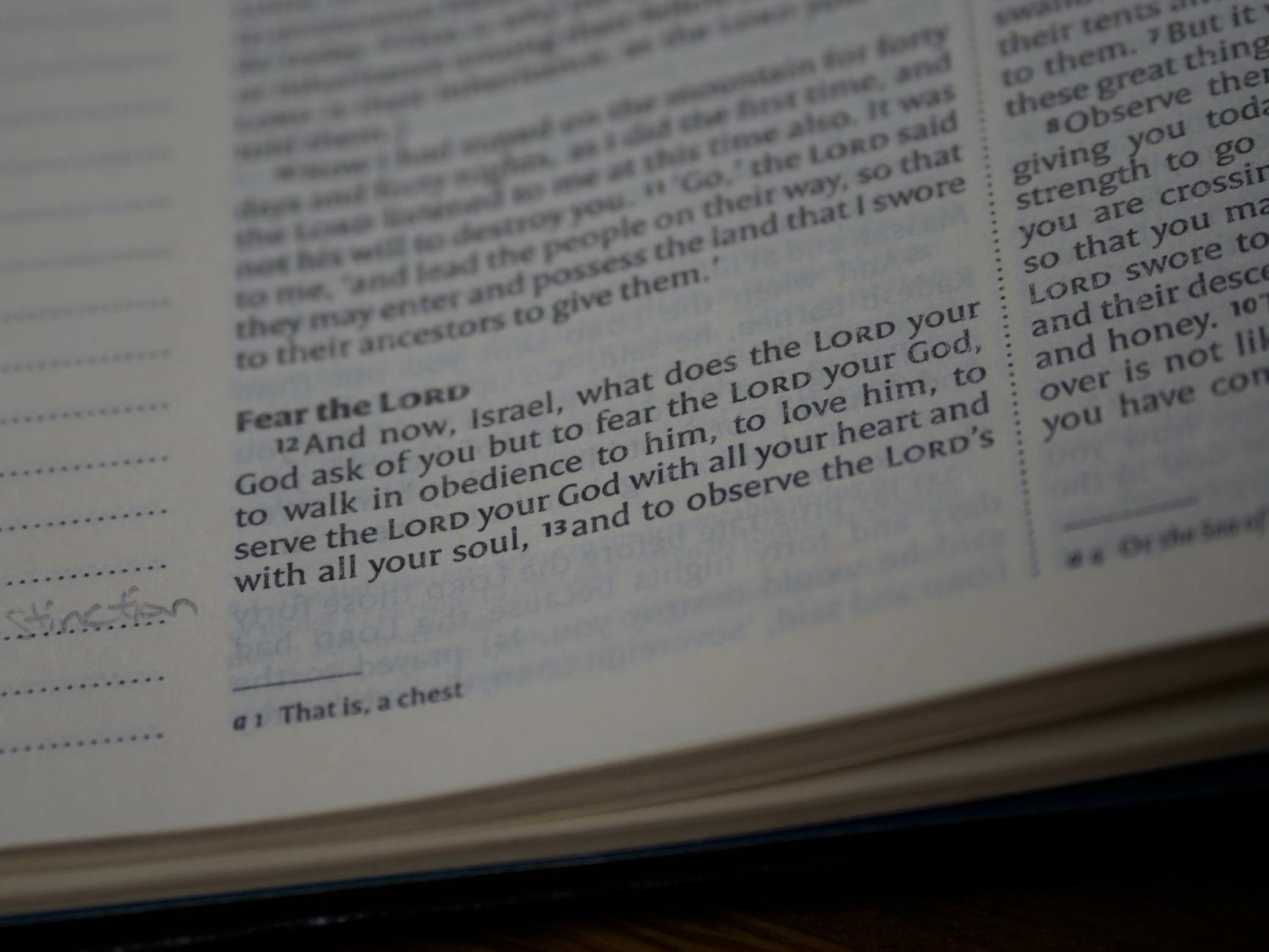
Obedience isn’t always dramatic. It rarely makes headlines. More often, it’s quiet, costly, and unseen. In 1 Samuel 15, Saul had won a victory, yet he’d adjusted God’s command to suit his own judgement. He kept what looked valuable and offered sacrifice as a spiritual covering for partial obedience. Samuel’s words cut through the smoke of religious performance: “Does the Lord delight in burnt offerings and sacrifices as much as in obeying the Lord? To obey is better than sacrifice, and to heed is better than the fat of rams.”

There’s something in us that prefers sacrifice to obedience. Sacrifice can feel impressive; it’s visible, measurable, even public. Obedience, though, is humbler. It means trusting that God’s way is wiser than our instincts. It means surrendering the part of the command we’d rather reinterpret. Saul’s mistake wasn’t outright rebellion in his own eyes, it was selective obedience. He did much of what God asked, but not all. Yet love that edits God’s voice is no longer love rooted in trust.

“To obey is better than sacrifice” reminds us that God desires hearts aligned with him, not gestures designed to compensate for disobedience. We can serve tirelessly, give generously, sing passionately, and still avoid the simple, searching call to heed his voice in the everyday. Obedience might mean forgiving when resentment feels justified, telling the truth when silence would protect us, choosing integrity when compromise would be easier.

Obedience flows from relationship. Samuel speaks of obeying the Lord, not merely obeying a rule. The invitation is personal. God isn’t hungry for ritual; he longs for trust. When we obey, we declare that his character is good, his wisdom reliable, his purposes kinder than our own plans. That kind of obedience shapes us quietly over time. It forms humility, deepens faith, and anchors our lives in something steadier than impulse.

In a world impressed by spectacle, God still listens for the softer sound of a willing heart. Not grand offerings, but faithful footsteps. Not impressive sacrifice, but attentive love.

This is one of a series of posts outlining 40 themes of the Bible. Previous Next

Bible Themes in 40 Posts

Each post in the series Bible Themes in 40 Posts covers one key theme of the Bible. It aims to present a simple overview of Bible to understand its overall message, the inherent theme at its heart, and to show the centrality of Jesus in both Old and New Testaments.

The series serves as a basic reference point, as a simple Lent Course, or as a 40 day devotional to be used at any time. Each post contains links to the previous and next posts in the sequence, these will open in a new tab. You can find an index page here.

It’s for those of all faiths and none. I hope it’ll clear up any misunderstandings or negative perceptions and that you’ll find it helpful.

Note: Apologies for getting behind with indexing, I’m working on it.

Ash Wednesday

Ash Wednesday marks the beginning of Lent in the Christian calendar, a forty day season of reflection and preparation leading up to Easter. It’s observed by many Christians across denominations, including Roman Catholic, Anglican, Lutheran, and Methodist traditions.

The day takes its name from the practice of placing ashes on the forehead, usually in the shape of a cross. The ashes are traditionally made by burning the palm branches from the previous year’s Palm Sunday services. They serve as a symbol of human mortality, repentance, and the need for spiritual renewal. During the service, words such as, “Remember that you are dust, and to dust you shall return,” are often spoken, drawing attention to the fragility and brevity of life.

Ash Wednesday isn’t a public holiday in the UK, but it’s widely recognised within churches and Christian communities. Many people attend a special service, while others choose to mark the day privately through prayer or quiet reflection.

Lent, which begins on Ash Wednesday, has historically been associated with fasting and self discipline. Some Christians give up certain foods, habits, or luxuries during this period, while others take on positive practices such as acts of charity, reading scripture, or volunteering. The purpose isn’t simply self denial, but a renewed focus on faith, compassion, and personal growth.

Although Ash Wednesday has ancient roots, it continues to hold relevance today. It offers a moment to pause, consider life’s priorities, and begin a season of intentional living. For many believers, it’s a reminder of both human limits and the hope of Easter that lies ahead.

Shrove Tuesday

Shrove Tuesday is the day before Ash Wednesday and marks the last day before the start of Lent in the Christian calendar. It’s observed in many countries, though in the UK it’s most commonly associated with Pancake Day. The tradition of eating pancakes developed as a practical way to use up rich foods such as eggs, milk, and butter before the fasting season of Lent began.

The name “Shrove Tuesday” comes from the old English word shrive, meaning to confess or receive absolution. Historically, it was a day when Christians were encouraged to reflect on their lives, seek forgiveness, and prepare spiritually for Lent. In medieval England, people would attend confession on this day in order to enter Lent with a clear conscience.

Over time, Shrove Tuesday also became linked with wider community customs. In some places, it was a day for feasting and social gatherings before the more restrained weeks that followed. Traditional foods varied, but pancakes became popular because they were simple, filling, and made from ingredients that households wanted to finish before Lent.

Today, Shrove Tuesday is often celebrated in a more secular way, with pancake breakfasts, school events, and pancake races. Many churches still observe its religious meaning, using it as a reminder of the themes of repentance, renewal, and preparation. It provides an opportunity to pause before Lent begins, whether that involves giving something up, taking on a new discipline, or simply becoming more mindful.

Although modern celebrations tend to focus on food and fun, Shrove Tuesday remains rooted in a long tradition of marking a transition, from ordinary routines to a season of reflection leading towards Easter.

Bible 40 Themes 04 Faith

Faith is one of the Bible’s most quietly powerful gifts. It isn’t loud, or showy, or always certain of the next step. More often, faith is the steady courage to keep walking when the road ahead is hidden by mist. Scripture doesn’t present faith as a flawless emotional confidence, but as a deep trust rooted in God’s character and promises.

Hebrews offers a simple and beautiful definition: “Now faith is confidence in what we hope for and assurance about what we do not see” (Hebrews 11:1). That verse carries such tenderness. Faith isn’t pretending we have all the answers. It’s holding on to hope when answers haven’t arrived yet. It’s trusting that God is still present, still working, even when our eyes cannot trace his hand.

The stories of faith throughout the Bible are full of ordinary people stepping forward with trembling hearts. Abraham left home without knowing where he was going. Moses stood before Pharaoh with nothing but God’s promise. Ruth walked into an uncertain future guided only by loyalty and love. None of them had a clear map, but they had God, and that was enough to take the next step.

Faith, then, is less about certainty and more about relationship. It grows not through control, but through surrender. It deepens when we pray honestly, when we wait patiently, when we keep choosing trust over fear. Faith isn’t a demand to feel strong, but an invitation to lean on the strength of God.

Sometimes faith feels solid like a mountain. Sometimes it feels fragile like a candle flame. Yet even the smallest faith, placed in the hands of a faithful God, can shine through darkness. Faith isn’t measured by how steady we feel, but by who we are holding on to.

If you’re carrying questions today, you’re not alone. Faith doesn’t erase doubt, but it invites us to bring our doubt into God’s presence. The invitation of Hebrews is simple: keep hoping, keep trusting, keep stepping forward, because God is trustworthy, even when the way is unseen.

And perhaps this is the quiet miracle of faith, that step by step, we discover we were never walking alone.

This is one of a series of posts outlining 40 themes of the Bible. Previous Next

Bible 40 Themes 03 Promise

Promise is a word we learn early, often through the ache of disappointment. We discover, sometimes painfully, that human promises are fragile things, shaped by good intentions but limited by weakness, forgetfulness, fear, or changing circumstances. Yet Paul speaks into that shared human experience with a steady, hope-filled assurance when he writes that no matter how many promises God has made, they are “Yes” in Christ. It’s a sweeping claim, not naïve optimism, but a grounded declaration rooted in the life, death, and resurrection of Jesus.

God’s promises aren’t abstract ideas floating above history. They’re woven through the long, messy story of scripture, promises of blessing, justice, mercy, restoration, forgiveness, and new life. Some seem delayed, others contested, and many misunderstood. But Paul insists they find their coherence, their fulfilment, and their trustworthiness in Christ. Jesus isn’t simply one more promise among many. He’s the living confirmation that God means what God says.

In Christ, the promises of God aren’t merely spoken, they’re embodied. When God promises forgiveness, we see it in Jesus eating with sinners and praying for his executioners. When God promises new life, we see it in empty tombs and transformed lives. When God promises presence, we hear Jesus say, quietly but decisively, that he’s with us always. The “Yes” of God isn’t a distant agreement but a costly commitment, sealed in love and faithfulness.

This matters deeply for how we live. Faith isn’t about clinging to isolated verses or hoping hard enough that things will turn out well. It’s about trusting the character of God revealed in Christ. Even when circumstances feel like a resounding “No”, even when prayers seem unanswered, the deeper promise still stands. God hasn’t withdrawn, changed his mind, or lost interest. The story isn’t finished yet.

To live as people of promise, then, is to anchor ourselves in Christ, returning again and again to that central truth. God’s promises are not dependent on our performance or certainty. They rest in God’s own faithfulness. In Christ, God has already said “Yes”, and that yes continues to echo through our doubts, our waiting, and our hope, steady, resilient, and alive.

This is one of a series of posts outlining 40 themes of the Bible. Previous Next