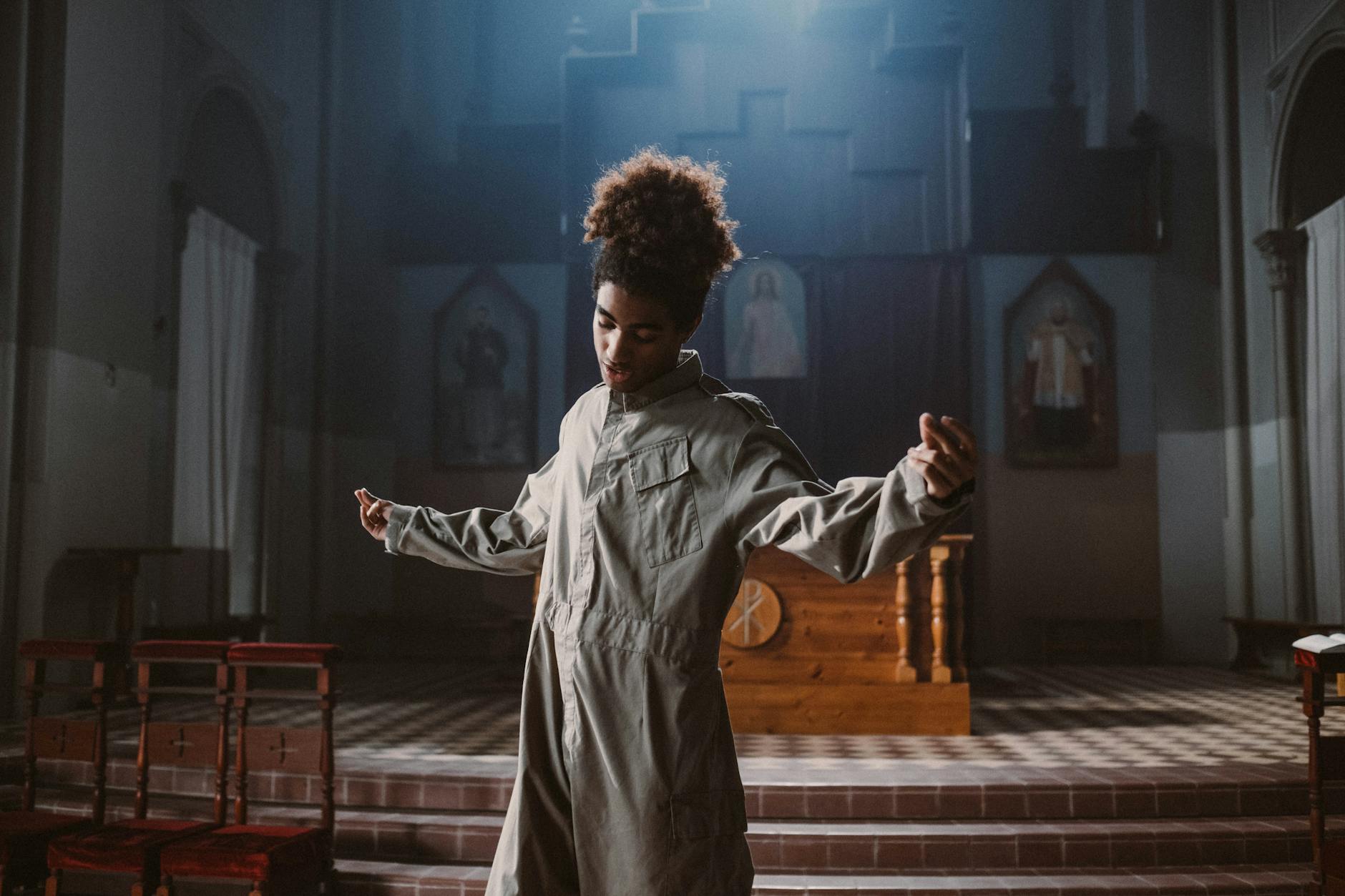
When St Andrew’s Day falls on the first Sunday in Advent, the themes of both occasions sit naturally together. Andrew is remembered as the disciple who recognised something stirring in Jesus before many others did, responding with a straightforward willingness to follow. His simple announcement, “We’ve found the Messiah” in John’s Gospel, has the feel of a light being switched on rather than a dramatic revelation. Advent begins with that same sense of early illumination: the quiet awareness that something significant is approaching, even if it isn’t yet fully seen.
The first Sunday in Advent often highlights Jesus’ call to stay awake and keep watch in Matthew 24:42–44. This isn’t a demand for anxiety, it’s a reminder to pay attention. Andrew’s life echoes that posture. He listened, observed, and took practical steps towards what he sensed God was doing, then encouraged others to come and see for themselves.
Seen together, St Andrew’s Day and Advent’s beginning underline a simple pattern of faith: noticing, responding, and preparing. They point towards the value of small beginnings, steady attentiveness, and readiness for the arrival of light, peace, and renewal.
Advent isn’t a season that leaves us skimming the surface of things, rushing about with lists and lights, though it’s easy to let it become that. At its heart, Advent is an invitation into waiting, watching, and yearning. It slows us down to listen for the footsteps of the one who is coming, the Christ who once entered the world in Bethlehem, who comes to us now in Spirit, and who will come again in glory.
To wait is to admit that we aren’t in control, that we can’t make the kingdom arrive by our own effort or force. We wait like Israel of old, who longed for God’s promises to be fulfilled. Isaiah spoke of a people walking in darkness who would see a great light, and Advent teaches us to hold that promise close in our own darkness. In our world of wars, injustice, and sorrow, waiting doesn’t mean passivity. It means watching for God’s movement with eyes sharpened by hope.
This season also deepens our longing. The carols and candles are beautiful, but they’re meant to stir something deeper than sentimentality, a hunger for Christ’s presence that nothing else can satisfy. Mary’s Song in Luke 1 shows us that longing isn’t quiet or tame. It bursts out with joy and prophecy: He has filled the hungry with good things but has sent the rich away empty. Advent asks us whether we dare to share in that longing, whether we let God awaken a hunger for justice, peace, and mercy in us.
And Advent draws us deeper into love. As Paul writes in Romans 13, The night is nearly over; the day is almost here. So let us put aside the deeds of darkness and put on the armour of light. We prepare not just with candles and wreaths, but with acts of kindness, reconciliation, and generosity. Each gesture of love becomes a way of making room for Christ.
Advent is not shallow waiting, but holy depth. It’s the pause before the music swells, the silence before the dawn. It invites us to wait, to long, and to love until Christ fills our emptiness with his presence, and our world is Illuminated with his coming.
Tabloid newspapers and social media manufacture outrage to promote sales and encourage clicks, but constant outrage about nothing is bad for us. A careless headline or a clipped video is enough to spark a wave of indignation that spreads faster than any calm explanation, and before we realise it, we’ve been drawn into yet another cycle of anger that leaves us feeling drained. This constant agitation isn’t harmless; it shapes the way we see the world and nudges us towards suspicion, cynicism, and fear. It also quietly erodes our mental health, because the human mind isn’t designed to live in a permanent state of alert.
When Jesus said, “do not let your hearts be troubled” (John 14:1 NIVUK), he wasn’t speaking into a peaceful world but into one where fear and confusion were daily companions. His words still meet us there, reminding us that peace isn’t naïve or passive; it’s a form of holy resistance. We can choose to step back, breathe, and seek whatever is true, noble, right, pure, lovely, and admirable, letting that shape our minds instead of the noise.
Stir up, O Lord, the wills of your faithful people; that they, richly bearing the fruit of good works, may by you be richly rewarded; through Jesus Christ who is alive with you in the unity of the Holy Spirit, one God now and for ever. Amen.
As the days shorten and winter settles in, the season of Advent beckons us into a sacred rhythm of waiting, watching, and wondering. More than a countdown to Christmas, Advent is a spiritual invitation to journey inward, towards mystery, hope, and transformation.
Rooted in the Latin word adventus, meaning coming, Advent marks the anticipation of Christ’s arrival, not only in the manger of Bethlehem, but in the quiet corners of our hearts and the unfolding of history. It’s a season that resists haste. In a world that prizes immediacy and spectacle, Advent whispers a counter-cultural truth – depth is found in stillness, and meaning in the slow unfolding of time.
The liturgical practices of Advent, lighting candles, reading prophetic texts, singing hymns of longing, are not mere rituals. They’re signposts guiding us deeper into the mystery of incarnation. The first candle flickers with hope, the second with peace, the third with joy, and the fourth with love. Each flame illuminates a path through the shadows of despair and distraction, drawing us closer to the heart of God.
Advent also invites us to confront the ache of waiting. Like the prophets who cried out for justice, like Mary who pondered the angel’s words, we too are called to dwell in the tension between promise and fulfilment. This waiting is not passive, it’s active, expectant, and transformative. It teaches us to listen more attentively, to see more clearly, and to love more deeply.
In this coming sacred season, we’re reminded that the divine doesn’t always arrive with fanfare. Sometimes, it comes quietly, in a whisper, a flicker, a breath. Advent draws us deeper not by offering answers, but by awakening our longing. And in that longing, we find ourselves drawn ever closer to the mystery of Emmanuel – God with us.
Creation begins in silence, in that deep and holy mystery before words, before time, before even the first breath. Then comes the divine utterance that breaks the stillness. God speaks, and everything stirs into being. In the beginning God created the heavens and the earth. It’s such a spare line, yet it carries the full weight of existence. The writer of Genesis doesn’t try to prove God’s reality or outline his methods; the story simply opens with him, because nothing else can be understood without that beginning. Every galaxy and mountain, every tide and atom, rests on that quiet, intentional act of love.
Creation isn’t something sealed away in ancient history, it’s the heartbeat of the present moment. Each sunrise that washes the world with colour, each newborn cry that breaks into the air, each stubborn seed pushing its way through dark soil continues that divine creativity. God didn’t set the universe spinning and then step back. He remains the sustaining pulse of life, still speaking light into our darkness, still breathing hope where we’ve forgotten how to look for it. Creation tells us that life isn’t random or accidental; it’s a gift, shaped by love and held by grace.
When we pause beneath a starlit sky or feel the wind threading its way through the trees, something deep within us recognises the signature of the one who made us. We’re woven into this creation too, shaped from dust yet filled with God’s breath. That truth draws out both wonder and responsibility. If creation is sacred, then caring for it becomes sacred as well, whether that means protecting forests and oceans, tending to our communities, or treating one another with gentleness and dignity.
“In the beginning” isn’t only a statement about the universe’s first moment; it’s an invitation for us now. Each day we’re offered the chance to begin again, to create goodness, beauty, and peace in the small spaces we inhabit. The same Spirit who hovered over the waters still moves through us, steadying us when life feels chaotic, guiding us when the shadows seem too deep, and helping us shape something new, hopeful, and alive.
Although not able to attend Stockton Salvation Army this morning (Sunday 16 November 2025) I’ve been able to reflect on the Bible reading at home.
Exodus 13:17 to 14:14 is a gentle reminder that God’s guidance is often longer, slower, and wiser than the paths we’d choose. When Pharaoh finally lets the people go, God doesn’t take them by the quickest route but leads them by the desert road towards the Red Sea, knowing they aren’t ready for the shock of conflict. There’s something tender in that, something that speaks to the long story of every church and every believer: God doesn’t rush maturity, and he doesn’t abandon us when the journey bends in ways we never expected.
The pillar of cloud and fire becomes a symbol of that patient, steady presence. By day and by night, God stays ahead of his people, guiding them with a quiet constancy that doesn’t demand attention but offers reassurance. When I think of my own church celebrating its anniversary, I see echoes of that presence: the unexpected turns navigated with grace, the seasons of joy, the times of strain, and the quiet ways God has held the fellowship together. Even from a distance, I can be part of that gratitude.
Then comes the moment of fear: the roar of Pharaoh’s chariots behind, the sea blocking the way ahead, and the people crying out in panic. Their protests feel painfully human: Was it because there were no graves in Egypt that you brought us to the desert to die? It’s the voice we all know when pressure closes in and the future feels impossible. And into that fear, Moses speaks words that settle deeply into the heart of any congregation marking its years: Do not be afraid. Stand firm and you’ll see the deliverance the Lord will bring you today… the Lord will fight for you; you need only to be still (Exodus 14:13–14).
A church anniversary is a moment to breathe in those words again, to remember how many times God has made a way where none seemed open, and to trust that he’s still leading, still guiding, still walking ahead with a faithfulness that doesn’t falter. Even at home, I’m grateful for the journey so far and hopeful for the road still unfolding.
Psalm 98 rises like a bright dawn, calling us to lift our voices because God’s faithful love keeps breaking into the world, renewing what’s weary and reclaiming what’s lost. It remembers that God has made his salvation known and revealed his righteousness to the nations, and those words feel especially powerful when justice and truth seem fragile.
The psalm reminds us that God’s rescue isn’t hidden or selective; it’s public, generous, and rooted in a goodness that refuses to be diluted by human failure. When we’re tempted to believe that dishonesty carries the day, Psalm 98 quietly insists that truth still has weight, still has substance, still has a heartbeat.
The invitation to sing a new song becomes more than poetic instruction; it’s a gentle protest against despair. New songs rise when truth has been defended, when justice has been honoured, when mercy has touched what was broken. They rise when people refuse to succumb to cynicism, choosing instead to trust that God’s character remains steady. And while the psalm shimmers with joy, it’s not naïve joy. It’s the kind that knows darkness well yet refuses to let darkness write the ending.
Then creation joins in, rivers clapping, mountains shouting for joy, the whole earth exhaling praise as the true judge draws near. It isn’t the joy of avoidance, but of alignment. Creation longs for God’s judgement because his judgement isn’t cruel, it’s right. It sets things straight, restores dignity, exposes lies, and shelters the vulnerable. In a world where truth can be bent and justice delayed, the image of God coming to judge with equity feels like a deep breath for the soul.
Psalm 98 invites us into that hope, to stand with creation and sing, trusting that the God who loves truth and upholds justice is already at work, already moving, already drawing near.
This is my Remembrance Sunday Sermon at Stockton Salvation Army on Sunday 9 November 2025.
It starts with three short Bible readings (each with brief context), moves into two quotes (which I come back to later in the sermon), and then the sermon itself. There is an additional prayer at the end.
Psalm 51:3–5
For I know my transgressions, and my sin is always before me. 4 Against you, you only, have I sinned and done what is evil in your sight; so you are right in your verdict and justified when you judge. 5 Surely I was sinful at birth, sinful from the time my mother conceived me.
David recognises the depth of sin not just in his actions but in his very nature, expressing the idea that human brokenness is inherited and universal.
Luke 6:43–45
‘No good tree bears bad fruit, nor does a bad tree bear good fruit. 44 Each tree is recognised by its own fruit. People do not pick figs from thorn-bushes, or grapes from briers. 45 A good man brings good things out of the good stored up in his heart, and an evil man brings evil things out of the evil stored up in his heart. For the mouth speaks what the heart is full of.
Jesus uses simple imagery to show that goodness can flow from a good heart. It shows that goodness isn’t foreign to us, it springs from within, from the heart shaped by God’s image and nurtured by his grace. It reminds us that the human heart, though capable of terrible wrong, still holds the seed of goodness that God can help grow.
Galatians 5:22–23
But the fruit of the Spirit is love, joy, peace, forbearance, kindness, goodness, faithfulness, 23 gentleness and self-control. Against such things there is no law.
Paul describes how the Holy Spirit brings forth goodness and other virtues in those who open their hearts to God. This reminds us that genuine goodness isn’t merely human effort, but the Spirit’s life within us. Even though we’re marked by sin, the Spirit cultivates in us a new nature, one that reflects the goodness of God himself.
True lament is not born from that trite sentiment that the world is bad but rather from a deep conviction that it is worthy of goodness.
We are not meant for war, For target-seeking arms, For blood that stains a fun-meant shore, For shells that scream alarms.
Before we speak of Remembrance, we begin with lament – the honest naming of pain and the longing for goodness.
Remembrance Sunday invites us to pause between the silence of loss and the call of hope. It’s a day when memory feels sacred, when we remember those who gave their lives, and the terrible cost of human pride, fear, and sin.
Psalm 51 reminds us that brokenness runs deep, not only in history but in every human heart. David’s confession, surely I was sinful at birth, acknowledges a truth we’d rather avoid, that the seeds of destruction lie not only in nations but in us.
Yet Jesus, in Luke 6, speaks of another seed, goodness that can still grow within the human heart. A good tree bears good fruit, he says, hinting that beneath the ash of sin, the image of God remains – a spark of life that grace can fan into flame.
Paul takes us further, describing the fruit of the Spirit, love, joy, peace, and the rest, as evidence that goodness isn’t lost but renewed. It isn’t our achievement, but God’s own life flowering within us. So even as we lament the wars of the past and the wars still raging in hearts and lands, we dare to believe that goodness is possible.
So as we hold these scriptures together, we face a paradox that reaches to the heart of our faith…
Original sin reminds us we’re all touched by brokenness. The image of God reminds us we’re all capable of goodness. The first shows our need for grace, the second reveals our dignity and our hope.
This paradox has deep roots in Christian theology. It stretches back to the debates between Augustine, who emphasised humanity’s inherited sinfulness, and Pelagius, who believed in the innate capacity for goodness and moral choice. Over the centuries, theologians have wrestled with this tension, seeking to balance the reality of sin with the redeeming grace that restores human goodness through Christ.
On the one hand, the doctrine of original sin teaches that humanity is marked by a brokenness inherited from Adam and Eve, a bent towards self-centredness that no one can escape. On the other, the Scriptures affirm that every person bears the image of God, and so carries the possibility of goodness, love, and truth.
The reconciliation lies in holding both truths together without letting one cancel out the other. Original sin doesn’t mean humanity is utterly evil, but rather that even our best intentions are tinged with self-interest, fear, or pride.
Augustine and later theologians stressed that while sin distorts the image of God in us, it doesn’t erase it. That divine imprint remains, like a flame flickering under ash.
So, the possibility of goodness is real, but it isn’t self-sufficient. Our goodness always points back to God’s sustaining grace, the Spirit moving within us. Paul speaks of people who do by nature things required by the law, showing that even those outside the covenant can reflect God’s goodness written on the heart. And yet he also says, all have sinned and fall short of the glory of God.
The paradox is that both can be true: goodness is possible because of God’s image within us, but salvation and wholeness require grace beyond us.
In that way, original sin underscores the need for redemption, while the possibility of goodness affirms our dignity and responsibility. We are neither condemned to despair nor able to save ourselves by our own light; instead, we’re invited to trust the God who renews the image already planted within us.
Let’s return to that first quote:
True lament is not born from that trite sentiment that the world is bad but rather from a deep conviction that it is worthy of goodness. Cole Arthur Riley
This striking quote reframes what it means to grieve. Lament isn’t shallow pessimism or complaint. It doesn’t flow from cynicism, the shrug that says the world is hopeless and always will be. Instead, Riley shows that lament is rooted in love, in the belief that the world can and should be different. To cry out against injustice or brokenness is to affirm that goodness is possible, that life is meant for something more.
Lament demands both courage and imagination, asking us to recognize current pain while envisioning better possibilities. It resists giving in to suffering or cruelty and instead acts as a form of hope, those who mourn deeply often do so because they truly believe in meaning, justice, and beauty.
Riley’s understanding of lament turns it into a form of witness. To lament is to stand against indifference, to speak truth to the world’s brokenness, and to demand something better. It’s an active testimony, one that refuses to let the world settle for less than goodness.
Through her writing, Riley insists on a more human and liberating expression of faith; one that makes space for grief and tenderness yet never gives up on goodness. In her vision, lament is not weakness but love, not despair but hope strong enough to weep.
True remembrance is more than sorrow, it’s a cry of faith. Like she says, lament is born not of cynicism but of conviction that the world is worthy of goodness. We remember, then, not just to mourn what’s been lost, but to nurture what can yet grow: peace, mercy, and the Spirit’s fruit in every heart.
And so, we remember not just with tears, but with longing – longing for peace, for goodness, for the renewal of all things in God.
Harry Read was a wireless operator in the 6th Airborne Division when he was parachuted into Normandy in the early hours of 6 June 1944, aged 20.
As Commissioner Harry Read, he was a much-loved Salvation Army Officer, who served with distinction, and in later life shared his poetry on Facebook. These poems have been compiled into anthologies, books I treasure especially as he was my Training Principal.
These are his words:
We are not meant for war, For target-seeking arms, For blood that stains a fun-meant shore, For shells that scream alarms.
We are not meant to kill Or, even worse, to maim Because of some despotic will, And do it in God’s name.
We are not meant to mourn, Have chilling memories; Of youth and innocence be shorn, Call good men enemies.
We are not meant to hate And hate with gathering force, Because our hate we cultivate And poison reason’s source.
But we are meant for peace And joy and harmony, For hearts that know a blest release From hate and enmity.
And we are meant for God, For whom our spirits yearn, Who has our war-torn pathways trod In hope of our return.
[Pause]
Prayer for Remembrance Sunday
God of peace and mercy, we come before you with hearts full of gratitude and sorrow. We remember those who gave their lives in war— those who fell in foreign fields, those who never came home, and those whose wounds, seen and unseen, carried the weight of the world’s brokenness.
We remember, too, those who still serve today, striving to keep peace in troubled lands; and we pray for all who live with the grief, fear, or silence that war leaves behind.
Teach us, Lord, to remember not only with words, but with lives that honour their sacrifice— by seeking peace where there is hatred, by building bridges where there are walls, by loving even our enemies, as Christ loved us.
May your Spirit comfort the sorrowing, strengthen the weary, and guide all nations in the ways of justice and compassion. Until that day when swords are beaten into ploughshares, and your kingdom of peace reigns over all the earth.
Remembrance Sunday calls us to pause, to remember, and to seek peace. James writes, Who is wise and understanding among you? Let them show it by their good life, by deeds done in the humility that comes from wisdom. James 3:13-18. True wisdom, he says, isn’t about cleverness or control, but about gentleness and sincerity, qualities that echo the quiet strength of those we honour today.
As we remember the fallen, we think of lives given not in pursuit of pride, but in the hope of peace. James contrasts earthly wisdom, driven by envy and selfish ambition, with wisdom from above, which is pure, peace-loving, considerate, submissive, full of mercy and good fruit, impartial and sincere. Such wisdom doesn’t roar; it whispers through acts of courage, compassion, and costly love.
War is the tragic failure of wisdom, yet even in its shadows we see glimpses of heaven’s light. The peacemaker who comforts the broken, the nurse who tends the wounded, the soldier who lays down his life for others, all reflect the divine wisdom that sows peace.
So on this Remembrance Sunday, as the bugle’s call fades and silence falls, may we not only remember the cost of peace but also commit ourselves to live wisely, to be people whose humility and mercy sow peace in our homes, our communities, and our world. For, as James reminds us, Peacemakers who sow in peace reap a harvest of righteousness.