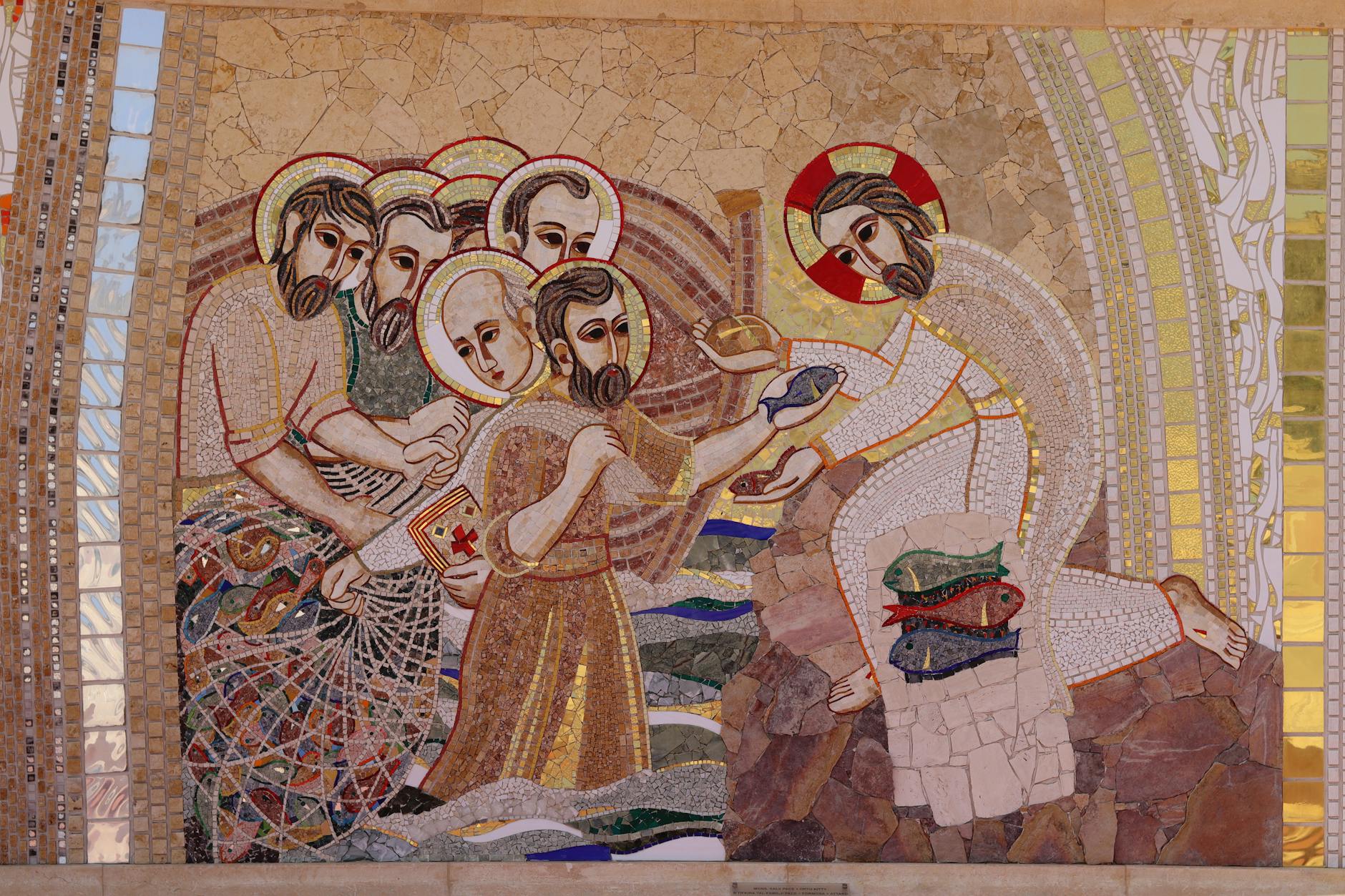
Extravagance at Cana

Bible Reading: John 2:1-11

Everyone plans well for a party, especially making sure there’s enough food and drink for everyone. Throughout history people have celebrated together by feasting, and this is something we all really missed during the coronavirus pandemic because these gatherings were banned.

Events associated with feasting make good memories for the future, and even a funeral reception or wake can be a place of joy, nurtured by food and drink.

Of course, waste is a concern for everyone, but running short of food or drink is always a failure of hospitality. When we come to that beautiful account of the wedding at Cana, all those themes and more are woven into the fabric of John’s story telling.

On the surface, there is the embarrassing awfulness of a wedding that runs out of wine. At a deeper level, we see the extravagance of God’s love and grace. Here is an overabundance of giving made real in Jesus for those who were present with him then, and with all who celebrate his presence now. It also points ahead to the great feast when the Lord will bring his promises to their ultimate fulfilment.

I invite to dig deeper into this wonderful story for yourselves, to discover its depths of meaning that reveal the extravagance of God and his love for us.

God who touchest earth with beauty,
Make my heart anew;
With thy Spirit recreate me
Pure and strong and true.
Like thy springs and running waters,
Make me crystal pure;
Like thy rocks of towering grandeur,
Make me strong and sure.

Like thy dancing waves in sunlight,
Make me glad and free;
Like the straightness of the pine trees
Let me upright be.
Like the arching of the heavens,
Lift my thoughts above;
Turn my dreams to noble action,
Ministries of love.

Like the birds that soar while singing,
Give my heart a song;
May the music of thanksgiving
Echo clear and strong.
God who touchest earth with beauty,
Make my heart anew;
Keep me ever by thy Spirit
Pure and strong and true.

Salvation Army Song Book 320 (TB 303/Whitechapel)

The Gifts of the Wise Men

Bible Readings: Matthew 2:1-12 & 2 Corinthians 9:6-11

Christmas celebrates the coming of God’s gift, the birth of Jesus as Saviour of the World. Epiphany celebrates our giving to God, symbolised by the wise men bringing their gifts to the baby Jesus. It’s traditionally celebrated on the twelfth day after Christmas (January 6).

We know very little about them, and only assume there were three because there were three gifts. Those three gifts represent three distinct aspects of our lives that we need to present to Jesus.

Gold represents everything of material value; our money, our property, our belongings. It’s good to recognise that everything comes from God, and as Christians we offer it to Jesus. We may not have much, but let’s make sure give our symbolic gold to Jesus, for God to use.

Frankincense represents something less tangible than gold. It symbolises our inner treasure of thought and influence; our education, our talents, and our personalities. By offering these to Jesus we have a reference point for our actions and behaviour, recognising something greater than ourselves.

Myrrh, partly because of its use in embalming, has been identified with sorrow and suffering. We can bring the challenging times in life to Jesus, and experience God’s comfort.

Myrrh is mine; it’s bitter perfume.
Breathes a life of gathering gloom;
Sorrowing. sighing, bleeding, dying,
Sealed in a stone-cold tomb.

A fourth wise man called Artaban belongs to the realm of myth and legend, but he is imagined having brought a gift representing the happier things in life. A reminder that Jesus:

…feeleth for our sadness,
And he shareth in our gladness.

The whole of human life can be symbolised in the three (four) gifts, personal gifts of ourselves that we can bring to Jesus.

Father, I place into your hands
The things I cannot do,
Father, I place into your hands
The things that I’ve been through.
Father, I place into your hands
The way that I should go,
For I know I always can trust you.

Father, I place into your hands
My friends and family.
Father, I place into your hands
The things that trouble me.
Father, I place into your hands
The person I would be,
For I know I always can trust you.

Father, we love to see your face,
We love to hear your voice.
Father, we love to sing your praise
And in your name rejoice.
Father, we love to walk with you
And in your presence rest,
For we know we always can trust you.

Father, I want to be with you
And do the things you do.
Father, I want to speak the words
That you are speaking too.
Father, I want to love the ones
That you will draw to you,
For I know that I am one with you.

A Continuing Story

This Sunday Devotional is for Stockton Corps on our 150th Anniversary.

This weekend (23/24 November 2024) marks the 150th Anniversary of Stockton Corps. None of us were here 150 years ago, but we’re part of a continuing story. We’re all part of a rich and proud heritage, of productive years of ministry and service, and have an ongoing privilege and responsibility now and into the future.

There may be those of you who remember the Centenary 50 years ago, when you would have looked back and been encouraged by what had been achieved from those early beginnings.

As we look back today, we can be similarly encouraged by what has been achieved; but 2024 is a very different world to 1974, and we’ll be aware of vast changes in culture, demographics, attitudes, technology and the like.

• What was in the news then?
• What do we take for granted that we didn’t have then?

Going back even further, the birth of the Salvation Army, and the commencement of the work in Stockton are events, not of the last century, but of the one before that. We live in a vastly different age, and that’s both an encouragement and a challenge. The encouragement is that the Christian message is the same as it’s always been, but every generation has the challenge to communicate it in the present age.

Jesus Christ is the same yesterday, today, and forever. Hebrews 3:18

We thank God for everything that’s been achieved in his name over the past 150 years; spiritual victories won in worship and service given in compassionate care. But, at the same time, we don’t forget what is being achieved now, nor do we neglect the need to move forward in faith into an uncertain future.

  • We celebrate those who have come to know Jesus as Saviour and Lord through the ministry of the Salvation Army in Stockton, because whenever the word of God has been declared, God’s will has been done.
  • We celebrate today all those who have been touched with the love of God through the ministry of the Salvation Army in Stockton, because whenever we’ve reached out with the compassion of Jesus, God’s will has been done.
  • We celebrate today the faithful officers, soldiers, adherents and friends who have been vital to the ministry of the Salvation Army in Stockton, because whenever lives have been dedicated to him, God’s will has been done.

Jesus commanded his disciples to go and make disciples of all the nations, baptizing them in the name of the Father and the Son and the Holy Spirit. Teach these new disciples to obey all the commands I have given you. And be sure of this: I am with you always, even to the end of the age. Matthew 28:16-20.

These words are a challenge and an encouragement, words that motivated those who opened this corps in Stockton all those years ago and have motivated all those in the corps since. May they be our motivation and encouragement for the future.

  • We celebrate the bonds of friendship and fellowship that have been sustained and strengthened in Christ through the years, because whenever our fellowship has been built up, God’s will has been done.

Paul wrote to the Philippians:
Is there any encouragement from belonging to Christ? Any comfort from his love? Any fellowship together in the Spirit? Are your hearts tender and compassionate? Then make me truly happy by agreeing wholeheartedly with each other, loving one another, and working together with one mind and purpose. Don’t be selfish; don’t try to impress others. Be humble, thinking of others as better than yourselves. Don’t look out only for your own interests, but take an interest in others, too. You must have the same attitude that Christ Jesus had. Philippians 2:1-5

The reality of Christian fellowship has been lived in this corps over the years. Yes, there may have been times of disappointment and loss, but underlying it all has been that rich strand of fellowship binding us to each other, and binding us to Christ.

May our fellowship be richer and deeper in the future, for therein lies the way of effective Christian ministry and service.

  • We also celebrate today all those who have been ministered to in time of need or hardship, because whenever we have cared for others in Christ’s name, God’s will has been done.

Our Christian gospel is for the whole person; body, mind and spirit. Let’s make sure that as we move forward, we look for the face of Jesus in the face of everyone we meet, and serve them in his name.

There’s a sense in which we’re always turning a page in our continuing story of faith and service; in our own lives and that of the corps. This anniversary is only a date after all, but it’s good to have significant milestones and signposts.

As participants in this continuing story we’re reminded of the need to declare the word of God in words and actions, to build up our fellowship, and to care for others in the name of Jesus.

We remember those who have gone before us and have done God’s will, and we take our place and follow in their footsteps. We honour their memory by living the same life of faith in obedience to the heavenly vision.

We’ve already been reminded that the Lord will always be with us. So, let’s thank God for the past, and claim in faith all that God wants to do in us and through us by committing ourselves fully to him and his work as we go in the strength of the Lord.

A Call to Worship and Obedience

Psalm 95 is a powerful and uplifting passage, often regarded as a call to worship and obedience. It’s traditionally classified as a hymn of praise, blending themes of thanksgiving, reverence, and a warning against disobedience. The psalm is divided into two distinct parts, each serving a specific purpose in its exhortation.

The opening verses invite us to come before the Lord with joy and thanksgiving, celebrating his greatness and majesty. They portray God as the creator of all things, from the depths of the earth to the heights of the mountains, as well as the sea and the dry land. This imagery underscores his sovereignty and power, inspiring awe and reverence among his people. The psalm encourages communal worship, urging believers to sing, make a joyful noise, and kneel in humble adoration.

As the psalm progresses, the tone shifts from praise to admonition. The latter half serves as a warning against hard-heartedness and rebellion, drawing on the historical example of the Israelites in the wilderness. It references the incidents at Meribah and Massah, where the people tested God through their lack of faith and disobedience. The psalmist cautions against repeating these mistakes, reminding us of the consequences faced by the Israelites, who were denied entry into God’s rest because of their stubbornness.

Psalm 95 serves a dual purpose then, combining an invitation to joyful worship with a solemn reminder of the importance of obedience and faithfulness. It emphasises the need to listen to God’s voice and respond with humility and trust, lest one falls into the same patterns of disbelief and disobedience. The psalm’s enduring relevance lies in its timeless message: recognising God’s majesty and responding with genuine worship and commitment to his ways.

Psalm 95 is often associated with the invitatory psalm in morning prayer services. Its themes of gratitude, reverence, and caution make it a vital passage for reflection, reminding us of both the joy and responsibility inherent in our relationship with God.

May this psalm continue to inspire us to honour God in our lives with a sincere and obedient heart.

Longing for Authenticity

Psalm 19:7-14 reflects on the nature of God’s law and its impact on human life. It’s part of a psalm attributed to King David, where he praises the perfection and value of God’s law, drawing attention to its ability to enlighten and transform the soul. David uses a series of expressions to illustrate the law’s qualities: it’s perfect, sure, right, pure, clean, and true. These descriptors suggest that God’s law is flawless, dependable, and unchanging, providing moral clarity and spiritual guidance. These qualities led David to compare it to precious gold and sweet honey, underlining how desirable and satisfying God’s commandments are to those who follow them.

The psalm also highlights the effects of the law: it revives the soul, makes wise the simple, and enlightens the eyes. David emphasises that God’s laws bring spiritual vitality and wisdom to those who might otherwise lack understanding. They provide enlightenment, making people aware of their own spiritual condition and illuminating the path they should follow.

David’s reflections in verses 12 to 14 turn introspective, recognising human fallibility and the need for divine help in staying righteous. He admits to hidden faults, those inner sins that may not be immediately visible but still require forgiveness. David then asks for protection against presumptuous sins, which he identifies as intentional or wilful transgressions. His request for these not to have dominion over him shows a desire to remain steadfast and blameless before God, to be unencumbered by any lingering or overpowering sins.

The final verse, Let the words of my mouth and the meditation of my heart be acceptable in your sight, O Lord, my rock, and my redeemer, captures a deep longing for authenticity and purity in his relationship with God. It’s a prayer that all aspects of his being, his speech, thoughts, and motives, align with God’s standards.

Psalm 19:7-14 beautifully portrays how divine law not only provides moral guidance but also shapes and refines the character of those who earnestly seek to live according to God’s will. May we demonstrate that authenticity in our lives.

Harmony with Nature

Psalm 19:1-6 is a beautiful passage that celebrates the majesty of God’s creation and his glory as revealed in the natural world. These verses emphasise how the heavens, the skies, and celestial bodies declare God’s splendour without uttering words, yet their message is universally understood.

The psalm begins with a grand declaration in verse 1: “The heavens declare the glory of God; the skies proclaim the work of his hands.” This verse highlights the idea that the beauty of the universe, particularly the heavens and skies, reflect God’s craftsmanship. The vastness and order of creation are a silent testimony to his power and creativity.

In verses 2 and 3, it continues by saying: “Day after day they pour forth speech; night after night they reveal knowledge. They have no speech, they use no words; no sound is heard from them.” Despite the lack of audible speech, the consistent cycle of day and night is portrayed as a form of communication, offering wisdom and insight into God’s character and nature. This suggests that creation communicates continuously and universally, transcending language and culture.

Verse 4 states: “Yet their voice goes out into all the earth, their words to the ends of the world.” Here, the psalmist indicates that the message of creation is inescapable; it reaches every corner of the earth, allowing all people to witness God’s glory through the natural world.

Verses 5 and 6 focus on the sun, personified as a bridegroom or an athlete, joyfully running its course across the sky: “It rises at one end of the heavens and makes its circuit to the other; nothing is deprived of its warmth.” The sun’s consistent and powerful presence is used to symbolise God’s provision and the encompassing nature of his glory.

Overall, Psalm 19:1-6 portrays the natural world as a reflection of God’s greatness, offering silent yet profound testimony to his eternal power and divine nature. May we be at one with nature and in harmony with God.

No Favouritism (James 2:1-17)

James 2:1-10 addresses favouritism within the Christian community, particularly regarding the treatment of rich and poor. This passage questions whether showing partiality aligns with genuine faith in Jesus Christ, presenting a scenario where a wealthy person is given preferential treatment over a poor person.

James emphasises that God has chosen the poor to be rich in faith and heirs of his Kingdom, pointing out the irony that the rich, often shown favouritism, typically oppress believers.

The author introduces the ‘royal law’ of loving one’s neighbour as oneself, arguing that showing favouritism violates this principle, like breaking the whole law.

James 2:11-17 continues by discussing the ‘law of liberty’ and the relationship between faith and works. James warns that judgement without mercy will be shown to those who have not been merciful, emphasising the importance of compassion in Christian living.

The passage concludes by stressing the crucial relationship between faith and works, arguing that faith without action is dead. James illustrates this with an example of encountering a person in need and offering words without practical assistance, emphasising that true faith is demonstrated through actions.

May we demonstrate our faith every day through an attitude of understanding that results in beautiful actions of love without favouritism.

Commissioning Day 1980

On this day (23 May 1980) I was ordained and commissioned as a Salvation Army Officer (Minister of Religion) in the Royal Albert Hall, London. This significant anniversary comes in a world that’s vastly different from the one in which I commenced my vocation, but one that continues in my retirement.

There’s so much I could write, but here’s just one memory of the day. My mother was chosen to come onto the stage to receive her Silver Star badge (presented then to mothers and now to both parents of officers) as a representative mother. Unfortunately, she couldn’t find her way through the tunnels in the bowels of the building in true This is Spinal Tap tradition. Fortunately, she had the presence of mind to come back up to the auditorium and make a grand entrance via the central stairs onto the stage!

Note: My commissioning was in Spring (May 1980) but I like this Autumn photo!

The Miracle of Pentecost

My chosen Bible readings for Pentecost Sunday are Genesis 11:1-9 and Acts 2:1-21.

When Chichester Cathedral was being renovated in 1962, they found that the medieval builders had built a magnificent cathedral on poor land and hadn’t extended the foundations far enough. As a result of this oversight, the 20th Century renovators had far more work than anticipated.

We don’t need reminding of the parable of the house built on the sand and the one built on the rock. It’s so important that we build our lives upon Christ, getting the foundations right and then building in the power of the Holy Spirit.

But let’s go right back to the beginning to the Book of Genesis and the story of the Tower of Babel. Genesis means ‘beginnings’, it’s a book that deals with the beginning of everything, not in a scientific way, but in a far more profound way.

Genesis focuses our attention on certain aspects of life, the first eleven chapters paint a picture of the world as God meant it to be, but they also show the appalling mess we’ve made of it; the message is timeless, because we continue to make a mess of it.

In these opening chapters of the Bible, we have parables of immense significance. From there on, the rest of the Bible show us what God has done to get us out of the mess, culminating in the life, death, and resurrection of Jesus, and the coming of the Holy Spirit.

We have the story of Noah and the Flood, the message being that the world merits nothing less than total destruction. The Flood symbolises God’s timeless judgement on humankind, as appropriate now as when it was written.

Noah wasn’t perfect, but he represents those in every age who walk with God. God always offers a way back to himself, if only we live our lives with reference to him.

Then we have the story of the Tower of Babel, a story that echoes the Fall: human defiance of God. But instead of the story being set in a garden with two people, the setting is bricks and mortar with a developing civilisation.

The age-old problem is that individuals and humankind as a whole build for their own glory rather than for the glory of God.

William Neil writes:
Man wants to run the world in his own way. He wants to put himself at the centre of his civilisation on a pedestal inscribed with the name: “Glory to MAN in the highest”.
Note how verse 4 says: “Come let us build ourselves a city, with a tower that reaches to the heavens, so that we may make a name for OURSELVES”.

This is the mistake we make repeatedly. There is only one God and Creator, we are created in his likeness, and our destiny is to know him, to live in fellowship with him, humbly seeking and obeying his will for our lives.

The builders’ desire for autonomy recalls the rebellion in the Garden of Eden, and establishes the need for Abraham’s redemptive faith in the midst of international disorder. Far from the original garden, the first cities in Genesis represent arrogance, tyranny, and wickedness. The city on the Babylonian plain was a magnet for human pride and idolatry, a tower that reaches into the sky. NLT Study Bible

When we put ourselves first, God comes and confounds our plans, and there is chaos and disorder. The confusion of tongues in the Tower of Babel story is but a symptom of a much deeper disharmony that prevents unity and mutual understanding.

We talk about people ‘not speaking the same language’, meaning that their positions are so far apart that they might as well be speaking a different language.

We see this between individuals, groups, and nations. Pride, injustice, and selfishness: all preventing meaningful communication and reconciliation.

But had you ever considered that the story of Pentecost balances the story of the Tower of Babel?

The divided language of Babel becomes the common language of Pentecost, the story is turned upside down, or more correctly the right way up.

The miracle of Pentecost was that a new language came with power, the language of love, the language of the Spirit, the language of unity, a language that all could understand; the love that God showed in sending his Son as Saviour and Lord, a suffering servant for all humankind.

God’s love in sending Jesus is something that speaks to the human heart far more eloquently than words could ever do. As we open our hearts and lives to God’s Holy Spirit he fills and empowers us to live this language of love in the world.

God can work in and through us when we’re open to God’s Holy Spirit, who takes our weaknesses and makes us strong, who takes our brokenness and makes us whole. Then the Holy Spirit can do the work of building the kingdom.

We can always move forward in his power and strength, building on the past, building in the present, and building for the future. Building, not for our glory, but for God’s glory.

Breathe on me, breath of God,
Fill me with life anew,
That I may love what thou dost love
And do what thou wouldst do.

Breathe on me, breath of God,
Until my heart is pure,
Until with thee I will one will
To do and to endure.

Breathe on me, breath of God,
Till I am wholly thine,
Until this earthly part of me
Glows with thy fire divine.

Breathe on me, breath of God,
So shall I never die,
But live with thee the perfect life
Of thine eternity.

Joy and Love

This Sunday Devotional continues where I left off last week, but it also stands alone. In John 15:9-17, the essence of joy and love radiates through the teachings of Jesus. He speaks with an intimacy that resonates deeply, offering a glimpse into the heart of his message.

Jesus begins by urging his followers to abide in his love, just as he abides in the love of the Father. This notion of abiding implies a deep, enduring connection, a bond that withstands trials and tribulations. It’s an invitation to dwell in a state of divine affection, where joy finds its roots.

The joy Jesus speaks of is not fleeting or circumstantial, it’s a profound sense of contentment rooted in knowing and being known by God. It’s a joy that persists even in the face of adversity, for it’s grounded in an unshakeable love.

He then goes on to reveal the ultimate expression of love, laying down one’s life for others. This sacrificial love mirrors the love Jesus has for his disciples and, by extension, for all humankind. It’s a love that transcends self-interest, seeking the highest good of others above all else.

As friends, Jesus invites his disciples into a relationship characterised by intimacy and trust. He shares with them the Father’s heart, revealing the depths of divine affection and the transformative power of love.

In this context, Jesus challenges his followers to bear fruit that will last. This fruitfulness stems from a life deeply rooted in love, a love that overflows and impacts the world around them. It’s a call to participate in the ongoing work of God’s kingdom, spreading joy and love wherever they go.

Finally, Jesus reaffirms the commandment to love one another. This love isn’t merely a suggestion, but a command, a fundamental principle that underpins the entirety of Jesus’s teachings. It’s a love that mirrors the love of the Father, selfless and unconditional.

In these verses, joy and love intertwine, forming the bedrock of Jesus’s message. They’re not abstract concepts, but lived realities, inviting us into a profound communion with God and one another. As we abide in his love and bear fruit that lasts, we become conduits of divine joy and agents of transformative love in the world.