Tears That Rebuild Foundations

The Book of Nehemiah opens (Nehemiah 1:1-11) not with walls being rebuilt, but with a heart breaking. When Nehemiah hears that Jerusalem’s walls are in ruins and its people are in disgrace, he doesn’t shrug it off as someone else’s problem. He sits down, weeps, fasts, and turns his whole being towards God. His prayer isn’t polished or detached, it’s raw with grief and yet rooted in deep trust. He confesses his nation’s sins, even naming himself and his family as part of the failure. And then he clings to God’s promise, if the people return, God will gather them back.

There’s something beautiful and searching in that. Nehemiah shows us that before restoration comes prayer, before building comes brokenness, before action comes humility. He doesn’t just mourn what’s been lost, he dares to believe that God’s covenant love hasn’t run dry. The ruins of Jerusalem might speak of shame and defeat, but Nehemiah’s prayer leans into a greater word: hope.

When we look at the world, or at parts of our own lives, and see what feels like ruins; relationships fractured, communities divided, faith worn thin. It’s tempting to despair. Yet Nehemiah reminds us that God listens to those who cry out, that his mercy is bigger than our failures, and that even scattered stones can be gathered into something strong again. As Paul later wrote, when I am weak, then I am strong (2 Corinthians 12:10), for God’s strength is revealed in our dependence.

So let Nehemiah’s first response be ours too: not a rush to fix, but a turning to God with tears, confession, and trust. For in prayer, the rebuilding begins.

See also: Ezra & Nehemiah
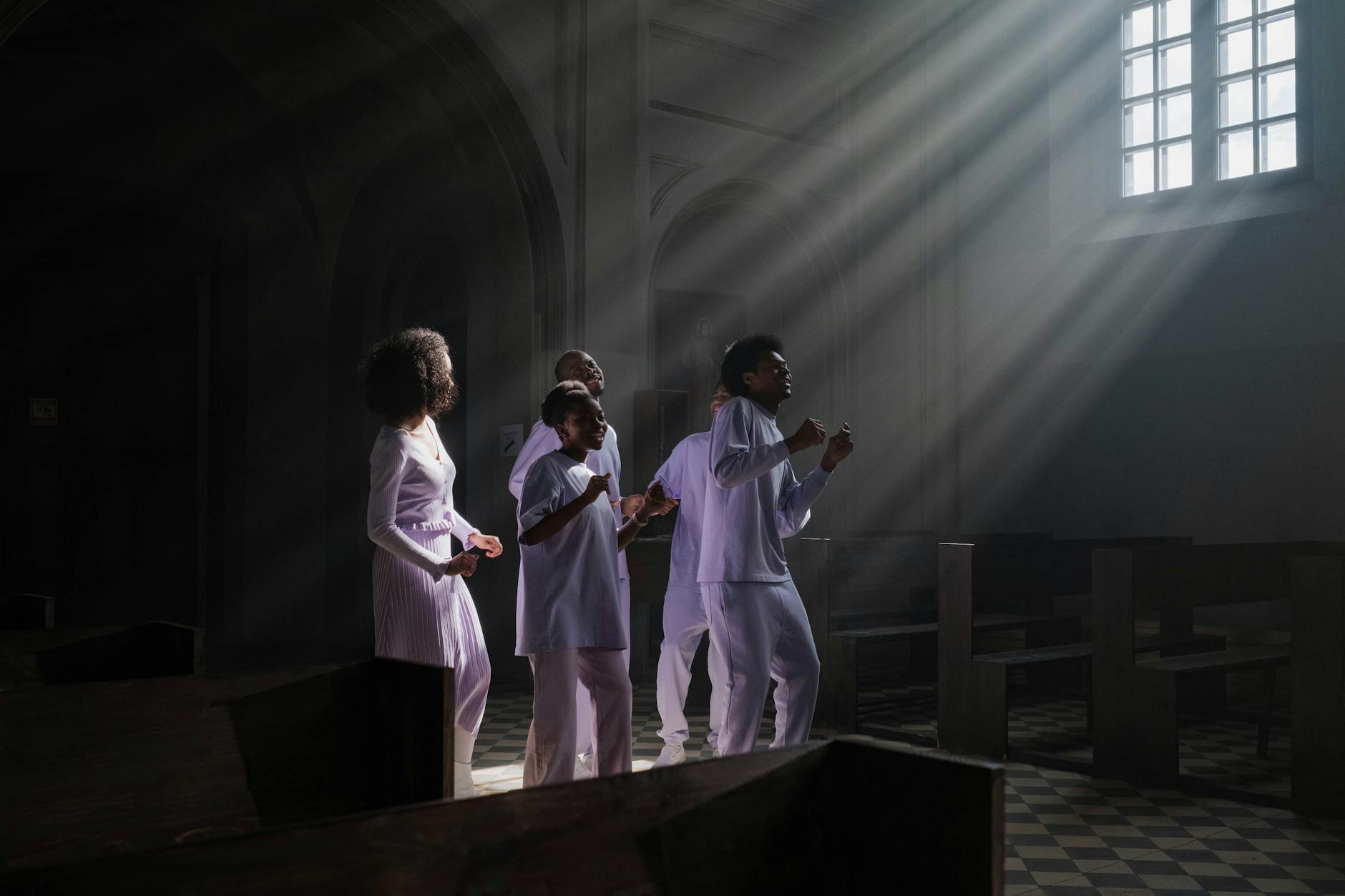
Into His Courts with Praise

There are psalms that whisper comfort, psalms that lament in the shadows, and psalms that roar with joy. Psalm 100 is one of the latter, a jubilant summons to lift our voices in praise. It doesn’t speak of quiet meditation or hushed reverence, but of gladness, song, and overflowing thanksgiving. It’s as if the psalmist is saying: Come on, everyone, join the choir, join the dance, lift up your hearts.

We’re reminded to worship the Lord with gladness because he made us and we belong to him. That’s where our joy takes root. We’re not lost wanderers in an indifferent universe, but cherished sheep under a faithful shepherd’s care. To know that we’re his is to discover both identity and home.

The psalm beckons us further: Enter his gates with thanksgiving and his courts with praise. In the temple days, pilgrims would come streaming into Jerusalem, hearts and voices full of song. Today, the invitation is just as real. Every time we draw near, whether through prayer at the kitchen table, hymns in church, or even a whispered ‘thank you’ on a morning run, we step into God’s courts. Gratitude is our ticket of entry, praise the language of belonging.

The psalm closes with the surest anchor of all, For the Lord is good and his love endures for ever; his faithfulness continues through all generations. What steadies us in changing times is God’s unchanging character. His goodness isn’t fickle, his love doesn’t run dry, his faithfulness doesn’t skip a generation. What our grandparents knew, what we know, what our children and grandchildren will know, the same God holds us all.

The challenge is simple yet searching, do we let thanksgiving set the rhythm of our lives? Or do we allow complaint, worry, or weariness to be louder? Psalm 100 invites us to practice joy, to live gratefully, and to trust the love that will never let us go.

The Uplook of Faith

I lift my eyes to the hills, the psalmist begins, and in those words you can almost feel the ache of the soul searching for help. The hills might have looked beautiful, but they were also places of danger, full of shadows and uncertainty. And yet the psalm doesn’t linger on the fear, it pivots quickly to truth: my help comes from the Lord, the Maker of heaven and earth. In that shift lies the heart of faith, the quiet courage to trust that the Creator who set the stars in their place is the same one who watches over every step you take. Psalm 121.

This psalm is a song of journey, perhaps sung by pilgrims making their way to Jerusalem, weary and vulnerable on the road. They would remind one another that the God who never slumbers or sleeps is not distracted, not indifferent, but awake to every danger, every stumble, every long night of the soul. He is your shade at your right hand, says the psalmist, the intimate picture of protection so close you can almost feel his presence like a cool shadow on a burning day.

And then comes the promise, repeated with gentle insistence: the Lord will keep you. Not once, not sometimes, but always. He will keep your life. He will keep your coming and your going, both now and for evermore. It’s a promise that stretches across the whole landscape of time, enfolding both the small ordinary steps and the heavy unknowns with the same faithful care.

When you read these words, let them breathe hope into the places where your strength feels thin. Remember that the God who made heaven and earth doesn’t grow weary, and he hasn’t lost sight of you. Whatever road lies ahead, whether steep with challenge or shaded with uncertainty, he is the keeper of your soul, and his watch is constant, tender, and unending.

Christian Love Without Boundaries

Probably no story from the lips of Jesus is more familiar than the Good Samaritan, yet its beauty can blind us to its sting. Jesus told it in reply to a lawyer who asked, “Who is my neighbour?” The lawyer wanted to limit responsibility, to justify avoiding certain people. Instead of argument, Jesus gave a story that left no room for debate.

He took the man, and us, to the dangerous Jericho Road, showing someone beaten and left for dead. A priest and a Levite passed by, men expected to help but who chose not to. Then came the shock: the rescuer was a Samaritan, one despised by Jews. The Samaritan saw, had compassion, and acted. His mercy broke through centuries of hatred. Luke 10:25-37

That hatred stretched back to the Assyrian invasion of the northern kingdom in 720 BC, when those left behind intermarried with foreigners. To strict Jews this was unforgivable, and when the exiles later returned from Babylon the Samaritans were rejected as corrupt. A rival temple on Mount Gerizim deepened the division, and by Jesus’ day the hostility between Jew and Samaritan was centuries old and bitter.

The Samaritan’s compassion mirrors God’s love in Christ. Humanity lies broken by sin, and Jesus stoops to lift us, binding our wounds and restoring life. That’s the deeper meaning: the Son of God came near, not with words only, but with saving action.

To hear the story afresh, picture a young man attacked in a city street. A respected leader drives past, a minister hurries on, afraid. Then someone society might scorn, a refugee, or a young Muslim woman, stops, tends his wounds, calls for help, and waits with him. That’s the parable alive today: love that crosses boundaries of race, religion, and status, showing mercy simply because someone is in need.

Jesus ends with the simple command: “Go and do likewise.” He makes it plain, love doesn’t draw boundaries or ask, “Who is my neighbour?” It doesn’t make excuses. Yet we can’t imitate the Samaritan by sheer effort. We need the love of God within us, transforming us until mercy flows naturally from our hearts.

The parable is both challenge and gift. It tells us that every wounded soul is our neighbour, and that God himself has first been neighbour to us. Having received his compassion, we’re called to let it shape our lives, so that at any turn in the road we may meet need with love.

Christian Humility

Jesus’ teachings often emphasized the importance of humility and service. In Luke 22:24-30, Jesus’ disciples were arguing about which one of them was the greatest. Jesus, aware of their discussion, called them together and said, The kings of the Gentiles lord it over them; and those in authority over them are called benefactors. But not so with you; on the contrary, let the greatest among you become as the youngest, and the leader as one who serves. (Luke 22:25-26)

Jesus’ statement highlights the difference between the way the world operates and the way God’s Kingdom operates. In the world, those in power often use their position to exploit and dominate others. However, in God’s Kingdom, leadership is not about seeking power or prestige, but about serving others. Jesus’ words emphasize the importance of humility and service, encouraging his disciples to put the needs of others before their own.

Jesus’ example of washing his disciples’ feet in John 13:1-17 is a prime example of this principle. By serving his disciples in this way, Jesus demonstrated the kind of leadership he expected from his followers. He showed that true greatness is not about seeking to be served, but about serving others. This mindset is essential for building a community that reflects God’s Kingdom values.

Jesus’ words in Luke 22:27, But I am among you as one who serves, emphasize his own humility and willingness to serve. He is not seeking to dominate or lord over his disciples, but rather to serve and guide them. This attitude is a model for all believers, who are called to serve one another in love and humility.

Thinking Faithfully with God

The phrase ‘don’t lean on your own understanding’ comes from Proverbs 3:5: Trust in the Lord with all your heart and lean not on your own understanding. It can sound like a call to switch off your brain, to stop thinking and just believe. But that’s not what it means at all.

The Book of Proverbs is full of encouragement to seek wisdom, understanding, and knowledge. Thinking clearly and growing in insight is part of what it means to live well. So, it’s not about rejecting reason or intellect, far from it.

What this verse is saying is something deeper. It’s about posture, not intelligence. ‘Leaning’ on your own understanding means depending solely on your own perspective, as if your view of the world is always right, complete, or enough. And that’s a risky way to live.

There’s nothing wrong with understanding, the problem is when we trust it more than we trust God. Human insight, however sharp, is still limited. We see through a glass darkly. We can’t always spot the traps ahead or understand the full weight of what’s going on in someone else’s heart. We misread situations, judge too quickly, or let ego and fear shape our choices.

God invites us to trust him with all our heart, not because thinking is bad, but because he sees the whole picture and we don’t. We’re not called to switch off our minds, but to hold our conclusions lightly, with humility and openness to his guidance.

In a world that prizes independence and self-sufficiency, this kind of trust might feel countercultural, but it’s also freeing. We don’t need to have it all figured out. We can use our brains and lean on grace, and in that space, that tension between thought and trust, we often find the wisdom we really need.

Laws Pointing to Grace

It’s remarkable that the Bible, written over centuries by many different people in diverse places and cultures, carries such a consistent and unified message. At first glance, the Old Testament and the New Testament can feel worlds apart. The Old Testament often centres on laws, commandments, and a structured way of living that shaped the identity of Israel as God’s people. These laws, from the Ten Commandments to the intricate rules of worship and daily life, weren’t just arbitrary restrictions, they were meant to guide a community in holiness, justice, and compassion.

Then we step into the New Testament, and the focus shifts. Here we see Jesus, the Word made flesh, embodying grace and truth. The emphasis is less on external regulation and more on transformation from within. Instead of merely telling people how to live, Jesus shows them: by eating with outcasts, forgiving sins, healing the broken, and ultimately giving his life for the sake of the world. The Apostle Paul captures this when he writes that the law was our guardian until Christ came, but now we’re justified by faith.

Yet these two parts of Scripture are not in conflict. The laws of the Old Testament prepared the way, revealing humanity’s need for God’s mercy. The grace of the New Testament fulfils the heart of those laws, drawing us into deeper relationship with God. From start to finish, the Bible tells one story, a God who longs to restore his people and renew creation.

The Illusion of Security

A man in the crowd interrupted Jesus with a demand: Tell my brother to divide the inheritance with me. It sounded fair enough, but Jesus didn’t grant it. Instead, he told a story. A rich man’s land produced such a bumper crop that he ran out of storage. So he decided to tear down his barns and build bigger ones. Sorted, he thought. Security, ease, a future assured. But God called him a fool: This very night your life will be demanded from you. Luke 12:13-21

Jesus wasn’t condemning wealth, but the illusion that it can secure us. The man in the parable wasn’t wicked, just self-focused. He mistook abundance for arrival and comfort for meaning. He didn’t see that life is more than possessions; it’s about what we do with them.

We live in a culture that glorifies accumulation, bigger homes, fuller wardrobes, more clicks, more likes. But Jesus speaks of being rich toward God: storing treasure that doesn’t rust or rot. That kind of richness isn’t about having nothing, it’s about holding things lightly, giving freely, and living with open hands.

This parable invites us to stop and take stock. What are we building? Who are we becoming? Are we storing up things that vanish, or investing in things that endure; love, kindness, compassion, courage?

Jesus offers no condemnation here, just a piercing question and a gentle call: live for more. Give freely. Love well. Let your life be shaped not by the barns you build, but by the grace you carry into the world.

The Gift of Stillness

They’d welcomed him into their home with love. Martha moved briskly from kitchen to table, napkin to pitcher, caught up in the quiet flurry of hospitality. She wanted it to be perfect, for Jesus, for the disciples, for everyone. But in the middle of all that effort, her heart boiled over. And Mary? She just sat there. At his feet. Listening.

Luke 10:38–42 offers a moment so simple, yet piercingly human. Two sisters, one Saviour, and a question that still echoes in every crowded to-do list and anxious heartbeat: what really matters?

Jesus wasn’t dismissing Martha’s service. He saw her. Her care, her planning, her desire to honour him. But he also saw something else, how burdened she’d become. Her kindness had turned to resentment. Her focus had blurred. And gently, he called her back: “You are worried and upset about many things, but few things are needed, or indeed only one.”

Mary had chosen that one thing. Not out of laziness, but love. She’d seen that presence was more precious than performance. That sometimes the most faithful act is to stop. Sit. Listen. Let the noise fade and the voice of Christ rise.

For those of us who care deeply, who show our love through action, who carry much on tired shoulders, it’s a tender invitation, not a rebuke. Jesus doesn’t shame Martha; he reorients her. He reminds us all that intimacy must anchor our activity. That being with him is never a waste of time.

In our culture of hustle and pressure, where value so often lies in output and pace, this story subverts expectations. It speaks of worth that’s not earned but received. A posture, not of striving, but surrender.

So today, may we find a quiet moment. A seat at his feet. A stillness that lets grace in. Because the dishes can wait, but his voice, his presence, is here now. And that, dear soul, is the better part.

Sacred Spaces of Love

There’s something sacred about home. Not just the building, but the atmosphere, the welcome, the sense of belonging. In Scripture, home isn’t only a shelter, it’s a symbol of peace, purpose, and presence. When we open our hearts and homes to others, and to God, we step into something holy.

In Exodus 25:8, God says, Then have them make a sanctuary for me, and I will dwell among them. This isn’t just about constructing a physical tabernacle, it’s about making space. Space for God to dwell with us, not at a distance but close, woven into our daily lives. The divine doesn’t demand grandeur, only a willing heart and a place prepared with love.

The New Testament picks up this theme of sacred welcome. In Hebrews 13:1–2, we’re urged to keep on loving each other and to show hospitality to strangers, because in doing so, we may entertain angels without knowing it. There’s something quietly miraculous in a meal shared, a bed offered, or a door opened. Hospitality becomes a doorway to heaven.

Peter takes it further: Offer hospitality to one another without grumbling (1 Peter 4:9). It’s not about duty, but about grace. We’re stewards of God’s kindness, and every shared loaf or offered chair becomes part of a greater love story. Our gifts, whatever they are, aren’t just for us, they’re for others. Generosity is the currency of the Kingdom.

And what does God want for those who dwell in such spaces? Isaiah 32:18 gives us a glimpse: My people will live in peaceful dwelling-places, in secure homes, in undisturbed places of rest. This is more than comfort, it’s a vision of shalom: deep, settled peace. A home, in God’s eyes, is a haven, a place where rest isn’t rare but regular.

Even Deuteronomy, in its laws, surprises us with gentleness. If a man has recently married, he must not be sent to war, he is to be free to stay at home and bring happiness to the wife he has married (24:5). There’s a tenderness here, a divine priority on building joy at home. Love isn’t an afterthought, it’s a foundation.

Proverbs 24:3–4 reminds us that a home isn’t built just by effort but by wisdom, understanding, and knowledge. And its true treasures? Not gold or possessions, but the invisible wealth of trust, laughter, shared memories, and the stories told at kitchen tables.

Finally, Jesus, in Matthew 21:13, reclaims the temple as a house of prayer. His words echo across all our spaces. A home, a church, a heart, any place can become holy ground if it’s centred on prayer, justice, and welcome.

These passages form a quiet but powerful call, make space. Make room for God. Make room for one another. Let your life become a sanctuary of peace, presence, and love. Because when you do, you’re not just building a home, you’re creating a holy place where heaven brushes earth.