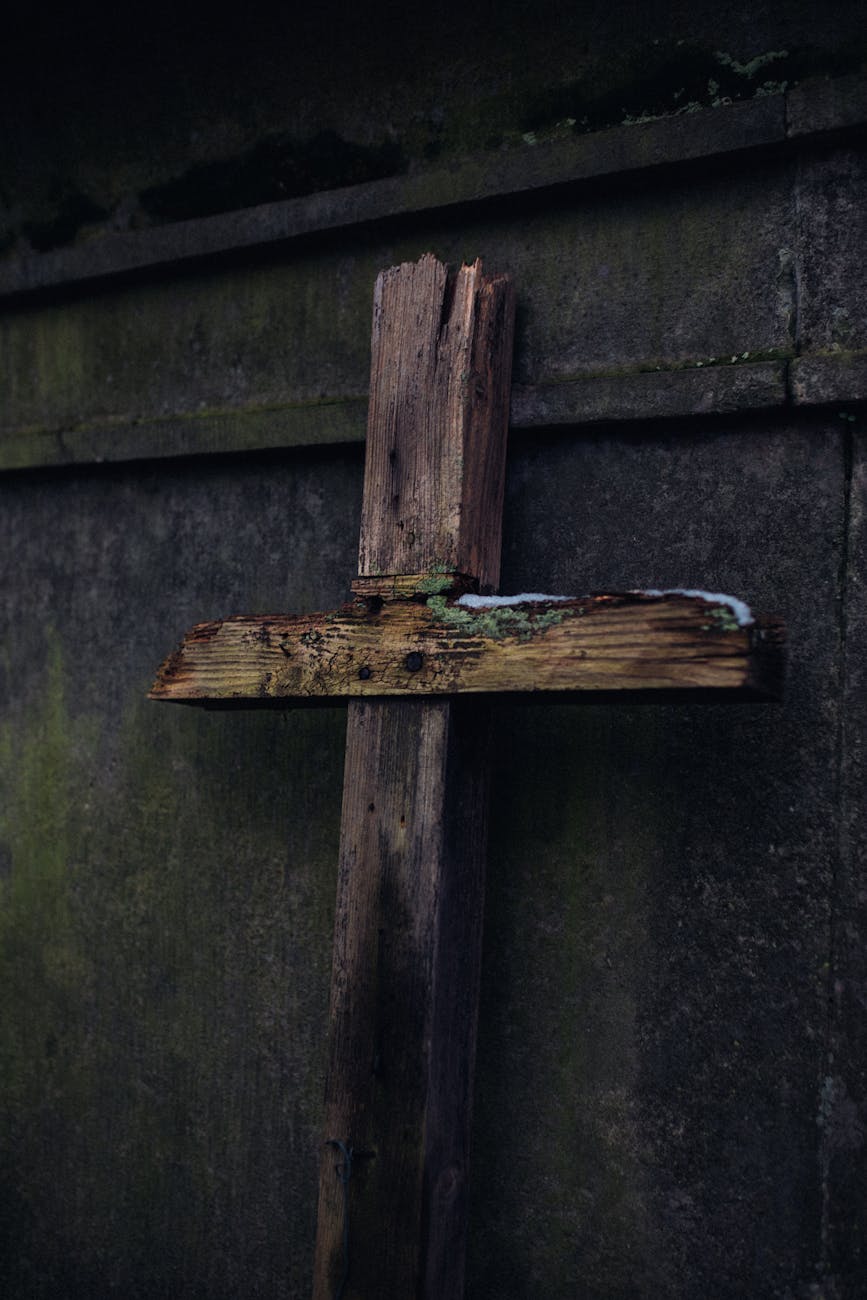
Bible 40 Themes 02 Covenant

Covenant is one of those biblical words that can sound distant, even legalistic, yet at its heart it speaks of relationship, commitment, and promise held steady across time. In Genesis 17, God says to Abram, later named Abraham, I will establish my covenant between me and you and your descendants after you throughout their generations as an everlasting covenant, to be your God and the God of your descendants after you. These words are spoken not into certainty, but into vulnerability. Abram is old, childless by human reckoning, living between promise and fulfilment. Covenant begins there, not with achievement, but with trust.

What’s striking is that the covenant isn’t presented as a contract between equals. Abram doesn’t negotiate terms or offer guarantees. The promise flows one way, grounded in God’s faithfulness rather than human reliability. This is an everlasting covenant, stretching beyond one lifetime, beyond one moment of obedience or failure, binding generations yet unborn into a story of belonging. It reminds us that faith has a long memory and a wide horizon. We inherit promises we didn’t earn, and we live in ways that will shape people we’ll never meet.

Covenant also names identity. To be your God is relational language, intimate and personal, not abstract theology. It speaks of presence, guidance, and care. In a world shaped by transactions, productivity, and conditional acceptance, covenant insists that relationship comes first. We aren’t held by God because we perform well, but because we’re known and named. Abraham’s new name marks that shift, from who he was to who he’s becoming, shaped by promise rather than past limitation.

Yet covenant isn’t passive. Abraham is invited to walk before God faithfully, to live as someone whose future is already spoken for. Covenant creates a way of life rooted in trust, generosity, and hope. It asks us to live now as if the promise is true, even when the evidence feels thin.

In our own lives, covenant can feel fragile. We’re aware of broken promises, fractured relationships, and our own inconsistency. Genesis 17 gently reminds us that the deepest promise does not rest on our steadiness, but on God’s. The covenant holds when we waver, stretches across time, and quietly insists that grace will have the final word.

Bible Reference: Genesis 17

A Reflection on Joy at Christmas

At Christmas, the difference between happiness and joy comes into sharper focus. The season itself is often wrapped in happiness, familiar songs, warm lights, shared meals, laughter, and moments of comfort and nostalgia. This kind of happiness is good and gift-like, but it’s also fragile. It depends on things lining up, relationships feeling easy, finances holding steady, and the ache of loss staying quietly in the background. When those things don’t fall into place, Christmas happiness can feel thin, or even painful.

Christian joy tells a deeper story. The joy of Christmas isn’t rooted in perfect circumstances but in the astonishing claim that God chose to draw near, not in power or certainty, but in vulnerability. The birth of Jesus doesn’t arrive in a calm, well-ordered world. It comes amid fear, displacement, political oppression, and ordinary human anxiety. That matters, because it means joy isn’t the denial of darkness, it’s light entering it.

Joy, in this sense, is a steady confidence that God is with us, not just when the table is full and the house is warm, but when the heart feels heavy or the season stirs grief as much as gratitude. It allows space for sorrow without surrendering hope. It says that love has taken flesh and pitched its tent among us, and that nothing, not loss, not uncertainty, not brokenness, has the final word.

St Lucy’s Day

St Lucy’s Day, celebrated on 13 December, sits quietly in the heart of Advent, carrying a gentle promise of light in the year’s darkest days. Lucy’s name comes from lux, meaning “light”, and over the centuries she’s become a symbol of hope that refuses to be extinguished, even when nights feel long and heavy. She was a young Christian woman from Syracuse in the fourth century, remembered for her courage, her generosity to the poor, and her refusal to let fear define her choices. The stories about her mix history and legend, yet they all circle around this conviction that light belongs to God and can’t be taken away.

In Scandinavia the day has a luminous beauty all of its own. A girl dressed as Lucy wears a white robe and a crown of candles, moving through the early morning darkness while songs about light and peace are sung. It’s a simple ritual, yet it feels profoundly human, capturing that ache we all recognise: the longing for warmth, clarity, and kindness to break into the cold shadows of winter. Even without the candles and processions, the day invites a moment of quiet reflection, reminding us that small acts of courage and compassion shine far further than we imagine.

St Lucy’s Day whispers that light isn’t a spectacle, and it isn’t fragile. It’s something we carry, something we share, something that grows whenever we choose generosity over indifference, truth over convenience, or hope over cynicism. In the middle of December, it’s a gentle reassurance that dawn always comes.

Advent Joy Springs Forth

The Third Sunday of Advent carries a note of joy, yet it isn’t the shallow cheer of tinsel and glitter. Advent joy is something deeper, born not of circumstance but of promise. The prophet Isaiah cries out, The desert and the parched land will be glad; the wilderness will rejoice and blossom. Joy bursts forth in unlikely places, just as it did when Mary, a young woman in Nazareth, received the angel’s word and sang of God’s faithfulness. This joy doesn’t deny sorrow or struggle; it wells up within them, a sign that God’s kingdom is near.

Paul, writing to the Philippians, urges: Rejoice in the Lord always. I will say it again: Rejoice! These words weren’t penned in ease but from prison. His joy didn’t rest on freedom or comfort but on the presence of Christ who was with him even there. Advent joy, then, isn’t about waiting for everything to be perfect before we rejoice. It’s about recognising the nearness of the Lord in the middle of imperfection, trusting that even in barrenness, God makes new life blossom.

John the Baptist, still in the wilderness, points beyond himself: Among you stands one you do not know. Even in his stark call to repentance, there is joy, because the Messiah is close at hand. Advent joy invites us to look for Christ’s presence in unexpected faces, in moments of kindness, in the whisper of the Spirit that meets us in our waiting.

This Sunday, a rose-coloured candle can be lit, softening the season’s sombreness with the warmth of joy. Its flame reminds us that joy is not naïve optimism but fierce hope – hope that God keeps his promises, hope that light breaks into darkness, hope that love will have the last word.

As we move closer to Bethlehem, may joy find us not only in carols and candles, but in the small, hidden ways Christ is at work. May it take root in us, steady and unshaken, so that even in a weary world we may rejoice, and our lives may shine with the gladness of the one who comes.

St Nicholas Day

St Nicholas Day, celebrated on 6 December, carries a gentle kind of magic that flows through many European traditions. It honours St Nicholas of Myra, a fourth-century bishop remembered for kindness that wasn’t loud or self-promoting, but steady, courageous, and rooted in compassion. One of the best-known stories tells of him secretly providing dowries for three young women by slipping bags of gold through their window at night. It’s a small, vivid moment that grew into a lasting symbol of generosity given quietly, without any desire for thanks.

In many countries, children still place shoes by the door on the evening of 5 December, hoping to wake to fruit, sweets, or small gifts. The simplicity of it makes the joy feel even richer. Rather than the grand spectacle that later surrounded Santa Claus, the spirit here feels gentler, more grounded in community, more like a whisper in the winter darkness reminding us to look out for one another.

What I love about St Nicholas Day is how it nudges us toward thoughtful generosity: the kind that starts with noticing who might need a blessing, then offering it without fanfare. It reminds us that giving doesn’t have to be big to be transformative. Sometimes the smallest gesture, offered in love, becomes the spark that warms an entire season.

Advent Peace Breaks In

The second Sunday of Advent turns our gaze toward peace, though not a fragile or shallow peace that simply papers over conflict. Advent peace is rooted in the promises of God, a peace that holds steady even when the world shakes. Isaiah envisioned a day when swords would be beaten into ploughshares and nations would no longer train for war. This isn’t just wishful thinking; it’s the vision of God’s kingdom breaking into our fractured world. Advent dares us to believe that such peace is possible, and it begins in the heart of those who wait for Christ.

John the Baptist steps into this season with a startling voice, calling from the wilderness: “Prepare the way for the Lord, make straight paths for him.” His message isn’t comfortable, but it is necessary. The peace of Christ doesn’t come by avoiding hard truths; it comes as we open ourselves to repentance, to turning away from the habits and fears that keep us captive. The wilderness, with its stark silence and uncluttered horizon, reminds us that peace grows where we make room for God to act.

Advent peace doesn’t ignore pain or deny the violence of our age. It looks straight at them and still proclaims that Christ is coming. Jesus said to his disciples, “Peace I leave with you; my peace I give you. I do not give to you as the world gives.” His peace isn’t tied to circumstances or politics; it flows from his presence, steady and unshaken.

And so the candle of peace is lit this week, not as a decoration but as a declaration. It flickers against the shadows, reminding us that even the smallest light is stronger than the darkest night. Each act of reconciliation, each word of forgiveness, each quiet moment of prayer becomes part of God’s peace breaking into the world.

Advent peace doesn’t wait for everything to be settled before it arrives. It comes quietly, like a child in a manger, and yet it carries the weight of heaven’s promise. As we prepare the way, may our restless hearts be stilled, and may we live as signs of that kingdom where justice and mercy kiss, and peace holds us fast.

St Andrew’s Day and Advent Sunday

Photo by Geert Rozendom on Pexels.com

When St Andrew’s Day falls on the first Sunday in Advent, the themes of both occasions sit naturally together. Andrew is remembered as the disciple who recognised something stirring in Jesus before many others did, responding with a straightforward willingness to follow. His simple announcement, “We’ve found the Messiah” in John’s Gospel, has the feel of a light being switched on rather than a dramatic revelation. Advent begins with that same sense of early illumination: the quiet awareness that something significant is approaching, even if it isn’t yet fully seen.

The first Sunday in Advent often highlights Jesus’ call to stay awake and keep watch in Matthew 24:42–44. This isn’t a demand for anxiety, it’s a reminder to pay attention. Andrew’s life echoes that posture. He listened, observed, and took practical steps towards what he sensed God was doing, then encouraged others to come and see for themselves.

Seen together, St Andrew’s Day and Advent’s beginning underline a simple pattern of faith: noticing, responding, and preparing. They point towards the value of small beginnings, steady attentiveness, and readiness for the arrival of light, peace, and renewal.

Advent Draws Us Deeper

Advent isn’t a season that leaves us skimming the surface of things, rushing about with lists and lights, though it’s easy to let it become that. At its heart, Advent is an invitation into waiting, watching, and yearning. It slows us down to listen for the footsteps of the one who is coming, the Christ who once entered the world in Bethlehem, who comes to us now in Spirit, and who will come again in glory.

To wait is to admit that we aren’t in control, that we can’t make the kingdom arrive by our own effort or force. We wait like Israel of old, who longed for God’s promises to be fulfilled. Isaiah spoke of a people walking in darkness who would see a great light, and Advent teaches us to hold that promise close in our own darkness. In our world of wars, injustice, and sorrow, waiting doesn’t mean passivity. It means watching for God’s movement with eyes sharpened by hope.

This season also deepens our longing. The carols and candles are beautiful, but they’re meant to stir something deeper than sentimentality, a hunger for Christ’s presence that nothing else can satisfy. Mary’s Song in Luke 1 shows us that longing isn’t quiet or tame. It bursts out with joy and prophecy: He has filled the hungry with good things but has sent the rich away empty. Advent asks us whether we dare to share in that longing, whether we let God awaken a hunger for justice, peace, and mercy in us.

And Advent draws us deeper into love. As Paul writes in Romans 13, The night is nearly over; the day is almost here. So let us put aside the deeds of darkness and put on the armour of light. We prepare not just with candles and wreaths, but with acts of kindness, reconciliation, and generosity. Each gesture of love becomes a way of making room for Christ.

Advent is not shallow waiting, but holy depth. It’s the pause before the music swells, the silence before the dawn. It invites us to wait, to long, and to love until Christ fills our emptiness with his presence, and our world is Illuminated with his coming.

The Advent Season Beckons

As the days shorten and winter settles in, the season of Advent beckons us into a sacred rhythm of waiting, watching, and wondering. More than a countdown to Christmas, Advent is a spiritual invitation to journey inward, towards mystery, hope, and transformation.

Rooted in the Latin word adventus, meaning coming, Advent marks the anticipation of Christ’s arrival, not only in the manger of Bethlehem, but in the quiet corners of our hearts and the unfolding of history. It’s a season that resists haste. In a world that prizes immediacy and spectacle, Advent whispers a counter-cultural truth – depth is found in stillness, and meaning in the slow unfolding of time.

The liturgical practices of Advent, lighting candles, reading prophetic texts, singing hymns of longing, are not mere rituals. They’re signposts guiding us deeper into the mystery of incarnation. The first candle flickers with hope, the second with peace, the third with joy, and the fourth with love. Each flame illuminates a path through the shadows of despair and distraction, drawing us closer to the heart of God.

Advent also invites us to confront the ache of waiting. Like the prophets who cried out for justice, like Mary who pondered the angel’s words, we too are called to dwell in the tension between promise and fulfilment. This waiting is not passive, it’s active, expectant, and transformative. It teaches us to listen more attentively, to see more clearly, and to love more deeply.

In this coming sacred season, we’re reminded that the divine doesn’t always arrive with fanfare. Sometimes, it comes quietly, in a whisper, a flicker, a breath. Advent draws us deeper not by offering answers, but by awakening our longing. And in that longing, we find ourselves drawn ever closer to the mystery of Emmanuel – God with us.

Bible 40 Themes 01 Creation

Creation begins in silence, in that deep and holy mystery before words, before time, before even the first breath. Then comes the divine utterance that breaks the stillness. God speaks, and everything stirs into being. In the beginning God created the heavens and the earth. It’s such a spare line, yet it carries the full weight of existence. The writer of Genesis doesn’t try to prove God’s reality or outline his methods; the story simply opens with him, because nothing else can be understood without that beginning. Every galaxy and mountain, every tide and atom, rests on that quiet, intentional act of love.

Creation isn’t something sealed away in ancient history, it’s the heartbeat of the present moment. Each sunrise that washes the world with colour, each newborn cry that breaks into the air, each stubborn seed pushing its way through dark soil continues that divine creativity. God didn’t set the universe spinning and then step back. He remains the sustaining pulse of life, still speaking light into our darkness, still breathing hope where we’ve forgotten how to look for it. Creation tells us that life isn’t random or accidental; it’s a gift, shaped by love and held by grace.

When we pause beneath a starlit sky or feel the wind threading its way through the trees, something deep within us recognises the signature of the one who made us. We’re woven into this creation too, shaped from dust yet filled with God’s breath. That truth draws out both wonder and responsibility. If creation is sacred, then caring for it becomes sacred as well, whether that means protecting forests and oceans, tending to our communities, or treating one another with gentleness and dignity.

“In the beginning” isn’t only a statement about the universe’s first moment; it’s an invitation for us now. Each day we’re offered the chance to begin again, to create goodness, beauty, and peace in the small spaces we inhabit. The same Spirit who hovered over the waters still moves through us, steadying us when life feels chaotic, guiding us when the shadows seem too deep, and helping us shape something new, hopeful, and alive.

Bible Reference: Genesis 1