Why use a VPN? (No, NOT that!)

A virtual private network has become one of the simplest, most dependable ways to stay safe online, especially when you’re moving through the world with a phone or laptop. Public Wi-Fi in cafés, hotels, trains, and airports feels convenient, yet it leaves your data exposed in ways most people never see. A VPN encrypts everything you send and receive, creating a private tunnel that shields your logins, messages, and personal details from anyone who might be snooping. It quietly restores a sense of safety at a time when digital life can feel far too porous.

It also offers a freedom that’s easy to underestimate. The internet is full of geographic walls – sites, services, and media locked to certain regions. A VPN removes many of those barriers. When you’re learning languages, this becomes genuinely exciting. It opens access to native news sites, streaming libraries, podcasts, and radio stations across Spain, France, Germany, Italy, and far beyond. It lets you immerse yourself in the authentic rhythms and cultural textures that simply don’t appear in textbooks or apps. It deepens understanding and makes language learning feel more alive.

Alongside all this, a VPN helps you push back against the quiet background tracking that follows most of us online. It limits the amount of profiling companies can do, softening the sense that every click is being watched. It’s a small, practical way to reclaim a little privacy and a little dignity, allowing you to move through the digital world with confidence, curiosity, and far fewer compromises.

Free WiFi is NOT Safe

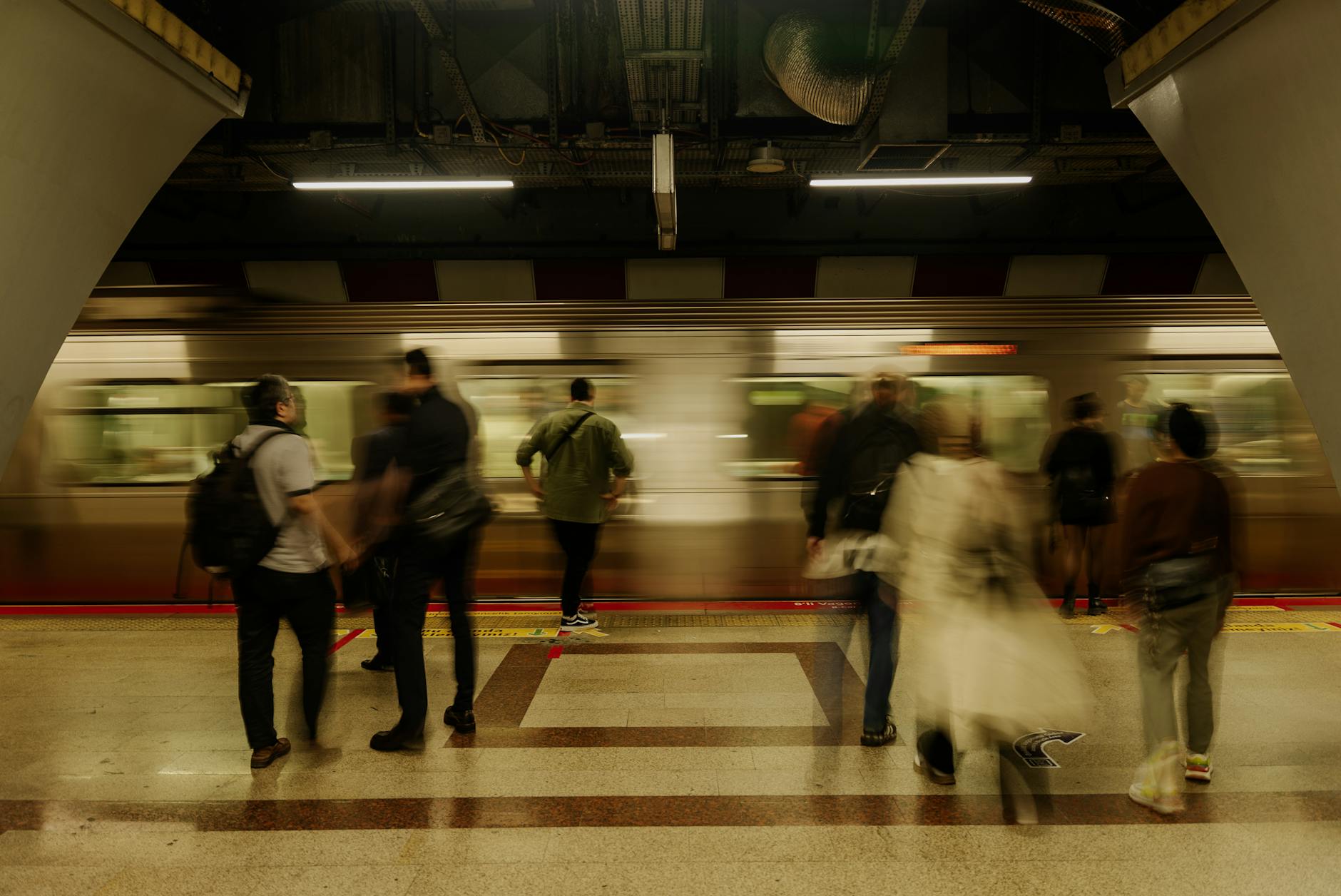
Free WiFi can feel like a small delight when you’re out and about, offering an easy way to stay connected without dipping into your data allowance. Yet the moment you join one of these open networks, you step into a space that’s far less secure than it appears. There’s something disarming about seeing that simple “Free WiFi” prompt, almost as if the friendliness of the offer guarantees safety, but behind the scenes the reality is very different. Anyone with basic know-how can sit on the same network and quietly observe the flow of information, as if peering through an unlocked window.

The risks grow the instant you start doing things that matter. Logging into email, checking social media, or accessing online banking sends personal details across a connection that offers no real protection. Passwords, account information, and small digital traces of your day can be intercepted without you noticing anything unusual. There’s no warning sign, no gentle nudge to be careful – just a normal screen that hides the fact that your privacy is exposed to anyone determined enough to exploit it.

A safer approach is remarkably simple. Choosing mobile data instead of public WiFi keeps your information within a far more secure environment, and when you must use a public network, a trusted VPN wraps your connection in a protective layer that makes it far harder for anyone to snoop. It’s a quiet, thoughtful act of digital self-care, a way of keeping what matters truly yours in a world where so much of life moves through invisible channels.

Christmas Love not Nationalism

Christmas should be one of the gentlest moments in our shared cultural life, a season of light breaking into darkness, of compassion stretching itself wide enough to hold everyone. Yet in recent years, it’s been unsettling to watch Christian nationalists try to hijack it. They frame Christmas as a symbol of cultural supremacy, a line in the sand, a test of loyalty to a particular version of identity. It turns something soft into something sharp, something generous into something guarded, and it jars with the spirit of the season.

Because at its heart, Christmas has never been about drawing boundaries. It’s about hospitality, humility, and a love that refuses to stay small or confined. It tells a story of welcome that begins on the margins, in obscurity, in vulnerability. When people attempt to pull Christmas into a narrative of exclusion or cultural fear, they aren’t defending it, they’re distorting it. They miss the quiet courage of the story, the way it invites us to see strangers as neighbours and neighbours as cherished parts of a shared human family.

The good news is that Christmas still holds its shape. It keeps nudging us toward kindness, solidarity, and the courage to imagine a broader, softer way of being together. And no matter how loudly others try to claim it as a weapon in a culture war, it keeps slipping through their fingers, returning again to warmth, generosity, and the beautifully simple call to make room for one another.

Formula 1 Championship 2025

Photo: Liauzh / Wikimedia Commons (CC BY-SA 4.0)

The 2025 F1 World Championship was a season defined by tight competition and consistent performance. Lando Norris secured his first world championship at the final round in Abu Dhabi, finishing third in the race to edge Max Verstappen by just two points, ending the season with 423 to Verstappen’s 421. It was the closest title battle in years, with every race contributing to the final outcome.

The season highlighted the strength of McLaren as a team. Both Norris and his teammate Oscar Piastri claimed seven victories each, showing that success was shared and not dominated by a single driver. Piastri finished third overall, 13 points behind Norris, while Verstappen, despite eight wins, narrowly missed out on the championship. McLaren also secured the Constructors’ Championship, marking a return to the top after several seasons of near-misses.

What set this season apart was the consistency and strategic racing that defined the title fight. While individual race wins were important, it was the accumulation of points across the season, and the ability to avoid costly mistakes, that ultimately determined the champion. The competitiveness of the field, with multiple teams and drivers capable of winning races, made the championship unpredictable and engaging throughout the year.

For fans, 2025 will be remembered for its close margins and the way the championship was decided in the final race. Norris’s calm and precise driving under pressure contrasted with the aggressive style of his rivals, demonstrating that composure across a season is just as important as outright speed. The season also reinforced the idea that the F1 grid remains highly competitive, with multiple teams capable of challenging for both race wins and championships. Overall, the 2025 season combined excitement, strategy, and tight racing, providing a clear example of why Formula 1 continues to captivate audiences worldwide.

Wynyard Woodland Country Park

Wynyard Woodland Park occupies land that was once part of the nineteenth-century Clarence Railway, a line built to transport coal from the Durham coalfields to the River Tees. The railway served the industrial development of the region for many decades, passing through what is now Thorpe Thewles. When the line closed in the twentieth century, the trackbed and surrounding land were left unused until local authorities identified the opportunity to convert the disused route into a public green space.

The redevelopment created a linear park that follows the former railway corridor. New pathways, cycle routes, and planted woodlands were introduced, allowing visitors to move through the landscape along the old line. The former station house at Thorpe Thewles was restored and adapted to include visitor facilities, a small museum covering the history of the railway, and a café. As the site matured, the woodland areas developed greater ecological value, supporting a range of wildlife and providing a mix of open and shaded spaces for recreation.

Wynyard Woodland parkrun forms part of the park’s present-day use. Held every Saturday morning, it follows sections of the former railway route and attracts local runners, walkers, and volunteers. The event highlights how the park has shifted from an industrial transport corridor to a community-focused recreational area.

Today Wynyard Woodland Park serves as a practical example of how former industrial land can be repurposed for public benefit. Its combination of historical features, accessible paths, and expanding natural habitats makes it a valued local space for exercise, education, and outdoor leisure.

St Nicholas Day

St Nicholas Day, celebrated on 6 December, carries a gentle kind of magic that flows through many European traditions. It honours St Nicholas of Myra, a fourth-century bishop remembered for kindness that wasn’t loud or self-promoting, but steady, courageous, and rooted in compassion. One of the best-known stories tells of him secretly providing dowries for three young women by slipping bags of gold through their window at night. It’s a small, vivid moment that grew into a lasting symbol of generosity given quietly, without any desire for thanks.

In many countries, children still place shoes by the door on the evening of 5 December, hoping to wake to fruit, sweets, or small gifts. The simplicity of it makes the joy feel even richer. Rather than the grand spectacle that later surrounded Santa Claus, the spirit here feels gentler, more grounded in community, more like a whisper in the winter darkness reminding us to look out for one another.

What I love about St Nicholas Day is how it nudges us toward thoughtful generosity: the kind that starts with noticing who might need a blessing, then offering it without fanfare. It reminds us that giving doesn’t have to be big to be transformative. Sometimes the smallest gesture, offered in love, becomes the spark that warms an entire season.

When Small Lives Matter

The ethics of using live animals, however small or easily overlooked, in programmes like ITV’s I’m a Celebrity is worth examining with care. The idea that living creatures can be used as props for entertainment sits uneasily once it’s named aloud, because it challenges the assumption that their lives are too insignificant to matter. When insects, worms, fish, or reptiles are tipped into tanks, poured over contestants, or handled purely for shock value, the show quietly reinforces the belief that the distress of smaller, weaker beings is inconsequential.

Contestants volunteer for these trials, but the animals don’t. They’re exposed to loud environments, constant handling, rapid movement, and extreme stress, and in some cases they’re killed outright. Even if the creatures aren’t endangered, even if the individual harm seems small, the issue isn’t simply about scale. It’s about the habits we form as a society. Normalising the idea that a life, any life, can be treated roughly for entertainment nudges us towards a thinner, less generous form of compassion.

The question becomes whether the spectacle genuinely requires the suffering of living beings, and whether the temporary thrill for viewers is a fair trade for the stress and harm inflicted. An entertainment format can be bold, messy, and playful without using animals as disposable objects. Thinking this through doesn’t diminish the fun; it simply asks the industry, and all of us, to imagine forms of entertainment that don’t rely on causing distress to creatures that can’t consent and can’t escape.

Advent Peace Breaks In

The second Sunday of Advent turns our gaze toward peace, though not a fragile or shallow peace that simply papers over conflict. Advent peace is rooted in the promises of God, a peace that holds steady even when the world shakes. Isaiah envisioned a day when swords would be beaten into ploughshares and nations would no longer train for war. This isn’t just wishful thinking; it’s the vision of God’s kingdom breaking into our fractured world. Advent dares us to believe that such peace is possible, and it begins in the heart of those who wait for Christ.

John the Baptist steps into this season with a startling voice, calling from the wilderness: “Prepare the way for the Lord, make straight paths for him.” His message isn’t comfortable, but it is necessary. The peace of Christ doesn’t come by avoiding hard truths; it comes as we open ourselves to repentance, to turning away from the habits and fears that keep us captive. The wilderness, with its stark silence and uncluttered horizon, reminds us that peace grows where we make room for God to act.

Advent peace doesn’t ignore pain or deny the violence of our age. It looks straight at them and still proclaims that Christ is coming. Jesus said to his disciples, “Peace I leave with you; my peace I give you. I do not give to you as the world gives.” His peace isn’t tied to circumstances or politics; it flows from his presence, steady and unshaken.

And so the candle of peace is lit this week, not as a decoration but as a declaration. It flickers against the shadows, reminding us that even the smallest light is stronger than the darkest night. Each act of reconciliation, each word of forgiveness, each quiet moment of prayer becomes part of God’s peace breaking into the world.

Advent peace doesn’t wait for everything to be settled before it arrives. It comes quietly, like a child in a manger, and yet it carries the weight of heaven’s promise. As we prepare the way, may our restless hearts be stilled, and may we live as signs of that kingdom where justice and mercy kiss, and peace holds us fast.

Breaking the Silence on Brexit

Sir Keir Starmer’s signal that the government will step up its criticism of Brexit feels like the beginning of a gentle but necessary reckoning; a moment when the country is finally invited to name the truth that’s been sitting heavily on us for years. So many promises were made in 2016, and so many of them were built on sand: claims about billions for the NHS, effortless trade deals, frictionless borders, and a world queueing up to prioritise Britain. Those lies shaped expectations, stirred emotions, and pushed people towards a path that hasn’t delivered the renewal or control they were told to expect. Now, with a quieter honesty, the government seems ready to acknowledge that Brexit hasn’t offered the stability or prosperity once promised.

By placing renewed emphasis on repairing relations with Brussels, Labour isn’t trying to reopen old divisions; it’s acting out of pragmatic realism. Closer cooperation with our nearest neighbours offers smoother trade, stronger supply chains, and a steadier economic climate. It also draws a clear contrast with Reform UK’s politics of resentment and retreat.

Hopefully, Labour can offer something steadier: the belief that partnership, shared standards, and respectful dialogue are acts of responsibility, not surrender. Many people who voted Leave weren’t gullible or unthinking; they were hopeful. They wanted a fairer deal, more security, and a sense that life might open up rather than narrow down. When those hopes haven’t been met, people are willing to listen again, as long as they’re met with honesty.

There’s something restorative in this shift, because it gently invites us to stop pretending. We can admit that we’re tired, that isolation hasn’t served us well, and that healing begins with truth. If the government speaks plainly, avoids the lure of easy slogans, and offers a hopeful, cooperative path forward, it may help the country breathe again.

International Volunteer Day

International Volunteer Day on 5 December is a wonderful chance to celebrate everyone who gives their time and energy to help others. If you already volunteer, please know this: you make an enormous difference. Whether you’re cheering at events, supporting neighbours, protecting the environment, or helping in local groups, your kindness makes communities warmer and stronger. Thank you for showing up; it matters more than you might realise.

It’s also a great moment to invite those who haven’t tried volunteering yet. You don’t need special skills or loads of free time; you just need a willingness to help. Volunteering isn’t only about giving; it’s about gaining friendships, confidence, purpose, and joy. Ask any volunteer and they’ll tell you that you might be surprised by how much it gives back.

So this International Volunteer Day, let’s celebrate the amazing people who are already making a difference, and gently encourage others to join in. Your community needs your gifts, your time, and your heart. And who knows? You might discover that volunteering is exactly what you’ve been looking for.