Christmas Eve arrives quietly, like breath on cold glass. The world slows, even if only for a moment, and listens. Streetlights glow a little softer, kitchens carry the memory of cinnamon and warmth, and the dark feels less like an ending and more like a cradle.
This is the night between, between longing and fulfilment, between promise and presence. We stand with tired hearts and hopeful hands, carrying the year we’ve lived, its griefs and its small, bright joys. Nothing needs to be fixed tonight. Nothing needs to be proven. Love doesn’t hurry.
Somewhere beneath the noise, a deeper truth hums. God doesn’t arrive with spectacle or certainty, but with vulnerability. Not above the mess, but within it. A child’s cry breaks the silence, and the universe leans in. Power chooses tenderness. Eternity borrows time.
Christmas Eve invites us to rest in that holy nearness. To believe that light can be born in the darkest places, including our own. To trust that gentleness is never wasted, and that hope, however fragile, is enough to carry us through the night.
So we wait. Candles ready. Hearts open. Tomorrow will come. For now, this is enough.
If you’re not looking forward to Christmas Day, you’re not broken and you’re not alone. For many people, this season brings pressure, noise, complicated family dynamics, painful memories, or the sharp ache of absence. The world tells us we should be joyful, grateful, and glowing, but real life doesn’t always follow the script.
It’s alright if you’re just getting through. It’s alright to keep the day small, to opt out of traditions, to say no, or to treat it like any other winter day. You don’t owe anyone cheerfulness or explanations. Be kind to yourself in the ways you can, a walk, a familiar film, a quiet moment, or a message to a trusted friend.
Christmas is just one day, not a measure of your worth or your faith, strength, or character. However you survive it is enough. You matter, deeply and genuinely, today and every day that follows.
Christmas carries a strange mix of light and weight. The lights sparkle, the music drifts through shops, and yet the pressure quietly builds. Expectations pile up, family dynamics resurface, money feels tighter, and the calendar fills faster than it ever should. Reducing stress at Christmas begins by noticing that much of it comes not from the season itself, but from what we think it ought to be.
One gentle step is permission, permission to simplify. Not every tradition needs to be honoured every year, not every invitation needs a yes, and not every table needs to look like a magazine spread. Choosing fewer things and doing them with care can be deeply freeing. Rest is not laziness at Christmas, it’s wisdom.
It also helps to ground yourself in small, ordinary moments. A quiet walk in cold air, a mug warming your hands, a familiar song played just for you. These pauses remind the nervous system that it’s safe to slow down. Breathing more deeply, even for a minute, can interrupt the rush and bring you back into your body.
Connection matters too, but it doesn’t have to be perfect. Honest conversations, lowered expectations, and a bit of humour can soften tense edges. If grief or loneliness surfaces, let it be acknowledged rather than pushed away. Christmas doesn’t erase hard feelings, it sits alongside them.
Finally, remember that the season passes. The world doesn’t hinge on one meal, one gift, or one day. Kindness to yourself, as much as to others, is perhaps the most meaningful Christmas practice of all.
People don’t say “Happy Holidays” because they’re ashamed of Christmas. They say it because several holidays occur around the same time – Christmas, Hanukkah, Kwanzaa, New Year, and others. Using an inclusive greeting simply recognises the reality of multiple celebrations happening at once. Yet somehow, this has been framed as a cultural threat.
In truth, the areas often criticised for saying “Happy Holidays” tend to be more economically productive, globally connected, and culturally diverse. People there interact daily with neighbours, colleagues, and strangers who don’t look, worship, or live exactly as they do. Exposure to different traditions isn’t threatening, it’s normal. Acknowledging others’ celebrations doesn’t diminish your own.
Graphics or narratives that suggest otherwise aren’t educational. They are carefully packaged branding, a form of grievance marketing designed to create division rather than understanding. When such messaging forms the bulk of someone’s information diet, it shapes their perception of the world in a narrow and fearful way.
Loving Christmas and recognising why “Happy Holidays” exists aren’t contradictory. They can coexist comfortably, reflecting both personal tradition and social awareness. Inclusivity doesn’t erase identity; it affirms that in a shared world, multiple stories and celebrations can exist side by side.
So this season, there’s no need to choose between joy and acknowledgment. You can celebrate what you love while respecting others’ traditions. In doing so, the message is clear: kindness, curiosity, and understanding matter more than cultural grievance. Merry Christmas and Happy Holidays!
Just Another Missing Person (Gillian McAllister) isn’t ‘just’ a mystery about another missing person. There are several narrators, with many twists and turns right up to the last page. An enjoyable read that will keep you guessing.
Bonk: The Curious Coupling of Science and Sex (Mary Roach) is an enlightening and humorous romp through a taboo subject, be prepared for grimaces and shocks along the way.
The Unseen (Roy Jacobsen) is a universal story about identity, resilience, and the tension between place and possibility. It follows the quiet yet elemental life of Ingrid Barrøy, a girl growing up on a remote Norwegian island in the early 20th century, where her family survives by the rhythm of the sea and seasons. As Ingrid matures, she begins to question her place in this isolated world, torn between the harsh beauty of her home and the pull of the unknown beyond the horizon. A deeply affecting portrait of a family clinging to a place that simultaneously sustains them and seals them off. It combines introspective narratives, minimalist yet evocative writing, and historical explorations of how ordinary lives intersect with nature’s grandeur.
The Surgeon (Tess Gerritson) is a chilling medical thriller about a meticulous serial killer who stalks and murders women in a ritualistic way, leaving behind surgical precision and no clues. As Detective Thomas Moore and trauma surgeon Dr Catherine Cordell (herself a past survivor) get closer to the truth, they discover the killer may be re-enacting her darkest nightmare.
Before I Go to Sleep (S. J. Watson) is a psychological thriller about Christine, a woman who wakes up every day with no memory of her past, relying on notes and the people around her to piece together her life. As she gradually uncovers the truth, she realises that those she trusts most may be hiding dangerous secrets.
Orbital (Samantha Harvey) is a short, poetic novel set aboard the International Space Station, following six astronauts over the course of a single 24-hour period as they circle Earth sixteen times and reflect on existential and planetary themes including the meaning of life, the divine, and climate change.
The Blue Hour (Paula Hawkins) is set on a remote Scottish tidal island, where a curator discovers a possible human bone in a sculpture, pulling together a vanished husband, a scholar, and an old companion into a web of secrets told through shifting timelines. It’s atmospheric and unsettling, exploring art, obsession, and power.
Upgrade (Blake Crouch) is a high-concept science fiction thriller that explores the limits of human evolution and the ethical boundaries of genetic engineering. It follows a man whose DNA is forcibly altered, forcing him to confront what it means to be human in a world where perfection may be the deadliest flaw.
The Traitors (Alan Connor) is an interactive tie-in book to the hit TV series that turns the show’s themes of deception, trust and betrayal into a choose-your-own adventure game, inviting readers to make strategic decisions as they navigate social deduction and shifting alliances. It blends the psychological tension and cunning of the Traitors franchise with puzzle-like scenarios that test logic, intuition, and group dynamics for individual or group play.
While You Sleep (Stephanie Merritt) is a haunting psychological thriller that explores the fine line between sanity and madness, and the shadows that the past can cast over the present. Set on a remote Scottish island, it’s a story steeped in isolation, grief, and the uneasy interplay between reason and the supernatural.
Into the Water (Paula Hawkins) is a layered exploration of memory, fear, and the stories we tell to survive, tracing how a small town’s buried secrets rise like mist from the river that binds it. Hawkins weaves a tense, multi-voiced narrative shaped by trauma, suspicion, and the haunting pull of the past.
Blood Stream (Luca Veste) is a tense, contemporary thriller exploring how fear, media manipulation, and the hunger for spectacle can turn a city against itself, as a mysterious outbreak of violence pushes people to question what’s real and who they can trust. Through its gripping plot and shifting perspectives, the novel reflects on the dangers of conspiracy thinking and the fragility of social cohesion.
Max Verstappen (James Gray) explores the extraordinary rise of the Dutch Formula 1 phenomenon whose fierce competitiveness, innate talent, and single-minded determination have redefined modern racing. The book captures not only his achievements and records but also the mindset, family dynamics, and controversies that shape one of the sport’s most compelling figures.
Night Sky Almanac 2025 (Radmila Topalivic, Storm Dunlop & Wil Tirion) is a yearbook I wouldn’t be without; each year’s edition is always by my side.
I’ve been considering how a US President can be removed from office for debasing the office, for being incompetent, and acting inappropriately? I’ve discovered that a president can only be formally removed from office through constitutional processes, and these are deliberately narrow and difficult.
The main route is impeachment. The Constitution allows a president to be impeached for “treason, bribery, or other high crimes and misdemeanours”. This phrase doesn’t mean ordinary crimes alone; it also covers serious abuses of power, corruption, or conduct that fundamentally undermines the presidency. The House of Representatives has the sole power to impeach, which is essentially bringing charges by a simple majority vote. If the House impeaches, the president is then tried by the Senate. Removal from office requires a two-thirds majority of senators voting to convict. Without that supermajority, the president remains in office, even if many believe the behaviour is debasing, incompetent, or inappropriate.
There’s also the 25th Amendment, which deals with incapacity rather than misconduct. If the vice-president and a majority of the cabinet declare that the president is unable to discharge the powers and duties of the office, the vice-president becomes acting president. If the president disputes this, Congress ultimately decides, again requiring a two-thirds vote in both the House and Senate to keep the president sidelined. This mechanism is meant for physical or mental incapacity, not poor judgement, moral failings, or offensive behaviour.
Beyond these, there’s no legal mechanism to remove a president simply for being incompetent, embarrassing the office, or behaving inappropriately. Those judgements are left to voters at the next election, to political pressure within the president’s own party, or to history. The system is designed to prioritise stability and electoral accountability over rapid removal, even when a president’s conduct deeply troubles many citizens.
Listening to an album in the intended order can give you a deeper sense of the artist’s vision, providing insight into the flow, structure, and story they wanted to convey. Many albums are carefully crafted so that each track leads naturally into the next, with musical themes, lyrical motifs, or emotional arcs that build progressively from beginning to end. Experiencing the songs in the intended sequence can allow you to appreciate subtle transitions, recurring ideas, and the way melodies and narratives evolve, giving you a fuller understanding of the album as a cohesive work rather than just a collection of individual songs.
On the other hand, listening to an album on shuffle play can offer a fresh and unpredictable experience. It breaks the usual sequence, mixing up the order of songs and providing a new perspective on familiar tracks. You might discover nuances in lyrics, instrumentation, or emotions that you hadn’t noticed before when hearing them in their original context. Shuffle play can also make listening feel more spontaneous and lively, turning even a well-known album into a new adventure each time, highlighting different moods or energies depending on which songs come next.
Ultimately, the choice of how to listen depends on your personal preferences and the type of experience you’re seeking. Some albums may benefit from careful, sequential listening, while others might feel invigorating when shuffled. Exploring both methods can help you appreciate music in varied ways, allowing you to connect with artists and their work on multiple levels, depending on the mood, setting, or your curiosity at the time.
Note: Two exceptions that you definitely shouldn’t play on shuffle are Sgt. Pepper (The Beatles) and The Dark Side of the Moon (Pink Floyd). I’m sure you can think of others.
The Fourth Sunday of Advent draws us close to the mystery at the heart of it all, love. Not a vague sentiment, nor a fleeting warmth, but the fierce and tender love of God made flesh. The angel’s words to Mary ring out: The Holy Spirit will come on you, and the power of the Most High will overshadow you. In that overshadowing, love takes on a heartbeat, and the Word begins to dwell among us. Advent love is daring, it breaks into the ordinary with extraordinary promise.
Mary’s response, her quiet yet courageous “I am the Lord’s servant,” shows us what love looks like when it’s received in faith. Love is never simply a feeling; it’s a surrender, a willingness to be caught up in God’s purposes even when they turn our world upside down. As Elizabeth exclaimed, “Blessed is she who has believed that the Lord would fulfil his promises to her!” Advent love asks us, too, whether we dare to trust that God is at work in us, however unlikely or unready we may feel.
John’s Gospel tells us, The Word became flesh and made his dwelling among us. We have seen his glory, the glory of the one and only Son, full of grace and truth. This is love, not that we loved God, but that he loved us first and chose to enter our world, fragile and flawed, to redeem it from within.
So the fourth candle is lit, the candle of love, shining beside the flames of hope, peace, and joy. Together they burn as a testimony that the night is nearly over, the dawn is near. Love holds them all together, for it’s love that sent Christ, love that sustains us in waiting, and love that will one day bring all things to completion.
As Christmas draws close, may our hearts be opened wide to receive this love that comes down, not in power and splendour, but in vulnerability and grace. And may we, like Mary, bear that love into the world, so that others might glimpse in us the light of Christ who is coming.
Brexit is probably the main reason the UK economy is doing badly because it’s made trade slower, more expensive, and more uncertain, especially for small and medium sized businesses. Leaving the single market and customs union introduced new paperwork, border checks, and regulatory barriers that didn’t exist before, reducing exports and discouraging investment.
Many international companies have shifted operations elsewhere in Europe, taking jobs, tax revenue, and growth with them. At the same time, labour shortages in sectors like agriculture, health, hospitality, and construction have pushed up costs and constrained productivity.
While global factors such as Covid and energy prices have affected all countries, the UK has performed consistently worse than comparable economies, suggesting that Brexit has acted as a long term drag rather than a one off shock.
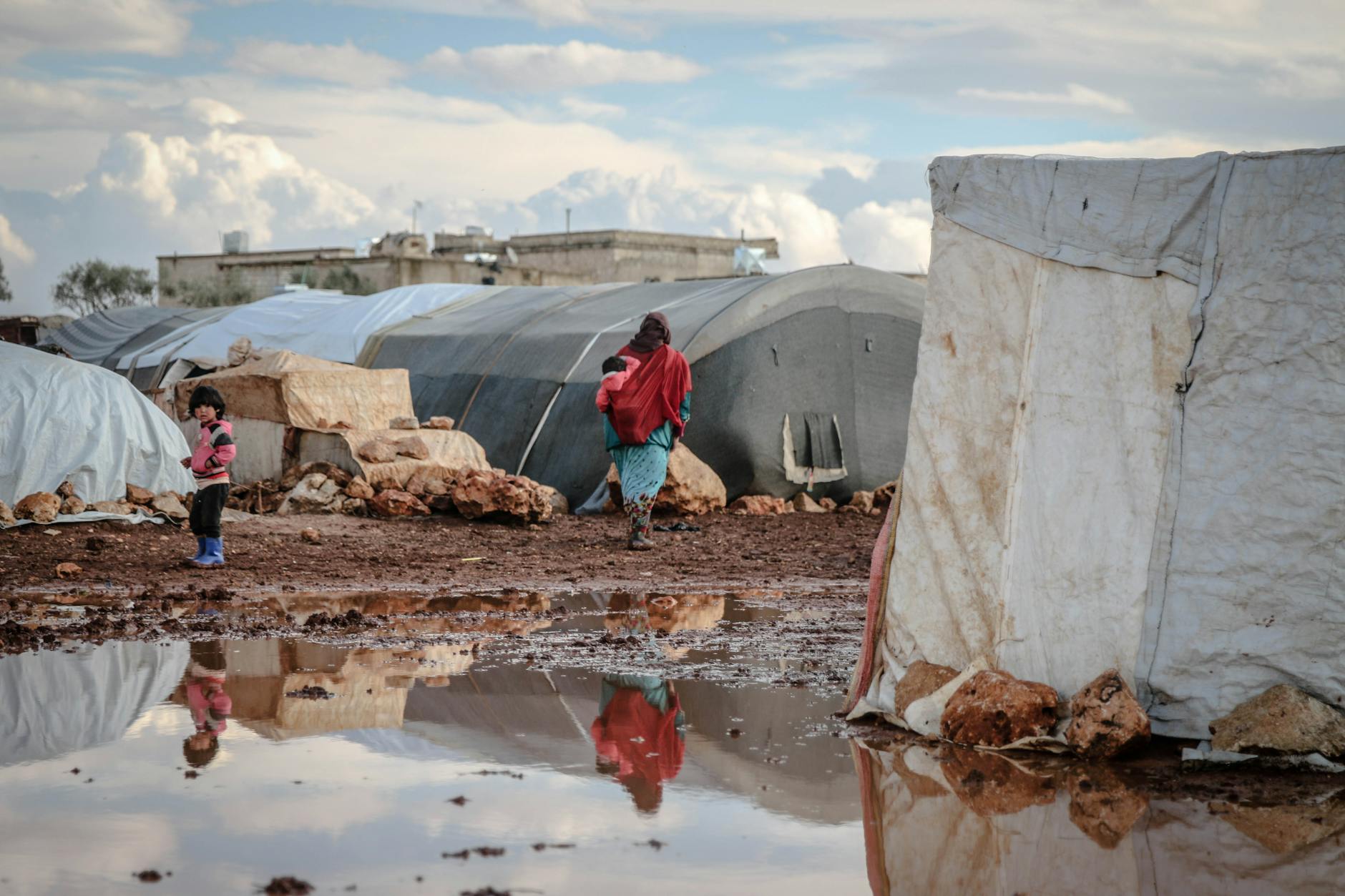
International Migrants Day is marked each year on 18 December, inviting us to pause and really see the people behind the word “migrant”. It was established by the United Nations to recognise the millions who live, work, study, and raise families away from the place they first called home, often carrying both hope and grief in the same suitcase. Some move by choice, others by necessity, many by a mixture of both, yet all share the experience of crossing boundaries, visible and invisible.
The day shines a light on the contributions migrants make to societies, economies, cultures, and communities, contributions that are too easily overlooked or reduced to statistics. It also draws attention to the realities many face, exploitation, dangerous journeys, separation from loved ones, and the quiet strain of never fully belonging. At its heart is a call to dignity, fairness, and compassion, reminding us that human rights don’t stop at borders.
International Migrants Day asks more than polite sympathy. It challenges us to listen carefully, to resist fear-driven narratives, and to remember that migration is as old as humanity itself. It’s a moment to recognise shared vulnerability and shared strength, and to choose hospitality over suspicion, solidarity over indifference.









 John Ager's Home on the Web!