Advent 2 Devotional Candle

Today is the Second Sunday in Advent. The season of Advent is the first period of reflection in the Christian year, the second being Lent.

The first candle in the Advent wreath symbolises HOPE and is known as the Prophet’s Candle. The second candle represents FAITH and is called Bethlehem’s Candle. Micah foretold that the Messiah would be born in Bethlehem, which was also the birthplace of King David.

Marshal your troops now, city of troops, for a siege is laid against us. They will strike Israel’s ruler on the cheek with a rod. “But you, Bethlehem Ephrathah, though you are small among the clans of Judah, out of you will come for me one who will be ruler over Israel, whose origins are from of old, from ancient times.” Micah 5:1-2

In those days Caesar Augustus issued a decree that a census should be taken of the entire Roman world. (This was the first census that took place while[a] Quirinius was governor of Syria.) And everyone went to their own town to register. So Joseph also went up from the town of Nazareth in Galilee to Judea, to Bethlehem the town of David, because he belonged to the house and line of David. He went there to register with Mary, who was pledged to be married to him and was expecting a child. While they were there, the time came for the baby to be born, and she gave birth to her firstborn, a son. She wrapped him in cloths and placed him in a manger, because there was no guest room available for them. Luke 2:1-7

Faith is like a light shining in a dark place. As we reflect on the light from this candle, we celebrate the faith we have in Jesus Christ.

Prayer: Heavenly Father, we remember the prophets who spoke of the coming of Christ, of how a Saviour would be born, a king in the line of King David. We remember all those who have been faithful through the centuries. At this busy time, help us to focus on what you are doing, and what you want to accomplish in and through our lives. Give us the faith to follow you every day of our lives and put you first. We ask this in the name of the one who was born in Bethlehem. Amen.

Advent Sunday Devotional Candle

On Advent Sunday (the start of the Christian year) we light the first candle of the Advent wreath. Advent comes from the Latin word adventus, meaning arrival or coming. The season of Advent is the first period of reflection in the Christian year, the second being Lent. Advent is a time for preparing for Christ’s second coming, even as we remember and celebrate his first coming at Christmas.

There are several themes related to this traditional wreath, with a variety of colours that sometimes incorporate purple and pink candles.

The first candle symbolises HOPE and is known as the Prophet’s Candle. The prophets of the Old Testament waited in hope for the Messiah’s arrival.

The people walking in darkness have seen a great light; on those living in the land of deep darkness a light has dawned. Isaiah 9:2

For to us a child is born, to us a son is given, and the government will be on his shoulders. And he will be called Wonderful Counsellor, Mighty God, Everlasting Father, Prince of Peace. Of the greatness of his government and peace there will be no end. He will reign on David’s throne and over his kingdom, establishing and upholding it with justice and righteousness from that time on and for ever. The zeal of the Lord Almighty will accomplish this. Isaiah 9:6-7

Advent Sunday is an opportunity to recall the hope we have in Christ. God told Abraham that through him all the nations of the world would be blessed, because he trusted and put his hope in God. The Old Testament spoke of the coming of Christ, of how a Saviour would be born, a king in the line of King David. He would rule the world wisely and bless all the nations. We also believe in God’s promise to send Jesus again to this world to establish his kingdom upon the earth.

Hope is like a light shining in a dark place. As we reflect on the light from this candle, we celebrate the hope we have in Jesus Christ.

Prayer: God of Abraham, the Patriarchs and Prophets of old, you are our Father too. Your love is revealed to us in Jesus Christ, Son of God, and Son of David. Help us in preparing to celebrate his birth, to make our hearts ready and to place our hope in you. Help us today and every day to worship you, to hear your word, and to do your will by sharing your hope with others. We ask this in the name of the one who was born in Bethlehem. Amen.

Living in a Social Media Bubble

Oxford Dictionaries decided that the word post-truth (or is that two words?) should be Word of the Year for 2016. They defined it as an adjective ‘relating to or denoting circumstances in which objective facts are less influential in shaping public opinion than appeals to emotion and personal belief’. Two major news events of 2016 illustrated how untruths (or should I just say lies?) were an illustration of this; namely, the debate prior to the UK referendum vote to leave the European Union and the campaign that resulted in the election of Donald Trump in the United States of America.

Many people were surprised by these two events, and one explanation is the so-called social media bubble. This is a phenomenon which links us to like-minded friends and others, sharing and liking similar news stories, views, and opinions. The algorithms of Facebook (and the like) can decide our friends for us, as those with similar views. Yes, this goes on in the everyday world, but the effect is magnified by the very nature of the medium. It’s like living in an echo chamber.

Many were surprised by Brexit and Trump because they weren’t aware of many people who favoured them. They just weren’t in their circle of friends, or they possibly kept quiet. Add to this the problem of hoaxes, fake news and unreliable quotes, and things can get quite messy. What is truth in a post-truth world after all? Falsehoods are easily spread by people unwilling (or too busy) to make a simple check of their veracity. Google can be your friend, or possibly your false-friend, who knows anymore?

In the space of two days I heard both Brian Eno and Laurie Anderson speak about the feature on Amazon that shows what other people bought after you’ve made a purchase. Another example of the bubble effect? Wouldn’t it be better to have a reverse filter suggesting what they didn’t buy? We can so easily inhabit an echo chamber.

Shouldn’t we be reaching out those with different opinions to our own and seeking to understand?

Become a Supporter

This blog is important to me, and I know that many have been encouraged by it, especially by the devotional posts. I seek to provide an independent and personal space to share an eclectic mix of content, which will always be free.

If you appreciate my varied content, you might like to donate towards the running costs of my blog. Many thanks, John.

Christian Remembrance

Remembrance Sunday is observed on the second Sunday in November in the UK and some Commonwealth nations. It’s a day to honour and remember the sacrifices made by those who lost their lives in times of war. It holds deep significance for Christians, interweaving both historical and spiritual elements in its observance.

At the heart of the Christian faith lies the principle of love, echoed in Jesus Christ’s teachings to “love your neighbour as yourself.” Remembrance Sunday aligns with this core belief, emphasising the sacrificial love shown by soldiers and civilians who laid down their lives for the well-being of others. Christians view this sacrifice as reflective of Christ’s own sacrificial love, embodied in his death on the cross.

For many Christian denominations, the act of remembrance itself is profoundly rooted in their faith. It’s a time to reflect on the virtues of courage, selflessness, and service exemplified by those who served in the armed forces. Christians recognise and honour the dedication and commitment of these individuals, echoing Christ’s message of service to others.

Church services on Remembrance Sunday often incorporate themes of peace, reconciliation, and the call for a world free from conflict. The prayers and hymns during these services focus on the hope for peace, drawing inspiration from biblical passages that speak of peace and the cessation of violence. It’s a moment to pray for global peace and for the families who continue to suffer due to the consequences of war.

The act of remembrance, marked by the two-minute silence at 11.00 am, stands as a solemn acknowledgment of the sacrifice made by so many. This silence is an act of collective honour and gratitude, echoing the Christian value of reverence, humility, and thankfulness.

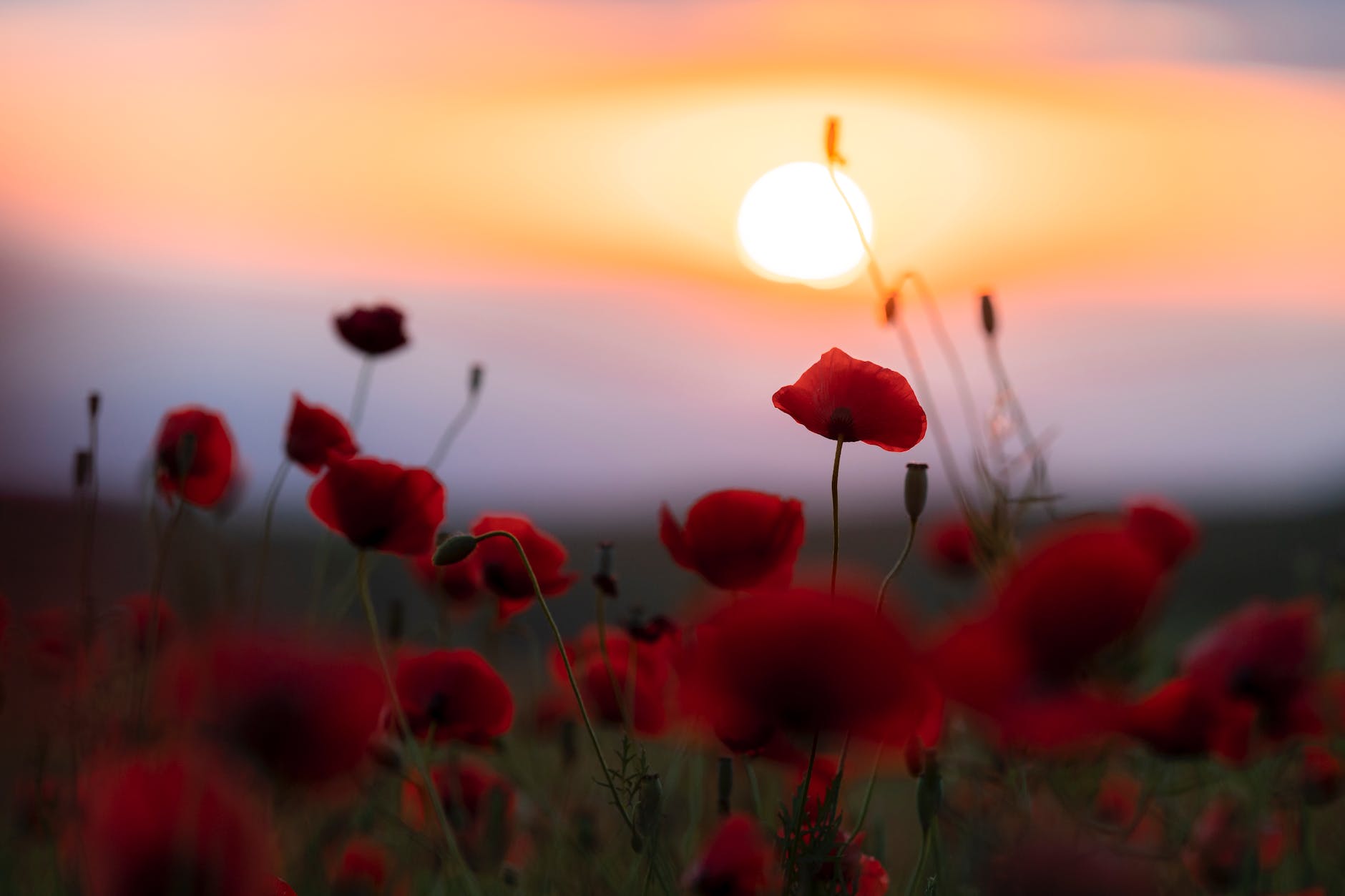
Moreover, the red poppy, often worn during this time, symbolises both loss and hope. While it signifies the bloodshed and sacrifices of war, it also represents the hope for a peaceful future. In a Christian context, the red poppy can be likened to the redemptive nature of Christ’s sacrifice, offering hope and renewal even in the face of immense suffering.

The Christian perspective on Remembrance Sunday also incorporates a plea for learning from history. It encourages reflection on the tragic consequences of war and the importance of pursuing peace, justice, and reconciliation. This aligns with the Christian ideals of forgiveness and understanding, emphasising the need to work towards preventing conflict and promoting harmony in society. Some wear a white poppy for this reason.

Ultimately, for Christians, Remembrance Sunday is a time to pay homage to the fallen, to reflect on the virtues of sacrifice, courage, and service, and to recommit to the pursuit of peace in a world often marred by conflict. It’s a day that highlights the interconnectedness of remembrance, faith, and the aspiration for a future guided by love, harmony, and unity.

A Design for Life

The Beatitudes, found in Matthew 5:1-12, are a set of teachings given by Jesus during the Sermon on the Mount, offering blessings to various groups of people. They serve as a cornerstone of Christian ethical teaching and reflect a profound spiritual insight into the nature of happiness, inner disposition, and the kingdom of God.

The Beatitudes begin with “Blessed are the poor in spirit, for theirs is the kingdom of heaven.” This signifies a state of humility and spiritual openness. Jesus emphasises the value of recognising one’s need for God, illustrating that those who acknowledge their spiritual poverty will inherit the kingdom of heaven.

“Blessed are those who mourn, for they will be comforted.” Here, Jesus acknowledges the pain and suffering in the world and offers solace to those experiencing grief, promising them comfort.

“Blessed are the meek, for they will inherit the earth.” This beatitude emphasizes the value of gentleness, humility, and self-control, promising the meek the ultimate reward of inheriting the earth.

“Blessed are those who hunger and thirst for righteousness, for they will be filled.” Jesus highlights the importance of pursuing righteousness and justice, promising fulfilment to those with a deep longing for what is right and just.

“Blessed are the merciful, for they will be shown mercy.” This beatitude underscores the reciprocal nature of mercy; those who show compassion and forgiveness to others will receive the same treatment.

“Blessed are the pure in heart, for they will see God.” Jesus emphasises the significance of inner purity and sincerity, suggesting that those with pure intentions will have the privilege of perceiving and encountering God.

“Blessed are the peacemakers, for they will be called children of God.” This beatitude praises those who actively seek and cultivate peace, implying that they reflect the nature of God, who desires peace among humankind.

“Blessed are those who are persecuted because of righteousness, for theirs is the kingdom of heaven.” This beatitude acknowledges the challenges faced by those who stand up for what is right, assuring them of a place in the Kingdom of Heaven.

In these teachings, Jesus redefines traditional ideas of happiness and success, pointing toward spiritual attitudes and virtues rather than worldly achievements. The Beatitudes challenge societal norms, emphasising humility, empathy, purity of heart, and pursuit of justice.

They highlight the paradoxical nature of happiness in Christianity, finding joy in hardship, comfort in mourning, and fulfilment in selflessness. Moreover, they present a roadmap for discipleship, outlining the characteristics and attitudes that Christ-followers should embody. A design for life.

The Beatitudes offer a profound understanding of the Christian faith, revealing the heart of Jesus’ message and calling individuals to live in a way that reflects the values of the Kingdom of God. They provide a guide for personal introspection and societal engagement, promoting a life characterised by compassion, humility, and a pursuit of righteousness.

Praise the Lord with Music and Song

photo of person playing acoustic guitar

Bible Readings: Psalm 95:1-7a & Psalm 150

Both these Psalms are an encouragement to praise the Lord, especially to praise him with music and song: Let us come before him with thanksgiving and extol him with music and song.

Psalm 150 begins and ends with the words, Praise the Lord or Hallelujah. The verses in between invite us to praise, telling us where and why to praise, and instructing us how to. We praise God because of who he is and because of what he has done, his surpassing greatness and his acts of power.

We praise him supremely because of what he did in sending Jesus to be our Saviour and Lord. We praise him with music, with song, and with our very lives. Psalm 150 expresses the sheer exuberance of lives given to God.

We thank God for lives devoted to him, who praise him day by day. The challenge comes to each one of us to use our talents and gifts, whether they are musical or whatever, to praise God and extend his kingdom.

I finish this short thought with the opening of a prayer I found here:

Creator God,
from the moment your spirit
hovered over the waters of this earth,
we were part of a vision
held lovingly within your heart.
From the moment you spoke
and separated darkness from light,
you created space
where we might one day walk.
From the moment your joy
spilled out into green and living things,
your beauty was revealed
for us to taste and see.
Creator God,
for this world,
beauty and majesty,
passion and artistry,
a green and pleasant place,
we praise your mighty name.

Staying whole in a fractured world

The world can be a confusing and unsettling place, especially with technology at our fingertips and 24/7 news. Making sense of it all can take its toll on our inner life. In this context, preserving our mental health is essential.

Here’s some strategies that work for me:

Limit your news consumption. Constant exposure to distressing news can lead to anxiety and stress. Set aside specific times to check the news and avoid it during the rest of the day. Consider turning off news notifications on your devices.

Choose reliable news sources. Verify the credibility of the news sources you follow and ask questions, such as, why is this person saying a certain thing, for example. This can reduce fear and uncertainty.

Focus on what you can control. It’s easy to feel powerless in the face of global crises. Concentrate on actions you can take in your own life, like supporting local charities, volunteering, or making environmentally conscious choices.

Establish a daily routine to bring stability and predictability. Regular sleep patterns, exercise, and work schedules can all help you maintain a sense of normality. Do what works for you.

Talk to people. Human connection is vital for mental wellbeing. Even when you can’t meet in person, stay connected with friends and family through phone calls, video chats, or online social groups. Sharing your feelings and experiences can be comforting. Smile at people and talk to strangers.

Develop the art of self-care. Dedicate time to activities that help you relax and unwind. Exercise, meditation, deep breathing, and hobbies can all reduce stress and improve your mood.

Seek help. If you find yourself struggling to cope with the constant stream of negative news, don’t hesitate to reach out for professional help. A therapist or counsellor can provide valuable guidance and support.

Stay informed, but not obsessed. Whilst staying informed is important, obsessing over the news can lead to information overload and increased anxiety. Set boundaries and avoid overconsumption.

Remember, preserving your mental health is a priority, it’s okay to take breaks from the news and practice self-compassion. By implementing these strategies, you can better navigate a world of bad news while maintaining your mental wellbeing.

A Song of Praise (Psalm 96)

Psalm 96 (click to read) is a beautiful and lyrical Psalm, often referred to as a ‘song of praise’ or a ‘hymn of thanksgiving’. This psalm, like many others, is attributed to King David and is traditionally used in both Jewish and Christian worship.

It begins with a call to sing a new song to the Lord, one that’s meant to be a fresh and heartfelt expression of praise and worship. It encourages us to declare God’s glory among the nations and his marvellous works among all people. This universal aspect of the psalm reflects the idea that the God of Israel is not confined to one nation but is the Creator and Lord of all the earth.

The psalmist calls on us to ascribe to the Lord the glory and strength that are due to him, and this theme of giving glory and honour to God is central to the entire psalm. It emphasises the idea that God is the source of all power and authority and that he deserves to be exalted supremely.

One of its key elements is the emphasis on the uniqueness of God. It also extols the beauty and holiness of the Lord’s sanctuary, that sacred place of worship and communion with God.

The psalmist also calls on all creation to rejoice in the presence of the Lord. The sea, the field, the trees, and all that’s in them are urged to sing for joy. This poetic imagery conveys the idea that all of creation is interconnected and can praise God through its existence, and we neglect this interdependence at our peril in our modern world.

The psalm proclaims that God’s rule extends beyond the borders of Israel and that his reign is universal, and concludes with a vision of a future judgement, where the Lord will judge the peoples with equity and righteousness; underscoring the idea that God’s rule is both powerful and just.

Here’s a wonderful song of praise, thanksgiving, and proclamation. One that emphasises the universal nature of God’s glory, the uniqueness of the one true God, and the call to all of creation to join in worship. It inspires us to lift our voices in praise and declare his reign among the nations.

Whether in our Christian lives or collective worship, Psalm 96 continues to be a source of inspiration and reflection as we seek to honour and glorify God.

Finding Peace in Five Verses

Just a simple (yet hopefully profound) Sunday devotional today. It’s based on five Bible verses shared in a newsletter from Our Daily Bread Ministries.

The newsletter reminds us that we live in anxious and uncertain times (not that we need reminding) and that peace can seem like a rare commodity. God’s peace is something completely different and reliable though.

It’s suggested that when we need to experience his peace, we dedicate some time to meditate and reflect on these five verses. I would also add that you might like to consider them in context, as this is always important in our reading of God’s word. So, why not find a quiet place, and immerse yourself in these verses?

In peace I will lie down and sleep, for you alone, Lord, make me dwell in safety.
Psalm 4:8
You will keep in perfect peace those whose minds are steadfast, because they trust in you. 
Isaiah 26:3
Peace I leave with you; my peace I give you. I do not give to you as the world gives. Do not let your hearts be troubled and do not be afraid.
John 14:27
Do not be anxious about anything, but in every situation, by prayer and petition, with thanksgiving, present your requests to God. And the peace of God, which transcends all understanding, will guard your hearts and your minds in Christ Jesus.
Philippians 4:6-7
Let the peace of Christ rule in your hearts, since as members of one body you were called to peace. And be thankful.
Colossians 3:15

Prayer: Peace to you from God who is our Father. Peace from Jesus Christ who is our peace. Peace from the Holy Spirit who gives us life. The peace of the triune God be always with you. Amen.