Psalm 19:7-14 reflects on the nature of God’s law and its impact on human life. It’s part of a psalm attributed to King David, where he praises the perfection and value of God’s law, drawing attention to its ability to enlighten and transform the soul. David uses a series of expressions to illustrate the law’s qualities: it’s perfect, sure, right, pure, clean, and true. These descriptors suggest that God’s law is flawless, dependable, and unchanging, providing moral clarity and spiritual guidance. These qualities led David to compare it to precious gold and sweet honey, underlining how desirable and satisfying God’s commandments are to those who follow them.
The psalm also highlights the effects of the law: it revives the soul, makes wise the simple, and enlightens the eyes. David emphasises that God’s laws bring spiritual vitality and wisdom to those who might otherwise lack understanding. They provide enlightenment, making people aware of their own spiritual condition and illuminating the path they should follow.
David’s reflections in verses 12 to 14 turn introspective, recognising human fallibility and the need for divine help in staying righteous. He admits to hidden faults, those inner sins that may not be immediately visible but still require forgiveness. David then asks for protection against presumptuous sins, which he identifies as intentional or wilful transgressions. His request for these not to have dominion over him shows a desire to remain steadfast and blameless before God, to be unencumbered by any lingering or overpowering sins.
The final verse, Let the words of my mouth and the meditation of my heart be acceptable in your sight, O Lord, my rock, and my redeemer, captures a deep longing for authenticity and purity in his relationship with God. It’s a prayer that all aspects of his being, his speech, thoughts, and motives, align with God’s standards.
Psalm 19:7-14 beautifully portrays how divine law not only provides moral guidance but also shapes and refines the character of those who earnestly seek to live according to God’s will. May we demonstrate that authenticity in our lives.
Psalm 19:1-6 is a beautiful passage that celebrates the majesty of God’s creation and his glory as revealed in the natural world. These verses emphasise how the heavens, the skies, and celestial bodies declare God’s splendour without uttering words, yet their message is universally understood.
The psalm begins with a grand declaration in verse 1: “The heavens declare the glory of God; the skies proclaim the work of his hands.” This verse highlights the idea that the beauty of the universe, particularly the heavens and skies, reflect God’s craftsmanship. The vastness and order of creation are a silent testimony to his power and creativity.
In verses 2 and 3, it continues by saying: “Day after day they pour forth speech; night after night they reveal knowledge. They have no speech, they use no words; no sound is heard from them.” Despite the lack of audible speech, the consistent cycle of day and night is portrayed as a form of communication, offering wisdom and insight into God’s character and nature. This suggests that creation communicates continuously and universally, transcending language and culture.
Verse 4 states: “Yet their voice goes out into all the earth, their words to the ends of the world.” Here, the psalmist indicates that the message of creation is inescapable; it reaches every corner of the earth, allowing all people to witness God’s glory through the natural world.
Verses 5 and 6 focus on the sun, personified as a bridegroom or an athlete, joyfully running its course across the sky: “It rises at one end of the heavens and makes its circuit to the other; nothing is deprived of its warmth.” The sun’s consistent and powerful presence is used to symbolise God’s provision and the encompassing nature of his glory.
Overall, Psalm 19:1-6 portrays the natural world as a reflection of God’s greatness, offering silent yet profound testimony to his eternal power and divine nature. May we be at one with nature and in harmony with God.
James 2:1-10 addresses favouritism within the Christian community, particularly regarding the treatment of rich and poor. This passage questions whether showing partiality aligns with genuine faith in Jesus Christ, presenting a scenario where a wealthy person is given preferential treatment over a poor person.
James emphasises that God has chosen the poor to be rich in faith and heirs of his Kingdom, pointing out the irony that the rich, often shown favouritism, typically oppress believers.
The author introduces the ‘royal law’ of loving one’s neighbour as oneself, arguing that showing favouritism violates this principle, like breaking the whole law.
James 2:11-17 continues by discussing the ‘law of liberty’ and the relationship between faith and works. James warns that judgement without mercy will be shown to those who have not been merciful, emphasising the importance of compassion in Christian living.
The passage concludes by stressing the crucial relationship between faith and works, arguing that faith without action is dead. James illustrates this with an example of encountering a person in need and offering words without practical assistance, emphasising that true faith is demonstrated through actions.
May we demonstrate our faith every day through an attitude of understanding that results in beautiful actions of love without favouritism.
In August 1999 I fulfilled a boyhood ambition of witnessing a total solar eclipse.
As I travelled down to Devon from South Wales (the eclipse was only going to be total in parts of Cornwall and Devon) I really started to capture the excitement when I stopped at a Service Area on the M5, as there was something of a party atmosphere.
I eventually parked on the waterfront at Kingsbridge, near some good public conveniences that were open 24 hours, and attempted to get some sleep in the car. Waking soon after 4.00 am I decided to make my way the coast, heading for Slapton Sands. I arrived at about 5.00 am and was totally unprepared for the level of traffic and activity going on.
There were some quite large car parks, and I managed to get one of the last spaces. It was right next to the beach, people were sleeping in cars and vans, in tents, and in sleeping bags on the beach itself. As it started to get light, there was no way I was going to get any more sleep, so I decided to get the bike out and go for an early morning cycle ride. There was a great buzz in the air; it was one of those occasions when people were drawn together by a shared experience, strangers found it easy to talk to each other. Telescopes, cameras and the like were being set up on the vantage points, and the smell of cooking was hanging in the air. By this time the authorities had closed off the car park entrances, and the refreshment vans were doing brisk business.
By about 8.00 am the traffic had become even busier, but there was nowhere to go, no sooner had people parked half on the road, half on the grass verges, they were moved on. Fields were opened up for the cars, but these eventually filled up, and still the cars were coming, causing chaos in the narrow country lanes.
I managed to see the eclipse at various stages, up to about 70% covered, but then the threatening darker clouds came and obscured the view, but nothing can prepare you for the experience of totality, and it’s impossible to adequately describe in words.
the approach of darkness the drop in temperature the quietness that descended on the crowds the expectation the moment of totality the darkness during the day the birds flying off the applause of the crowd
Because of the cloud cover, I saw nothing more of the eclipse as the Moon finished travelling across the Sun, although the Sun did break through later on.
And that’s my experience of the eclipse, something I will never forget. I was slightly disappointed that I didn’t actually see the full eclipse, but I experienced something equally unique; it was moody, eerie, and atmospheric, to be under cloudy skies when the shadow of the Moon travelled overhead at nearly 2000 mph, a very British eclipse.
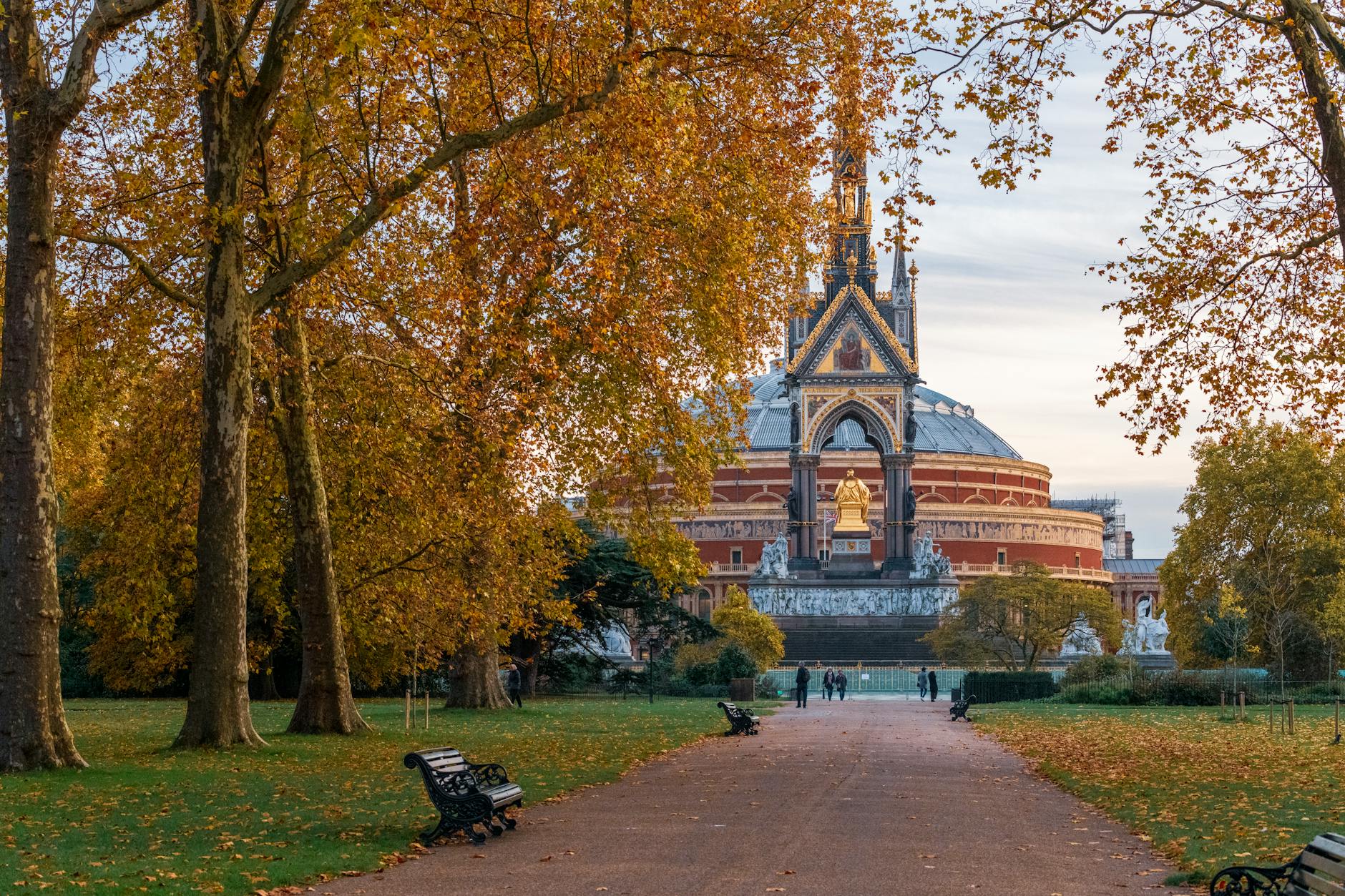
On this day (23 May 1980) I was ordained and commissioned as a Salvation Army Officer (Minister of Religion) in the Royal Albert Hall, London. This significant anniversary comes in a world that’s vastly different from the one in which I commenced my vocation, but one that continues in my retirement.
There’s so much I could write, but here’s just one memory of the day. My mother was chosen to come onto the stage to receive her Silver Star badge (presented then to mothers and now to both parents of officers) as a representative mother. Unfortunately, she couldn’t find her way through the tunnels in the bowels of the building in true This is Spinal Tap tradition. Fortunately, she had the presence of mind to come back up to the auditorium and make a grand entrance via the central stairs onto the stage!
Note: My commissioning was in Spring (May 1980) but I like this Autumn photo!
When Chichester Cathedral was being renovated in 1962, they found that the medieval builders had built a magnificent cathedral on poor land and hadn’t extended the foundations far enough. As a result of this oversight, the 20th Century renovators had far more work than anticipated.
But let’s go right back to the beginning to the Book of Genesis and the story of the Tower of Babel. Genesis means ‘beginnings’, it’s a book that deals with the beginning of everything, not in a scientific way, but in a far more profound way.
Genesis focuses our attention on certain aspects of life, the first eleven chapters paint a picture of the world as God meant it to be, but they also show the appalling mess we’ve made of it; the message is timeless, because we continue to make a mess of it.
In these opening chapters of the Bible, we have parables of immense significance. From there on, the rest of the Bible show us what God has done to get us out of the mess, culminating in the life, death, and resurrection of Jesus, and the coming of the Holy Spirit.
We have the story of Noah and the Flood, the message being that the world merits nothing less than total destruction. The Flood symbolises God’s timeless judgement on humankind, as appropriate now as when it was written.
Noah wasn’t perfect, but he represents those in every age who walk with God. God always offers a way back to himself, if only we live our lives with reference to him.
Then we have the story of the Tower of Babel, a story that echoes the Fall: human defiance of God. But instead of the story being set in a garden with two people, the setting is bricks and mortar with a developing civilisation.
The age-old problem is that individuals and humankind as a whole build for their own glory rather than for the glory of God.
William Neil writes: Man wants to run the world in his own way. He wants to put himself at the centre of his civilisation on a pedestal inscribed with the name: “Glory to MAN in the highest”. Note how verse 4 says: “Come let us build ourselves a city, with a tower that reaches to the heavens, so that we may make a name for OURSELVES”.
This is the mistake we make repeatedly. There is only one God and Creator, we are created in his likeness, and our destiny is to know him, to live in fellowship with him, humbly seeking and obeying his will for our lives.
The builders’ desire for autonomy recalls the rebellion in the Garden of Eden, and establishes the need for Abraham’s redemptive faith in the midst of international disorder. Far from the original garden, the first cities in Genesis represent arrogance, tyranny, and wickedness. The city on the Babylonian plain was a magnet for human pride and idolatry, a tower that reaches into the sky.NLT Study Bible
When we put ourselves first, God comes and confounds our plans, and there is chaos and disorder. The confusion of tongues in the Tower of Babel story is but a symptom of a much deeper disharmony that prevents unity and mutual understanding.
We talk about people ‘not speaking the same language’, meaning that their positions are so far apart that they might as well be speaking a different language.
We see this between individuals, groups, and nations. Pride, injustice, and selfishness: all preventing meaningful communication and reconciliation.
But had you ever considered that the story of Pentecost balances the story of the Tower of Babel?
The divided language of Babel becomes the common language of Pentecost, the story is turned upside down, or more correctly the right way up.
The miracle of Pentecost was that a new language came with power, the language of love, the language of the Spirit, the language of unity, a language that all could understand; the love that God showed in sending his Son as Saviour and Lord, a suffering servant for all humankind.
God’s love in sending Jesus is something that speaks to the human heart far more eloquently than words could ever do. As we open our hearts and lives to God’s Holy Spirit he fills and empowers us to live this language of love in the world.
God can work in and through us when we’re open to God’s Holy Spirit, who takes our weaknesses and makes us strong, who takes our brokenness and makes us whole. Then the Holy Spirit can do the work of building the kingdom.
We can always move forward in his power and strength, building on the past, building in the present, and building for the future. Building, not for our glory, but for God’s glory.
Breathe on me, breath of God, Fill me with life anew, That I may love what thou dost love And do what thou wouldst do.
Breathe on me, breath of God, Until my heart is pure, Until with thee I will one will To do and to endure.
Breathe on me, breath of God, Till I am wholly thine, Until this earthly part of me Glows with thy fire divine.
Breathe on me, breath of God, So shall I never die, But live with thee the perfect life Of thine eternity.
Volunteering encompasses a multitude of benefits that extend beyond altruism. Engaging in acts of service fosters a profound sense of fulfilment and satisfaction. Research indicates that volunteerism correlates with improved mood, reduced stress levels, and enhanced overall wellbeing.
Furthermore, volunteering cultivates a stronger sense of community. By participating in local initiatives, individuals forge connections with like-minded individuals and develop a deeper understanding of societal needs.
Volunteering also serves as a platform for skill development. Volunteers hone essential competencies such as communication, teamwork, problem-solving, and time management. These experiences contribute to personal and professional growth, enriching one’s repertoire of abilities.
From a pragmatic standpoint, volunteering enhances your curriculum vitae (resume). Employers value candidates who demonstrate initiative, passion, and a willingness to contribute to the greater good. Volunteering serves as tangible evidence of these qualities, distinguishing individuals in competitive job markets.
Volunteering is a catalyst for personal growth and self-discovery. It offers opportunities to step outside comfort zones, confront challenges, and unearth hidden talents. Through service to others, individuals embark on a journey of continuous learning and development.
Overall, the benefits of volunteering are manifold, encompassing emotional, social, professional, and personal dimensions. Engaging in acts of service not only enriches the lives of others but also nurtures individual wellbeing and fosters a stronger, more interconnected society.
This Sunday Devotional continues where I left off last week, but it also stands alone. In John 15:9-17, the essence of joy and love radiates through the teachings of Jesus. He speaks with an intimacy that resonates deeply, offering a glimpse into the heart of his message.
Jesus begins by urging his followers to abide in his love, just as he abides in the love of the Father. This notion of abiding implies a deep, enduring connection, a bond that withstands trials and tribulations. It’s an invitation to dwell in a state of divine affection, where joy finds its roots.
The joy Jesus speaks of is not fleeting or circumstantial, it’s a profound sense of contentment rooted in knowing and being known by God. It’s a joy that persists even in the face of adversity, for it’s grounded in an unshakeable love.
He then goes on to reveal the ultimate expression of love, laying down one’s life for others. This sacrificial love mirrors the love Jesus has for his disciples and, by extension, for all humankind. It’s a love that transcends self-interest, seeking the highest good of others above all else.
As friends, Jesus invites his disciples into a relationship characterised by intimacy and trust. He shares with them the Father’s heart, revealing the depths of divine affection and the transformative power of love.
In this context, Jesus challenges his followers to bear fruit that will last. This fruitfulness stems from a life deeply rooted in love, a love that overflows and impacts the world around them. It’s a call to participate in the ongoing work of God’s kingdom, spreading joy and love wherever they go.
Finally, Jesus reaffirms the commandment to love one another. This love isn’t merely a suggestion, but a command, a fundamental principle that underpins the entirety of Jesus’s teachings. It’s a love that mirrors the love of the Father, selfless and unconditional.
In these verses, joy and love intertwine, forming the bedrock of Jesus’s message. They’re not abstract concepts, but lived realities, inviting us into a profound communion with God and one another. As we abide in his love and bear fruit that lasts, we become conduits of divine joy and agents of transformative love in the world.
As a Christian with a scientific background, who sees no conflict between faith and science, I find it incomprehensible that anyone can deny the reality of climate change and global warming.
Similarly, I find it puzzling how people can believe and share dubious articles that have no basis in empirical evidence, sometimes combining this with a belief that God alone is responsible for the planet and it’s nothing to do with us. It’s so much easier to pass the blame onto someone else (even if that person is God) than face the consequences of our own actions.
As I understand it, climate change is cyclical (earth’s history shows this), but global warming (since the start of the Industrial Revolution) is largely the result of human activity. This is accepted by the vast majority of the worldwide scientific community. Unfortunately, many people confuse climate with weather, just because you’re experiencing a cold spell doesn’t negate the overall global trend.
My responsibility as a human being and as a Christian is to care for the planet and its inhabitants. God doesn’t expect us to be careless and irresponsible towards his creation. We all need to play our part to look after our home, the planet that has been entrusted to us for our children and future generations.
Ed Balls Day is a bit of fun and the stuff of nonsense. It celebrates and remembers the day (28 April 2011) when British politician Ed Balls tweeted his name thinking he was entering it into a search box.
Since then […] every year Twitter rejoices in the madness of the internet gaffe and marks Ed Balls Day.Source
A simple mistake has made him the Patron Saint of Simple Mistakes. To his credit, he hasn’t deleted the tweet, it remains on Twitter in all its pomp and glory, although at the time he didn’t know it was possible to delete them.
It’s a day to look forward to, it’s a day to enjoy with family and friends, it’s a day to share with others. It’s a day that unites everyone. Whatever your race, colour, or creed, everyone can enjoy Ed Balls Day.
Some bemoan the fact that’s it’s become too commercialised these days, having lost its true meaning. So, however you celebrate, make sure it’s significant.
Yes, it’s a bit of fun, but at its heart is the positive affirmation of simple mistakes and a willingness to own them.









 John Ager's Home on the Web!