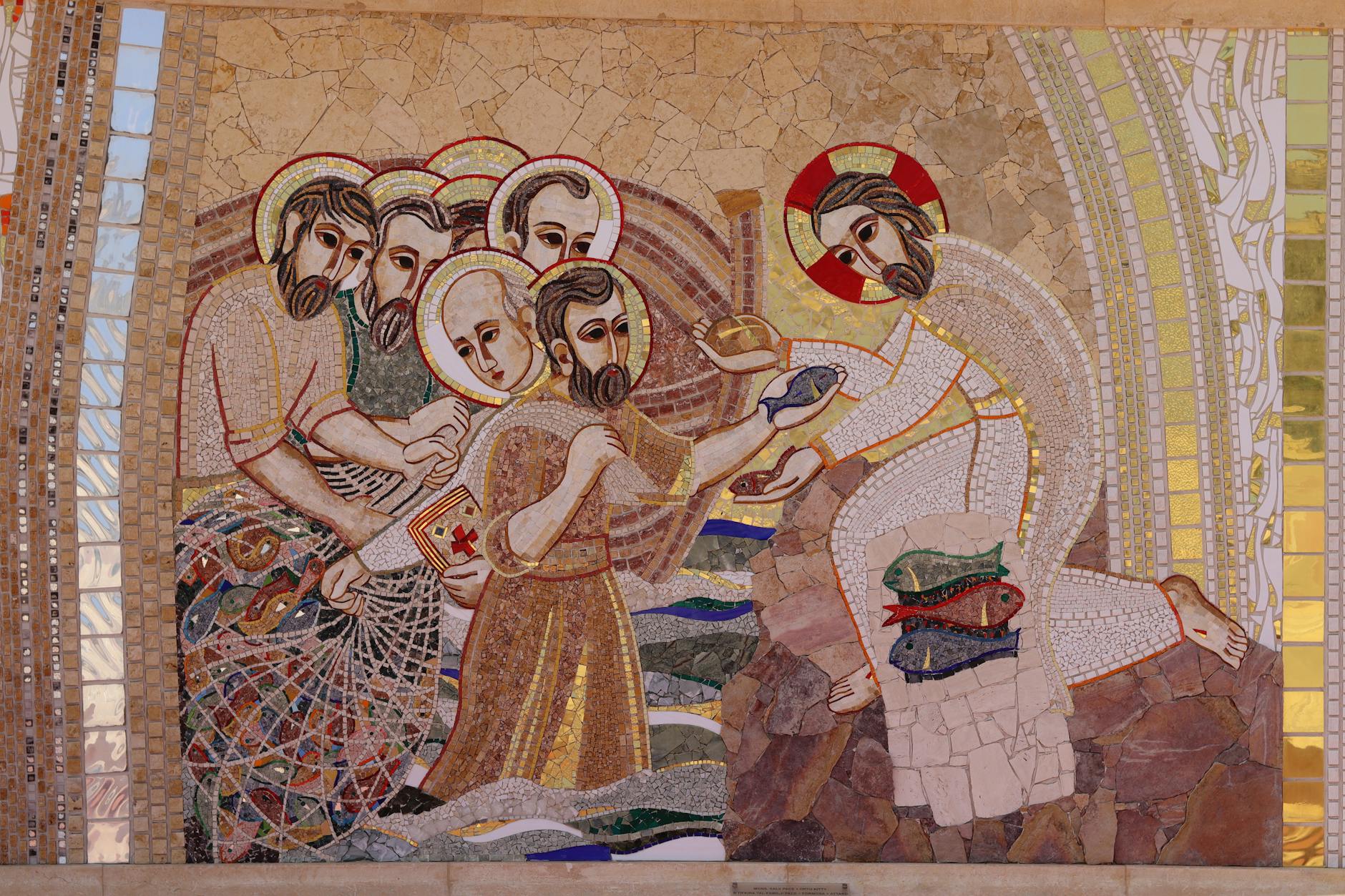
Luke 5:1-11 recounts a significant event in the ministry of Jesus, where he calls his first disciples. It’s rich in symbolism and demonstrates Jesus’ authority, the power of faith, and the transformative nature of following him.
The scene begins with Jesus standing by the Lake of Gennesaret (the Sea of Galilee), surrounded by a crowd eager to hear the word of God. To better address them, Jesus steps into a boat belonging to Simon Peter and asks him to put out a little from the shore. From there, Jesus instructs the people. After finishing his discourse, He turns to Simon and instructs him to “put out into deep water and let down the nets for a catch.” Simon, a seasoned fisherman, responds with a mixture of reluctance and respect. He explains that they’d toiled all night without catching anything, yet he agrees to Jesus’ request, saying, “But because you say so, I will let down the nets.”
This act of obedience, despite his doubts, is pivotal. When they follow Jesus’ instruction, they catch such an enormous number of fish that their nets begin to break. They signal to their partners in another boat to come and help, and both boats are so filled that they begin to sink. This miraculous catch overwhelms Simon Peter, who falls at Jesus’ knees and exclaims, “Go away from me, Lord; I am a sinful man!” His reaction reflects a profound awareness of Jesus’ divine authority and his own unworthiness. Similarly, James and John, Simon’s partners, are astonished. Jesus, however, reassures Simon, saying, “Don’t be afraid; from now on you will fish for people.” This statement marks the beginning of their new mission, to spread the Gospel and bring people into the Kingdom of God.
The passage concludes with the disciples bringing their boats to shore, leaving everything behind, and following Jesus. This act of abandonment signifies their complete trust and commitment to him. They transition from being fishermen to becoming “fishers of men,” a metaphor for their future role in gathering souls for Christ.
Our passage highlights several key themes. First, it underscores Jesus’ authority over nature, as demonstrated by the miraculous catch of fish. Second, it illustrates the importance of faith and obedience, even when circumstances seem unfavourable. Simon Peter’s willingness to trust Jesus, despite his initial scepticism, leads to an extraordinary outcome. Third, the passage reveals the transformative power of encountering Jesus. Simon Peter’s recognition of his sinfulness and Jesus’ reassurance pave the way for his new identity and purpose.
Here is a powerful account of Jesus’ call to discipleship. It challenges us to trust in his authority, step out in faith, and embrace the transformative journey of following him. We are also reminded that God often works in ways that surpass human understanding, inviting us to participate in his greater plan.
The Christian festival of Candlemas (2nd February) has deep historical and cultural significance. It commemorates the Presentation of Jesus at the Temple found in Luke 2:22-40, where Mary and Joseph took the infant Jesus to the temple in Jerusalem, fulfilling Jewish law.
The name derives from the tradition of blessing and distributing candles during church services. These candles symbolise Jesus as the Light of the World as proclaimed by Simeon in the temple when he recognised Jesus as the Messiah. The practice of lighting and carrying candles in processions became a central aspect of the celebration, signifying spiritual enlightenment and protection against darkness.
Candlemas has its roots in both Christian and pre-Christian traditions. Before Christianity, the Romans celebrated Lupercalia, a festival of purification and fertility. In Celtic traditions, Imbolc, honouring the goddess Brigid, was celebrated around the same time, marking the midpoint between the winter solstice and the spring equinox. When Christianity spread, elements of these older traditions merged with the new religious observances.
In mediaeval Europe, Candlemas was an important date in the agricultural calendar. People believed that the weather on this day could predict the coming of spring. A popular English saying states:
If Candlemas Day be fair and bright, Winter will have another flight. If Candlemas Day be dull with rain, Winter is gone and will not come again.
Different countries and Christian denominations observe Candlemas with unique customs. In the Roman Catholic Church, it remains a significant feast day, with candlelit processions and blessings. In Eastern Orthodox Christianity, the event is known as the Feast of the Meeting of the Lord, often including processions and special hymns.
In Mexico and parts of Latin America, Día de la Candelaria is widely celebrated. Families dress figurines of the baby Jesus in fine clothes and take them to church to be blessed. Traditional foods, such as tamales, are shared in gatherings, continuing the festive spirit from Epiphany.
In England, Candlemas was once a key date for settling debts and rents, much like Quarter Days. It also marked the end of the Christmas season in some traditions, when greenery and nativity scenes were finally taken down. Some churches still follow this practice, extending the Christmas period beyond Twelfth Night.
Though its significance has diminished in modern times, Candlemas remains an important religious and cultural festival. Its themes of light, purification, and hope continue to resonate, making it a poignant moment in the Christian calendar. Whether observed through religious services, traditional weather lore, or community gatherings, Candlemas serves as a reminder of faith, renewal, and the gradual return of longer, brighter days.
Jesus returned to Galilee in the power of the Spirit, and news about him spread through the whole countryside. He was teaching in their synagogues, and everyone praised him. He went to Nazareth, where he had been brought up, and on the Sabbath day he went into the synagogue, as was his custom. He stood up to read, and the scroll of the prophet Isaiah was handed to him. Unrolling it, he found the place where it is written:
‘The Spirit of the Lord is on me, because he has anointed me to proclaim good news to the poor. He has sent me to proclaim freedom for the prisoners and recovery of sight for the blind, to set the oppressed free, to proclaim the year of the Lord’s favour.’
Then he rolled up the scroll, gave it back to the attendant and sat down. The eyes of everyone in the synagogue were fastened on him. He began by saying to them, ‘Today this scripture is fulfilled in your hearing.’ Luke 4:14-21
This could be thought of as the manifesto of Jesus. He was setting out his mission as the Son of God, the Servant King.
Jesus had gone to worship at the synagogue in his hometown, and all the eyes of the people were fastened on him. There was great expectation. They were hoping for a sign, a sign that he was God’s Messiah, the one who would deliver the people from the oppression of Rome and bring political change.
He read to the people from the prophet Isaiah. Those words had been written many centuries before and described the deliverance of the people of Israel from exile in Babylon. There was a much deeper meaning though, pointing to a time when true freedom would come to the people. Jesus was saying there’s a worse poverty, captivity, blindness, and oppression.
This is what the Christian faith is all about. Jesus is central to the Bible, and the central message of the Bible is of God reaching out in love to humankind, and he reaches out supremely through the Cross of Jesus. Offering us release from spiritual poverty, captivity, blindness, and oppression.
Everyone plans well for a party, especially making sure there’s enough food and drink for everyone. Throughout history people have celebrated together by feasting, and this is something we all really missed during the coronavirus pandemic because these gatherings were banned.
Events associated with feasting make good memories for the future, and even a funeral reception or wake can be a place of joy, nurtured by food and drink.
Of course, waste is a concern for everyone, but running short of food or drink is always a failure of hospitality. When we come to that beautiful account of the wedding at Cana, all those themes and more are woven into the fabric of John’s story telling.
On the surface, there is the embarrassing awfulness of a wedding that runs out of wine. At a deeper level, we see the extravagance of God’s love and grace. Here is an overabundance of giving made real in Jesus for those who were present with him then, and with all who celebrate his presence now. It also points ahead to the great feast when the Lord will bring his promises to their ultimate fulfilment.
I invite to dig deeper into this wonderful story for yourselves, to discover its depths of meaning that reveal the extravagance of God and his love for us.
God who touchest earth with beauty, Make my heart anew; With thy Spirit recreate me Pure and strong and true. Like thy springs and running waters, Make me crystal pure; Like thy rocks of towering grandeur, Make me strong and sure.
Like thy dancing waves in sunlight, Make me glad and free; Like the straightness of the pine trees Let me upright be. Like the arching of the heavens, Lift my thoughts above; Turn my dreams to noble action, Ministries of love.
Like the birds that soar while singing, Give my heart a song; May the music of thanksgiving Echo clear and strong. God who touchest earth with beauty, Make my heart anew; Keep me ever by thy Spirit Pure and strong and true.
Not as many books read as I’d hoped, as my aim was 24 in 2024.
The Hobbit (J. R. R. Tolkien) I enjoyed listening to this while walking Rufus.
Everything Is F*cked (Mark Manson) Don’t be put off by the title, an excellent book to guide you through life and manage your expectations and mental health.
Tin Men (Christopher Golden) Great science fiction with a good human element and twists.
Alien (Alan Dean Foster) A novel based on the movie, what happens when you don’t listen to a smart woman with a cat.
She/He/They/Me (Robyn Ryle) An interactive book that guides you through the issue of gender, your journey depends on your answers to questions.
Wrong Place Wrong Time (Gillian McAllister) A journey backwards in time to understand a murder.
Eating Robots (Stephen Oram) Short stories that anticipate the near future of technology, often shocking.
Biohacked & Begging (Stephen Oram) Another series of short stories to pull you up sharp and challenge your thinking.
Fathomless Riches (Rev. Richard Coles) A brutally honest autobiography that covers attempted suicide, time in a mental hospital, London’s gay scene, drugs, pop stardom, broadcasting, writing, and life as a vicar – and that’s just for starters! Not for the easily offended.
Beyond the Burn Line (Paul McAuley) A science fiction novel set in the distant future that addresses big issues. I rarely give up on a book but, like many other people, I gave up with this one. My advice, avoid like the plague!
How to Sleep Well (Dr. Neil Stanley) An excellent book covering all aspects of sleep.
Aliens (Jim Al-Khalili/Editor) A comprehensive study about the possibility of life elsewhere in the universe from a variety of authors and experts.
Night Sky Almanac 2024 (Storm Dunlop & Wil Tirion) This is a yearbook I wouldn’t be without; each year’s edition is always by my side.
So, my aim is now at least 25 in 2025, and I’m off to a good start.
Christmas celebrates the coming of God’s gift, the birth of Jesus as Saviour of the World. Epiphany celebrates our giving to God, symbolised by the wise men bringing their gifts to the baby Jesus. It’s traditionally celebrated on the twelfth day after Christmas (January 6).
We know very little about them, and only assume there were three because there were three gifts. Those three gifts represent three distinct aspects of our lives that we need to present to Jesus.
Gold represents everything of material value; our money, our property, our belongings. It’s good to recognise that everything comes from God, and as Christians we offer it to Jesus. We may not have much, but let’s make sure give our symbolic gold to Jesus, for God to use.
Frankincense represents something less tangible than gold. It symbolises our inner treasure of thought and influence; our education, our talents, and our personalities. By offering these to Jesus we have a reference point for our actions and behaviour, recognising something greater than ourselves.
Myrrh, partly because of its use in embalming, has been identified with sorrow and suffering. We can bring the challenging times in life to Jesus, and experience God’s comfort.
Myrrh is mine; it’s bitter perfume. Breathes a life of gathering gloom; Sorrowing. sighing, bleeding, dying, Sealed in a stone-cold tomb.
A fourth wise man called Artaban belongs to the realm of myth and legend, but he is imagined having brought a gift representing the happier things in life. A reminder that Jesus:
…feeleth for our sadness, And he shareth in our gladness.
The whole of human life can be symbolised in the three (four) gifts, personal gifts of ourselves that we can bring to Jesus.
Father, I place into your hands The things I cannot do, Father, I place into your hands The things that I’ve been through. Father, I place into your hands The way that I should go, For I know I always can trust you.
Father, I place into your hands My friends and family. Father, I place into your hands The things that trouble me. Father, I place into your hands The person I would be, For I know I always can trust you.
Father, we love to see your face, We love to hear your voice. Father, we love to sing your praise And in your name rejoice. Father, we love to walk with you And in your presence rest, For we know we always can trust you.
Father, I want to be with you And do the things you do. Father, I want to speak the words That you are speaking too. Father, I want to love the ones That you will draw to you, For I know that I am one with you.
My twenty favourite albums of 2024 are largely connected by being works of maturity (including Billie Eilish) with the remaining albums showing great originality. I’ll let you discover which is which as all these albums demand careful and repeated listens. As with most albums, they should be listened to in their entirety as presented (not shuffled).
The twenty albums are listed and described below. My top five (in alphabetical order of artist and marked with an asterisk) are The Cure, David Gilmore, Jon Anderson & The Band Geeks, Nick Cave & The Bad Seeds, and Stuckfish. All five are worthy of the top spot, but I couldn’t decide. If pushed, I’d say The Cure is my number one album of the year.
Lives Outgrown (Beth Gibbons) – This is the debut solo studio album by Beth Gibbons, the singer of the group Portishead. She wrote the album over a decade, with topics specific to nearing the age of 60, including motherhood, anxiety, menopause, and mortality. The album reflects on the deaths of family and friends over several years.
Hit Me Hard and Soft (Billie Eilish) – Billie Eilish hasn’t always hit the musical spot for me, apart from some notable exceptions. But, at an incredibly early age, she has produced a masterpiece with this album, it speaks to both the mind and heart. A true work of maturity.
Songs of a Lost World (The Cure)* – A mind-blowing album from Robert Smith and The Cure. It both laments the lost of loved ones and uplifts the spirit, there’s light in the darkness. It’s arguably the most personal album of Smith’s career. Let the entire album flood your heart and soul.
Down the Hill (Cousin Silas) – This is a really excellent ambient album from my friend David Hughes, it’s relaxing and reflective. You can find this album on Bandcamp.
The Derelict (Cousin Silas) – Another favourite from Cousin Silas, this time some dark ambient inspired by the original Alien movie and scenes of the alien ship, both external and internal, the corridors, and the alien pilot room. As before, this album can be found on Bandcamp.
Luck and Strange (David Gilmour)* – The legendary guitarist of Pink Floyd needs no introduction, and this is an album of both maturity and creativity. His daughter Romany features on the album as does the keyboard playing of the late Richard Wright from 2007. David Gilmour said that his producer (Charlie Andrew) challenged him musically and was not intimidated by his past work with Pink Floyd. He also considers it to be some of his best work.
This Could Be Texas (English Teacher) – The debut studio album by the English Teacher. It drew acclaim from critics and won the 2024 Mercury Prize. It’s been described as a truly original effort from start to finish, an adventure in sound and words, and a landmark statement.
Mountainhead (Everything Everything) – This concept album takes place in a fictional world wherein all of society is consumed with the building of a giant mountain. However, the twist in the story is that the people would have to dig a deep hole and live in it in order to build the mountain. Furthermore, at the bottom of the pit lives a giant golden snake that they have to escape. It represents an alternate society where those at the bottom have to work relentlessly to keep the elite elevated.
Romance (Fontaines D.C.) – This is the fourth studio album from this Irish rock band, one in which they have moved on from their previous work. Inspired by Japanese manga and Italian cinema, they search for truth in a world gone wrong.
True (Jon Anderson & The Band Geeks)* – What can I say? Jon Anderson is the voice of Yes, and this is like getting a new Yes album. Fantastic progressive rock.
Ritual (Jon Hopkins) -This is an album to feel or (equally) one to listen carefully and deeply. It works on both levels. An ambient album from a master of electronic music.
In a Landscape (Max Richter) – Another album of reflective music, this time from a master of classical minimalism.
Wild God (Nick Cave & The Bad Seeds)* – This is a magnificent album by the wonderful Nick Cave, released to universal acclaim.
A Matter of Time (Shed Seven) – Shed Seven passed me by first time around, but I decided to give this album a listen. There’s nothing original here, except an album full of good songs created by a group that clearly enjoy making music. It’s a case of the whole being greater than the sum of the individual parts.
Wall of Eyes (The Smile) – This is the first of two albums released this year by the Radiohead spin-off group. As a Radiohead fan it’s unsurprising that both albums feature in my favourites. Having said that, both were released to universal acclaim.
Cutouts (The Smile) – The second of the two albums is more challenging and prioritises atmosphere over conventional song writing. The lyrics address capitalism, climate change denial, and socio-political dread.
All Born Screaming (St. Vincent) – Anne Clark, known professionally as St. Vincent, has made the album whose title she’s had in her head for nearly twenty years. She wasn’t ready then, but felt the time was right now. It’s a uniquely personal album and is self-produced, to truly render the sounds in her head and maintain a greater control over her own work.
Ensoulment (The The) – A late night listening album (long in the making) from the wonderful Matt Johnson and The The.
Confidenza Soundtrack (Thom Yorke) – I’m not a great fan of soundtrack albums, but this one by Thom Yorke of Radiohead stands tall on its own. One for everyone, but especially Radiohead fans.
Stuckfish IV (Stuckfish)* – This is the fourth album (obviously) from a melodic progressive rock group based in Northumberland. Philip Stuckey is a friend, although I haven’t had the chance to hear them live. They deserve wider recognition. Find them on Bandcamp.
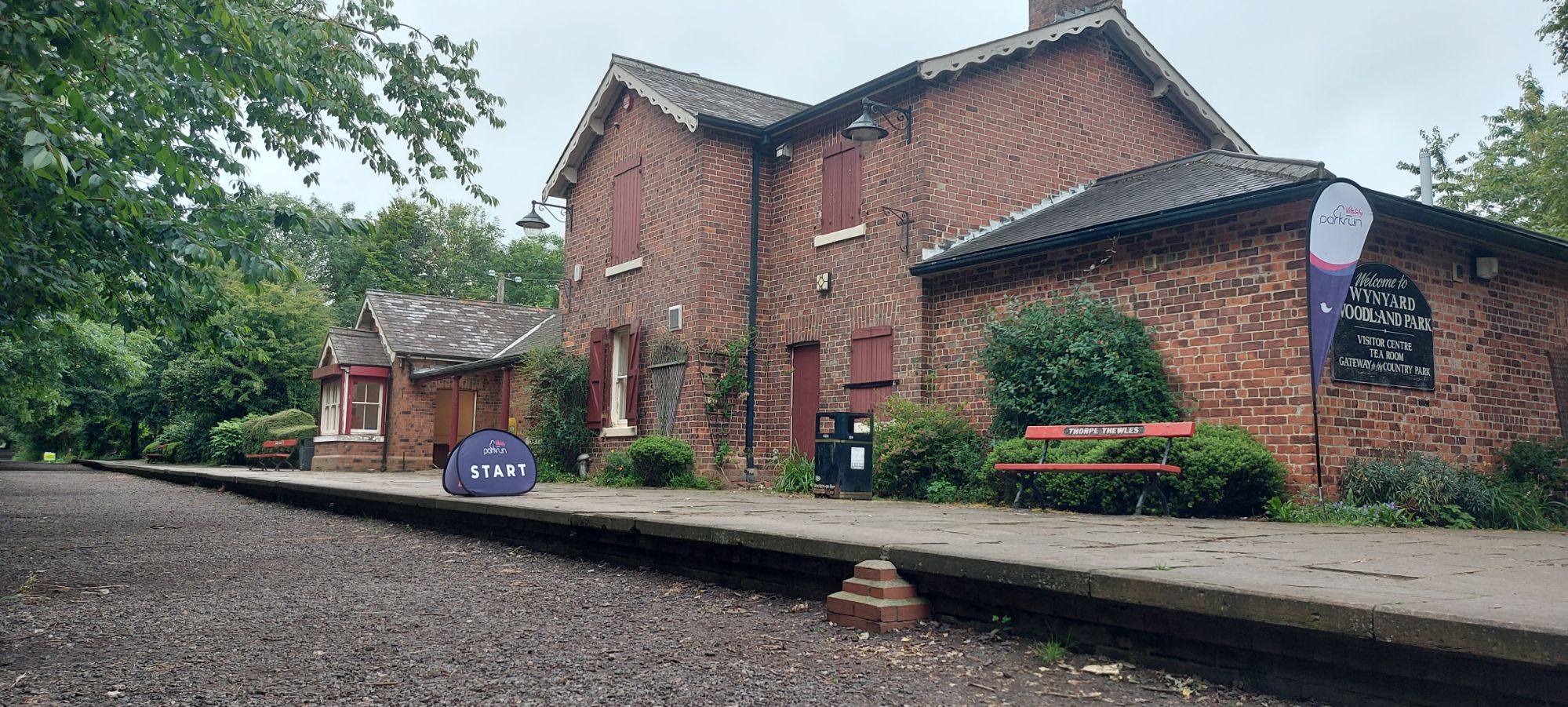
Wynyard Woodland parkrun is a weekly timed 5k run/walk organised by volunteers. Click the photo or here for more information.
Event Director: Wynyard Woodland parkrun is managed by an event director (Rosie Dawson) who is responsible for ensuring the event is delivered appropriately, building relationships with landowners, and for liaising with parkrun HQ. The Event Director is assisted by a number of Run Directors.
Run Director: The designated Run Director for an event has the overall responsibility for safety and oversees proceedings before, during, and after the event. They must be near the start/finish area at all times. The Run Director has the ultimate authority to decide whether the event should be cancelled or postponed or if an adjustment to the course is required. The Run Director also welcomes all parkrunners to the event via the pre-event briefing and communicates all important messages prior to the event start, recognises the contributions of the volunteers, acknowledges visitors, first-timers and ensures everyone understands the event and stays safe for the duration. The Run Director at Wynyard Woodland parkrun is usually the Volunteer Coordinator that week and also the Results Processor. We are always glad for help setting up the event and clearing away afterwards.
Course Checker: Every Saturday a course checker runs, walks, or cycles the course to check it’s safe to use and free from anything that might be hazardous to runners and volunteers. These hazards could be rocks, branches, or flooding, etc. The check takes place on the day of the parkrun and as close to the start time as reasonably possible, this usually involves meeting the Run Director at about 8.00 am.
First-Timers Welcome: This role is to create a friendly atmosphere for first timers and visitors. The volunteer introduces parkrun, its inclusiveness and ethos, highlights any course-specific information, and explains the finish procedure. This vital volunteer role provides essential reassurance for first-timers especially. It can also help the volunteer to gain confidence in public speaking in a relaxed atmosphere. We sometimes provide an additional welcome volunteer in the car park to encourage people and point them in the right direction.
Timekeeper: The thought of timekeeping can seem daunting, but it’s very straightforward. The timekeepers are responsible for recording the finish times of all participants at parkrun by using the Virtual Volunteer app (which is also used for barcode scanning) in aeroplane mode. We always have two timekeepers to protect against losing one set of times. The Run Director instructs them to start timing on the word GO! Then they press the timer once as each participant crosses the finish line. They liaise with each other to make sure the numbers match during the event. They work with the funnel manager (if there is one) to keep everyone in order until they have received their finish token. The last person to cross the line is always the tail walker(s). It’s then a simple matter of uploading the results with the Run Director. The timekeepers retain the results in their app in case of problems but can delete them the next time they use the app.
Finish Tokens: This person is responsible for handing out position tokens to all participants. They work closely with the funnel manager and timekeepers because finishers must stay in order until they have received their token. They may be assisted by a finish token support volunteer, and this is an ideal role for a younger volunteer.
Barcode Scanner: Volunteers use the Virtual Volunteer app to scan the personal barcode of every finisher along with their finish token. This ensures that every participant who completes the course receives a result. The data is then uploaded to be processed by the Run Director. The barcode scanners retain the results in their app in case of problems but can delete them the next time they use the app. The Virtual Volunteer parkrun app is available in your app store. It’s used for both barcode scanning and timekeeping and is always used in aeroplane mode.
Funnel Manager: This person is responsible for the whole finish area but is primarily focused on ensuring that participants move smoothly and swiftly through the finish funnel. Also, along with other volunteers at the finish line, they ensure participants stay in their finish order until they have received a finish token. They also look out for ‘funnel dodgers’ who cross the finish line but ‘escape’ before taking a token as this causes problems with the results. Even if a participant wishes to remain ‘unknown’ in the results, they must take a token and return it to the barcode scanners.
Marshals: The main tasks performed by marshals are guiding, interacting and encouraging the participants along the course, warning them of any obstacles or hazards, alerting the Run Director of any incidents, as well as ensuring that other park users are aware of the event. The marshal should stay in position until the tail walker passes them for the last time. The turning point marshal is usually responsible for unlocking and locking the gates.
We sometimes have a marshal(s) in the car park to encourage people and point them in the right direction. They also supervise parking if we’re especially busy. Ideally, we’d have a marshal beyond the turning point every week, but the turning point marshal always takes a ‘Caution Runners’ sign to warn other park users.
Tail Walker and parkwalker: The Tail Walker role is a friendly face who stays right at the back of the field and should be the last to go through the finish funnel, ensuring that everyone is accounted for. The parkwalker role is also a friendly face who provides support and encouragement to walkers, as part of our commitment to increasing the number of people who walk at our events. This is a separate role from that of tail walker. The parkwalker should be positioned ahead of the tail walker but behind those who are running.
Tail walkers and parkwalkers are entitled to receive both a volunteer credit and a walk/run credit when carrying out this role. We ask that these roles aren’t filled by the same volunteers each week (for more than three consecutive weeks) and whenever possible multiple people carry out the role. This is both for safeguarding purposes and to provide as positive and sociable experience as possible for everyone.
Setup and Close Down: The Pre-event Setup volunteer(s) help the Run Director prepare for the event. This involves the placement of markers and signage around the course, setting up the start/finish area including the finish funnel, and placing signs to indicate the route. Not forgetting the personal best bell! The Post-event Close Down volunteer(s) help clear up and return any kit to its storage place, leaving our parkrun space as we found it. Both volunteer roles are very suitable for our young people, and they also allow you to volunteer and run.
Photographer: The official photographer is an optional volunteer role. They take photographs and videos for our Facebook page. Photographers must always register as an official volunteer, make themselves known to the Run Director, and wear a high-vis vest at all times. Photographers cannot charge individuals for event photography at parkrun events and watermarks are not permitted.
In conclusion, there are a few volunteer roles that are self-explanatory. Token sorting, report writer, and pacers. Obviously, we need volunteers to sort the tokens each week, the report writer role is optional, and we have pacers on the last Saturday of the month.
Volunteers are welcome to be accompanied by their children. However, they can be distracting and volunteers may find themselves in very challenging situations, so volunteers must be mindful of this at all times.
Volunteers are requested to: Wear a volunteer vest to make them visible as a person who can help. Keep a watchful eye as people arrive looking for those who are there for the first time; they may be looking apprehensive and unsure of what to do. Greet people with a warm welcome, asking where they are from and what brings them to parkrun.
This Sunday Devotional is for Stockton Corps on our 150th Anniversary.
This weekend (23/24 November 2024) marks the 150th Anniversary of Stockton Corps. None of us were here 150 years ago, but we’re part of a continuing story. We’re all part of a rich and proud heritage, of productive years of ministry and service, and have an ongoing privilege and responsibility now and into the future.
There may be those of you who remember the Centenary 50 years ago, when you would have looked back and been encouraged by what had been achieved from those early beginnings.
As we look back today, we can be similarly encouraged by what has been achieved; but 2024 is a very different world to 1974, and we’ll be aware of vast changes in culture, demographics, attitudes, technology and the like.
• What was in the news then? • What do we take for granted that we didn’t have then?
Going back even further, the birth of the Salvation Army, and the commencement of the work in Stockton are events, not of the last century, but of the one before that. We live in a vastly different age, and that’s both an encouragement and a challenge. The encouragement is that the Christian message is the same as it’s always been, but every generation has the challenge to communicate it in the present age.
Jesus Christ is the same yesterday, today, and forever. Hebrews 3:18
We thank God for everything that’s been achieved in his name over the past 150 years; spiritual victories won in worship and service given in compassionate care. But, at the same time, we don’t forget what is being achieved now, nor do we neglect the need to move forward in faith into an uncertain future.
We celebrate those who have come to know Jesus as Saviour and Lord through the ministry of the Salvation Army in Stockton, because whenever the word of God has been declared, God’s will has been done.
We celebrate today all those who have been touched with the love of God through the ministry of the Salvation Army in Stockton, because whenever we’ve reached out with the compassion of Jesus, God’s will has been done.
We celebrate today the faithful officers, soldiers, adherents and friends who have been vital to the ministry of the Salvation Army in Stockton, because whenever lives have been dedicated to him, God’s will has been done.
Jesus commanded his disciples to go and make disciples of all the nations, baptizing them in the name of the Father and the Son and the Holy Spirit. Teach these new disciples to obey all the commands I have given you. And be sure of this: I am with you always, even to the end of the age.Matthew 28:16-20.
These words are a challenge and an encouragement, words that motivated those who opened this corps in Stockton all those years ago and have motivated all those in the corps since. May they be our motivation and encouragement for the future.
We celebrate the bonds of friendship and fellowship that have been sustained and strengthened in Christ through the years, because whenever our fellowship has been built up, God’s will has been done.
Paul wrote to the Philippians: Is there any encouragement from belonging to Christ? Any comfort from his love? Any fellowship together in the Spirit? Are your hearts tender and compassionate? Then make me truly happy by agreeing wholeheartedly with each other, loving one another, and working together with one mind and purpose. Don’t be selfish; don’t try to impress others. Be humble, thinking of others as better than yourselves. Don’t look out only for your own interests, but take an interest in others, too. You must have the same attitude that Christ Jesus had. Philippians 2:1-5
The reality of Christian fellowship has been lived in this corps over the years. Yes, there may have been times of disappointment and loss, but underlying it all has been that rich strand of fellowship binding us to each other, and binding us to Christ.
May our fellowship be richer and deeper in the future, for therein lies the way of effective Christian ministry and service.
We also celebrate today all those who have been ministered to in time of need or hardship, because whenever we have cared for others in Christ’s name, God’s will has been done.
Our Christian gospel is for the whole person; body, mind and spirit. Let’s make sure that as we move forward, we look for the face of Jesus in the face of everyone we meet, and serve them in his name.
There’s a sense in which we’re always turning a page in our continuing story of faith and service; in our own lives and that of the corps. This anniversary is only a date after all, but it’s good to have significant milestones and signposts.
As participants in this continuing story we’re reminded of the need to declare the word of God in words and actions, to build up our fellowship, and to care for others in the name of Jesus.
We remember those who have gone before us and have done God’s will, and we take our place and follow in their footsteps. We honour their memory by living the same life of faith in obedience to the heavenly vision.
We’ve already been reminded that the Lord will always be with us. So, let’s thank God for the past, and claim in faith all that God wants to do in us and through us by committing ourselves fully to him and his work as we go in the strength of the Lord.
Psalm 95 is a powerful and uplifting passage, often regarded as a call to worship and obedience. It’s traditionally classified as a hymn of praise, blending themes of thanksgiving, reverence, and a warning against disobedience. The psalm is divided into two distinct parts, each serving a specific purpose in its exhortation.
The opening verses invite us to come before the Lord with joy and thanksgiving, celebrating his greatness and majesty. They portray God as the creator of all things, from the depths of the earth to the heights of the mountains, as well as the sea and the dry land. This imagery underscores his sovereignty and power, inspiring awe and reverence among his people. The psalm encourages communal worship, urging believers to sing, make a joyful noise, and kneel in humble adoration.
As the psalm progresses, the tone shifts from praise to admonition. The latter half serves as a warning against hard-heartedness and rebellion, drawing on the historical example of the Israelites in the wilderness. It references the incidents at Meribah and Massah, where the people tested God through their lack of faith and disobedience. The psalmist cautions against repeating these mistakes, reminding us of the consequences faced by the Israelites, who were denied entry into God’s rest because of their stubbornness.
Psalm 95 serves a dual purpose then, combining an invitation to joyful worship with a solemn reminder of the importance of obedience and faithfulness. It emphasises the need to listen to God’s voice and respond with humility and trust, lest one falls into the same patterns of disbelief and disobedience. The psalm’s enduring relevance lies in its timeless message: recognising God’s majesty and responding with genuine worship and commitment to his ways.
Psalm 95 is often associated with the invitatory psalm in morning prayer services. Its themes of gratitude, reverence, and caution make it a vital passage for reflection, reminding us of both the joy and responsibility inherent in our relationship with God.
May this psalm continue to inspire us to honour God in our lives with a sincere and obedient heart.









 John Ager's Home on the Web!